Pak Chong Isopod
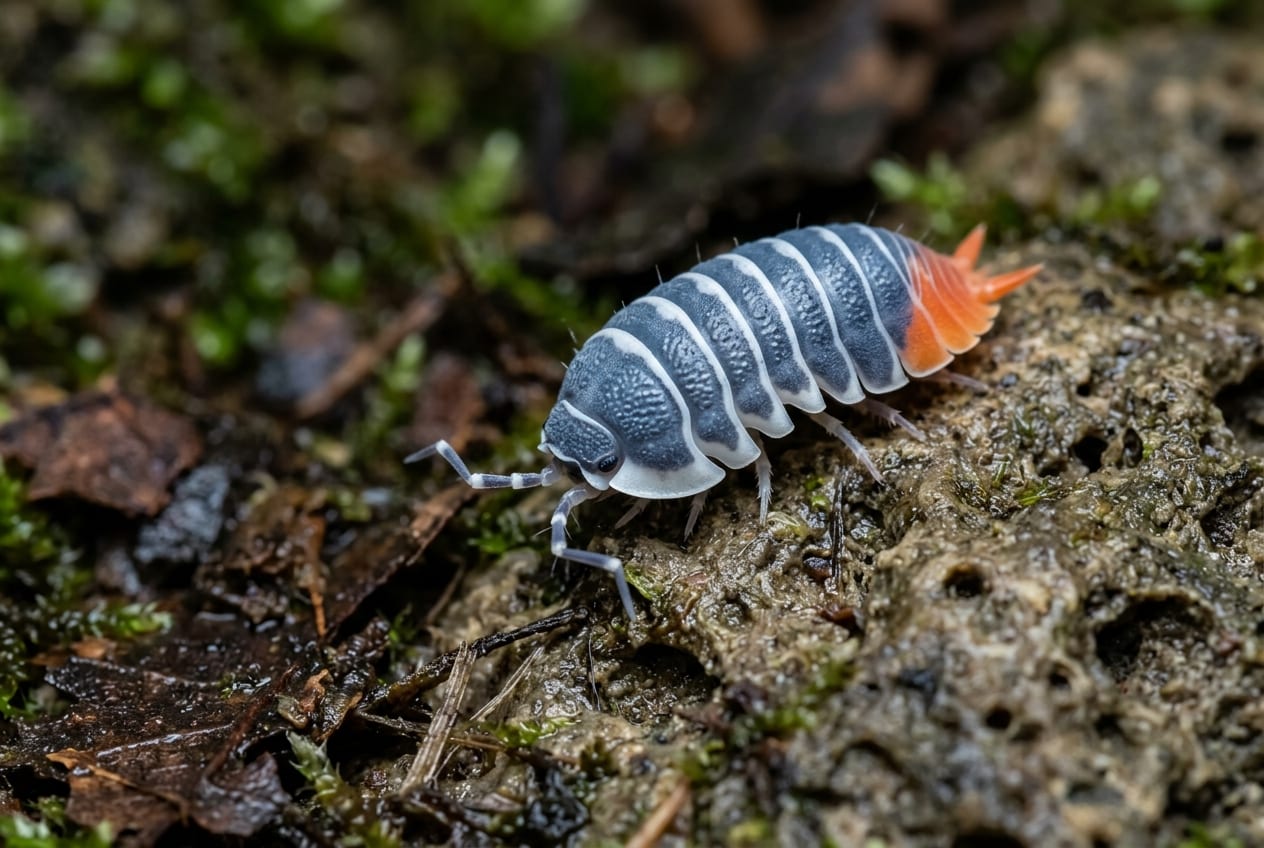
The Pak Chong Isopod is an undescribed species discovered in Thailand's Pak Chong district. Its blue-gray body is lined with pale white borders along each segment, and the tail shades from orange to red — a striking three-tone pattern that sometimes extends to the face as well. Adults reach around 15mm, a compact size that suits close observation. Calm and low-key by nature, its daily care mainly involves humidity management, feeding, and cleaning, though keeping it well calls for some prior isopod knowledge, making it better suited to intermediate keepers. Its vivid coloration has made it a favorite among exotic invertebrate enthusiasts.
View Pak Chong Isopod encyclopedia →0% commission on your first sales!Register by September 30, 2026 and your first 2 sales are commission-free!
Breeder Wanted!
List on BreederDirect and sell directly to customers nationwide!
5 Transparency Standards You Can Trust
When listing Exotic Invertebrates, Breeders disclose the following. We guarantee transparency on growth stage and breeding unit.
- Real Photos
- Breeding Unit
- Generation Info
- Body Length (mm)
- Country of Origin
Browse all 249 breeds
Verified breeders wanted for Exotic Invertebrates
Breeders are signing up now ahead of launch. Subscribe to be notified when new listings go live.
Getting alerts is free with a member account. When new listings match your saved search, we'll notify you by email and in-app.
Browse other categories
Verified breeders (preview)
Are you raising exotic invertebrates?
Register as a breeder and connect with buyers directly.
Apply as a breederPak Chong Isopod key facts
- Care level
- Intermediate
- Lifespan
- 2-3 years
- Size
- About 15mm
- Temperature
- 24〜26℃
- Humidity
- 75〜80%
- Diet
- Decaying leaves and wood as the staple, with occasional vegetable and a modest pinch of protein; cuttlebone or crushed limestone stays in permanently
- Temperature & Humidity
- 24-26C and 75-80% humidity. Keep ventilation low to moderate, but never seal the box.
- Enclosure
- Deep substrate of flake soil blended with rotted hardwood and topsoil, topped with leaf litter and cork bark. Do not base it on coco coir.
- Diet & Feeding
- Feed lightly and regularly on decaying leaves and wood, with occasional vegetable and a modest pinch of protein. Calcium is permanent, not occasional.
- Temperament & Venom
- Harmless to people. Calm, and quick to roll into a ball when startled. Kept in groups.
- Notes
- Breeding is slow, so hold conditions steady and leave them alone. A springtail culture keeps mould down.
About Pak Chong Isopod
An undescribed isopod from Thailand's Pak Chong district, with a blue-gray body, white-edged segments, and a tail shading from orange to red. Adults reach about 15mm; best suited to intermediate keepers.
7 things to know before welcoming a Pak Chong Isopod
1Suited to Intermediate Keepers
The Pak Chong Isopod is generally recommended for intermediate keepers rather than absolute beginners. Getting comfortable with basic temperature and humidity management, plus regular observation, helps keep them stable. If this is your first isopod, starting with an easier species first is a reasonable option.
2A Striking Three-Tone Pattern
Its defining feature is the three-tone coloration: a blue-gray body lined with white along each segment, with the tail shading from orange to red. Some individuals show the same coloring on the face, and how the colors express can vary between individuals and growth stages.
3A Compact ~15mm Adult Size
Adults measure only around 15mm, small enough to rest in the palm of your hand. This compact size makes them easy to house and observe, even when keeping several together.
4Humidity Is the Key Care Factor
As with isopods in general, dry substrate puts stress on the animals. Misting regularly to maintain moisture while still allowing enough airflow to prevent stagnation is the core balance to manage.
5Quiet and Best Enjoyed by Watching
This isopod isn't especially active and spends much of its time tucked under substrate or hides. Part of the appeal is patiently watching for the moments it emerges, such as at night or after feeding.
6Daily Care Is Feeding and Cleanup
Offer modest amounts of prepared isopod food, vegetable scraps, or decaying wood, and remove leftovers and waste regularly. Checking the substrate periodically and topping it up or replacing it as needed keeps the enclosure hygienic.
7Prepare the Enclosure Beforehand
Before bringing one home, set up a well-ventilated enclosure with moisture-retentive substrate and hiding materials. After transport, keep them somewhere calm and avoid unnecessary disturbance until they settle in.
Frequently asked questions about Pak Chong Isopod
- Q.How difficult is it to keep the Pak Chong Isopod?
- A.It's generally considered a species for intermediate keepers. Getting familiar with basic temperature and humidity management, along with regular observation, helps keep them stable. If you're new to isopods, it can help to start with an easier species first.
- Q.Can I keep multiple Pak Chong Isopods together?
- A.Isopods are generally well suited to being kept in groups. The Pak Chong Isopod is no exception — given enough space and hiding spots, they tend to cohabit well.
- Q.What colors and patterns do they have?
- A.They have a blue-gray body lined with white along each segment, with a tail that shades from orange to red — a distinctive three-tone look. Some individuals show the same coloring on the face as well.
- Q.What should I watch out for in their enclosure?
- A.Avoid letting the substrate dry out, and mist it regularly to maintain moisture. At the same time, keep the enclosure ventilated to strike a balance and prevent excess stagnation.
- Q.Is this species listed under CITES?
- A.The Pak Chong Isopod is not subject to CITES.
Learn more about Pak Chong Isopod in the encyclopedia
View Pak Chong Isopod encyclopedia entry →
Care difficulty, lifespan, size and diet — all basics covered.
More in this category
Can't find the one you're looking for?
Post your wishes for free and breeders with matching animals will contact you with introductions.