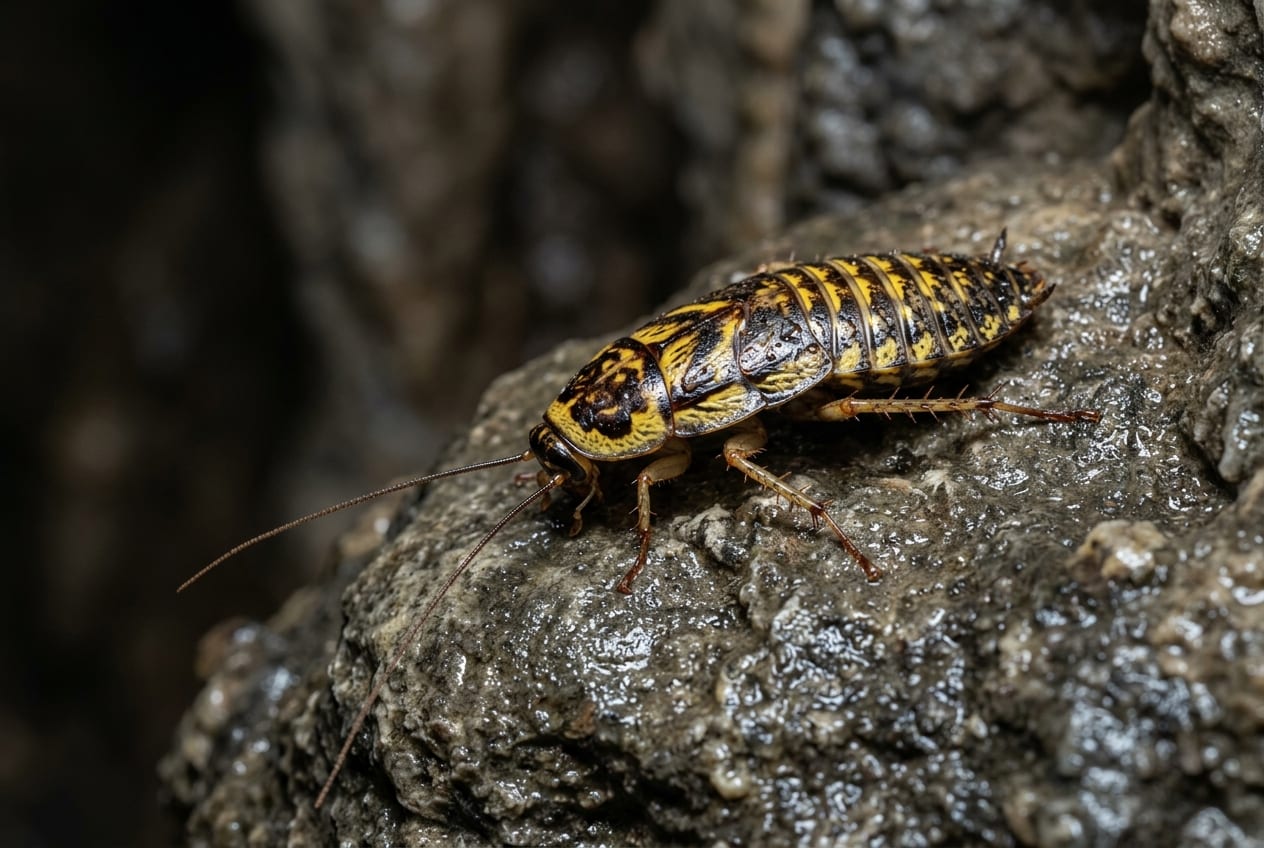
Simandoa Cave Cockroach
The Simandoa Cave Cockroach is a species once found in a single cave in Guinea — a cave that was destroyed by mining, leaving the only surviving populations in the hands of hobbyists around the world today. Its head and body are marked with striking yellow stripes and bands, and despite its large size, it has a calm, easy-to-handle temperament. It doesn't fly and rarely climbs smooth surfaces, making it approachable even for first-time keepers. It's also a social species that lives in groups, so watching a colony go about its business is one of the real pleasures of keeping them.
View Simandoa Cave Cockroach encyclopedia →Breeder Wanted!
List on BreederDirect and sell directly to customers nationwide!
BreederDirect's 5 Transparency Commitments
When listing Exotic Invertebrates, Breeders disclose the following. We guarantee transparency on growth stage and breeding unit.
- Real Photos
- Breeding Unit
- Generation Info
- Body Length (mm)
- Country of Origin
Browse all 286 breeds
Verified breeders wanted for Exotic Invertebrates
Breeders are signing up now ahead of launch. Subscribe to be notified when new listings go live.
Getting alerts is free with a member account. When new listings match your saved search, we'll notify you by email and in-app.
Browse other categories
Verified breeders (preview)
Are you raising exotic invertebrates?
Register as a breeder and connect with buyers directly.
Apply as a breederSimandoa Cave Cockroach key facts
- Care level
- Beginner-friendly
- Lifespan
- 1-2 years
- Size
- About 42mm in males and 47mm in females
- Temperature
- 21〜29℃
- Diet
- Omnivorous: vegetables, fruit, dry prepared feeds
- Temperature & Humidity
- Keep at 21-29 C. Air humidity is not critical, but the substrate should be kept moist.
- Enclosure
- Nymphs burrow under bark and substrate while adults hide under egg crate. All life stages climb, so the lid must seal.
- Diet & Feeding
- Omnivorous and not fussy. Combine vegetables and fruit with dry prepared feed.
- Temperament & Venom
- No venom and no biting. They cannot fly and move calmly, which makes them easy to handle.
- Notes
- Antennae nipping is common and a larger enclosure reduces it. Breeding is slow, so start with a comfortable number if you plan to increase the colony.
About Simandoa Cave Cockroach
A yellow-striped cockroach originally from a single cave in Guinea, now surviving only in captivity. Calm, flightless, and beginner-friendly.
7 things to know before welcoming a Simandoa Cave Cockroach
1Extinct in the Wild
The Simandoa Cave Cockroach was found in only one cave in Guinea, and that habitat was destroyed by mining activity. Today the species survives solely through captive populations maintained by hobbyists worldwide, so keeping this species means playing a small part in its continued existence.
2Calm, Flightless, and Non-Climbing
Despite its large size, this species cannot fly and rarely climbs smooth surfaces like glass or plastic. Its movements are also relatively slow-paced, so escape risk is low, making it manageable even for beginners.
3A Social, Colony-Dwelling Species
This species naturally huddles together in groups. Keeping several individuals in the same enclosure, rather than a single roach alone, lets you observe more natural behavior and makes breeding more likely.
4Distinctive Yellow Stripes
Its most recognizable feature is the vivid yellow stripes and bands running from the head across the body. This makes it easy to distinguish from other captive roach species, and many keepers enjoy the pattern itself as part of the appeal.
5Enclosure Temperature and Humidity
Since this species originates from an enclosed cave environment, keeping enclosure temperature and humidity stable is fundamental to its health. Maintain airflow while avoiding excessive dryness, and check the substrate condition regularly.
6Setup to Prepare Before Bringing One Home
Prepare a ventilated, lidded enclosure, substrate, hiding spots such as bark or driftwood, and feeding items like insect jelly before bringing your roaches home. If keeping a group, make sure the enclosure has enough room for all of them.
7Avoid Mixing With Other Species
Housing this species together with other insects or different roach species in the same enclosure can risk hybridization, stress, or disease transmission. It's best to keep Simandoa Cave Cockroaches in a dedicated enclosure of their own species only.
Frequently asked questions about Simandoa Cave Cockroach
- Q.Is this species suitable for beginners?
- A.Yes, this species is considered beginner-friendly. It's calm and flightless, and day-to-day care is relatively simple, making it a good choice for first-time invertebrate keepers.
- Q.How large does it grow?
- A.Adults reach about 42mm for males and 47mm for females. This makes them a fairly large species among cockroaches, and many keepers enjoy observing them as a colony.
- Q.Is this species subject to any legal restrictions?
- A.The Simandoa Cave Cockroach is not listed under CITES.
- Q.Can it be kept alone rather than in a group?
- A.Keeping a single individual is possible, but this is naturally a social species that huddles together in groups. Housing several together makes it easier to observe more natural behavior.
- Q.Does this species still exist in the wild?
- A.Its only known habitat, a cave in Guinea, was destroyed by mining, so today the species survives solely through captive populations maintained by hobbyists around the world.
Learn more about Simandoa Cave Cockroach in the encyclopedia
View Simandoa Cave Cockroach encyclopedia entry →
Care difficulty, lifespan, size and diet — all basics covered.
More in this category
Can't find the one you're looking for?
Post your wishes for free and breeders with matching animals will contact you with introductions.