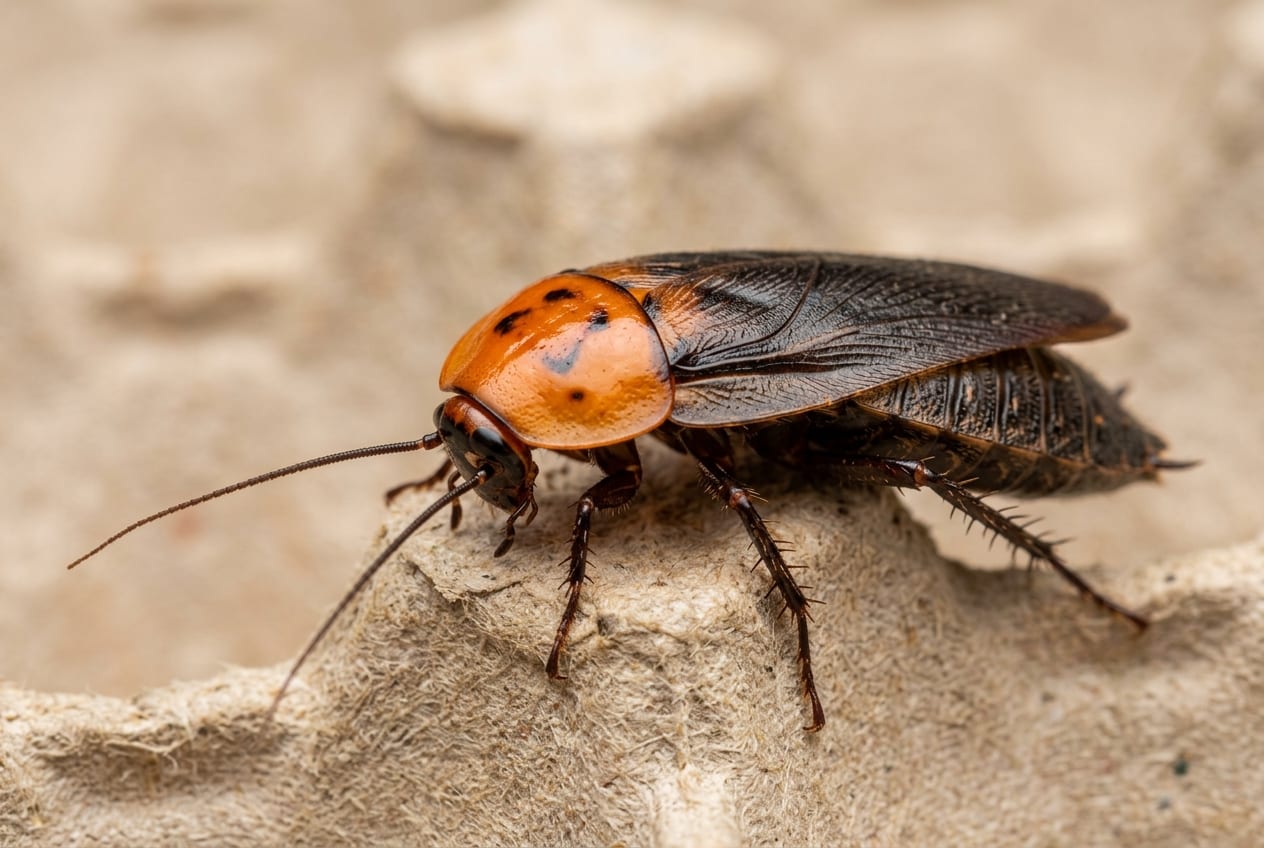
Orange Head Cockroach
The Orange Head Cockroach is a Central and South American species named for the bright orange plate just behind its head. Adults reach a sturdy 4.6-5.2cm, while the nymphs are noticeably plump and fleshy. Highly prolific and easy to build up into a colony, this species also can't climb glass or fly, so escapes are rarely a concern. That combination makes it a beginner-friendly choice for anyone starting out with exotic invertebrates, and its calm, easy-to-observe nature has also made it a popular feeder insect for reptile keepers.
View Orange Head Cockroach encyclopedia →0% commission on your first sales!Register by September 30, 2026 and your first 2 sales are commission-free!
Breeder Wanted!
List on BreederDirect and sell directly to customers nationwide!
5 Transparency Standards You Can Trust
When listing Exotic Invertebrates, Breeders disclose the following. We guarantee transparency on growth stage and breeding unit.
- Real Photos
- Breeding Unit
- Generation Info
- Body Length (mm)
- Country of Origin
Browse all 249 breeds
Verified breeders wanted for Exotic Invertebrates
Breeders are signing up now ahead of launch. Subscribe to be notified when new listings go live.
Getting alerts is free with a member account. When new listings match your saved search, we'll notify you by email and in-app.
Browse other categories
Verified breeders (preview)
Are you raising exotic invertebrates?
Register as a breeder and connect with buyers directly.
Apply as a breederOrange Head Cockroach key facts
- Care level
- Beginner-friendly
- Lifespan
- About 1 year
- Size
- 4.6-5.2cm
- Temperature
- 24〜29℃
- Diet
- Vegetables, fruit, grains, prepared insect food, dog food
- Temperature & Humidity
- Keep at 24-29 C and keep the substrate moist.
- Enclosure
- They cannot climb or fly, so a deep open-topped bin works. Stand egg crates for surface area and provide ventilation.
- Diet & Feeding
- Combine vegetables and fruit with grains or prepared insect food; they also take dog food readily. Gut-load before use as feeders.
- Temperament & Venom
- No venom and no biting. They move quickly but cannot climb, so they are easy to handle.
- Notes
- Adults often have tattered wings, but wild individuals show the same wear, so it is not necessarily abnormal. The species breeds fast and colonies crowd easily.
About Orange Head Cockroach
A Central/South American roach known for its bright orange pronotum. Adults measure 4.6-5.2cm, breed readily, and can't climb glass or fly — an easy species for beginners.
7 things to know before welcoming a Orange Head Cockroach
1Low Escape Risk
This species can't climb glass and doesn't fly, so a simple plastic enclosure is usually enough to keep it contained. Nymphs are small, though, so choose a lid with fine mesh ventilation to prevent tiny escapees.
2Plump, Fleshy Nymphs
Nymphs have a distinctively plump, fleshy body, and the bright orange pronotum becomes more vivid as they mature into adults. Watching their appearance change with each molt is part of the fun of keeping this species.
3High Reproductive Rate
This species breeds readily, and a healthy colony can grow quickly once conditions are right. It's worth planning ahead for extra enclosure space, or finding new homes for surplus insects, before numbers grow beyond what you can manage.
4Beginner-Friendly Care
This roach is considered beginner-friendly and doesn't require elaborate equipment to get started. That said, it's still a living animal, so basic care like temperature control and regular cleaning remains essential.
5Substrate and Cleanliness
Coconut fiber or insect substrate works well for bedding, and droppings or leftover food should be cleared out regularly. Keep an eye on ventilation too, since excess humidity can lead to mold or unwanted pests.
6Easy Omnivorous Diet
As omnivores, they'll eat vegetable scraps, commercial insect food, and protein sources like dried fish, so feeding them doesn't take much preparation. It's also worth providing a water source such as gel or a dampened cotton pad.
7Getting Ready Beforehand
Before bringing them home, it helps to have a securely lidded enclosure, substrate, and egg trays for hiding spots ready to go. Given how readily they breed, choosing a container with room to grow is a good idea from the start.
Frequently asked questions about Orange Head Cockroach
- Q.Can Orange Head Cockroaches climb glass?
- A.No, they can't climb smooth surfaces like glass or plastic, so a securely lidded enclosure is usually enough to keep them contained. That said, nymphs are small and can slip through the tiniest gaps, so it's still worth checking your enclosure carefully.
- Q.How big do adults get?
- A.Adults reach about 4.6 to 5.2cm. Nymphs start out plump and fleshy, and their orange pronotum becomes more vivid as they grow into adults.
- Q.Is this species suitable for beginners?
- A.Yes, it's considered a beginner-friendly species that doesn't require an elaborate setup. Since it can't climb glass or fly, escape risk is low, which also makes it easier for first-time keepers.
- Q.What if my colony breeds too much?
- A.Because they breed readily, colony numbers can grow quickly once conditions are right. It helps to plan for extra enclosure space, or arrange to rehome surplus insects, before things get out of hand.
- Q.Is the Orange Head Cockroach subject to CITES?
- A.No, this species is not subject to CITES. This isn't something you need to worry about when keeping or breeding them.
Learn more about Orange Head Cockroach in the encyclopedia
View Orange Head Cockroach encyclopedia entry →
Care difficulty, lifespan, size and diet — all basics covered.
More in this category
Can't find the one you're looking for?
Post your wishes for free and breeders with matching animals will contact you with introductions.