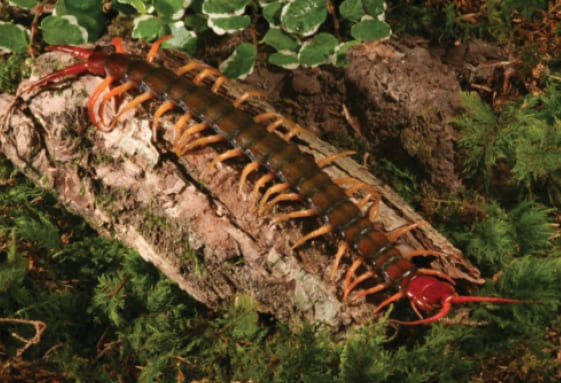
 © Kronmüller C, Lewis JGE (2015) / CC BY 4.0
Red-headed Centipede
The Red-headed Centipede is a large centipede species native to southern China and Southeast Asia. Its dark red head stands out sharply against a brownish-green body and yellow-to-red legs, giving it a bold, striking appearance that appeals to exotic invertebrate keepers. It's frequently confused with another red-headed centipede species, but the two are actually distinct, and this one grows notably larger. Fast-moving and equipped with powerful forcipules, it calls for confident, careful handling, making it a rewarding choice for experienced keepers who appreciate observing an imposing, characterful animal.
View Red-headed Centipede encyclopedia →0% commission on your first sales!Register by September 30, 2026 and your first 2 sales are commission-free!
Breeder Wanted!
List on BreederDirect and sell directly to customers nationwide!
5 Transparency Standards You Can Trust
When listing Exotic Invertebrates, Breeders disclose the following. We guarantee transparency on growth stage and breeding unit.
- Real Photos
- Breeding Unit
- Generation Info
- Body Length (mm)
- Country of Origin
Browse all 249 breeds
Verified breeders wanted for Exotic Invertebrates
Breeders are signing up now ahead of launch. Subscribe to be notified when new listings go live.
Getting alerts is free with a member account. When new listings match your saved search, we'll notify you by email and in-app.
Browse other categories
Verified breeders (preview)
Are you raising exotic invertebrates?
Register as a breeder and connect with buyers directly.
Apply as a breederRed-headed Centipede key facts
- Care level
- Advanced
- Lifespan
- 5-8 years
- Size
- 10-20cm
- Temperature
- 26〜28℃
- Humidity
- 60〜80%
- Diet
- Crickets, dubia and red runner roaches
- Temperature & Humidity
- About 26-28 C with high humidity; keep the substrate moist for roughly 60-80% and never let it dry.
- Enclosure
- A tight-sealing enclosure with 5-10 cm of coco fibre. It burrows, so keep the substrate deep, plus a hide and a shallow water dish.
- Diet & Feeding
- Crickets, dubia or red runner roaches once or twice a week.
- Temperament & Venom
- Aggressive and potently venomous; bites are extremely painful. Never handle.
- Notes
- House singly. Red-headed S. mutilans are sometimes sold as this species; check the scientific name and locality.
About Red-headed Centipede
A large centipede native to southern China and Southeast Asia, with a striking dark red head and yellow-to-red legs. Adults reach 10-20cm, and this fast-moving species is recommended for experienced keepers only.
7 things to know before welcoming a Red-headed Centipede
1Large and Fast-Moving
Adults reach 10-20cm and move quickly. Make sure the enclosure lid locks securely and has no gaps to prevent escapes.
2House Solitarily
This species is territorial and may cannibalize others if housed together. Keep one individual per enclosure rather than combining multiple centipedes.
3Deep, Burrowable Substrate
In the wild it hides under debris and burrows into soil, so provide a deep substrate layer and a hide. Maintain adequate humidity without letting the substrate dry out completely.
4Avoid Bare-Hand Contact
With strong forcipules and quick movements, it's best handled with tongs or forceps rather than bare hands during feeding or cleaning. Avoid letting it out of its enclosure unnecessarily.
5Feed Live Insect Prey
This species is insectivorous and typically fed crickets or similar live prey. Remove uneaten food promptly to prevent mold and bacteria from building up in the enclosure.
6Minimize Disturbance When Molting
Centipedes are especially sensitive before and after molting. Reduce feeding and cleaning during this period and let them rest undisturbed.
7Prepare the Enclosure First
Before bringing one home, set up a lockable enclosure, substrate, hide, and a thermometer/hygrometer. As this species is best suited to experienced keepers, it's wise to build handling confidence with centipedes beforehand.
Frequently asked questions about Red-headed Centipede
- Q.Is the Red-headed Centipede suitable for beginners?
- A.This species is fast-moving and has strong forcipules, making it best suited to experienced keepers. It's recommended to build experience handling centipedes before bringing one home.
- Q.How is it different from other red-headed centipedes?
- A.Because both have red heads, this species is often confused with another well-known red-headed centipede, but they are actually distinct species. The Red-headed Centipede grows notably larger.
- Q.How big do adults get?
- A.Adults typically reach 10-20cm, making this a large centipede species. Since individual size varies, choose an enclosure with enough room to accommodate full growth.
- Q.Can it bite?
- A.Like other centipedes, it may bite if startled or provoked, so it should be handled with tongs rather than bare hands. If you have concerns, consult a specialist beforehand.
- Q.Is temperature and humidity management difficult?
- A.This species prefers warm, humid conditions, so substrate moisture and temperature need regular attention. Watch for excessive dryness or poor ventilation, and maintain adequate airflow.
Learn more about Red-headed Centipede in the encyclopedia
View Red-headed Centipede encyclopedia entry →
Care difficulty, lifespan, size and diet — all basics covered.
More in this category
Can't find the one you're looking for?
Post your wishes for free and breeders with matching animals will contact you with introductions.