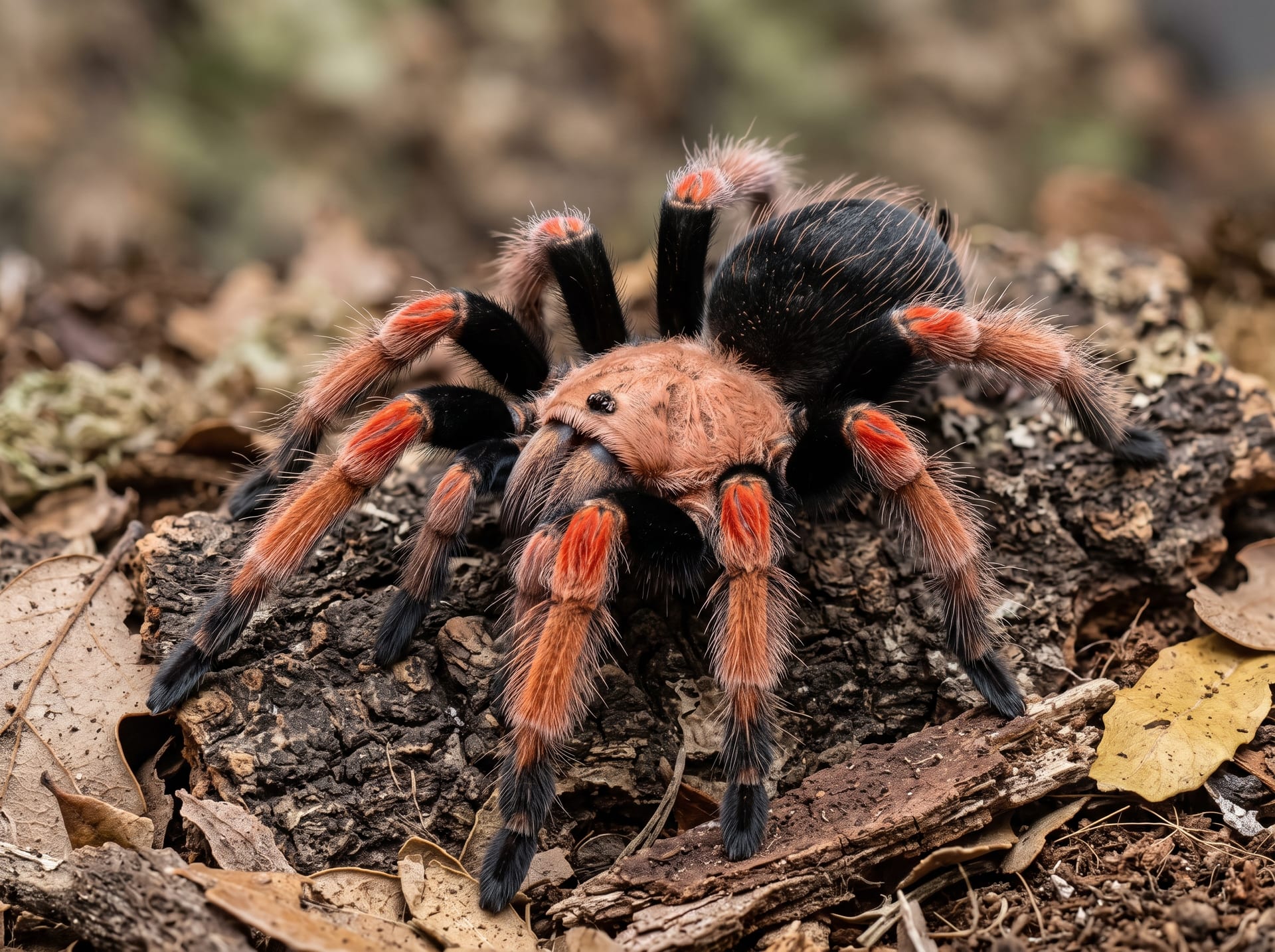
Mexican Fireleg
The Mexican Fireleg is a terrestrial tarantula native to Mexico, instantly recognizable by its striking fiery orange-red legs. It can be somewhat skittish and may flick urticating hairs when it feels threatened, but it is hardy and forgiving, making it a great choice for beginner keepers. Its movements tend to be slow and deliberate, so owners can enjoy watching its vivid coloring up close. Adults reach roughly 12 to 15 cm in legspan, and lifespans differ dramatically by sex: females typically live 20 to 25 years, while males live only about 5 to 6 years. Anyone hoping for a long-term companion should confirm the spider's sex before bringing one home.
View Mexican Fireleg encyclopedia →0% commission on your first sales!Register by September 30, 2026 and your first 2 sales are commission-free!
Breeder Wanted!
List on BreederDirect and sell directly to customers nationwide!
5 Transparency Standards You Can Trust
When listing Exotic Invertebrates, Breeders disclose the following. We guarantee transparency on growth stage and breeding unit.
- Real Photos
- Breeding Unit
- Generation Info
- Body Length (mm)
- Country of Origin
Browse all 249 breeds
Verified breeders wanted for Exotic Invertebrates
Breeders are signing up now ahead of launch. Subscribe to be notified when new listings go live.
Getting alerts is free with a member account. When new listings match your saved search, we'll notify you by email and in-app.
Browse other categories
Verified breeders (preview)
Are you raising exotic invertebrates?
Register as a breeder and connect with buyers directly.
Apply as a breederMexican Fireleg key facts
- Care level
- Beginner-friendly
- Lifespan
- Female 20-25 years / Male 5-6 years
- Size
- Leg span 12-15 cm
- Temperature
- 24〜28℃
- Humidity
- 55〜65%
- Diet
- Live insects such as crickets and roaches, offered roughly weekly.
- Habitat
- Dry terrestrial setup with deep substrate, hide and water dish.
- Temp & Humidity
- 24-28°C, 55-65% humidity; keep on the dry side.
- Feeding
- Weekly live prey; fasts around molting.
- Caution
- Readily kicks urticating hairs; venom is mild, bite like a bee sting.
About Mexican Fireleg
A hardy, beginner-friendly terrestrial tarantula from Mexico known for its fiery orange-red legs. Adults span 12-15 cm; females live 20-25 years, males 5-6 years.
7 things to know before welcoming a Mexican Fireleg
1Watch for urticating hairs
This species is a bit high-strung and, when startled, may kick loose the urticating hairs on its abdomen using its hind legs as a defense. Contact with skin or mucous membranes can cause itching or irritation, so avoid handling it bare-handed and keep it away from your eyes and mouth. Calm, unhurried care sessions help keep the spider from feeling threatened.
2Set up ground-level housing
As a terrestrial species, it does better in an enclosure with plenty of floor space rather than height. Use a deep layer of moisture-retentive substrate and add a hide so it has somewhere to retreat and settle in. Climbing branches aren't essential, but a bit of natural-looking texture in the layout encourages more natural behavior.
3Keep it warm and humid
This species prefers warm, humid conditions, so keeping the enclosure on the warmer and more humid side helps it stay healthy. Mist part of the substrate regularly while still allowing enough airflow to prevent it from becoming stagnant. Pay extra attention to sudden temperature or humidity swings when the seasons change.
4Feeding routine
Offer live prey such as crickets, and remove any uneaten food promptly to keep the enclosure clean. Growing individuals tend to eat readily, but appetite often drops around molting, so watch the spider's condition rather than sticking to a fixed schedule.
5Handling molting periods
Before a molt, the spider may slow down or stop eating — this is a normal part of getting ready to shed its exoskeleton. During and right after the molt, its body is extremely delicate, so avoid disturbing it and let it recover in peace. Hold off on feeding for a while after the molt until the new exoskeleton has fully hardened.
6House them individually
Tarantulas are territorial and can turn on each other, so this species should be kept one per enclosure. If you want to keep more than one, house them in separate enclosures, and choose a securely fitting lid to prevent escapes.
7Preparing before arrival
Set up the enclosure, substrate, hide, and water dish in advance so the spider can settle in with minimal stress after transport. Avoid handling or disturbing it right after arrival, and wait until it has calmed down before starting to feed. Since lifespan varies greatly by sex, it's worth confirming this beforehand if you're hoping for a long-term companion.
Frequently asked questions about Mexican Fireleg
- Q.Is the Mexican Fireleg suitable for beginners?
- A.Yes, it's considered hardy and easy to care for, making it a good choice for beginner keepers. That said, it can be a bit high-strung and may flick urticating hairs, so handle it gently and avoid touching it with bare hands.
- Q.Why is there such a big difference in lifespan between males and females?
- A.In many tarantula species, lifespan varies greatly by sex, and the Mexican Fireleg is no exception — females live 20 to 25 years while males live only about 5 to 6 years. Males tend to have a much shorter lifespan after reaching maturity, so females are the better choice if you want a long-term companion.
- Q.What should I do if it flicks urticating hairs at me?
- A.If the hairs contact your skin, rinse the area with water and try not to scratch it, since scratching can spread the irritation. If symptoms are severe, such as hairs getting into your eyes, seek medical attention promptly.
- Q.How big does the Mexican Fireleg get?
- A.Adults reach a legspan of roughly 12 to 15 cm, which is a moderate size for a tarantula rather than an especially large one. Since it grows gradually, you can adjust the size of its enclosure as it matures.
- Q.Can it be housed together with other tarantulas?
- A.No, tarantulas generally need to be kept alone. They are territorial and can attack one another, so if you want to keep several, give each one its own separate enclosure.
Learn more about Mexican Fireleg in the encyclopedia
View Mexican Fireleg encyclopedia entry →
Care difficulty, lifespan, size and diet — all basics covered.
More in this category
Can't find the one you're looking for?
Post your wishes for free and breeders with matching animals will contact you with introductions.