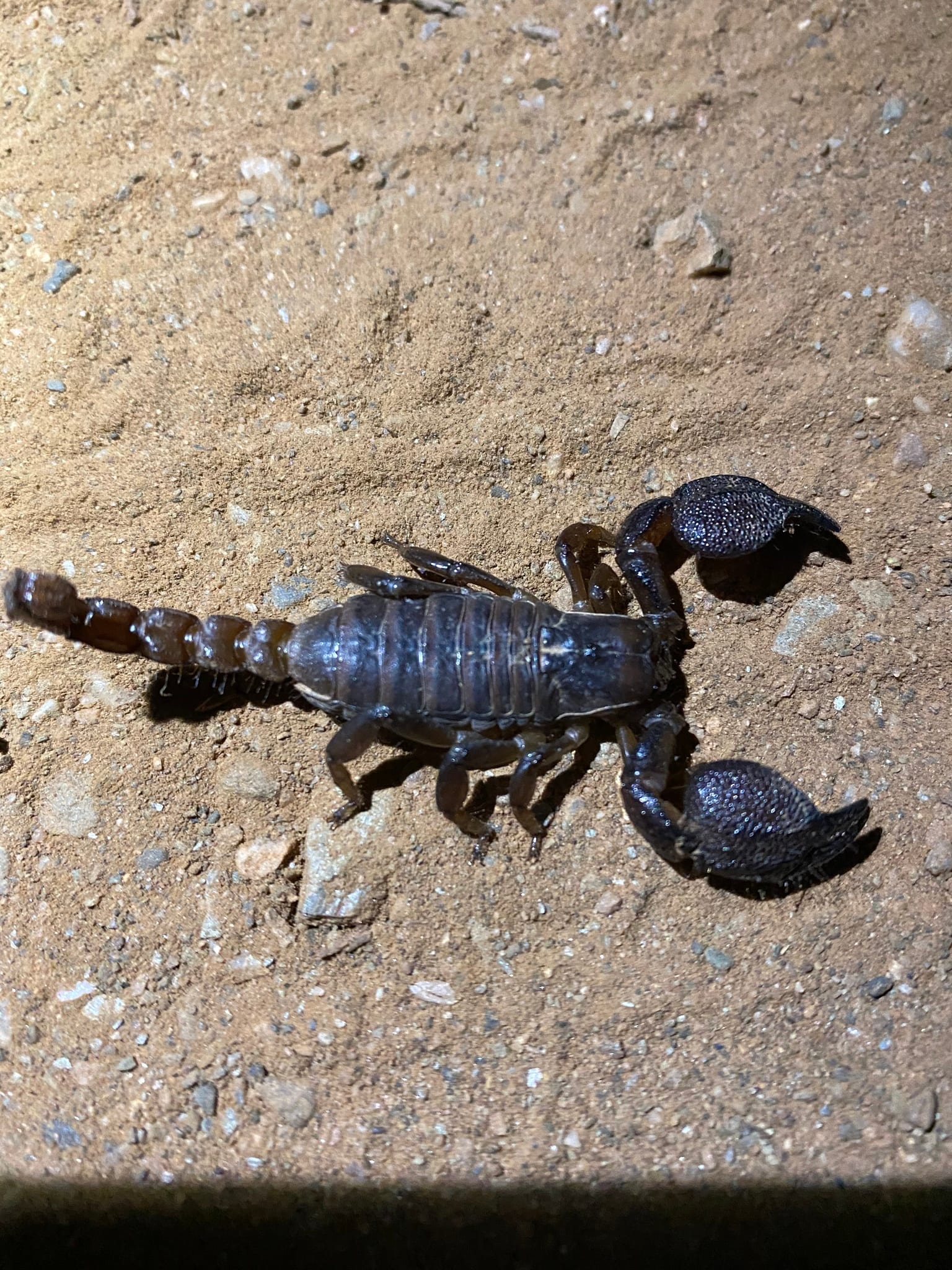
 © karim Attouche / CC0
Large-clawed Scorpion
The Israeli Gold Scorpion is native to North Africa and the Middle East, reaching about 8 cm in length at maturity. Its brown body contrasts strikingly with a pair of large, gold-toned claws, giving it a bold, eye-catching look. Despite its imposing appearance, its venom is mild and considered low-risk to humans, making it a species best suited to keepers with some scorpion experience. In the wild, it is a remarkably capable digger, excavating burrows up to a meter deep in desert sand — a trait worth recreating with generous substrate depth in captivity. Alert and quick-moving, it's best appreciated by keepers who enjoy quiet observation rather than handling.
View Large-clawed Scorpion encyclopedia →0% commission on your first sales!Register by September 30, 2026 and your first 2 sales are commission-free!
Breeder Wanted!
List on BreederDirect and sell directly to customers nationwide!
5 Transparency Standards You Can Trust
When listing Exotic Invertebrates, Breeders disclose the following. We guarantee transparency on growth stage and breeding unit.
- Real Photos
- Breeding Unit
- Generation Info
- Body Length (mm)
- Country of Origin
Browse all 249 breeds
Verified breeders wanted for Exotic Invertebrates
Breeders are signing up now ahead of launch. Subscribe to be notified when new listings go live.
Getting alerts is free with a member account. When new listings match your saved search, we'll notify you by email and in-app.
Browse other categories
Verified breeders (preview)
Are you raising exotic invertebrates?
Register as a breeder and connect with buyers directly.
Apply as a breederLarge-clawed Scorpion key facts
- Care level
- Intermediate
- Lifespan
- About 10 years
- Size
- About 8cm (76mm) total length
- Diet
- Live insects such as crickets
- Temperature & Humidity
- It lives in desert and sparse woodland. Deep burrows stay damp at the bottom, so keeping the lower substrate moist, and the burrow humid, is said to suit it.
- Enclosure
- In the wild it digs burrows up to a metre deep. Use a tall enclosure with substrate as deep as practical.
- Diet & Feeding
- Offer live insects such as crickets; it ambushes prey near the burrow entrance.
- Temperament & Venom
- The venom has varied components but only a weak neurotoxin; the species is not dangerous to humans and no fatalities are recorded.
- Notes
- The correct name depends on provenance: Israeli populations are now treated as the separate species Scorpio palmatus.
About Large-clawed Scorpion
A North African and Middle Eastern scorpion reaching about 8 cm, known for its gold claws and mild venom. An intermediate-level species prized for its natural burrowing behavior.
7 things to know before welcoming a Large-clawed Scorpion
1A Natural Burrower
In the wild, this species digs burrows reaching up to a meter deep into desert sand. Providing a deep substrate layer in captivity lets it express this natural digging behavior.
2Mild Venom, No Bare Hands
Reference data indicates its venom is mild and the species poses low risk to humans. Even so, a sting can still cause pain, so always handle it with tools rather than bare hands.
3Prefers Dry Conditions
Native to the arid regions of North Africa and the Middle East, it does best with substrate kept on the dry side. Excess humidity can lead to health problems, so moisture levels need careful attention.
4Nocturnal by Nature
This species is largely nocturnal, spending daylight hours hidden in its burrow or under cover. Not seeing it during the day is completely normal and not a cause for concern.
5Best Kept Solitary
Scorpions are territorial and prone to cannibalism, so each individual should be housed alone. If you keep more than one, give each its own separate enclosure.
6Intermediate Difficulty
This species is rated as intermediate in difficulty. Some background knowledge of temperature, humidity, and safe handling is recommended before taking one on.
7Prep Before Arrival
Before bringing one home, set up an enclosure with deep, dry substrate and a hide. Having shelter ready from day one helps it settle in calmly.
Frequently asked questions about Large-clawed Scorpion
- Q.Is its venom really mild, and is it safe for humans?
- A.Reference data indicates its venom is mild and the species poses low risk to humans. That said, a sting can still cause pain and swelling, so it should be handled carefully and never with bare hands.
- Q.Can a beginner keep this scorpion?
- A.It's rated as an intermediate-level species, so it suits keepers with some prior scorpion experience. If it's your first, research temperature, humidity, and handling in advance.
- Q.How big does it get as an adult?
- A.Adults reach roughly 8 cm in length. Combined with its brown body and striking gold claws, it has a strong presence despite its modest size.
- Q.What should I watch out for in its enclosure?
- A.In the wild it digs burrows up to a meter deep in desert sand, so captive setups should include a deep substrate layer and dry conditions. Room to burrow lets it display natural behavior.
- Q.Is it subject to CITES?
- A.No, the Israeli Gold Scorpion is not subject to CITES.
Learn more about Large-clawed Scorpion in the encyclopedia
View Large-clawed Scorpion encyclopedia entry →
Care difficulty, lifespan, size and diet — all basics covered.
More in this category
Can't find the one you're looking for?
Post your wishes for free and breeders with matching animals will contact you with introductions.