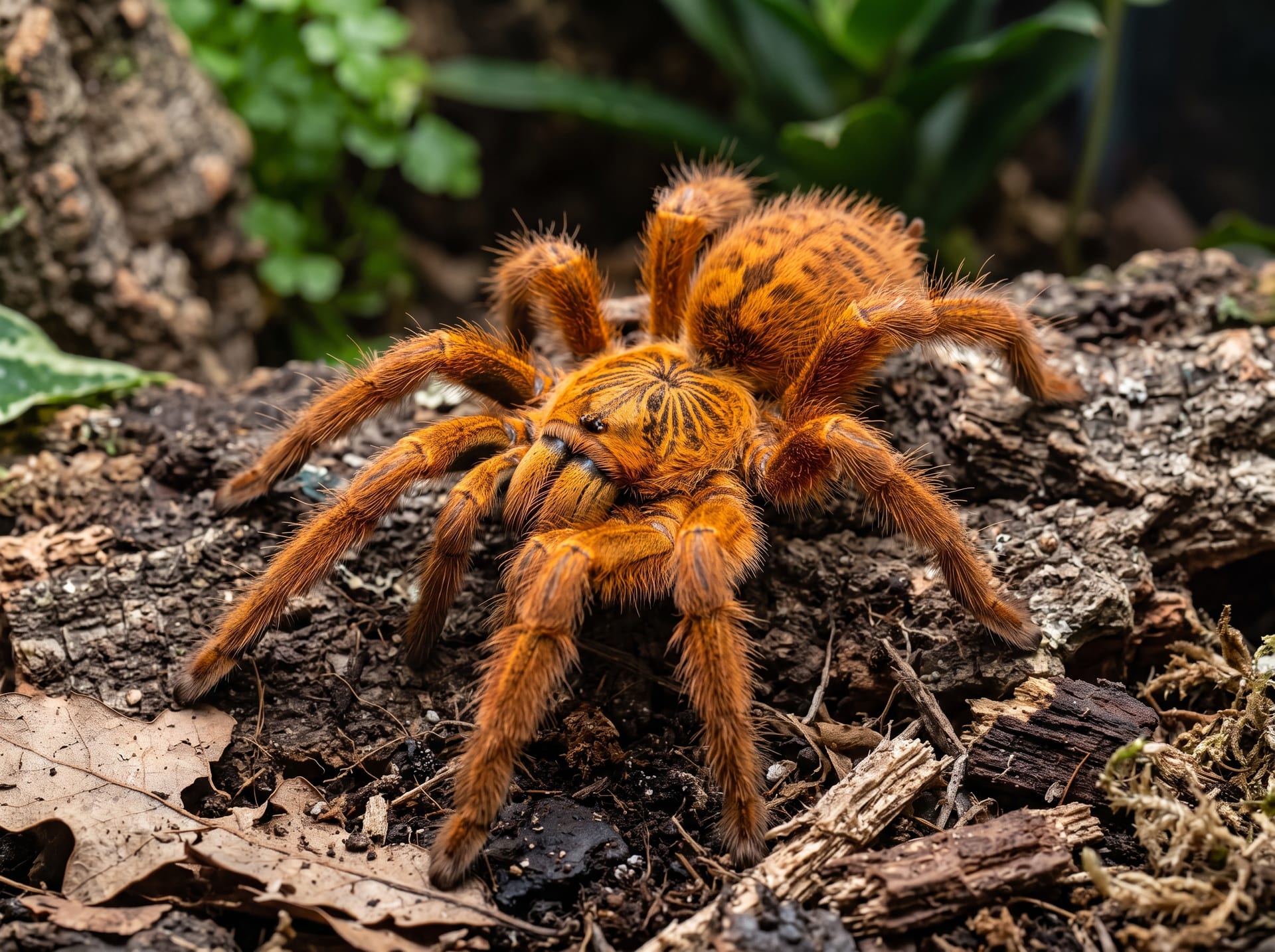
Orange Baboon Tarantula
The Orange Baboon Tarantula (OBT) is an African baboon spider known for its striking, fiery orange coloration. It's remarkably fast-moving and highly defensive, quick to rear into a threat posture when it feels threatened, and its bite carries potent venom. Among Old World tarantulas, it's considered one of the more demanding species to keep safely. Rather than a hands-on pet, the OBT is best enjoyed as a visual spectacle, admired through the glass for its lightning reflexes and vivid color. It suits experienced keepers who can maintain a calm, low-disturbance setup.
View Orange Baboon Tarantula encyclopedia →0% commission on your first sales!Register by September 30, 2026 and your first 2 sales are commission-free!
Breeder Wanted!
List on BreederDirect and sell directly to customers nationwide!
5 Transparency Standards You Can Trust
When listing Exotic Invertebrates, Breeders disclose the following. We guarantee transparency on growth stage and breeding unit.
- Real Photos
- Breeding Unit
- Generation Info
- Body Length (mm)
- Country of Origin
Browse all 249 breeds
Verified breeders wanted for Exotic Invertebrates
Breeders are signing up now ahead of launch. Subscribe to be notified when new listings go live.
Getting alerts is free with a member account. When new listings match your saved search, we'll notify you by email and in-app.
Browse other categories
Verified breeders (preview)
Are you raising exotic invertebrates?
Register as a breeder and connect with buyers directly.
Apply as a breederOrange Baboon Tarantula key facts
- Care level
- Advanced
- Lifespan
- Female 12-15 years / Male 3-4 years
- Size
- Leg span 11-14 cm
- Temperature
- 24〜28℃
- Humidity
- 50〜65%
- Diet
- Live insects such as crickets and roaches, offered roughly weekly.
- Habitat
- Setup with deep substrate and a hide; webs very heavily.
- Temp & Humidity
- 24-28°C, 50-65% humidity; drier side with a water dish.
- Feeding
- Very aggressive feeder; weekly feeding suffices.
- Caution
- No urticating hairs but extremely fast and defensive with frequent threat postures; venom is potent—never handle.
About Orange Baboon Tarantula
Orange Baboon Tarantula (OBT): a vividly colored, fast-moving African species with a defensive temperament and potent venom, suited to experienced keepers.
7 things to know before welcoming a Orange Baboon Tarantula
1Extremely Fast Movement
OBTs move noticeably faster than many other tarantulas, capable of darting for cover or lunging in an instant when startled. Take extra care when opening the enclosure, and make sure it's genuinely escape-proof.
2Strong Defense and Venom
When threatened, they readily rear up into a defensive threat posture, and their bite delivers potent venom. Avoid handling with bare hands, using tongs or a shield during enclosure maintenance instead.
3An Old World Species Trait
Unlike New World tarantulas that flick urticating hairs, the OBT relies on venom as its primary defense. Keep disturbance to a minimum by choosing a quiet spot and calm timing for enclosure care.
4Advanced Care Level
Given its speed and defensiveness, this species is generally recommended for experienced keepers. It's best to build confidence with easier tarantulas before taking one on.
5Lifespan Differs by Sex
Females typically live around 12 to 15 years, while males reach maturity and live only about 3 to 4 years afterward. Many keepers choose a female for a longer-term companion, though a male's shorter adult stage has its own appeal.
6A Natural Burrower
In the wild, OBTs dig and live in burrows, so a deep substrate layer and hiding spots help them settle in captivity. Watching them web up their own private space is one of the joys of keeping this species.
7Preparing the Enclosure
Adults reach a leg span of about 11 to 14 cm, so plan for a correspondingly roomy enclosure well before bringing one home. Double-check the lid's locking mechanism and ventilation, since a fast-moving species like this needs a genuinely escape-proof setup.
Frequently asked questions about Orange Baboon Tarantula
- Q.Is this species suitable for beginners?
- A.The Orange Baboon Tarantula is generally considered an advanced-level species. Because it's fast-moving and highly defensive, it's best to gain experience with easier tarantulas first before taking one on.
- Q.Is a bite from this tarantula dangerous?
- A.OBT venom is considered fairly potent, and a bite can cause pain and swelling. Avoid direct contact with bare hands, and seek medical attention promptly if you have any concerns after a bite.
- Q.Can I handle it like a pet?
- A.Given its speed and defensive nature, the OBT isn't well suited to hands-on handling. It's best appreciated as a tarantula you observe rather than one you hold.
- Q.How much do lifespans differ between males and females?
- A.Females typically live around 12 to 15 years, while males live only about 3 to 4 years after reaching maturity. Many keepers choose a female if they want a longer-term companion.
- Q.How big do adults get?
- A.Adults reach a leg span of roughly 11 to 14 cm. Make sure to prepare an enclosure with enough room for that size well in advance.
Learn more about Orange Baboon Tarantula in the encyclopedia
View Orange Baboon Tarantula encyclopedia entry →
Care difficulty, lifespan, size and diet — all basics covered.
More in this category
Can't find the one you're looking for?
Post your wishes for free and breeders with matching animals will contact you with introductions.