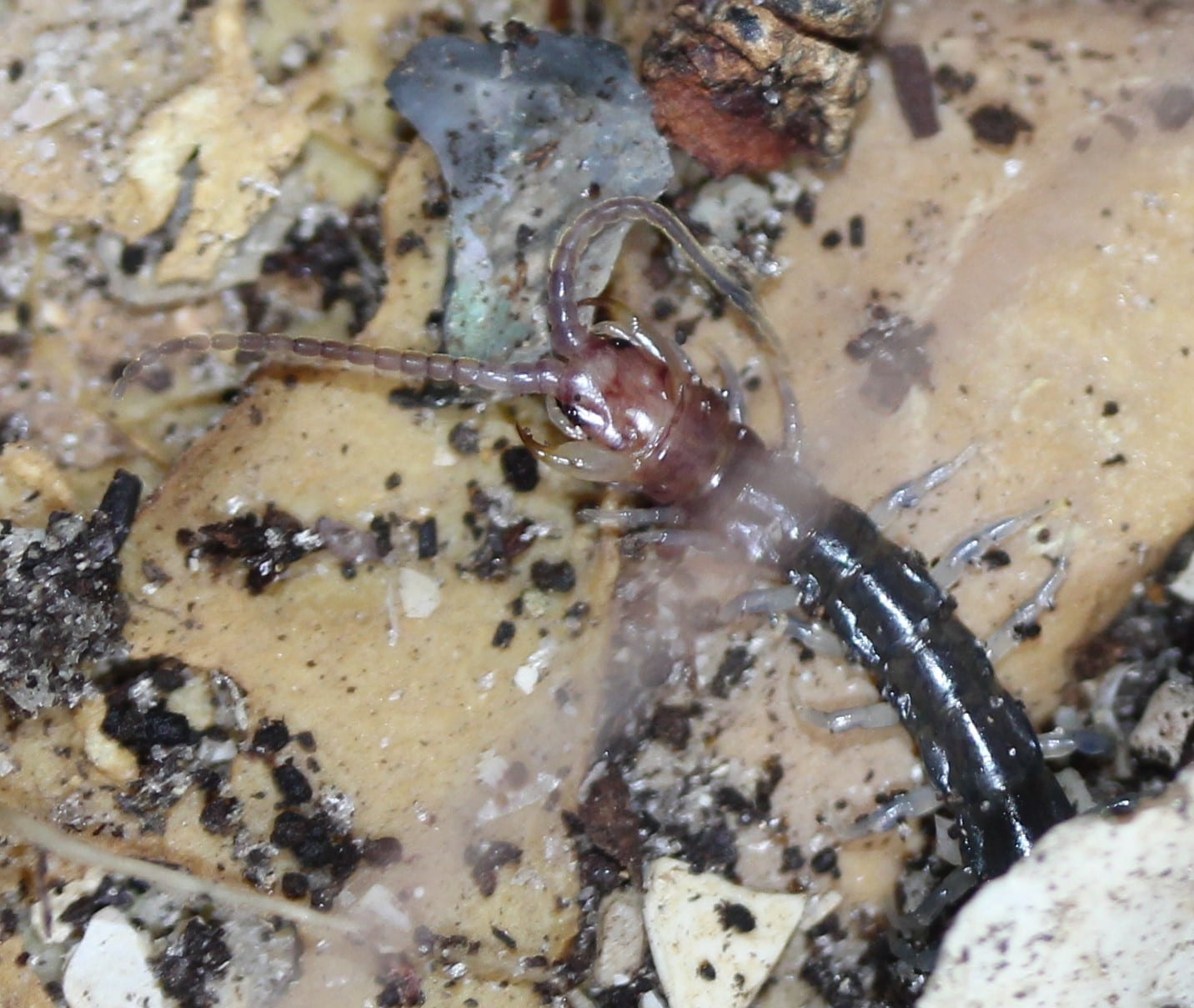
 © Even Dankowicz / CC BY 4.0
Long-legged Centipede
The Long-legged Centipede is a small centipede believed to originate in Asia and now widely established across tropical and subtropical regions worldwide. At 6 to 8 cm in body length, it is noticeably smaller and easier to manage than centipedes in the genus Scolopendra, with bluish legs and distinctively long trailing hind legs. Its quick movements and unusual silhouette make it rewarding to observe, and its compact size means it doesn't need a large enclosure. Generally considered suited to keepers with some prior experience, it's often chosen as a next step by those looking to expand into invertebrate keeping.
View Long-legged Centipede encyclopedia →0% commission on your first sales!Register by September 30, 2026 and your first 2 sales are commission-free!
Breeder Wanted!
List on BreederDirect and sell directly to customers nationwide!
5 Transparency Standards You Can Trust
When listing Exotic Invertebrates, Breeders disclose the following. We guarantee transparency on growth stage and breeding unit.
- Real Photos
- Breeding Unit
- Generation Info
- Body Length (mm)
- Country of Origin
Browse all 249 breeds
Verified breeders wanted for Exotic Invertebrates
Breeders are signing up now ahead of launch. Subscribe to be notified when new listings go live.
Getting alerts is free with a member account. When new listings match your saved search, we'll notify you by email and in-app.
Browse other categories
Verified breeders (preview)
Are you raising exotic invertebrates?
Register as a breeder and connect with buyers directly.
Apply as a breederLong-legged Centipede key facts
- Care level
- Intermediate
- Lifespan
- 3-5 years
- Size
- 6-8cm
- Temperature
- 23〜29℃
- Humidity
- 50%
- Diet
- Small crickets, red runner roaches and other small insects
- Temperature & Humidity
- 23-29 C (26 C as base) and humidity above 50%. Keep the substrate moist.
- Enclosure
- Being small, a tall food container with fine ventilation holes works well. Provide substrate, a hide and a shallow water dish.
- Diet & Feeding
- Small crickets or red runner roaches once or twice a week.
- Temperament & Venom
- Venomous but less dangerous than large species. Fast-moving; do not handle bare-handed.
- Notes
- House singly as a rule. Juveniles slip through lid gaps easily, so check the seal. The name "long-legged centipede" is also applied to Thereuopoda clunifera, a house centipede with thread-like legs. House centipedes belong to a different order with a different body plan from giant centipedes, so do not carry care information across on the trade name alone; check for Rhysida longipes.
About Long-legged Centipede
Long-legged Centipede: a small 6-8cm centipede with bluish legs and long trailing hind legs. Care guide for keepers with some experience.
7 things to know before welcoming a Long-legged Centipede
1More manageable than Scolopendra
Adults reach only 6 to 8 cm, so they take up far less enclosure space than large Scolopendra species. That said, they move quickly and are agile, so enclosure handling still needs careful attention.
2Escape-proof housing is essential
Its slender body can slip through even small gaps, so choose an enclosure with a tightly sealed lid. Use a moisture-retentive substrate and provide several hiding spots for shelter.
3Humidity control is key
As a species native to tropical and subtropical regions, it needs an environment that doesn't dry out. Mist regularly to maintain adequate humidity, while also ensuring some ventilation to prevent mold from excess moisture.
4Avoid direct contact due to venom
Like other centipedes, it captures prey using venomous forcipules, so avoid handling it with bare hands. Use tools such as tweezers during care to reduce the risk of being bitten.
5Quiet and suited to observation
It typically stays hidden in its shelter and becomes active mainly at night. It isn't a species that bonds with people, but its quick movements and distinctive form make for enjoyable observation.
6Feeding frequency and diet
It is carnivorous, feeding mainly on insects such as crickets sized appropriately for its body. Remove leftover food promptly to keep the enclosure clean and help prevent mold or pest issues.
7Equipment to prepare before bringing one home
Prepare basic supplies in advance, including a tightly sealed enclosure, moisture-retentive substrate, shelters, and a mister. Since it's generally considered suited to keepers with some experience, prior experience with other invertebrates will help you get set up smoothly.
Frequently asked questions about Long-legged Centipede
- Q.Can beginners keep a Long-legged Centipede?
- A.It is generally considered suited to keepers with some experience. Basic knowledge is needed to handle its quick movements and manage the risk of its venomous bite, so it's best attempted after gaining experience with other animals.
- Q.How large does it grow?
- A.Adults grow to roughly 6 to 8 cm in body length. This is smaller than Scolopendra species, making it manageable in a relatively compact enclosure.
- Q.Is it safe to handle with bare hands?
- A.Since it possesses venom, avoid handling it with bare hands. Using tools such as tweezers during care can reduce the risk of being bitten.
- Q.What should I watch for regarding escapes?
- A.Its slender body means it can escape through even small gaps. Choose an enclosure with a tightly sealed lid and fine-mesh ventilation for peace of mind.
- Q.Is it subject to any special regulations?
- A.The Long-legged Centipede is not subject to CITES.
Learn more about Long-legged Centipede in the encyclopedia
View Long-legged Centipede encyclopedia entry →
Care difficulty, lifespan, size and diet — all basics covered.
More in this category
Can't find the one you're looking for?
Post your wishes for free and breeders with matching animals will contact you with introductions.