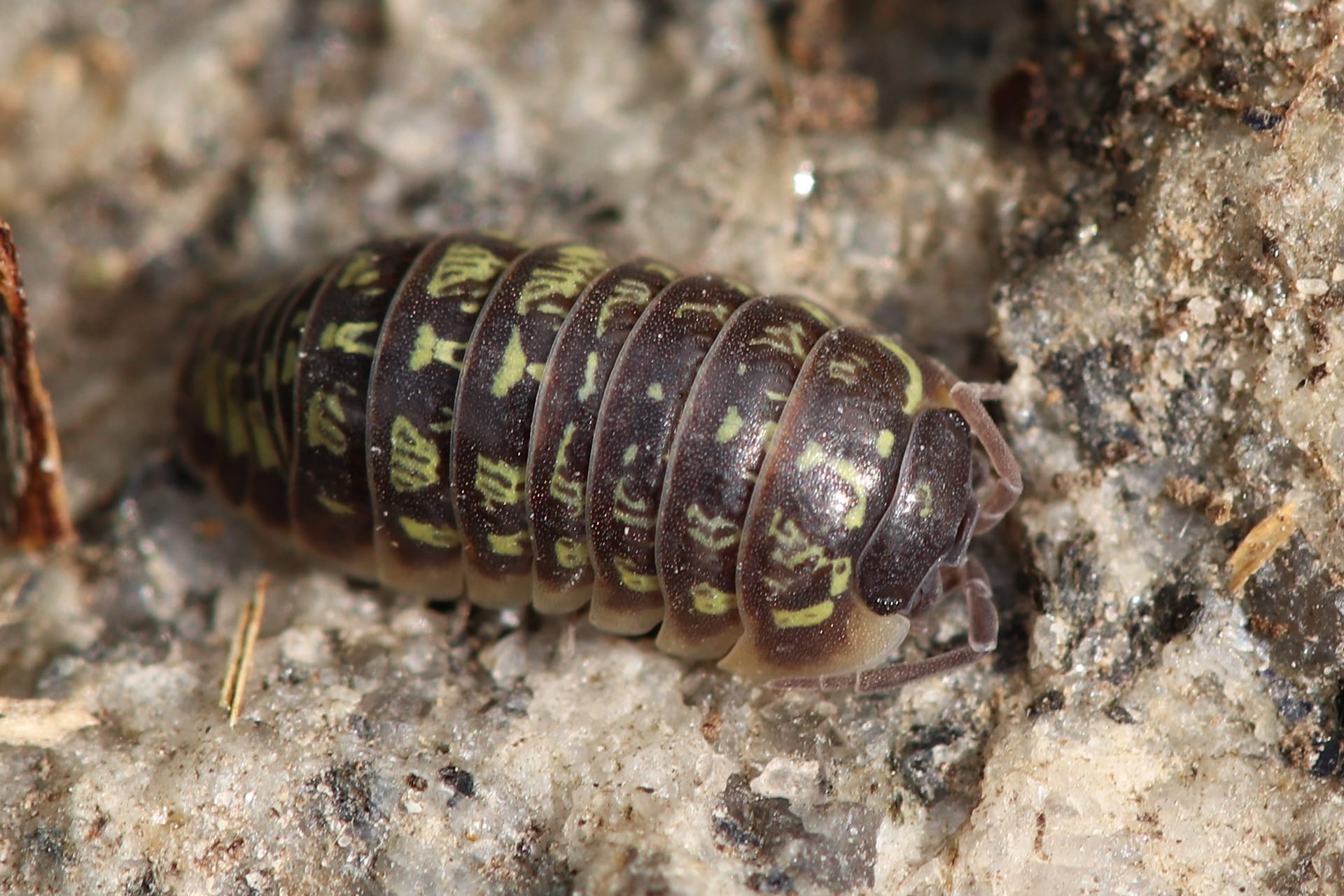
 © Schnensch / CC BY-SA 4.0
Versicolor Isopod
The Versicolor Isopod is a small isopod native to a wide range spanning Central Europe to East Asia, with adults reaching about 0.9 to 1.5 cm. Its brown body carries rows of yellow spots, and no two individuals look quite alike, color and pattern vary widely even within the same lineage. That variability has made this species a favorite starting point for isopod keepers interested in selective breeding for color, since every generation offers something new to choose from. Temperament is calm, so mixed groups rarely cause problems, and the species is hardy and breeds readily, which makes it forgiving for anyone new to keeping invertebrates. In the wild, these isopods break down leaf litter and rotting wood, and that same behavior makes for easy, low-maintenance observation even in a small enclosure.
View Versicolor Isopod encyclopedia →0% commission on your first sales!Register by September 30, 2026 and your first 2 sales are commission-free!
Breeder Wanted!
List on BreederDirect and sell directly to customers nationwide!
5 Transparency Standards You Can Trust
When listing Exotic Invertebrates, Breeders disclose the following. We guarantee transparency on growth stage and breeding unit.
- Real Photos
- Breeding Unit
- Generation Info
- Body Length (mm)
- Country of Origin
Browse all 249 breeds
Verified breeders wanted for Exotic Invertebrates
Breeders are signing up now ahead of launch. Subscribe to be notified when new listings go live.
Getting alerts is free with a member account. When new listings match your saved search, we'll notify you by email and in-app.
Browse other categories
Verified breeders (preview)
Are you raising exotic invertebrates?
Register as a breeder and connect with buyers directly.
Apply as a breederAbout Versicolor Isopod
The Versicolor Isopod is a hardy, prolific isopod from Central Europe to East Asia, growing to about 0.9–1.5 cm with richly variable yellow-spotted patterns, an easy, popular choice for beginners and color-selective breeding.
7 things to know before welcoming a Versicolor Isopod
1Color Variation Is the Draw
Even isopods raised in identical conditions can show very different yellow spotting and background shading. Selecting your favorite patterns to breed forward is a big part of the hobby with this species.
2Small Space, Many Isopods
Adults reach only about 0.9 to 1.5 cm, so a small plastic enclosure is enough to house a colony. This makes group housing, and breeding, easy even with limited space.
3Leaf Litter Is Their Diet
In the wild, these isopods break down decaying leaves and rotting wood. In captivity, offer the same: leaf litter, humus, and decaying wood rather than kitchen scraps.
4Avoid Heat and Dryness
Prolonged heat or dryness can stress the colony, so keep the enclosure out of direct sunlight and moisten part of the substrate regularly. At the same time, avoid keeping the whole enclosure constantly soaked, alternating moist and dry zones works best.
5Calm and Communal
Versicolor Isopods are docile and rarely fight with tankmates, making them well suited to group housing. Watching a colony interact is one of the simplest pleasures of keeping this species.
6Breeds Readily
This is a hardy, prolific species, and colony numbers can grow quickly once conditions are right. It is worth planning ahead for extra space, or a way to rehome offspring, before numbers climb.
7Prep Before You Bring Them Home
Before your isopods arrive, set up a ventilated enclosure with leaf litter or decaying wood as substrate and some moss for humidity. Having the habitat ready in advance reduces stress after transport.
Frequently asked questions about Versicolor Isopod
- Q.Is this species suitable for beginners?
- A.Yes. It is a hardy species that tolerates minor environmental swings well, making it a good choice even for first-time keepers of isopods or other invertebrates. As a decomposer that mainly eats leaf litter and rotting wood, feeding requirements are simple.
- Q.How big do adults get?
- A.Adults reach roughly 0.9 to 1.5 cm in length, making this a small species overall. Because they stay compact, a small enclosure is all that is needed to house them.
- Q.What is the typical lifespan?
- A.Versicolor Isopods typically live around 2 to 3 years. Actual lifespan can vary somewhat with individual genetics and care conditions.
- Q.Can they be housed with other animals?
- A.They are docile and do well in groups with their own kind. If mixing with other invertebrates, check first that neither species will prey on the other, keeping them with their own species is the simplest and safest approach.
- Q.Are there any import or keeping restrictions?
- A.The Versicolor Isopod is not listed under CITES (the Convention on International Trade in Endangered Species of Wild Fauna and Flora).
Learn more about Versicolor Isopod in the encyclopedia
View Versicolor Isopod encyclopedia entry →
Care difficulty, lifespan, size and diet — all basics covered.
More in this category
Can't find the one you're looking for?
Post your wishes for free and breeders with matching animals will contact you with introductions.