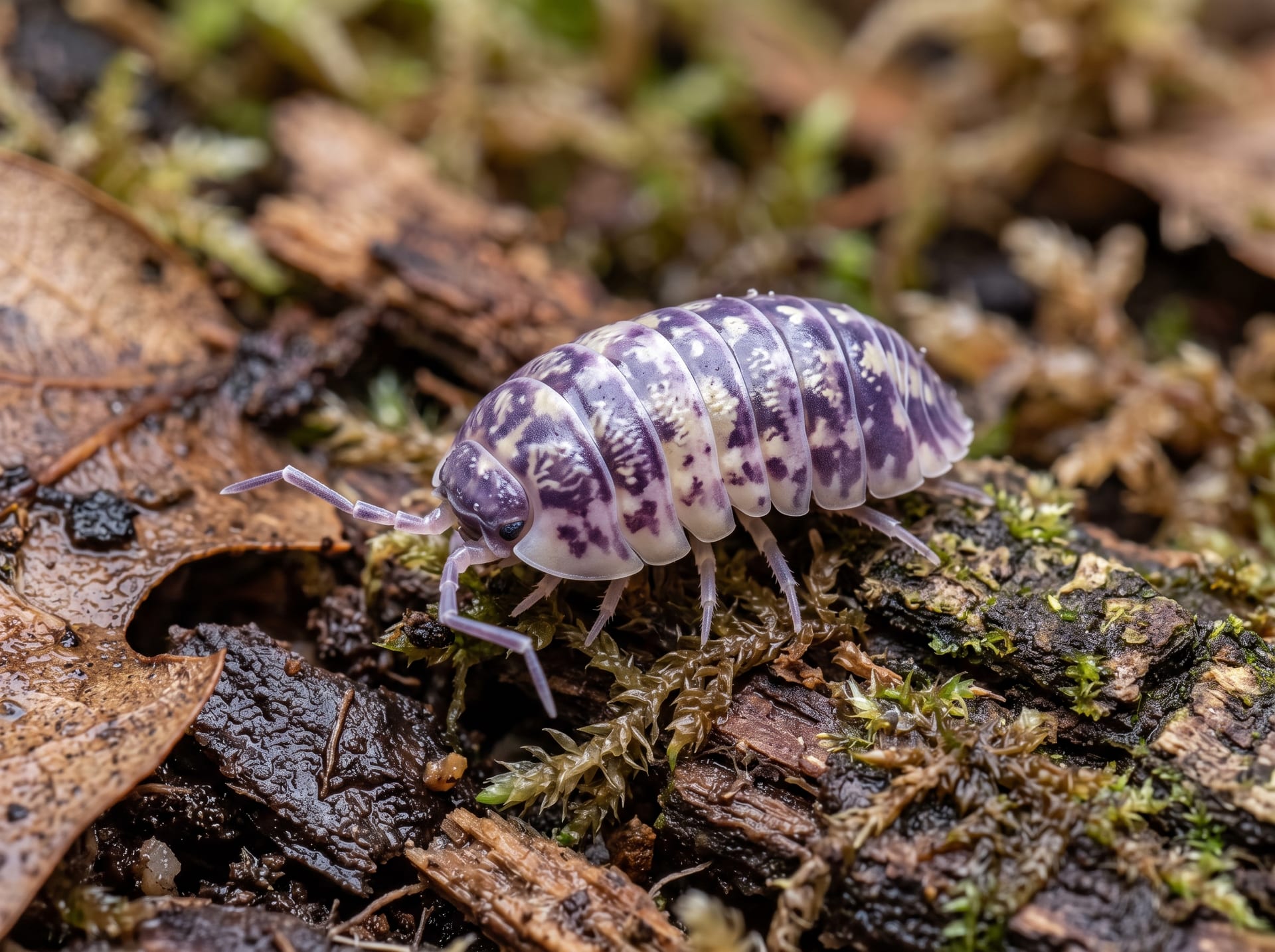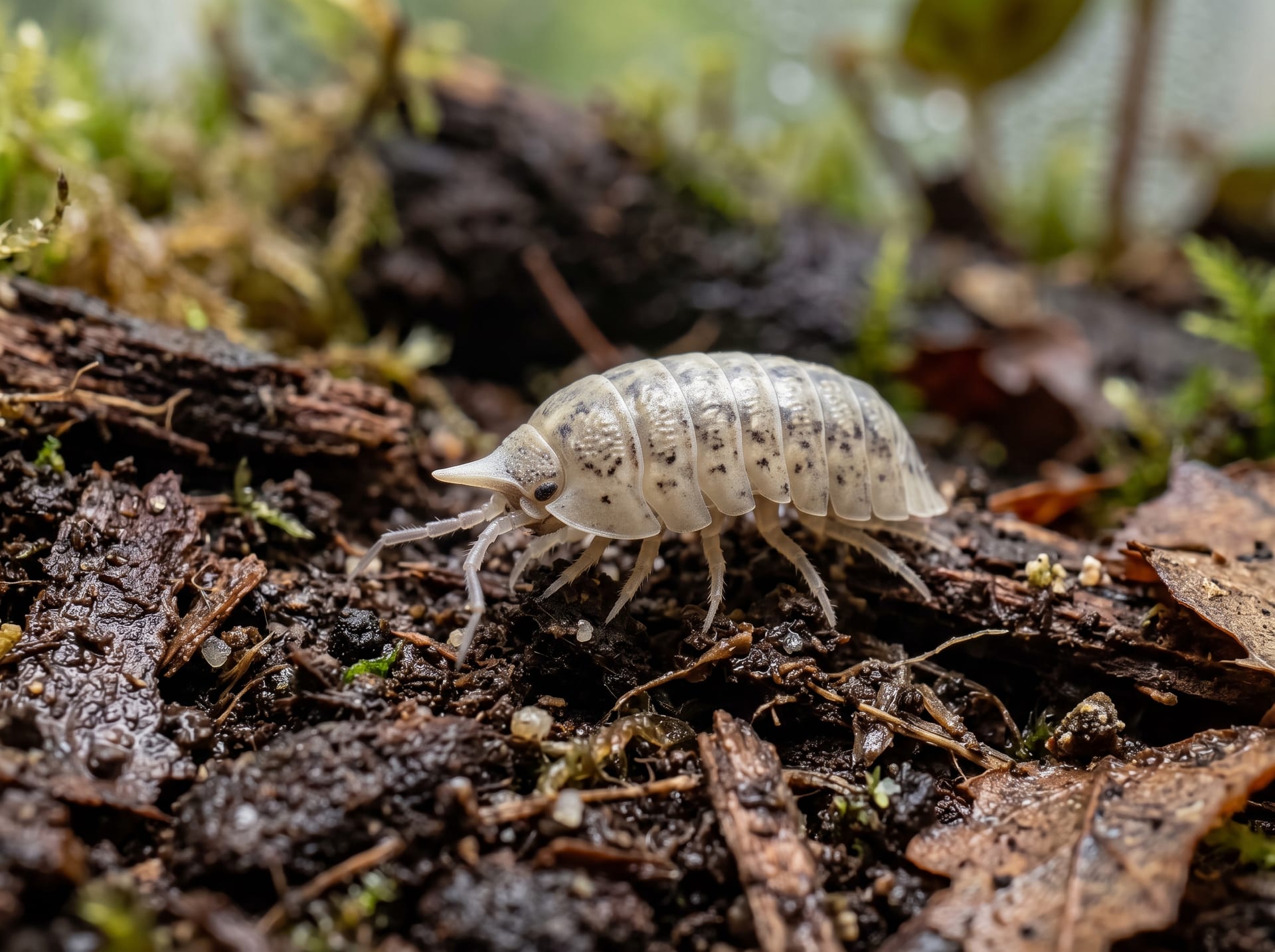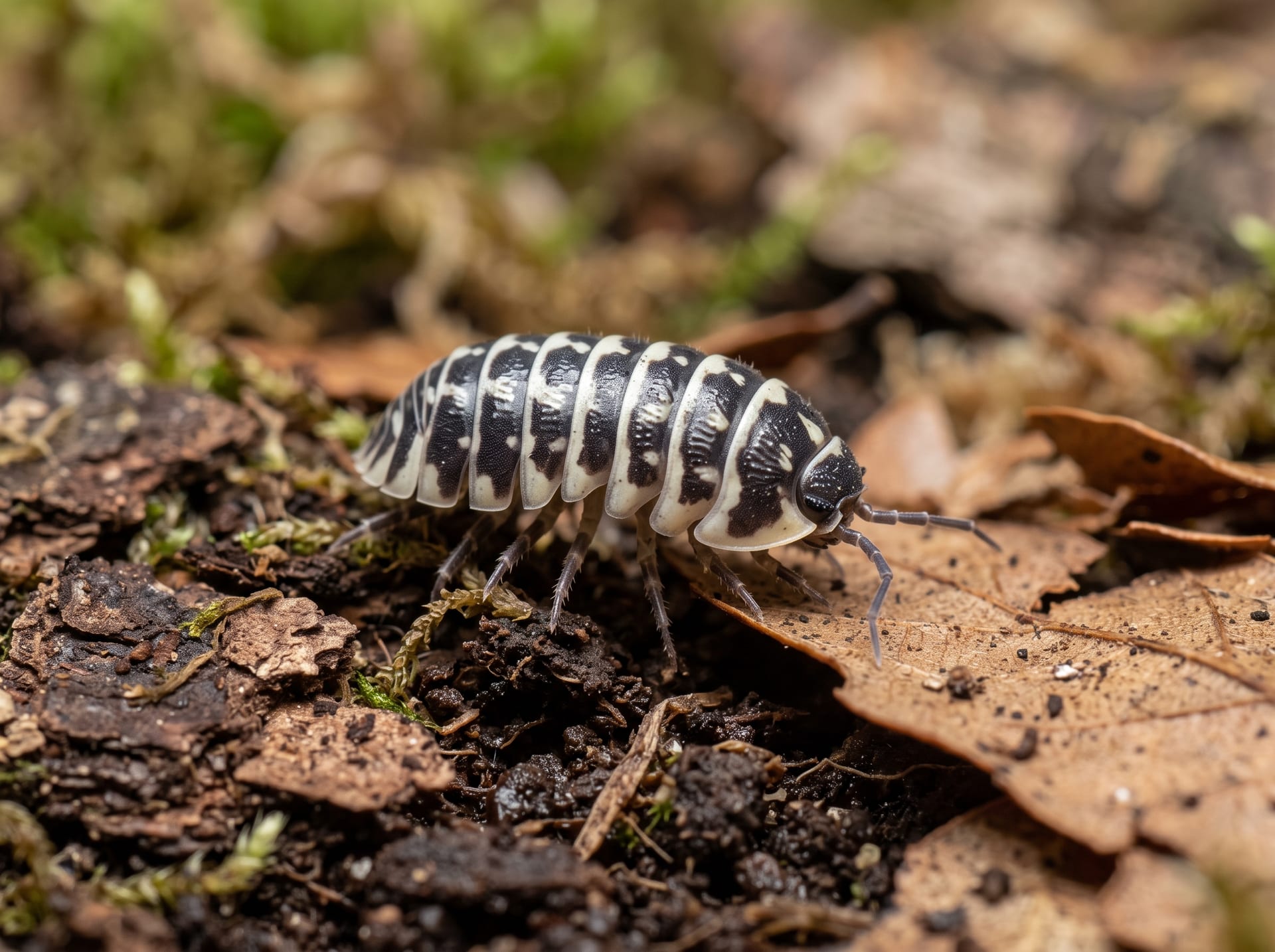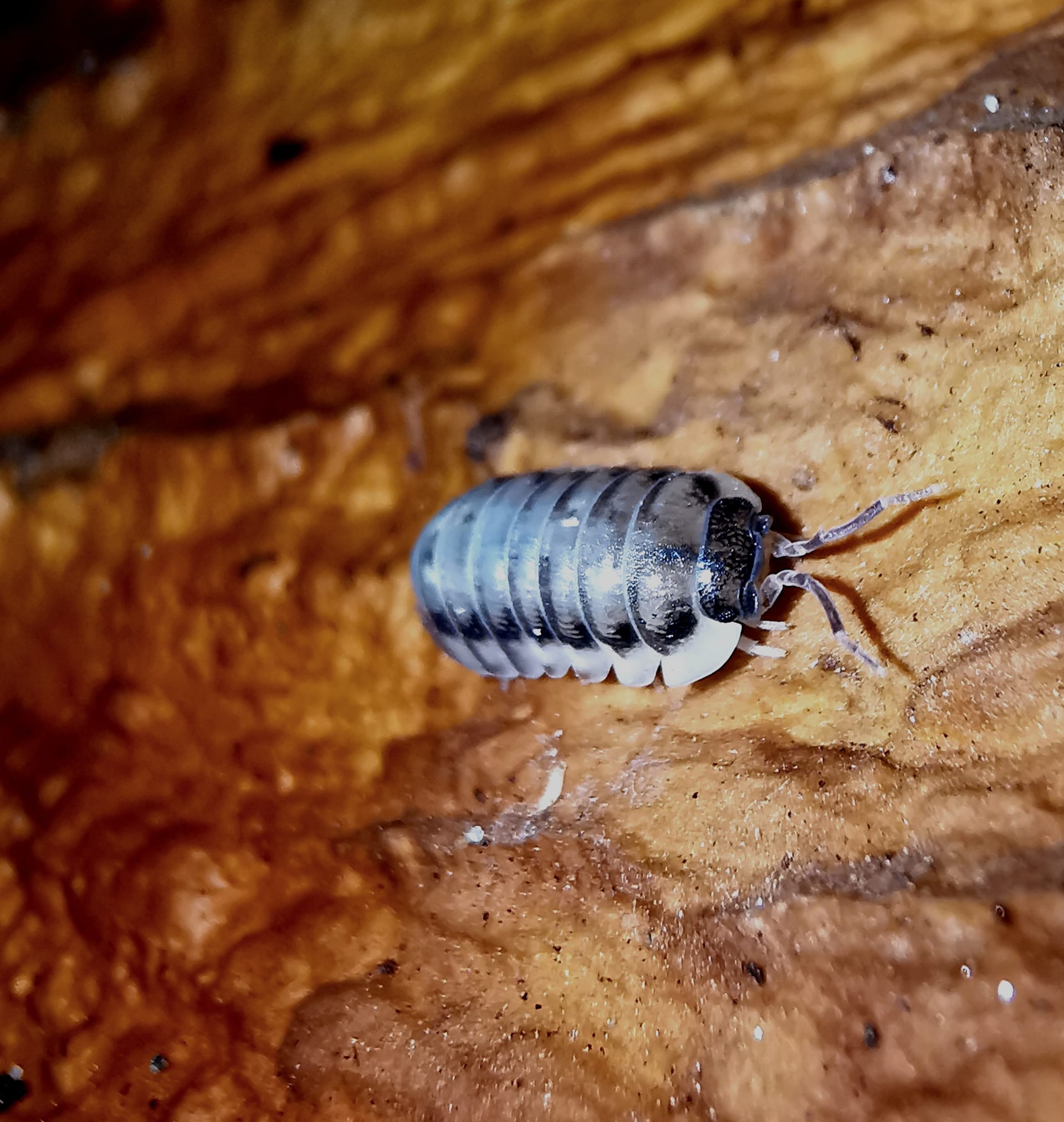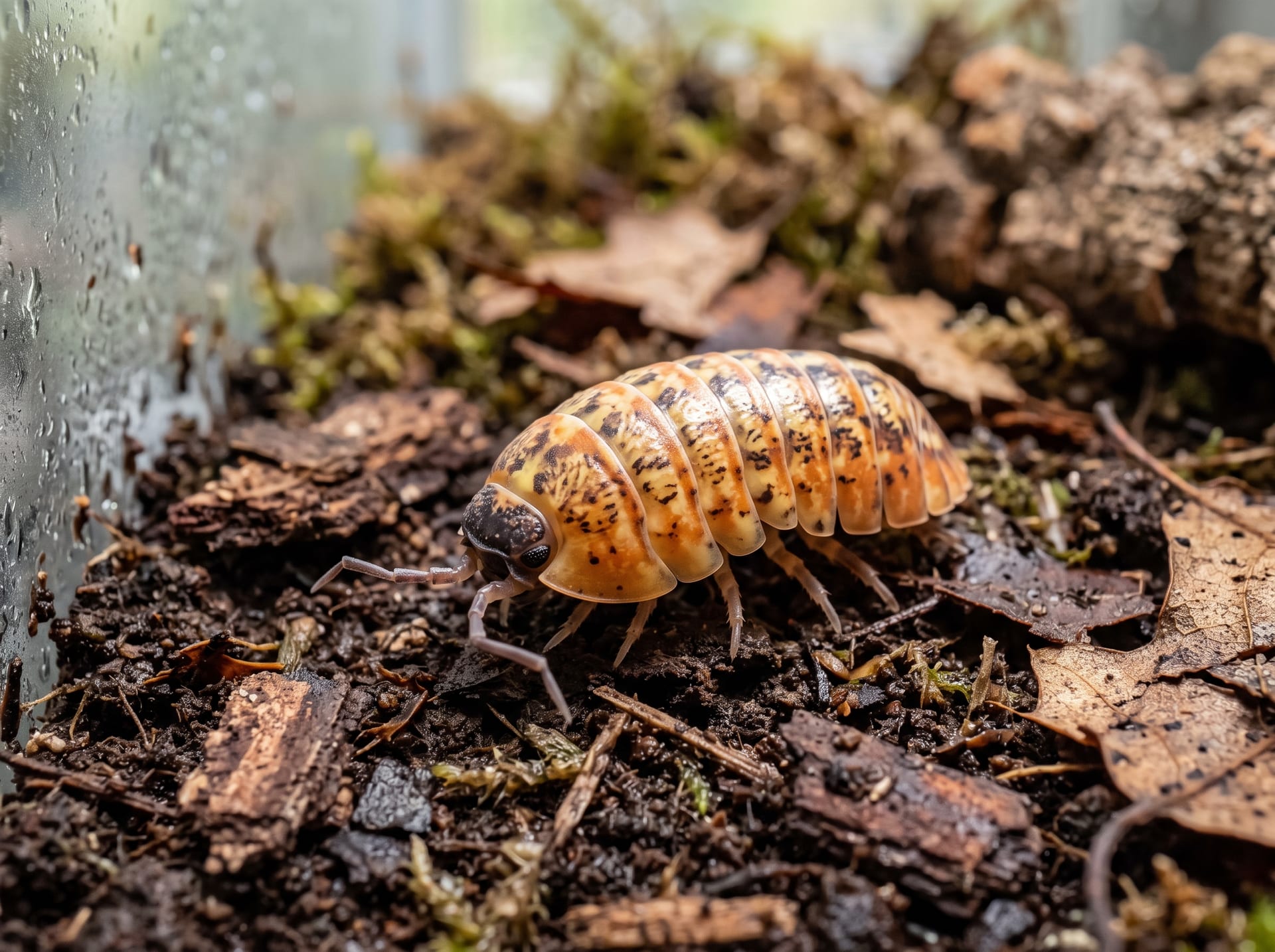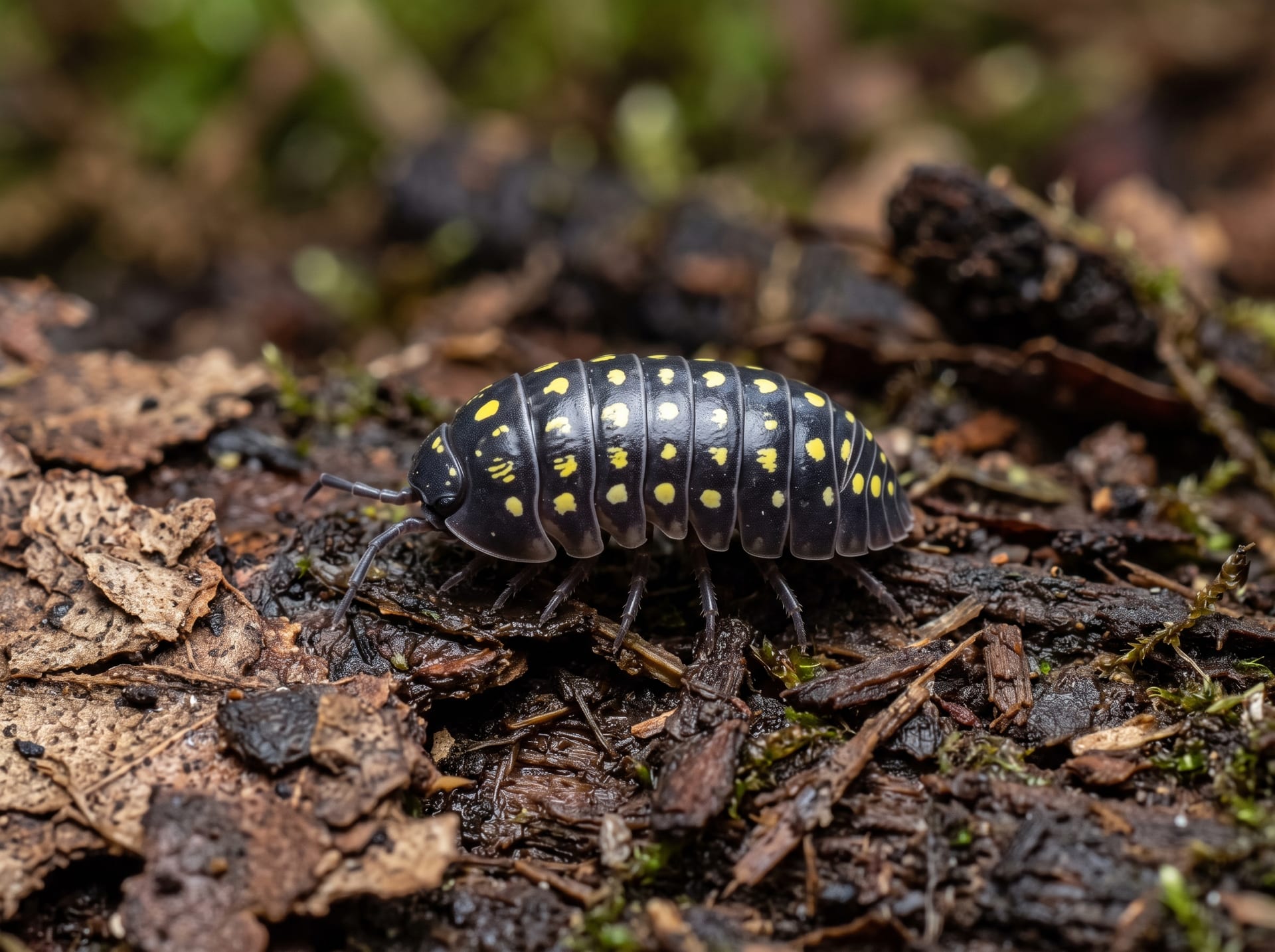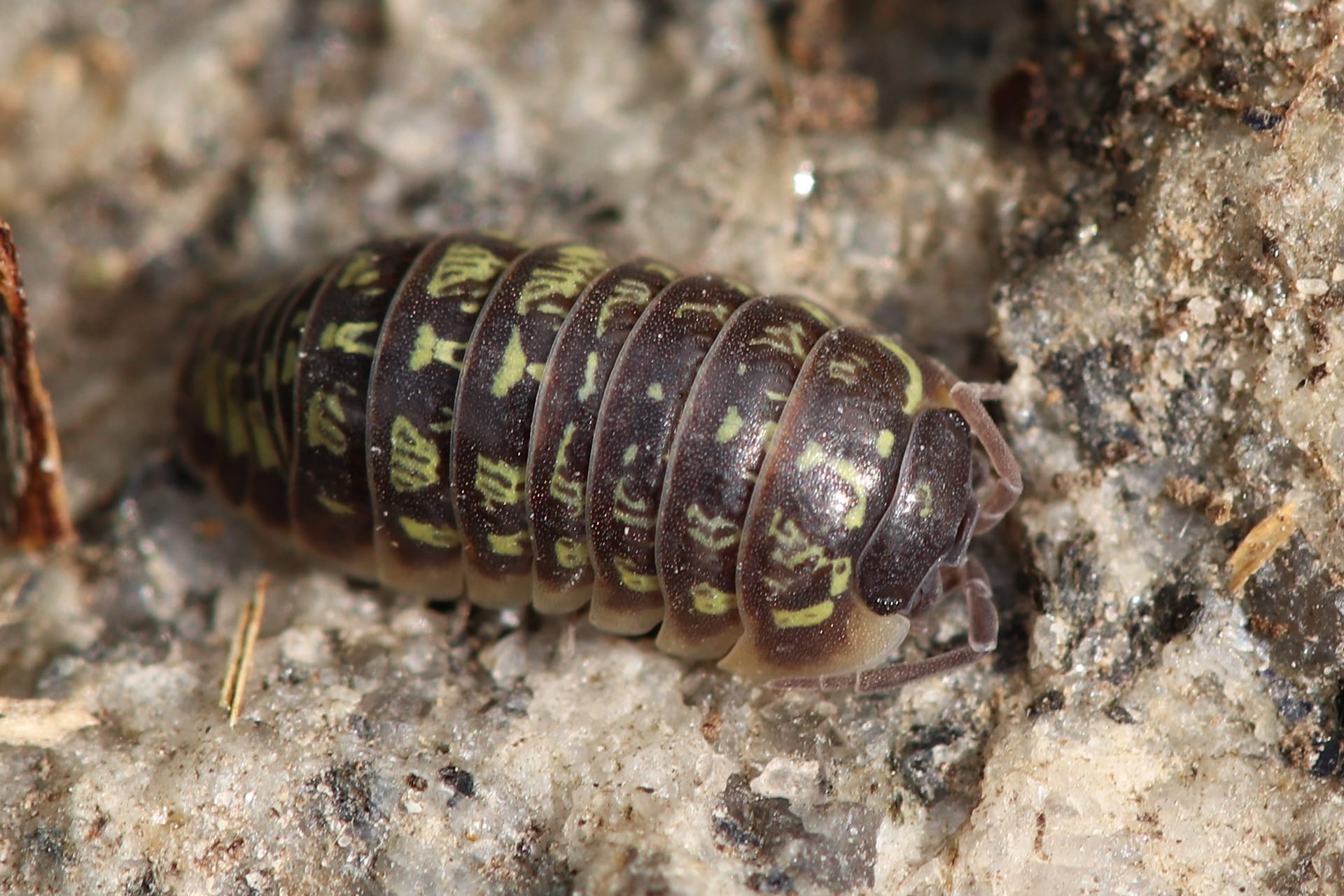
Source: Wikimedia Commons
Versicolor Isopod
BeginnerArmadillidium versicolor
A 9-15mm pill isopod ranging from central Europe to East Asia. Rows of yellow spots on a brown ground vary widely between individuals. Hardy and prolific, it suits beginners and colour-selection projects.
Difficulty
Beginner
Temperature
21〜25℃
Lifespan
2-3 years
Size
About 9-15mm
Humidity
55〜65%
Diet
Oak and beech leaf litter as the staple, with sweet potato, courgette, carrot and Chinese cabbage, plus protein and calcium.
About
Armadillidium versicolor, described by Stein in 1859, ranges from the Eastern Alps and Danube countries through the Balkans, Turkey, the Caucasus and Kazakhstan to East Asia. Its German name means 'colour-changing pill woodlouse': adults are 9-15mm with rows of yellowish spots on brown and marked individual variation. It rolls into a complete ball when disturbed and lives on mineral soils on river banks, walls and under stones. Keep oak or beech leaf litter available and feed sweet potato, courgette or similar every three days. It is highly prolific, with young maturing in about six months, but frass build-up can acidify the substrate and crash a colony, so move animals to fresh containers periodically.
Source: Wikipedia (CC BY-SA 4.0)
Lifespan of the Versicolor Isopod
The Versicolor Isopod lives 2-3 years.
Captive lifespan is 2-3 years.
Size of the Versicolor Isopod
The Versicolor Isopod grows to About 9-15mm.
Temperature & humidity for the Versicolor Isopod
The ideal temperature for the Versicolor Isopod is 21〜25℃. Ideal humidity is 55〜65%.
Care is easy at 21-25C and 55-65% humidity; a 4-5cm substrate layer buffers against drying out, and a light dusting of garden lime is recommended.
Basic Info
Origin
Central Europe (Eastern Alps and Danube countries) through the Balkans, southern Russia and Kazakhstan to East Asia
Care Specifications
PeacefulGroupBreeding: Easy
Sources: Insektenliebe keeping report (temperature, size, feeding) / Exuvium Isopods (humidity, lifespan, frass acidity) / Wikipedia (de) (size, distribution) / WoRMS
References & Sources
Edited & verified by: BreederDirect editorial team
The taxonomic, regulatory, and husbandry data on this page are compiled and verified against the authoritative primary sources below.
Taxonomy & Authority
Accepted name: Armadillidium versicolor Stein, 1859
Synonyms: Armadillidium quinqueseriatum, Armadillidium versicolor var. quinqueseriata
Authority databases: GBIF
Nomenclature follows global taxonomic authority databases.
Regulations & Conservation Status
Not CITES-listed
Sources: CITES Appendices (species not listed)
Regulations may change. Always verify the latest information with the relevant authorities.
Versicolor Isopod Listings
Loading latest listingsFind listings for this species