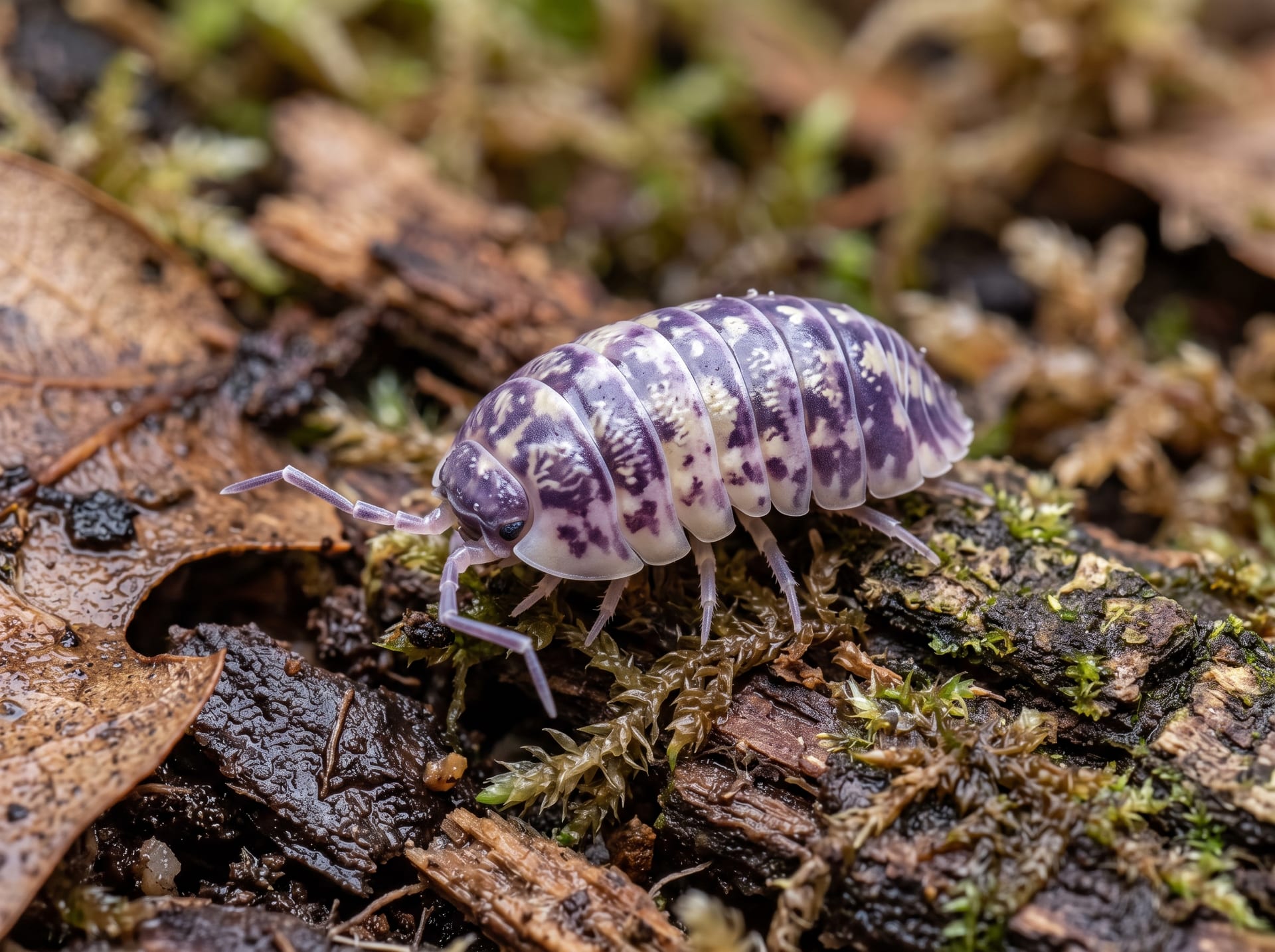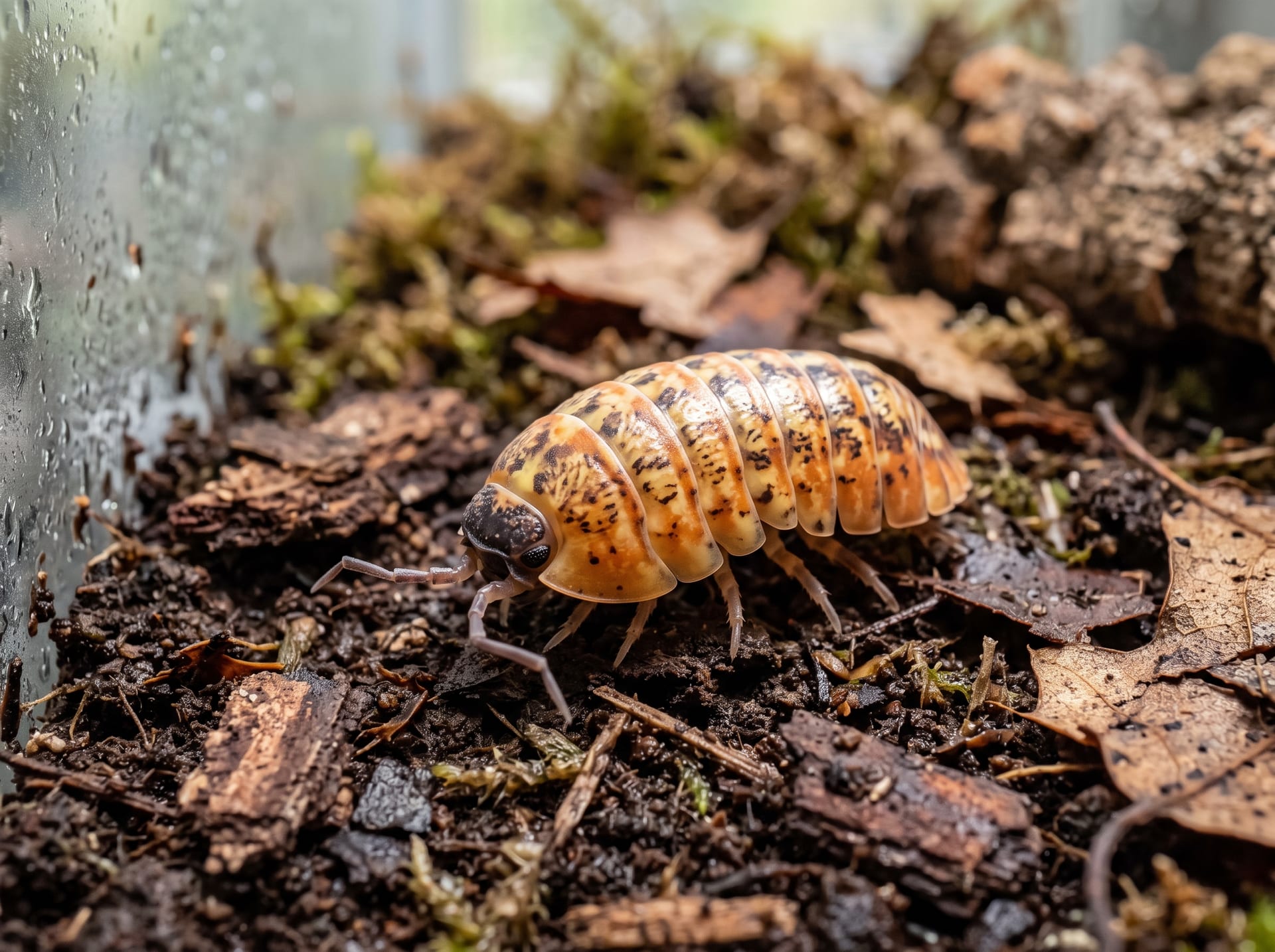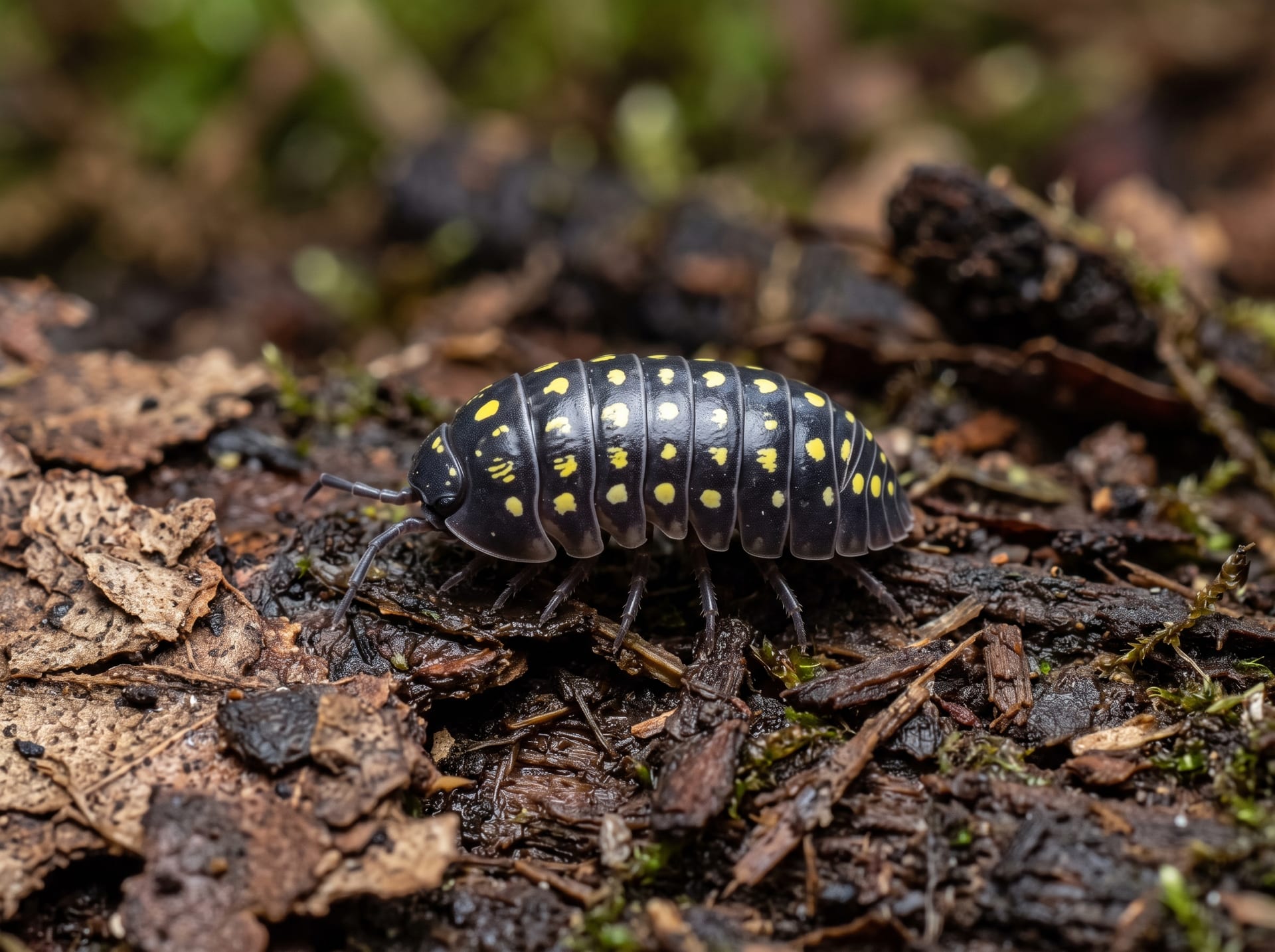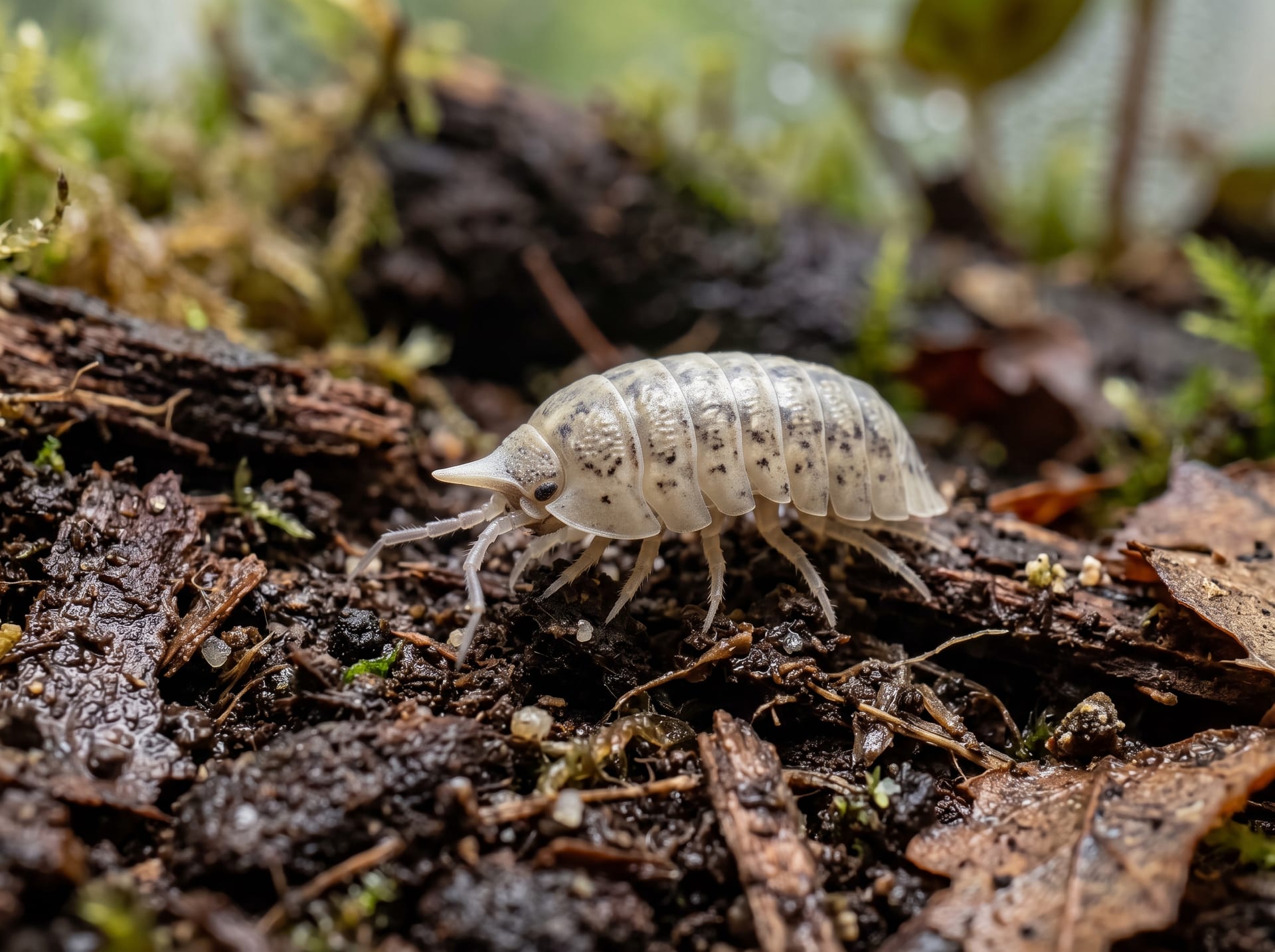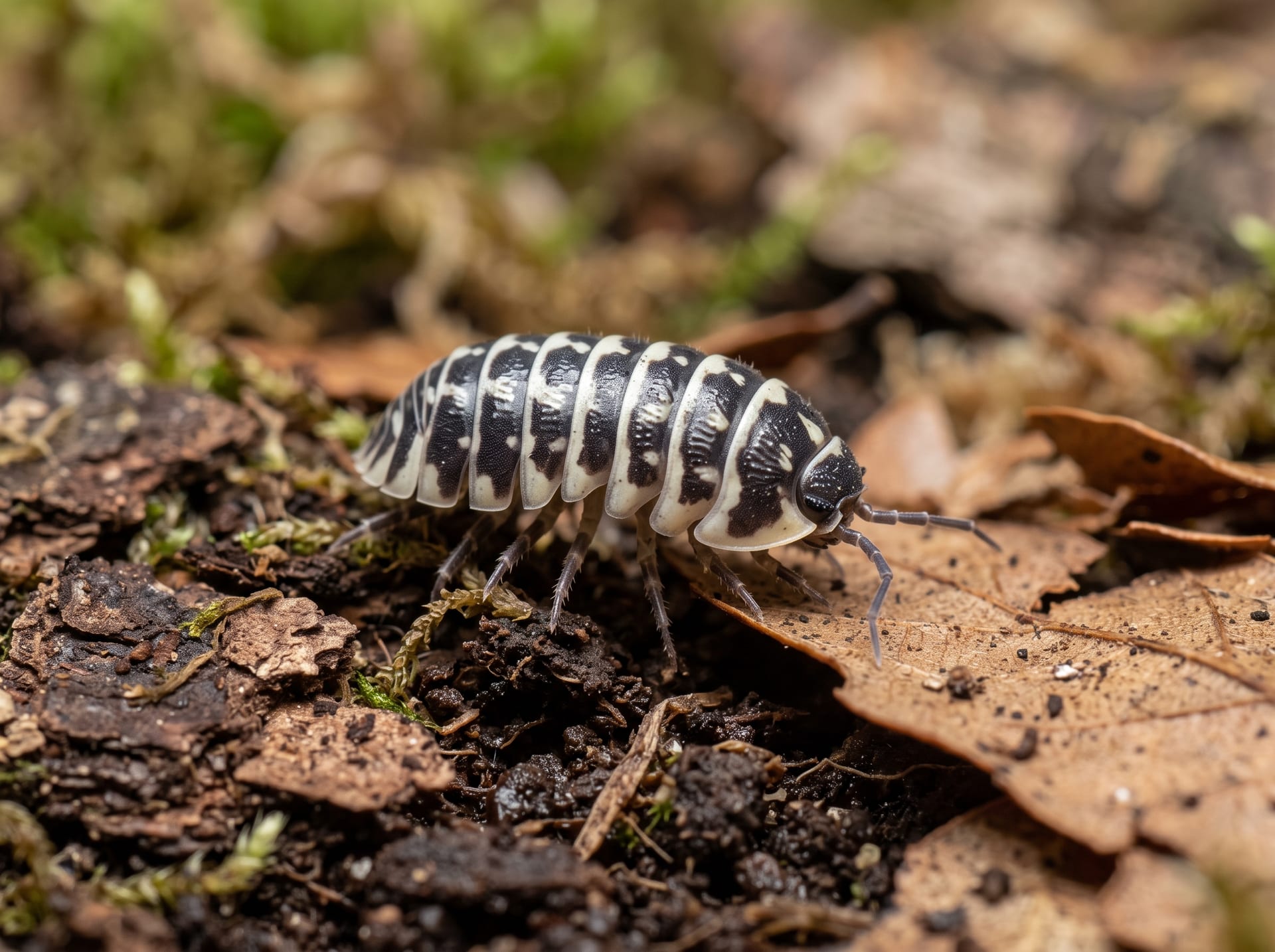
AI-generated image
Zebra Isopod
BeginnerArmadillidium maculatum
A classic, popular pill bug with striking black-and-white stripes. It rolls up, is hardy and easy to breed, and is a harmless detritivore kept for display and clean-up.
Difficulty
Beginner
Temperature
18〜25℃
Lifespan
About 2-3 years
Size
About 1.5-2 cm
Humidity
55〜75%
Diet
Mainly leaf litter and wood, supplemented with vegetable scraps, protein, and calcium.
About
The Zebra Isopod (Armadillidium maculatum) is a classic, much-loved pill bug with striking black-and-white stripes. Native to Mediterranean Europe, including southern France, it reaches about 1.5–2 cm and lives roughly 2–3 years. It rolls up when disturbed and is a harmless detritivore with no bite or venom.
Lifespan of the Zebra Isopod
The Zebra Isopod lives About 2-3 years.
Size of the Zebra Isopod
The Zebra Isopod grows to About 1.5-2 cm.
Temperature & humidity for the Zebra Isopod
The ideal temperature for the Zebra Isopod is 18〜25℃. Ideal humidity is 55〜75%.
Hardy and easy to breed at 18–25°C and 55–75% humidity, it is widely kept both for display and as a clean-up crew.
Basic Info
Origin
Native to Europe (Mediterranean regions such as southern France)
Lifespan
About 2-3 years
Size
About 1.5-2 cm
Temperature
18〜25℃
Humidity
55〜75%
References & Sources
Edited & verified by: BreederDirect editorial team
The taxonomic, regulatory, and husbandry data on this page are compiled and verified against the authoritative primary sources below.
Zebra Isopod Listings
Loading latest listingsFind listings for this species