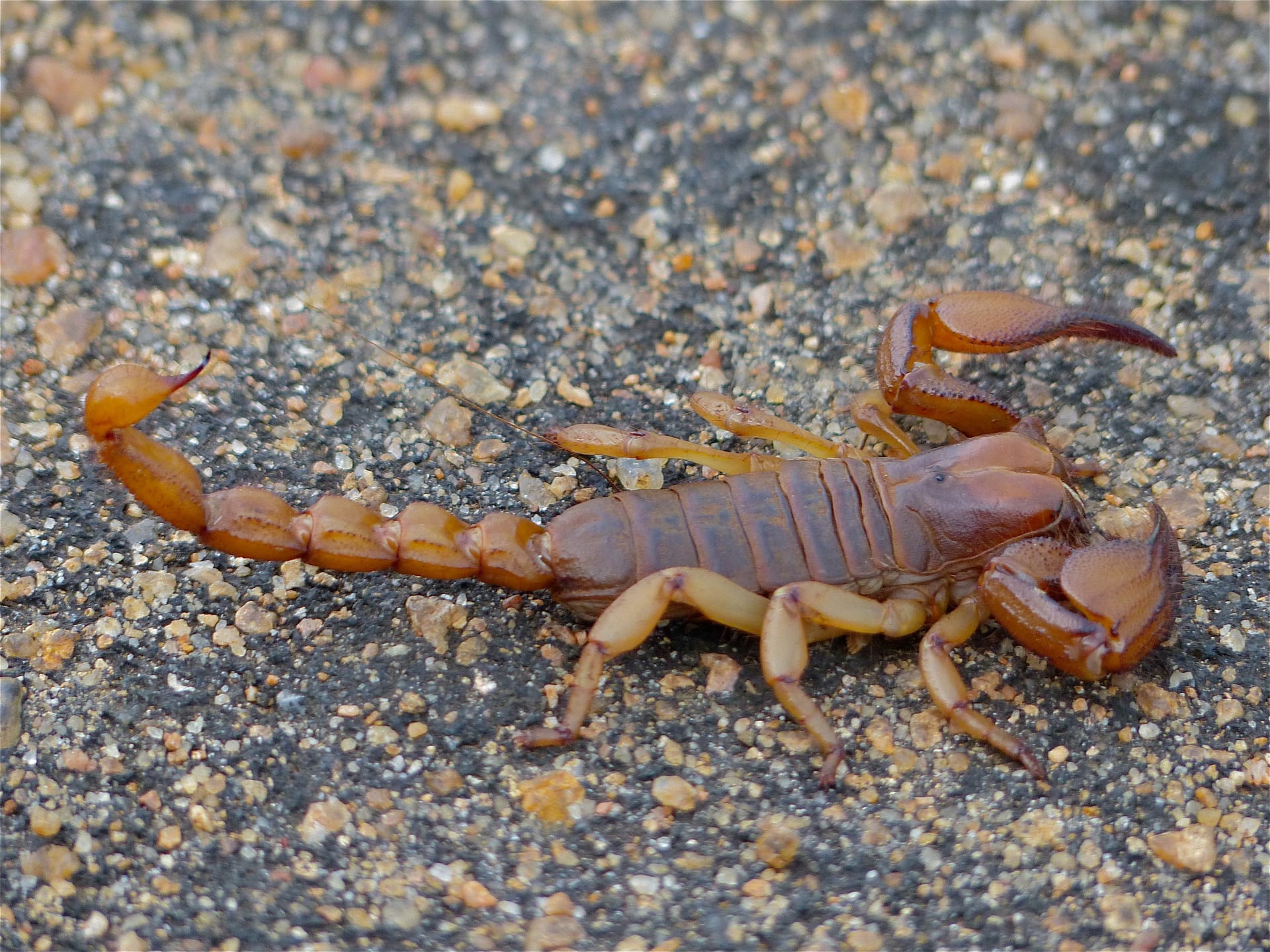
 © Bernard DUPONT / CC BY-SA 2.0
Yellow-legged Burrowing Scorpion
The Yellow-legged Burrowing Scorpion is a large, ground-dwelling scorpion native to southern and eastern Africa, reaching 11 to 15 cm in body length as an adult. Its glossy, dark body is set off strikingly by bright yellow legs, giving it an eye-catching appearance that has made it a favorite among invertebrate keepers. True to its name, it digs burrows and spends much of its time underground, so a deep substrate layer lets it show off this natural behavior in captivity. Day-to-day care is fairly straightforward, but this species is skittish and quick to react to vibration or disturbance, and its sting is unusually potent for the genus, so it calls for careful, experienced handling rather than casual contact. The result is a scorpion that rewards keepers with both dramatic looks and genuinely interesting behavior to watch.
View Yellow-legged Burrowing Scorpion encyclopedia →0% commission on your first sales!Register by September 30, 2026 and your first 2 sales are commission-free!
Breeder Wanted!
List on BreederDirect and sell directly to customers nationwide!
5 Transparency Standards You Can Trust
When listing Exotic Invertebrates, Breeders disclose the following. We guarantee transparency on growth stage and breeding unit.
- Real Photos
- Breeding Unit
- Generation Info
- Body Length (mm)
- Country of Origin
Browse all 249 breeds
Verified breeders wanted for Exotic Invertebrates
Breeders are signing up now ahead of launch. Subscribe to be notified when new listings go live.
Getting alerts is free with a member account. When new listings match your saved search, we'll notify you by email and in-app.
Browse other categories
Verified breeders (preview)
Are you raising exotic invertebrates?
Register as a breeder and connect with buyers directly.
Apply as a breederYellow-legged Burrowing Scorpion key facts
- Care level
- Intermediate
- Lifespan
- 8-12 years
- Size
- 11-15cm total length as an adult
- Diet
- Live insects such as crickets
- Temperature & Humidity
- It occurs in arid to semi-arid southern Africa. Keep only the lower substrate slightly damp and the surface dry.
- Enclosure
- With deep substrate it digs a burrow and hides in it, staying out of sight. Do not disturb the burrow once dug.
- Diet & Feeding
- Offer live insects such as crickets. It may refuse food while sealed in its burrow.
- Temperament & Venom
- The genus is hardy but nervous. Thick-clawed scorpions in southern Africa are generally assumed harmless, but this species is an exception and its sting is more serious.
- Notes
- Stings are relatively rare, probably because the animals seldom leave their burrows except to mate. Use tools rather than hands when working in the enclosure.
About Yellow-legged Burrowing Scorpion
A large burrowing scorpion from southern and eastern Africa, reaching 11 to 15 cm with striking yellow legs. Basic care is fairly easy, but its sting is unusually strong, so handle with caution.
7 things to know before welcoming a Yellow-legged Burrowing Scorpion
1A Large, Powerful Digger
As an adult, this scorpion reaches 11 to 15 cm in length, making it one of the larger species kept among exotic invertebrates. Its sturdy build gives it real digging strength, so its enclosure needs decent floor space and depth.
2Deep Substrate Is a Must
True to its name, this species digs burrows and lives much of its life underground. If the substrate layer is too shallow, it won't be able to dig properly, so give it enough depth and a substrate that holds its shape.
3An Unusually Strong Sting
Overall care is considered intermediate-level, but this species' sting is exceptionally strong for its genus. Avoid handling it directly, and use proper tools during maintenance instead of touching it by hand.
4Skittish and Easily Startled
Despite its bold appearance, it has a nervous temperament and reacts quickly to noise, vibration, or sudden movement. Choose a quiet spot for the enclosure and handle daily care calmly to avoid stressing it.
5Nocturnal, Hidden by Day
During the day it typically stays inside its burrow or hide, becoming active mainly at night. Provide a proper hide so it feels secure, and don't disturb it during daylight hours just to see it.
6Keep One Per Enclosure
Scorpions can fight even with their own kind, so they're generally kept one to an enclosure. If you keep more than one, house them separately rather than together.
7Prefers a Drier Setup
Coming from the drier regions of southern and eastern Africa, this species does best with good airflow and without excess humidity. At the same time, keep the substrate firm enough to hold a burrow shape when it digs.
Frequently asked questions about Yellow-legged Burrowing Scorpion
- Q.Is this species suitable for beginners?
- A.This species is generally considered suited to intermediate keepers rather than complete beginners. Basic care itself isn't difficult, but its skittish nature and unusually strong sting call for some prior scorpion-keeping experience.
- Q.How large does it grow?
- A.As an adult it reaches about 11 to 15 cm in length, making it one of the larger scorpions kept as exotic pets.
- Q.Is it aggressive, and can I handle it?
- A.Despite its dramatic looks, it's a nervous, easily startled scorpion, and its sting is exceptionally strong for its genus. It's best not to handle it directly or touch it with bare hands.
- Q.Can I keep more than one together?
- A.Scorpions can fight even with their own species, so they're generally housed one per enclosure. If you keep multiple, give each one its own separate enclosure.
- Q.Is this species regulated under CITES?
- A.No, this species is not subject to CITES.
Learn more about Yellow-legged Burrowing Scorpion in the encyclopedia
View Yellow-legged Burrowing Scorpion encyclopedia entry →
Care difficulty, lifespan, size and diet — all basics covered.
More in this category
Can't find the one you're looking for?
Post your wishes for free and breeders with matching animals will contact you with introductions.