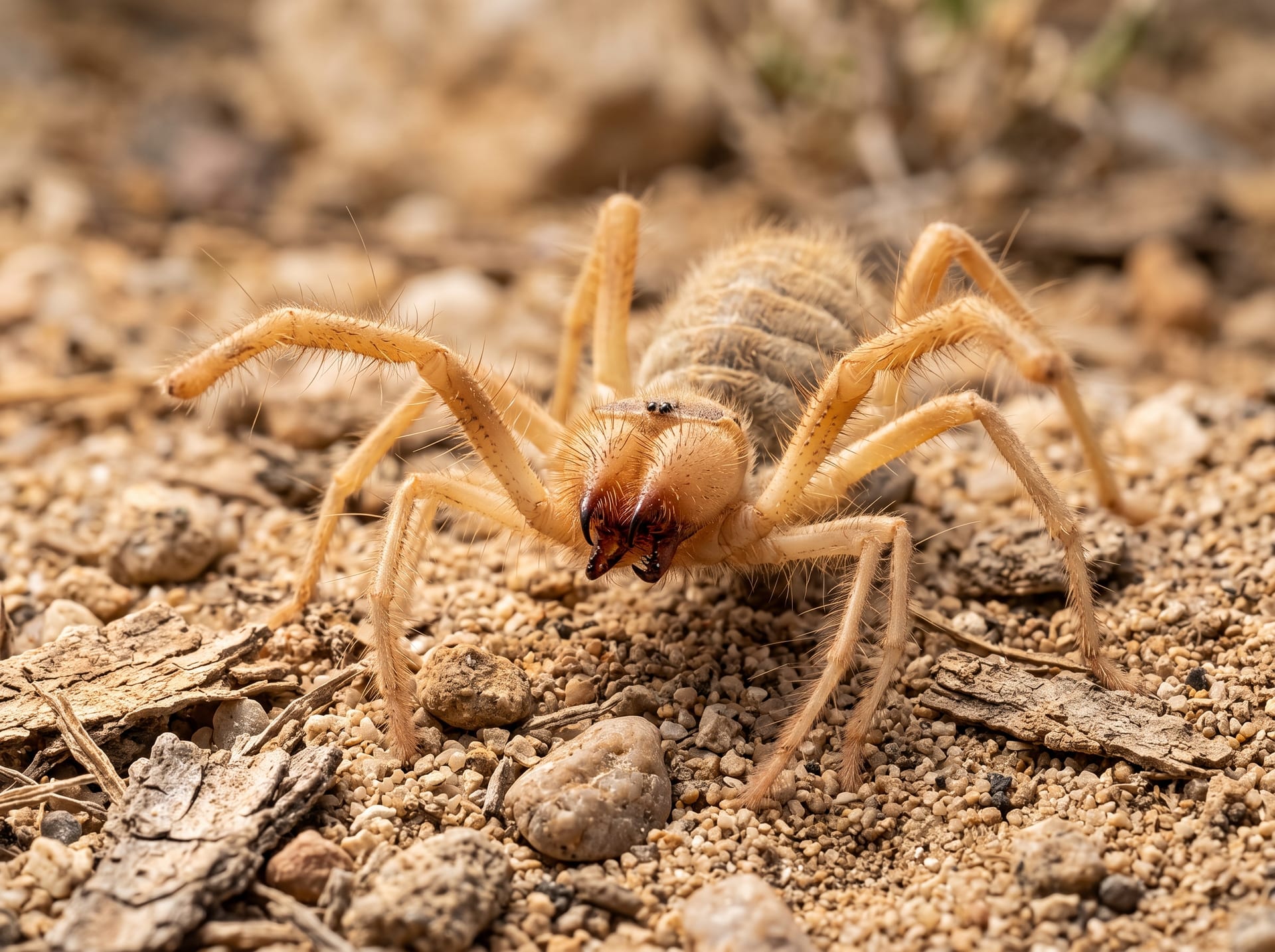
Camel Spider
Camel spiders are fast-moving predatory arthropods native to desert regions. Despite the name, they aren't true spiders or scorpions — they belong to their own order, Solifugae. Their most striking feature is an oversized pair of chelicerae that give them a distinctive, almost otherworldly look, and this has made them a favorite among exotic invertebrate keepers. They carry no venom, but those jaws can deliver a surprisingly strong pinch, so handling calls for caution. Combined with their speed and skittish temperament, they're best suited to keepers with prior experience and a properly set-up enclosure. Their lifespan is short, so this isn't a long-term companion animal, but few creatures offer such a close-up view of a truly unique desert predator.
View Camel Spider encyclopedia →0% commission on your first sales!Register by September 30, 2026 and your first 2 sales are commission-free!
Breeder Wanted!
List on BreederDirect and sell directly to customers nationwide!
5 Transparency Standards You Can Trust
When listing Exotic Invertebrates, Breeders disclose the following. We guarantee transparency on growth stage and breeding unit.
- Real Photos
- Breeding Unit
- Generation Info
- Body Length (mm)
- Country of Origin
Browse all 249 breeds
Verified breeders wanted for Exotic Invertebrates
Breeders are signing up now ahead of launch. Subscribe to be notified when new listings go live.
Getting alerts is free with a member account. When new listings match your saved search, we'll notify you by email and in-app.
Browse other categories
Verified breeders (preview)
Are you raising exotic invertebrates?
Register as a breeder and connect with buyers directly.
Apply as a breederAbout Camel Spider
Camel spiders are fast desert predators belonging to their own arthropod order, distinct from spiders and scorpions. Venom-free but strong-jawed and quick-moving, they suit experienced keepers only.
7 things to know before welcoming a Camel Spider
1Not a true spider
Camel spiders aren't spiders or scorpions — they belong to their own order, Solifugae. Despite superficial resemblance, their biology and anatomy are quite different.
2Venom-free but strong jaws
Camel spiders have no venom, but their oversized chelicerae can deliver a firm pinch. Avoid direct handling and always take care around them.
3Fast and easily startled
These animals move extremely quickly, so watch for escape risks whenever the enclosure is opened. They're also sensitive to noise and vibration, and rarely stay calm.
4Best for experienced keepers
Camel spiders are considered a challenging species, not recommended as a first exotic invertebrate. Keeping one successfully requires experience recreating an arid habitat and handling their speed safely.
5A short lifespan
In the wild they typically live around a year, and in captivity that's often even shorter — just weeks to a few months. This isn't an animal you'll keep for the long term.
6An arid setup is essential
As a desert species, camel spiders need dry substrate and careful temperature control. Excess humidity can quickly harm their health.
7An animal to observe, not handle
Think of the camel spider as a species to watch rather than interact with directly. Set up the enclosure and equipment properly before bringing one home.
Frequently asked questions about Camel Spider
- Q.Is a camel spider a type of spider?
- A.No — it belongs to its own order, Solifugae, not the spider order. It only resembles spiders and scorpions superficially; biologically it's a distinct group.
- Q.Is it venomous or dangerous to handle?
- A.Camel spiders have no venom. However, their large chelicerae can pinch hard, so it's best to avoid direct contact and always handle them carefully.
- Q.Can a beginner keep one?
- A.This species is considered suitable for experienced keepers only and isn't recommended as a first exotic invertebrate. Maintaining a dry habitat and safely managing their speed both require some background.
- Q.How long will it live?
- A.In the wild, camel spiders typically live around a year, and in captivity that's often even shorter — just weeks to a few months. It's not an animal kept for the long haul.
- Q.How big do adults get?
- A.Adult body length is roughly 3 to 7 cm, varying by species. Combined with their quick movements, they can feel more imposing than their actual size suggests.
Learn more about Camel Spider in the encyclopedia
View Camel Spider encyclopedia entry →
Care difficulty, lifespan, size and diet — all basics covered.
More in this category
Can't find the one you're looking for?
Post your wishes for free and breeders with matching animals will contact you with introductions.