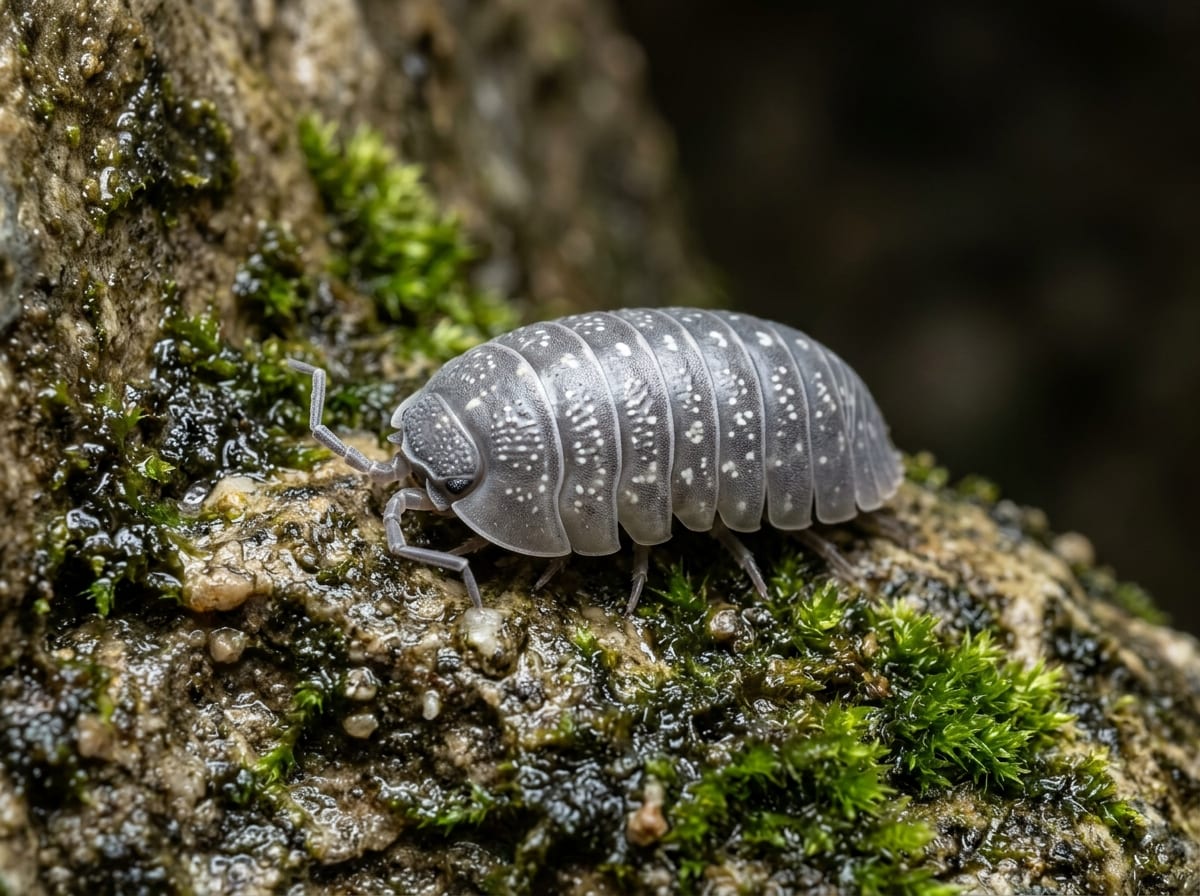
Armadillidium ruffoi
Armadillidium ruffoi is a pill bug endemic to Verona Province in northern Italy. It has a grey body marked with whitish spots in three rows, and adults reach only about 16 × 6.5 mm at most. The species is known from specimens collected in and around caves, and very little is understood about its life in the wild. Keeping it means starting from standard pill bug care and adjusting to what you observe in your own colony. It suits keepers with some experience who enjoy watching a small, range-restricted species closely.
View Armadillidium ruffoi encyclopedia →0% commission on your first sales!Register by September 30, 2026 and your first 2 sales are commission-free!
Breeder Wanted!
List on BreederDirect and sell directly to customers nationwide!
5 Transparency Standards You Can Trust
When listing Exotic Invertebrates, Breeders disclose the following. We guarantee transparency on growth stage and breeding unit.
- Real Photos
- Breeding Unit
- Generation Info
- Body Length (mm)
- Country of Origin
Browse all 286 breeds
Verified breeders wanted for Exotic Invertebrates
Breeders are signing up now ahead of launch. Subscribe to be notified when new listings go live.
Getting alerts is free with a member account. When new listings match your saved search, we'll notify you by email and in-app.
Browse other categories
Verified breeders (preview)
Are you raising exotic invertebrates?
Register as a breeder and connect with buyers directly.
Apply as a breederArmadillidium ruffoi key facts
- Care level
- Intermediate
- Lifespan
- Little data
- Size
- Up to about 16 x 6.5 mm
- Diet
- Omnivorous (leaf litter, rotten wood, vegetables)
- Enclosure
- Use a leaf-mould-based substrate topped with hardwood leaves and bark, with plenty of hiding places. It can be kept in groups.
- Temperature & Humidity
- Little temperature or humidity data exist. It is known from caves and their surroundings, so avoid heat and keep part of the substrate moist to give a dry-to-damp gradient.
- Diet & Feeding
- Keep leaf litter and rotten wood available at all times and add small amounts of vegetables or crustacean food. Remove any food that goes mouldy.
- Temperament & Venom
- Harmless; it rolls up when disturbed.
- Notes
- It is hard to separate from the related A. germanicum, so check that the trade name and scientific name match before buying. It is a non-native isopod, so never release captive animals. Isopods escape through corner gaps and coarse vents, so use a close-fitting lid with fine mesh ventilation.
About Armadillidium ruffoi
Armadillidium ruffoi is a pill bug endemic to Verona Province, Italy, with whitish spots in three rows on a grey body and adults up to about 16 × 6.5 mm. Intermediate difficulty. Traits, care notes and FAQs.
7 things to know before welcoming a Armadillidium ruffoi
1Endemic to northern Italy
Armadillidium ruffoi is endemic to Verona Province in northern Italy. It is known from specimens collected in and around caves, and little is understood about how it lives in the wild. It helps to accept from the start that many basic questions about this species remain open.
2Grey with three spot rows
The species has a grey ground colour with whitish spots arranged in three rows. Adults reach at most about 16 × 6.5 mm, so the pattern is best appreciated under bright light or with a loupe. It is a species for enjoying fine detail rather than bold colour.
3Intermediate difficulty
Its difficulty level is intermediate. Because species-specific care information is scarce, you need to start from general pill bug husbandry and adjust based on how the animals move and feed. Prior experience with other pill bugs makes this much easier.
4Temperature and humidity
Since specimens come from in and around caves, it is prudent to avoid heat and sudden temperature swings. Provide both damp and drier areas in the enclosure so the animals can choose where to stay. No established temperature or humidity figures exist for this species, so adjust gradually while watching their behaviour.
5Hides and substrate
Use a substrate such as leaf mould and leaf litter that holds moderate moisture, and add hides like pieces of bark. Avoid soaking the whole enclosure and keep some ventilation to reduce mould and stuffiness. Because the animals are small, choose a lid without gaps they can squeeze through.
6Food and calcium
As with pill bugs in general, offer leaf litter and rotting wood as the staple, plus a calcium source such as eggshell or cuttlebone. The natural diet of this species is not documented, so watch what they actually eat and adjust. Remove leftovers promptly, since they encourage mould.
7Handling and lifespan
The animals are tiny and easily hurt when picked up, so this is a species best kept for observation. Like many Armadillidium, they may roll into a ball when disturbed. Lifespan data is scarce and no reliable figure can be given, so keeping your own care records will be useful over time.
Frequently asked questions about Armadillidium ruffoi
- Q.Can beginners keep this species?
- A.Its difficulty is rated intermediate. Species-specific information is limited, so keepers with pill bug experience will find it easier. If you are new to isopods, it is safer to get comfortable with general pill bug care first.
- Q.How large does it grow?
- A.Adults reach a maximum of about 16 × 6.5 mm. It is a small species, so a loupe or bright light helps when studying the pattern.
- Q.How long does it live?
- A.There is too little published information to give a reliable lifespan. Keeping your own records of your animals can be a useful reference.
- Q.What habitat does it come from?
- A.It is known from specimens collected in and around caves in Verona Province, northern Italy. However, very little is understood about its ecology in the wild.
- Q.What should I feed it?
- A.As with pill bugs generally, base the diet on leaf litter and rotting wood and add a calcium source such as eggshell. The specific diet of this species is not documented, so adjust according to what they actually eat.
Learn more about Armadillidium ruffoi in the encyclopedia
View Armadillidium ruffoi encyclopedia entry →
Care difficulty, lifespan, size and diet — all basics covered.
More in this category
Can't find the one you're looking for?
Post your wishes for free and breeders with matching animals will contact you with introductions.