Source: Wikimedia Commons
Desert velvet spider
IntermediateStegodyphus lineatus
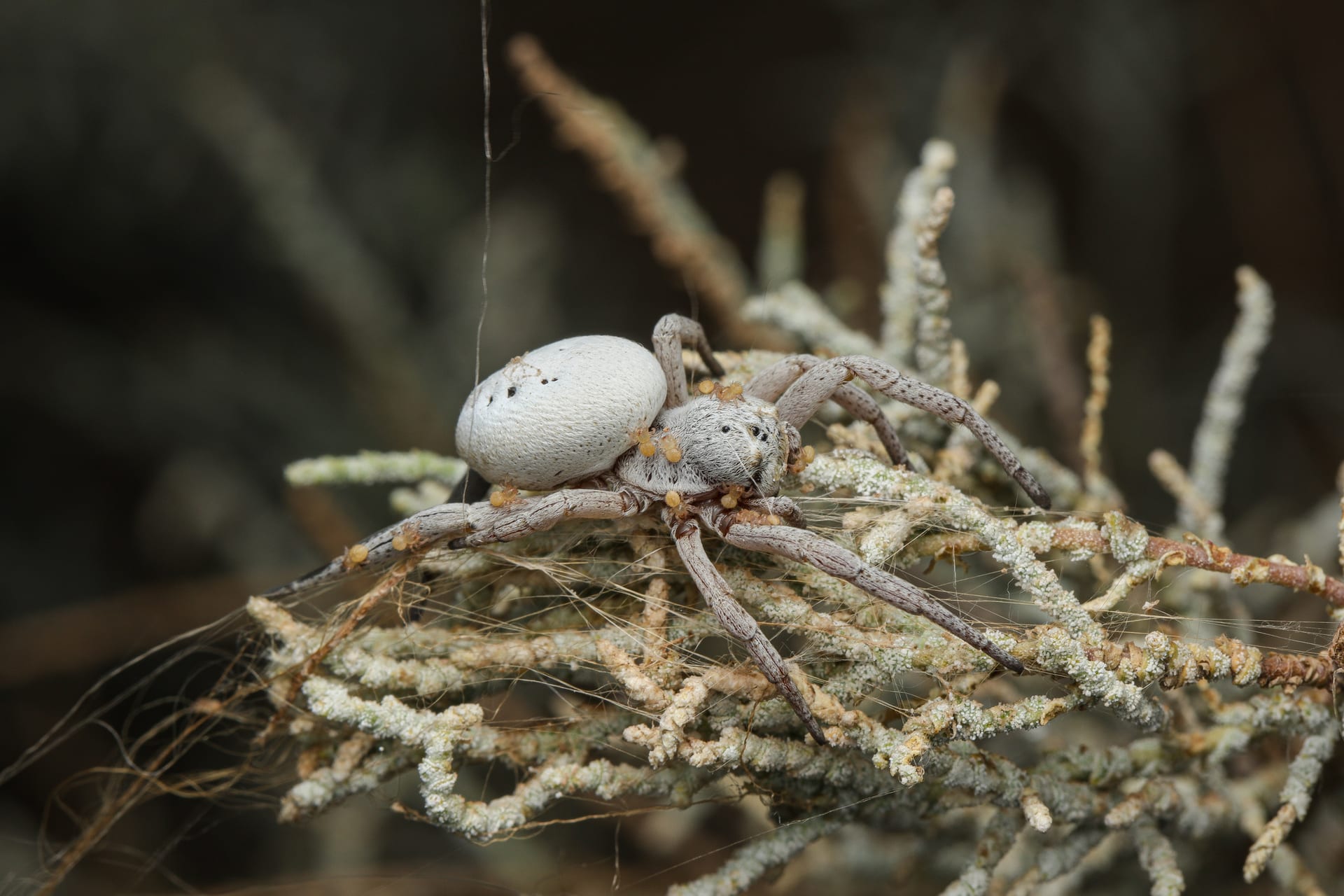
An eresid spider whose abdomen usually bears two broad black stripes. It builds a web and a cone-shaped retreat among shrub twigs, and is known for its young eventually eating their mother.
Difficulty
Intermediate
Lifespan
Little data
Size
Body length up to 12 mm (males), up to 15 mm (females)
Diet
Carnivorous (flying insects and other prey caught in the web)
About
Stegodyphus lineatus (Latreille, 1817) is a spider of the family Eresidae and the only European member of its genus. It ranges from the southern Mediterranean region of Europe (Spain south of Barcelona, Sicily, and southern Greece including Crete) across North Africa to Tajikistan, living in deserts such as the Negev in Israel and in dry Mediterranean climates. In the pet trade it has been called the desert velvet spider. Males grow to 12 mm and females to 15 mm. The colour ranges from whitish to almost black, and most individuals have a whitish abdomen with two broad black longitudinal stripes. It builds a web about 30 cm across between the twigs of low thorny shrubs, attached to a cone-shaped retreat about 5 cm long made of silk covered with debris and prey remains; web repair takes place at night. The spiderlings hatch inside the retreat, are released from the cocoon by their mother and guarded for about two weeks, and then eat her. Males are also known to discard egg sacs fathered by other males so that the female will mate again. In Japan specialist shops sometimes offer animals, for example from Egypt.
Source: Wikipedia (CC BY-SA 4.0)
Size of the Desert velvet spider
The Desert velvet spider grows to Body length up to 12 mm (males), up to 15 mm (females).
Basic Info
Origin
Southern Mediterranean Europe and North Africa to Central Asia (Tajikistan)
Lifespan
Little data
Size
Body length up to 12 mm (males), up to 15 mm (females)
Diet
References & Sources
Edited & verified by: BreederDirect editorial team
The taxonomic, regulatory, and husbandry data on this page are compiled and verified against the authoritative primary sources below.
Taxonomy & Authority
Regulations & Conservation Status
Not CITES-listed
It is not a designated invasive species, an uncategorised alien species or a taxon needing an identification certificate in Japan, and it is not listed by CITES (September 2026). It is a non-native spider, so keep it in escape-proof housing and never release captive animals.
Sources: Ministry of the Environment: List of regulated alien species, including taxa needing an identification certificate (JA) / Species+ CITES query (not listed)
Regulations may change. Always verify the latest information with the relevant authorities.
Desert velvet spider Listings
Loading latest listingsFind listings for this species