Source: Wikimedia Commons
Malaysian orange huntsman
IntermediateHeteropoda davidbowie
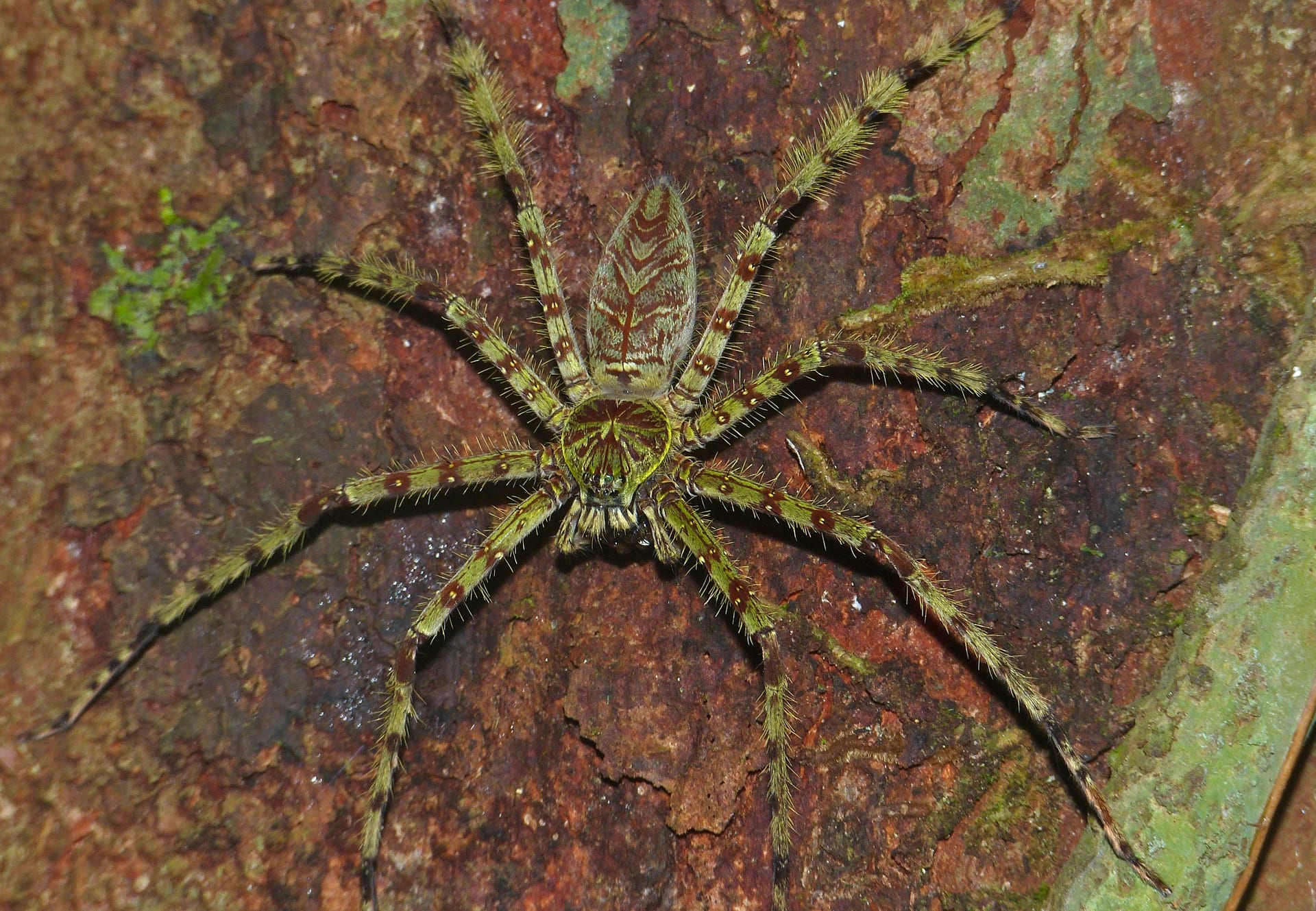
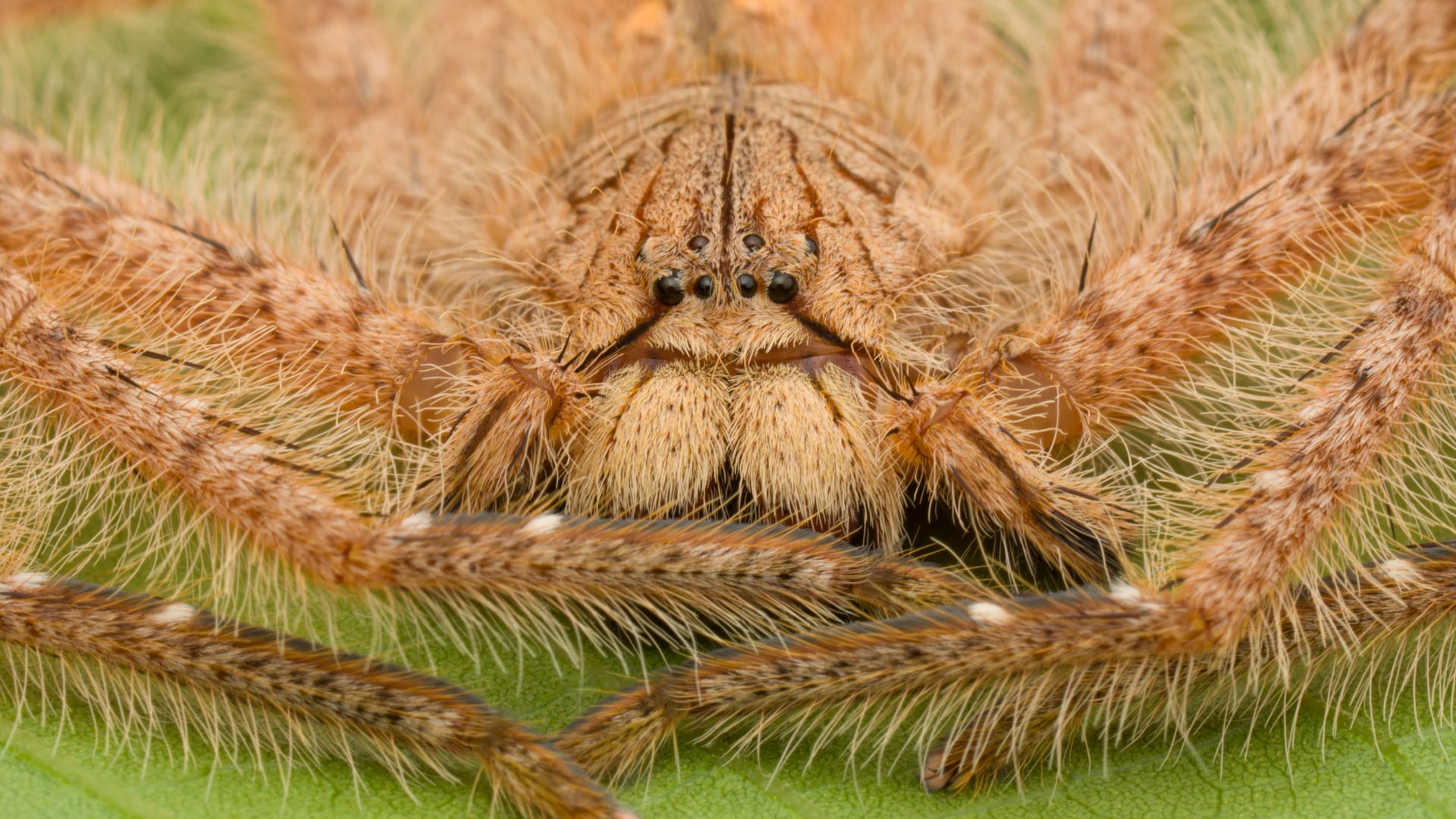
A huntsman spider from the Malay Peninsula with conspicuous long orange hairs. Described in 2008 and named after the singer David Bowie, adults are often seen on tree bark.
Difficulty
Intermediate
Size
Body length 15.3-18.2 mm (males), 21.3-25.3 mm (females)
Diet
Carnivorous (live insects such as crickets and roaches)
About
Heteropoda davidbowie Jäger, 2008 is a huntsman spider of the family Sparassidae. Peter Jäger described it in 2008 from a specimen collected in 2007 in the Cameron Highlands of peninsular Malaysia. The name honours the singer David Bowie, partly because the spider's face resembles his painted face from his early career. It is found in West Malaysia (Cameron Highlands), Singapore and Sumatra, and possibly southern Thailand. Males have a reddish-brown dorsum with short dense hair interspersed with long bright orange hairs and a red line on the rear half of the body, and black pedipalps. Females are similar, but the dorsum varies from greyish to reddish brown and the legs are marked with dark spots on the pale areas. Adults are often seen on tree bark, and juveniles have been found on leaf litter and on the leaves of shrubs. In Japan specialist shops occasionally offer it, including captive-bred young.
Source: Wikipedia (CC BY-SA 4.0)
Size of the Malaysian orange huntsman
The Malaysian orange huntsman grows to Body length 15.3-18.2 mm (males), 21.3-25.3 mm (females).
The sexes differ, with body lengths of 15.3-18.2 mm in males and 21.3-25.3 mm in females.
Basic Info
Origin
West Malaysia (Cameron Highlands), Singapore and Indonesia (Sumatra)
Size
Body length 15.3-18.2 mm (males), 21.3-25.3 mm (females)
Diet
Carnivorous (live insects such as crickets and roaches)
Care Guide
References & Sources
Edited & verified by: BreederDirect editorial team
The taxonomic, regulatory, and husbandry data on this page are compiled and verified against the authoritative primary sources below.
Taxonomy & Authority
Regulations & Conservation Status
Not CITES-listed
It is not a designated invasive species, an uncategorised alien species or a taxon needing an identification certificate in Japan, and it is not listed by CITES (September 2026). It is a non-native spider, so keep it in escape-proof housing and never release captive animals.
Sources: Ministry of the Environment: List of regulated alien species, including taxa needing an identification certificate (JA) / Species+ CITES query (not listed)
Regulations may change. Always verify the latest information with the relevant authorities.
Malaysian orange huntsman Listings
Loading latest listingsFind listings for this species