Source: Wikimedia Commons
Amami Whip Scorpion
IntermediateTypopeltis stimpsonii
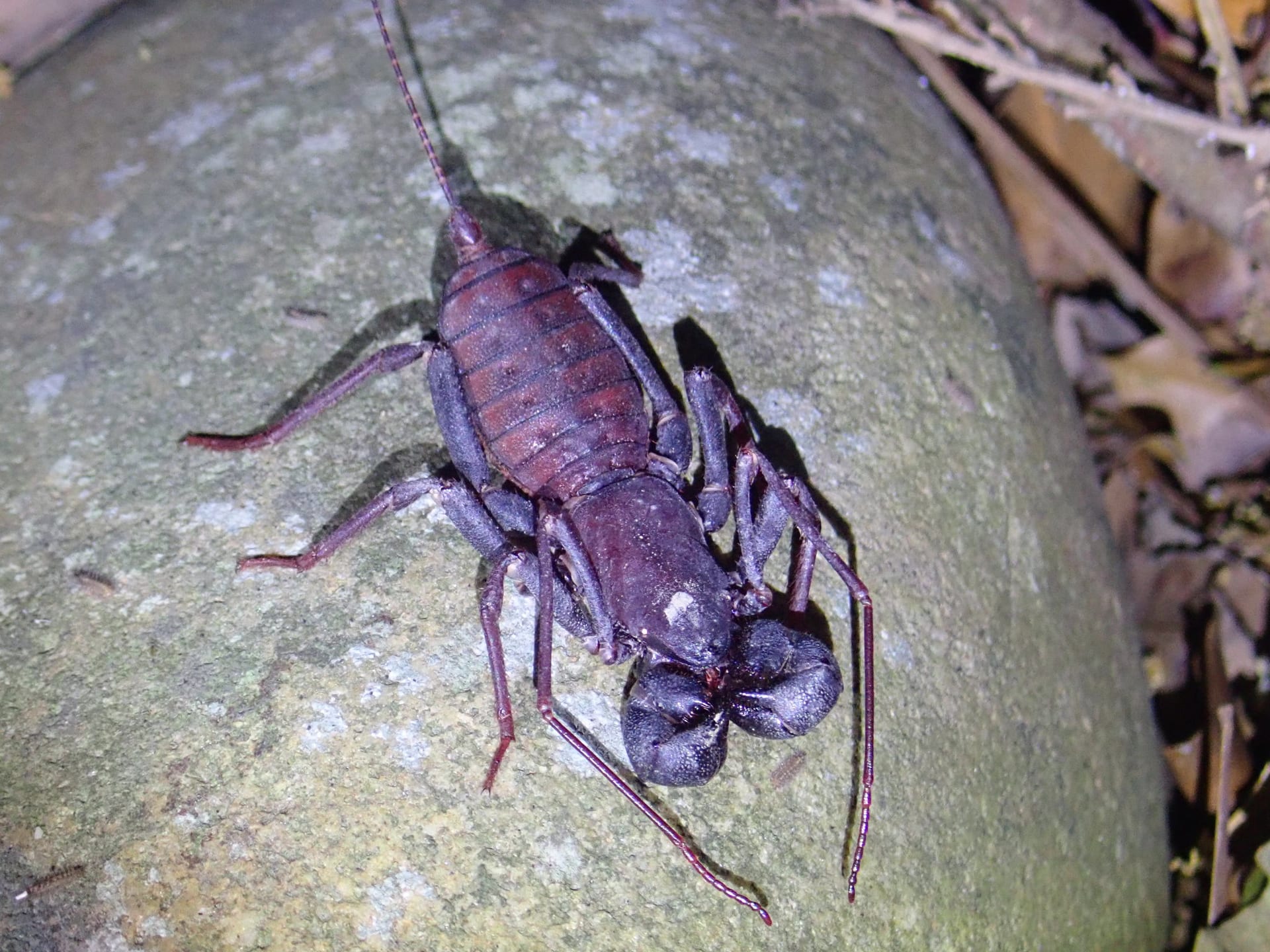
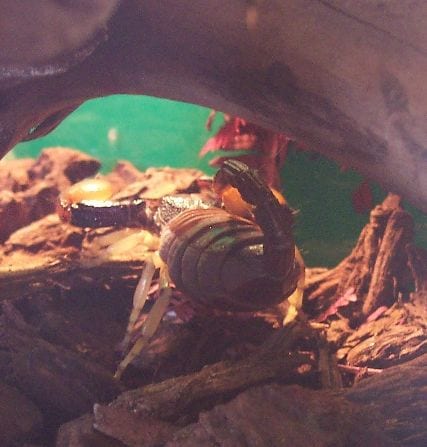
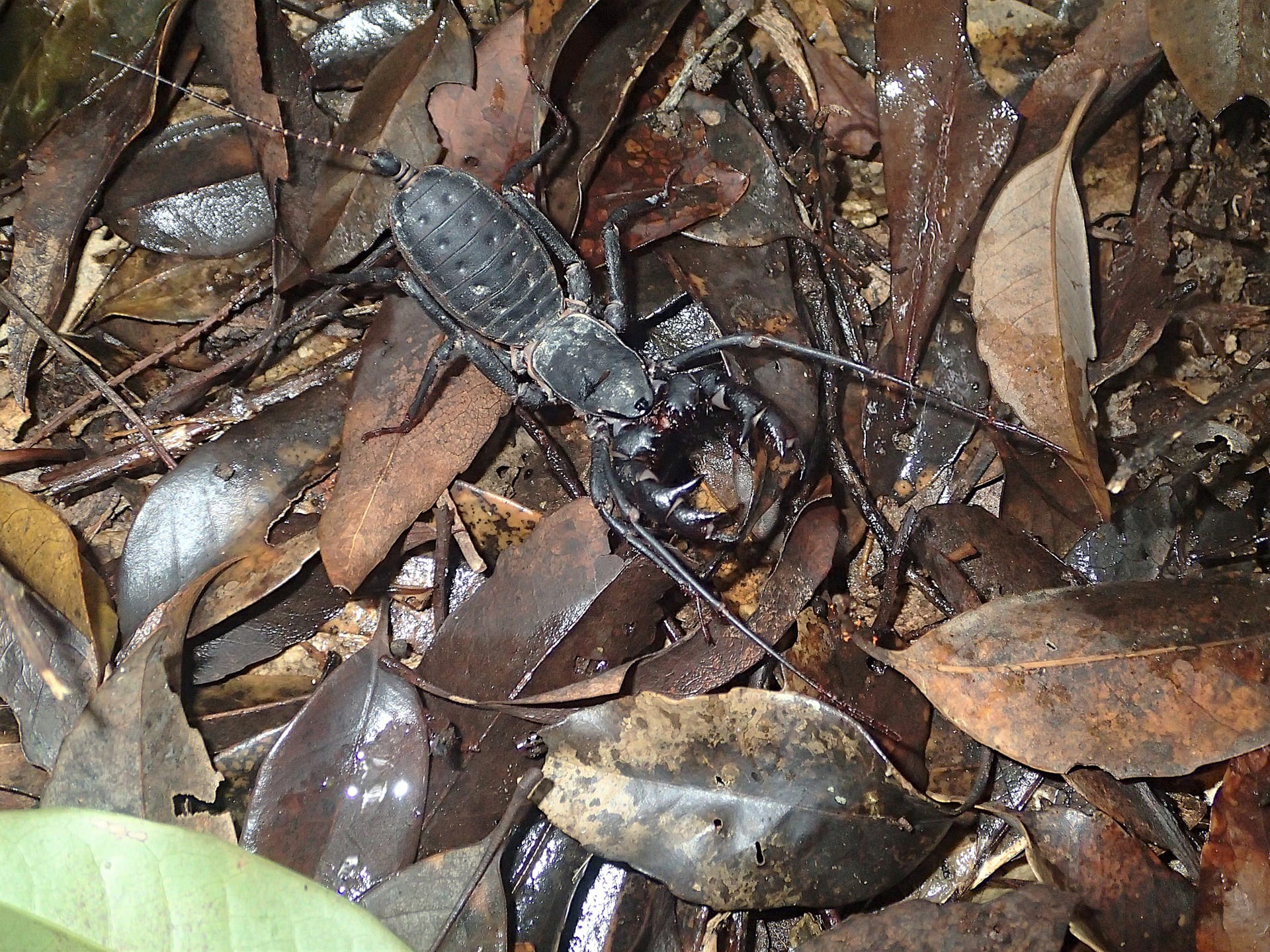
A whip scorpion of southern Kyushu and the Amami Islands, the only one that reaches the Japanese mainland. About 4cm long and almost entirely black, with reddish legs and flagellum. When provoked it sprays a strongly vinegary fluid from its anal glands.
Difficulty
Intermediate
Temperature
22〜26℃
Lifespan
5-7 years
Size
Body about 4cm, with a flagellum longer than the body
Humidity
75〜90%
Diet
Insects and spiders such as crickets, flies and red runner roaches
About
Typopeltis stimpsonii is a thelyphonid whip scorpion and the only member of the group that also occurs on the Japanese mainland, ranging from southern Kyushu to the Amami Islands with its southern limit at Izena Island. The body is about 4cm long and the prosoma is covered by a single undivided carapace. The pedipalps are heavily built and end in pincers, while the first pair of legs is long and slender and held forward like antennae rather than used for walking. The colour is essentially black, with reddish legs and flagellum. The species is nocturnal and hides by day under stones and fallen logs. Lifted from its retreat it spreads its pedipalps and raises abdomen and flagellum in a threat posture, and if pressed further sprays a fluid of 80% acetic acid, 5% caprylic acid and 15% water from its anal glands. The spray reaches 20cm, stings on skin and causes severe pain in the eyes. It is carnivorous, taking insects and spiders, and unlike scorpions it needs feeding every day; animals left unfed for a day or two have turned cannibalistic, so it must be housed alone.
Source: Wikipedia (CC BY-SA 4.0)
Lifespan of the Amami Whip Scorpion
The Amami Whip Scorpion lives 5-7 years.
Size of the Amami Whip Scorpion
The Amami Whip Scorpion grows to Body about 4cm, with a flagellum longer than the body.
Temperature & humidity for the Amami Whip Scorpion
The ideal temperature for the Amami Whip Scorpion is 22〜26℃. Ideal humidity is 75〜90%.
Basic Info
Origin
Japan (southern Kyushu to the Amami Islands, southern limit at Izena Island)
Care Specifications
Semi-aggressiveSolitary
Sources: Japanese Wikipedia: Typopeltis stimpsonii / Insektenliebe: Typopeltis spec. Java (congeneric husbandry reference) / GBIF
References & Sources
Edited & verified by: BreederDirect editorial team
The taxonomic, regulatory, and husbandry data on this page are compiled and verified against the authoritative primary sources below.
Taxonomy & Authority
Accepted name: Typopeltis stimpsonii (Wood, 1862)
Synonyms: Thelyphonus stimpsonii Wood, 1862
Authority databases: GBIF
Nomenclature follows global taxonomic authority databases.
Regulations & Conservation Status
Not CITES-listed
Sources: CITES Appendices (species not listed)
Regulations may change. Always verify the latest information with the relevant authorities.
Amami Whip Scorpion Listings
Loading latest listingsFind listings for this species