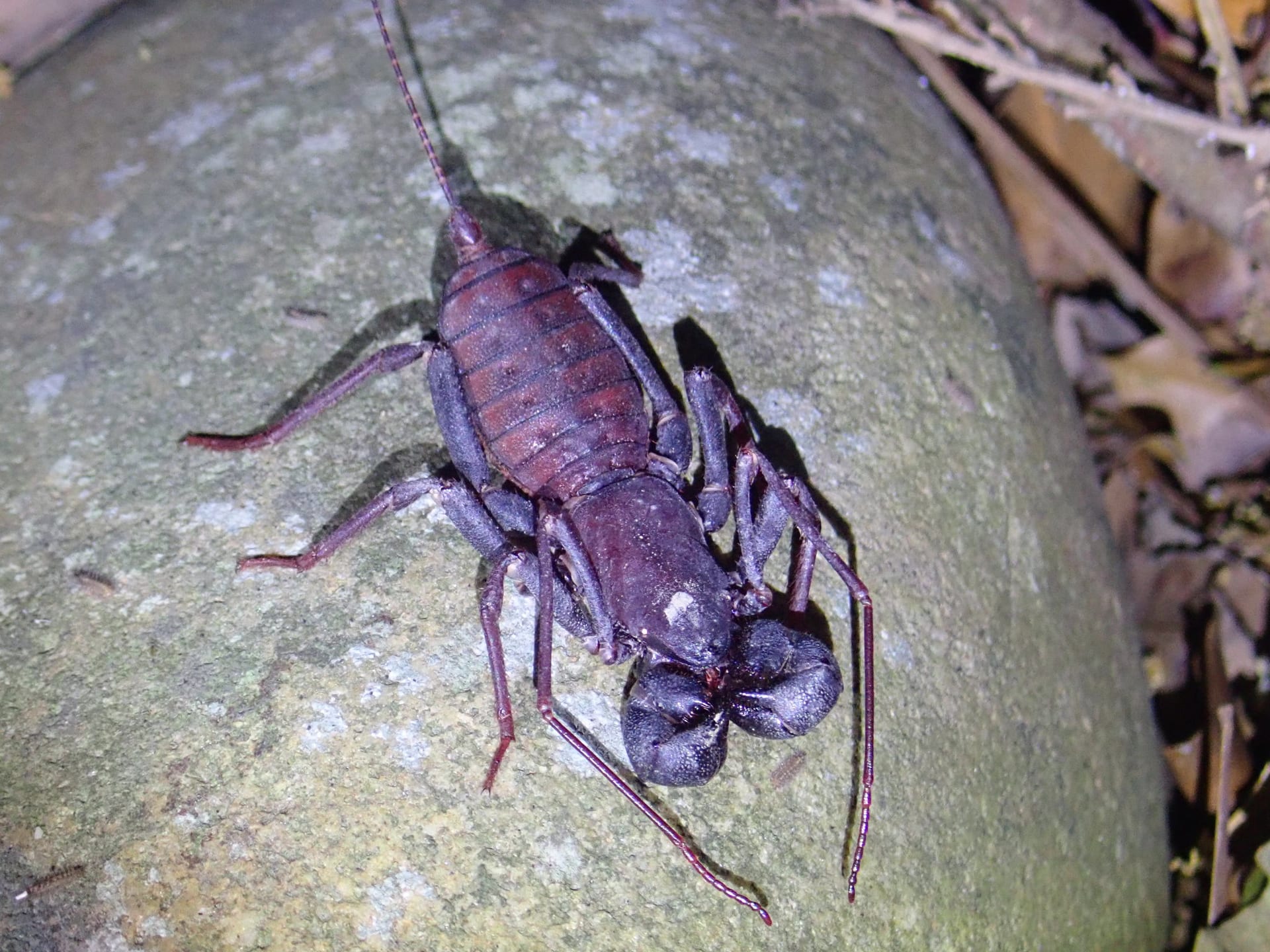
Source: Wikimedia Commons
Taiwanese Whip Scorpion
IntermediateTypopeltis crucifer
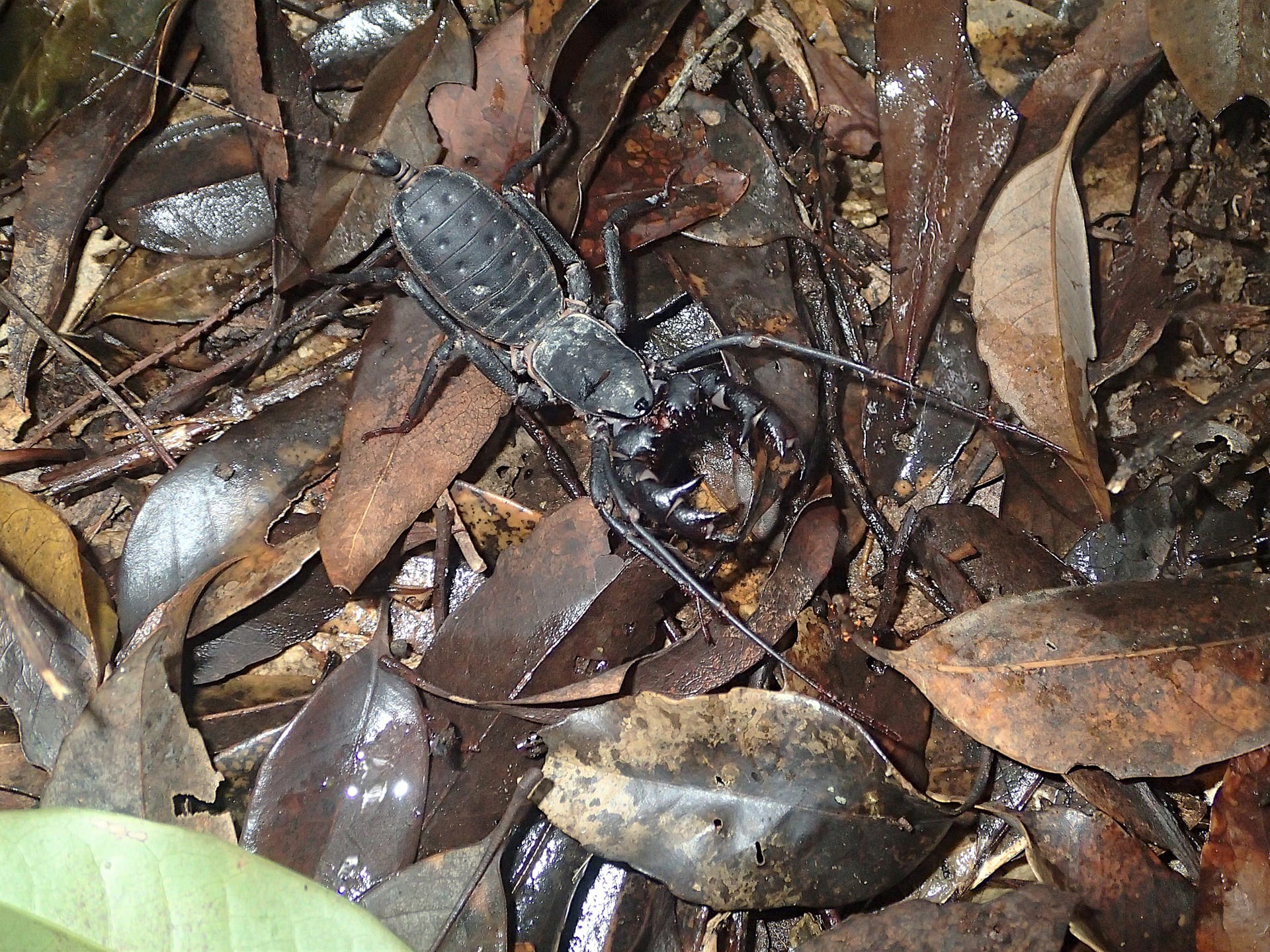
A whip scorpion of the Okinawa Islands southward and Taiwan. About 4cm long and almost entirely black, with a thin flagellum roughly as long as the body. It sprays a pungent fluid when provoked, and is separated from T. stimpsonii by the shape of the pedipalp process.
Difficulty
Intermediate
Temperature
22〜26℃
Lifespan
5-7 years
Size
Body about 4cm, with a flagellum roughly as long as the body
Humidity
75〜90%
Diet
Insects such as cockroaches and camel crickets, plus millipedes, centipedes and land snails
About
Typopeltis crucifer is one of the two whip scorpions found in Japan. While Typopeltis stimpsonii ranges from Kyushu to the Amami Islands, this species occurs from the Okinawa Islands southward and is also known from Taiwan. Its northern limit in Japan is Iheya Island, with records further south on Okinawa, Ishigaki, Iriomote, Hatoma, Kohama and Yonaguni. The body is about 4cm long and almost entirely black, with a thin flagellum about as long as the body. It closely resembles T. stimpsonii and is separated by the shape of the pedipalp process and the structure of the female genital plate. Behaviour is likewise similar: when provoked it raises the flagellum and releases a pungent gas. Prey includes cockroaches and camel crickets as well as millipedes, centipedes and land snails. In the Yaeyama Islands mating takes place in March and April, when the animals can be seen active even by day; eggs are laid in June and July, the female excavating a chamber 6-12cm across and 2-3cm deep under a log or stone and carrying 30-40 eggs in a thin white disc-shaped sac beneath her genital plate.
Source: Wikipedia (CC BY-SA 4.0)
Lifespan of the Taiwanese Whip Scorpion
The Taiwanese Whip Scorpion lives 5-7 years.
Size of the Taiwanese Whip Scorpion
The Taiwanese Whip Scorpion grows to Body about 4cm, with a flagellum roughly as long as the body.
Temperature & humidity for the Taiwanese Whip Scorpion
The ideal temperature for the Taiwanese Whip Scorpion is 22〜26℃. Ideal humidity is 75〜90%.
Basic Info
Origin
Care Specifications
Semi-aggressiveSolitary
Sources: Japanese Wikipedia: Typopeltis crucifer / Insektenliebe: Typopeltis spec. Java (congeneric husbandry reference) / GBIF
References & Sources
Edited & verified by: BreederDirect editorial team
The taxonomic, regulatory, and husbandry data on this page are compiled and verified against the authoritative primary sources below.
Taxonomy & Authority
Accepted name: Typopeltis crucifer Pocock, 1894
Synonyms: Typopeltis formosanus Kraepelin, 1897, Typopeltis crucifer kochi Schwangart, 1906
Authority databases: GBIF
Nomenclature follows global taxonomic authority databases.
Regulations & Conservation Status
Not CITES-listed
Sources: CITES Appendices (species not listed)
Regulations may change. Always verify the latest information with the relevant authorities.
Taiwanese Whip Scorpion Listings
Loading latest listingsFind listings for this species