Source: Wikimedia Commons
Satsuma Cockroach
BeginnerOpisthoplatia orientalis
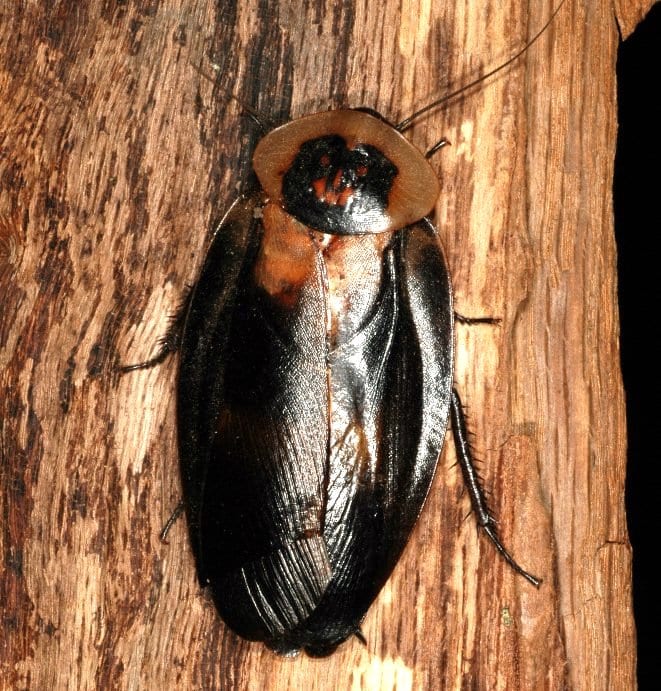
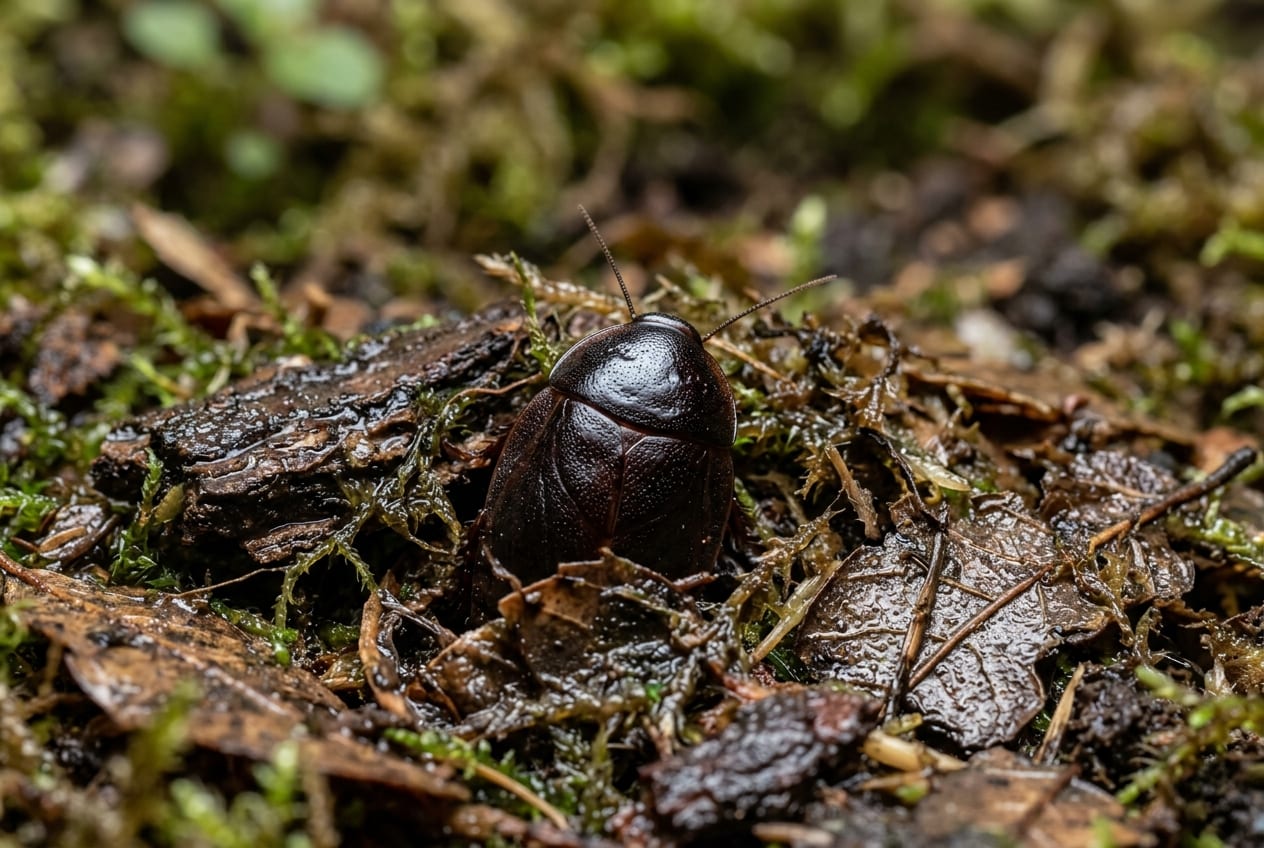
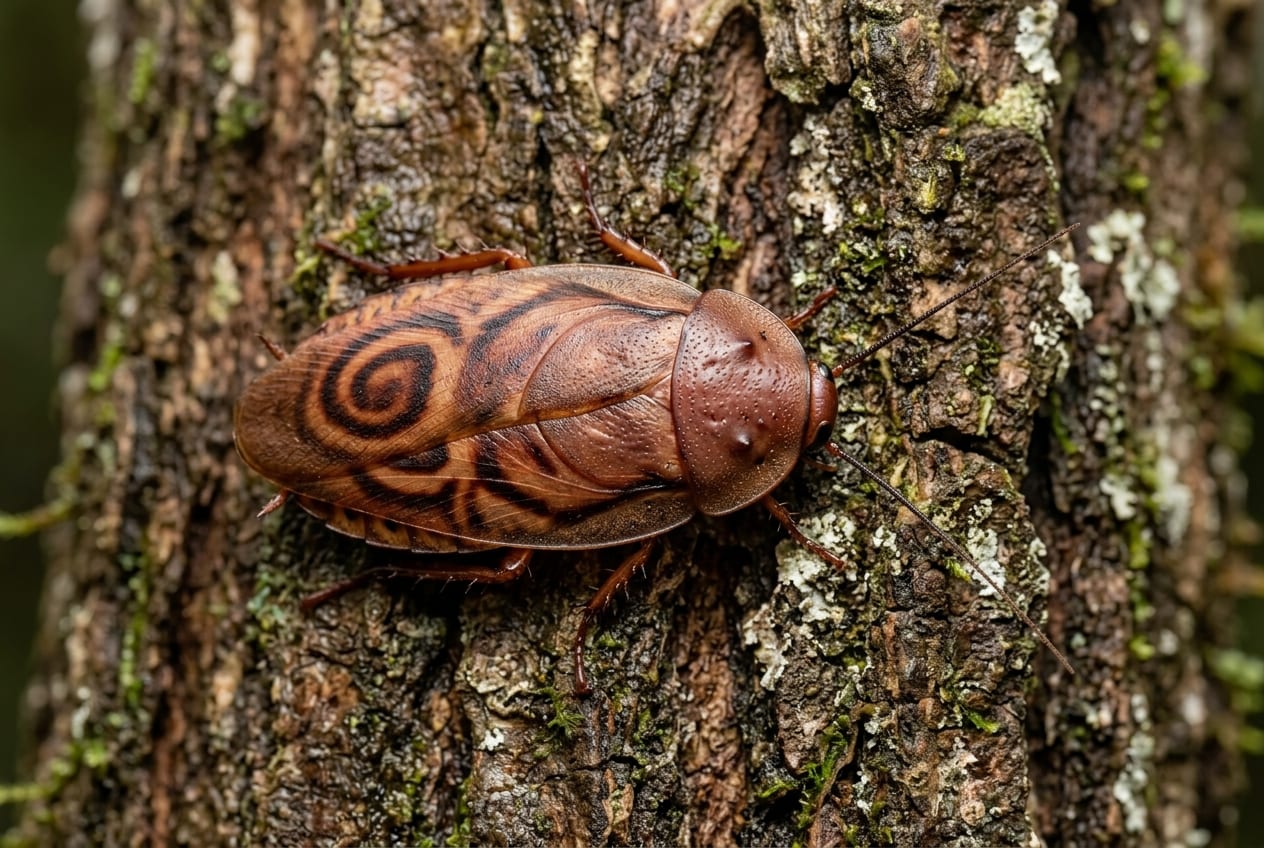
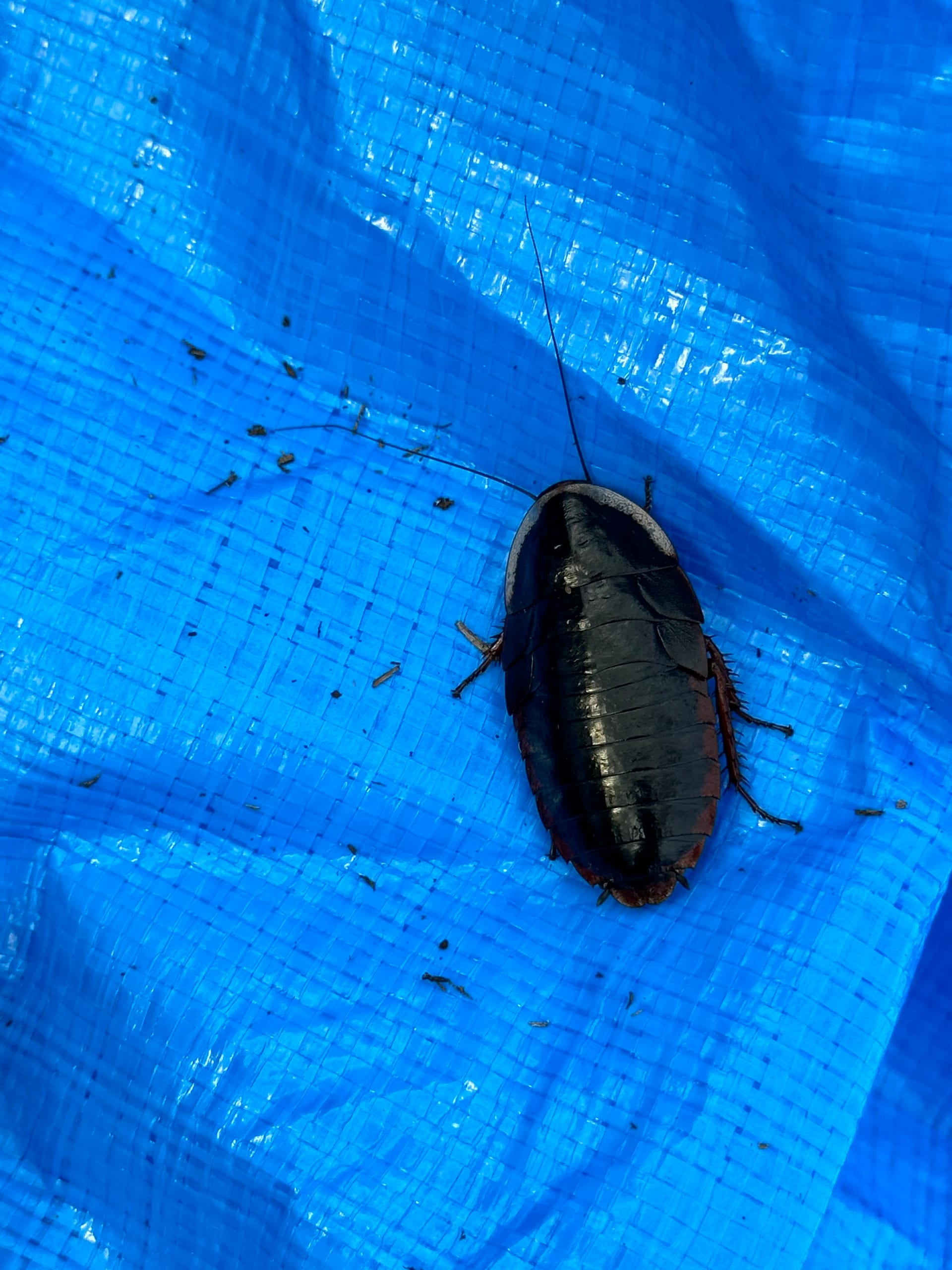
A dark brown cockroach with wings reduced to scales and an orange margin around the body. It lives outdoors under stones and fallen logs from southern Kyushu to the Ryukyus. It cannot fly, and in China it has long been used as a medicinal ingredient.
Difficulty
Beginner
Lifespan
2-4 years
Size
25-35mm, females larger than males
Diet
Omnivorous: vegetables, fruit, rotting wood, dry prepared feeds
About
Opisthoplatia orientalis is a blaberid cockroach found in Japan mainly in southern Kyushu, southern Shikoku and the Ryukyu Islands, and abroad in India, China, Taiwan and Java in Indonesia. Adults measure 25-35 mm, females being the larger sex. The wings are reduced to scale-like flaps and the species cannot fly. Its dark brown body edged in orange makes it attractive enough to be kept as a display animal. It is an outdoor species that shelters under stones and fallen logs and does not establish indoors, though in Japan it is formally classed as a sanitary pest. Populations have also turned up outside its native Japanese range: it was first recorded on Hachijojima in the Izu Islands in 1979 and has been confirmed in Wakayama Prefecture since 1994. In China it is known as zhechong and has a long history of use as an ingredient in traditional medicine.
Source: Wikipedia (CC BY-SA 4.0)
Lifespan of the Satsuma Cockroach
The Satsuma Cockroach lives 2-4 years.
Size of the Satsuma Cockroach
The Satsuma Cockroach grows to 25-35mm, females larger than males.
Basic Info
Origin
Japan (mainly southern Kyushu, southern Shikoku and the Ryukyus), India, China, Taiwan and Indonesia
Lifespan
2-4 years
Size
25-35mm, females larger than males
Diet
Care Specifications
Peaceful
Sources: Wikipedia (Japanese) / Wikipedia / GBIF
References & Sources
Edited & verified by: BreederDirect editorial team
The taxonomic, regulatory, and husbandry data on this page are compiled and verified against the authoritative primary sources below.
Primary sources
Taxonomy & Authority
Accepted name: Opisthoplatia orientalis (Burmeister, 1838)
Synonyms: Polyzosteria orientalis Burmeister, 1838, Opisthoplatia maculata Shiraki, 1906, Polyzosteria pictetiana Saussure, 1863
Authority databases: GBIF
Nomenclature follows global taxonomic authority databases.
Regulations & Conservation Status
Not CITES-listed
Sources: CITES Appendices (species not listed)
Regulations may change. Always verify the latest information with the relevant authorities.
Satsuma Cockroach Listings
Loading latest listingsFind listings for this species