Source: Wikimedia Commons
Bold Jumping Spider
BeginnerPhidippus audax
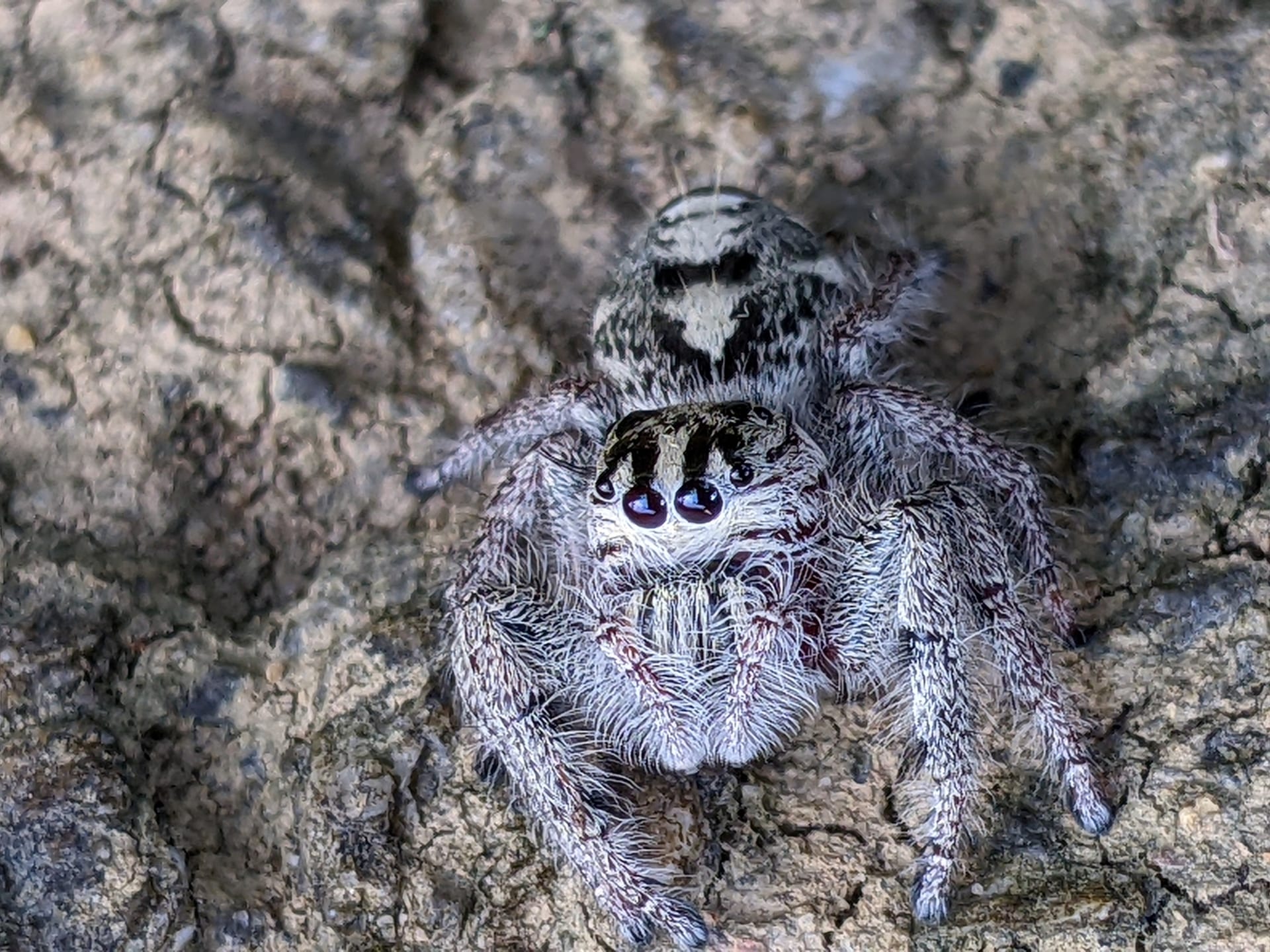
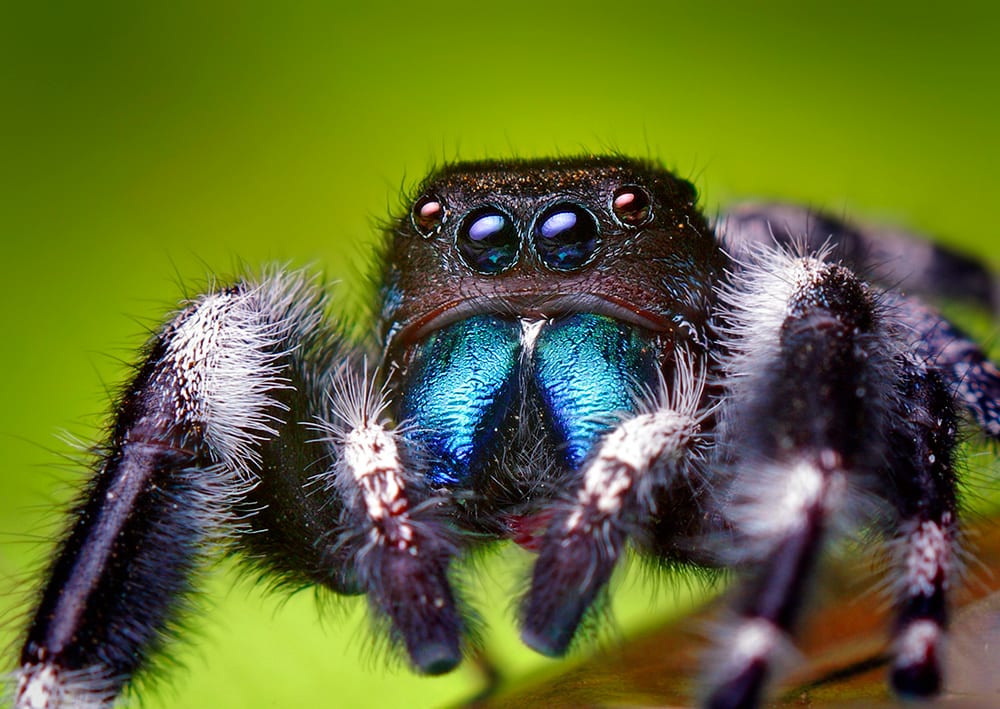
A jumping spider widespread in North America. The black body is flecked with white hairs and marked by a large triangular spot on the abdomen, and the chelicerae are iridescent green. Diurnal, active, and easy to keep and breed. It builds no prey web and hunts by sight.
Difficulty
Beginner
Temperature
26〜28℃
Lifespan
About 1 year
Size
Males about 1.3cm, females slightly larger
Diet
Insects such as fruit flies, house flies and small crickets
About
Phidippus audax, the bold jumper, is a North American jumping spider and one of the most commonly encountered spiders across its range; it has been introduced to Hawaii, the Nicobar Islands, the Azores and the Netherlands. The whole animal is very hairy, with the carapace and abdomen black but lightened by fine white hairs. A large triangular white spot sits in the middle of the abdomen with two smaller spots behind and beside it. The large spot can be orange in juveniles, and while the pattern varies between individuals the colour is always white, yellow or orange. The chelicerae are iridescent green. Males measure 1.3cm, slightly smaller than females, with a more contrasting pattern and stronger iridescence. The species builds no prey web, instead locating prey with sharp vision, stalking it and pouncing, and it trails a dragline as it jumps so a missed leap does not end in a fall. Prey ranges from caterpillars and dragonflies to grasshoppers and other spiders, and its effect on crop pests has been studied in agricultural fields. A female can produce up to six clutches of 30-170 eggs each, around 200 eggs in total, with later clutches smaller.
Source: Wikipedia (CC BY-SA 4.0)
Lifespan of the Bold Jumping Spider
The Bold Jumping Spider lives About 1 year.
Size of the Bold Jumping Spider
The Bold Jumping Spider grows to Males about 1.3cm, females slightly larger.
Temperature & humidity for the Bold Jumping Spider
The ideal temperature for the Bold Jumping Spider is 26〜28℃.
Basic Info
Origin
Care Specifications
PeacefulSolitaryBreeding: Easy
Sources: Insektenliebe: Phidippus audax / Insektenliebe: Phidippus regius Everglades (humidity reference) / Wikipedia: Phidippus audax / GBIF
References & Sources
Edited & verified by: BreederDirect editorial team
The taxonomic, regulatory, and husbandry data on this page are compiled and verified against the authoritative primary sources below.
Taxonomy & Authority
Accepted name: Phidippus audax (Hentz, 1845)
Synonyms: Attus audax Hentz, 1845, Phidippus electus C. L. Koch, 1846, Phidippus howardi G. W. Peckham & E. G. Peckham, 1896, Phidippus mexicanus G. W. Peckham & E. G. Peckham, 1888
Authority databases: GBIF
Nomenclature follows global taxonomic authority databases.
Regulations & Conservation Status
Not CITES-listed
Sources: CITES Appendices (species not listed)
Regulations may change. Always verify the latest information with the relevant authorities.
Bold Jumping Spider Listings
Loading latest listingsFind listings for this species