Source: Wikimedia Commons
Regal Jumping Spider
BeginnerPhidippus regius
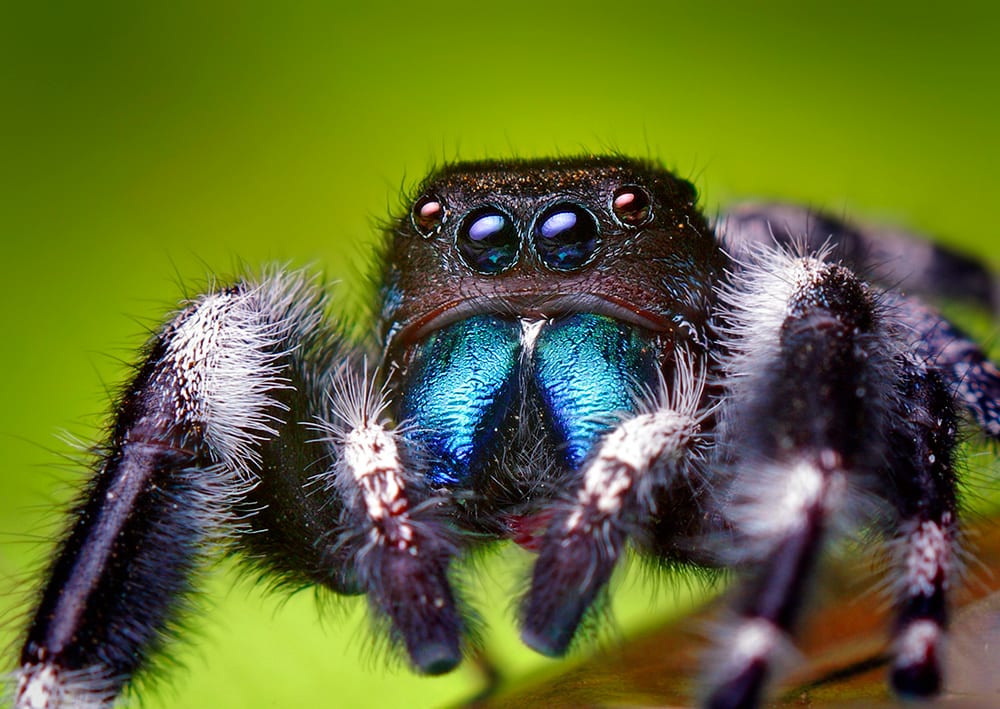
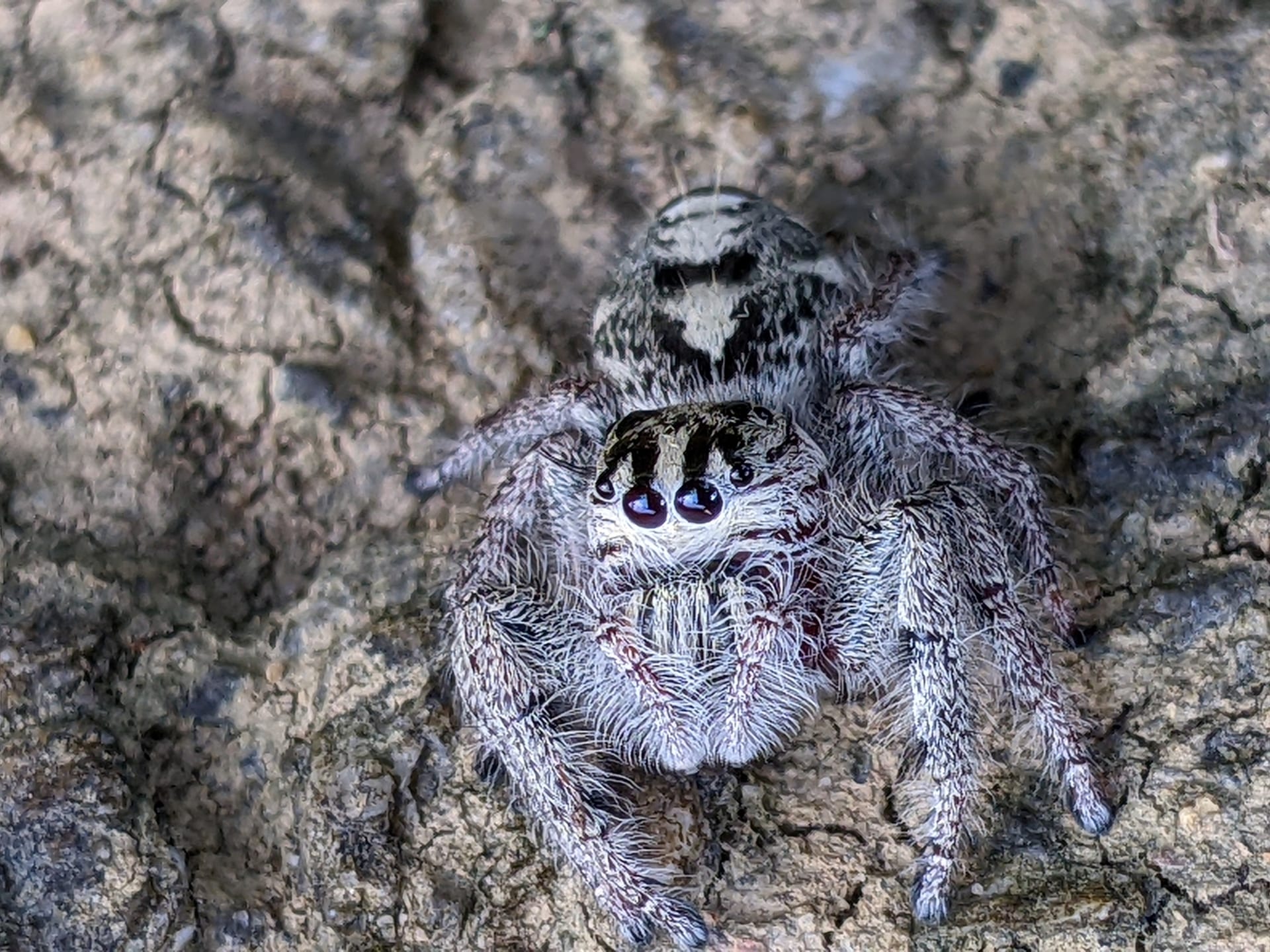
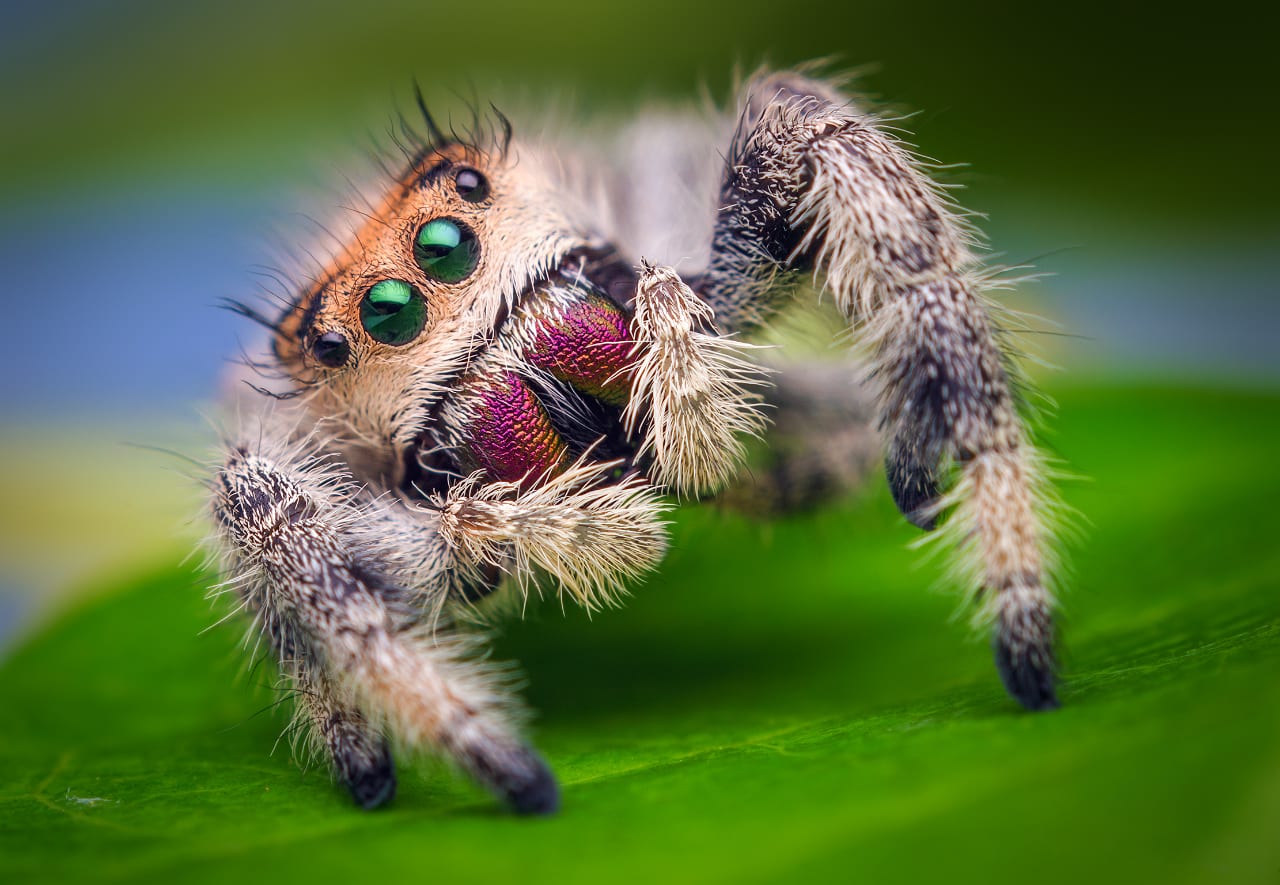
The largest jumping spider in eastern North America. Females are clothed in brown, orange, tan or grey scales; males are black with white markings and iridescent green-blue chelicerae. Diurnal, active and easy to observe and breed. It is traded under locality strain names.
Difficulty
Beginner
Temperature
26〜28℃
Lifespan
1-2 years
Size
Males average 1.2cm (0.6-1.8cm), females average 1.5cm (0.7-2.2cm)
Diet
Small insects such as fruit flies, house flies and firebrats
About
Phidippus regius, the regal jumper, is the largest jumping spider in eastern North America, found in the southeastern United States and the Caribbean and traded under locality names such as Everglades. Males average 12mm (6-18mm) and females 15mm (7-22mm). Males have alternating black and white fringes on the first legs and a black abdomen marked with a basal band, a central triangular spot and two posterior oval spots; the large chelicerae are iridescent green to blue-violet and each bears a tubercle. Females may show white or orange abdominal markings and are largely covered in brown, orange, tan or grey scales, with iridescent green or red-violet chelicerae lacking tubercles and tufts of setae around the eyes. The species is diurnal, stalking prey with excellent vision and trailing a dragline when it jumps, and it retreats into a silken nest before moulting. Feed and water juveniles every three days and adults weekly, removing uneaten prey within a day.
Source: Wikipedia (CC BY-SA 4.0)
Lifespan of the Regal Jumping Spider
The Regal Jumping Spider lives 1-2 years.
Size of the Regal Jumping Spider
The Regal Jumping Spider grows to Males average 1.2cm (0.6-1.8cm), females average 1.5cm (0.7-2.2cm).
Temperature & humidity for the Regal Jumping Spider
The ideal temperature for the Regal Jumping Spider is 26〜28℃.
Keep it in a small enclosure that uses vertical space, at 26-28 C and around 70% humidity with good ventilation.
Basic Info
Origin
Care Specifications
PeacefulSolitaryBreeding: Easy
Sources: Insektenliebe: Phidippus regius Everglades / Insektenliebe: Jumping spider breeding / Wikipedia: Phidippus regius / GBIF
References & Sources
Edited & verified by: BreederDirect editorial team
The taxonomic, regulatory, and husbandry data on this page are compiled and verified against the authoritative primary sources below.
Taxonomy & Authority
Accepted name: Phidippus regius C. L. Koch, 1846
Synonyms: Phidippus miniatus (G. W. Peckham & E. G. Peckham, 1883), Phidippus purpurifer C. L. Koch, 1846, Phidippus tullgreni Wallace, 1950
Authority databases: GBIF
Nomenclature follows global taxonomic authority databases.
Regulations & Conservation Status
Not CITES-listed
Sources: CITES Appendices (species not listed)
Regulations may change. Always verify the latest information with the relevant authorities.
Regal Jumping Spider Listings
Loading latest listingsFind listings for this species