Source: Wikimedia Commons
Heavy Jumping Spider
IntermediateHyllus diardi
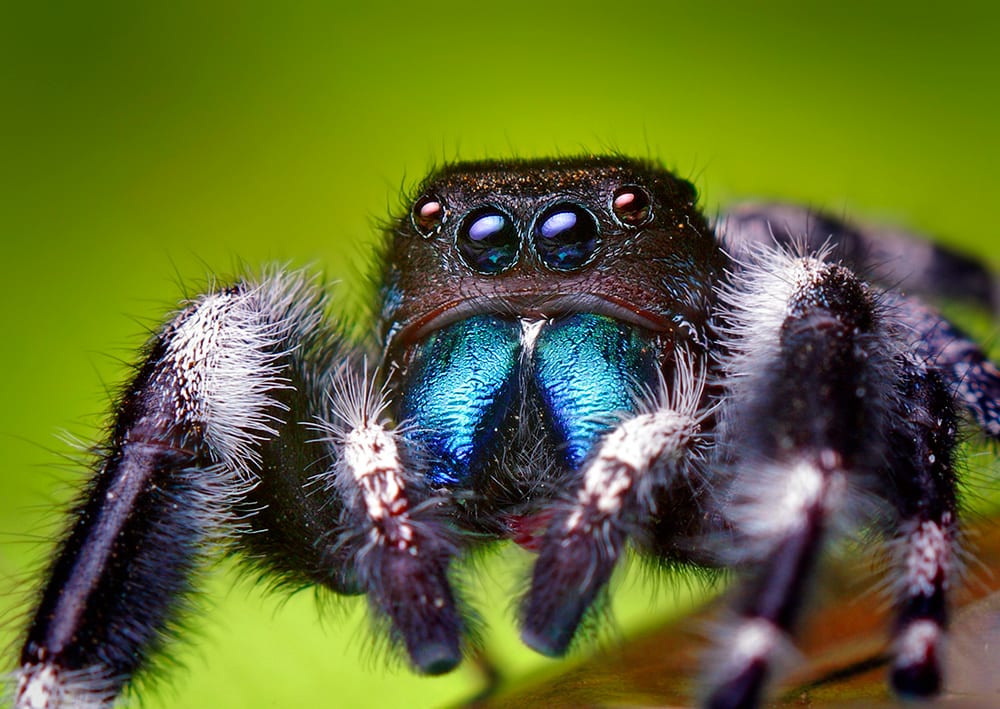
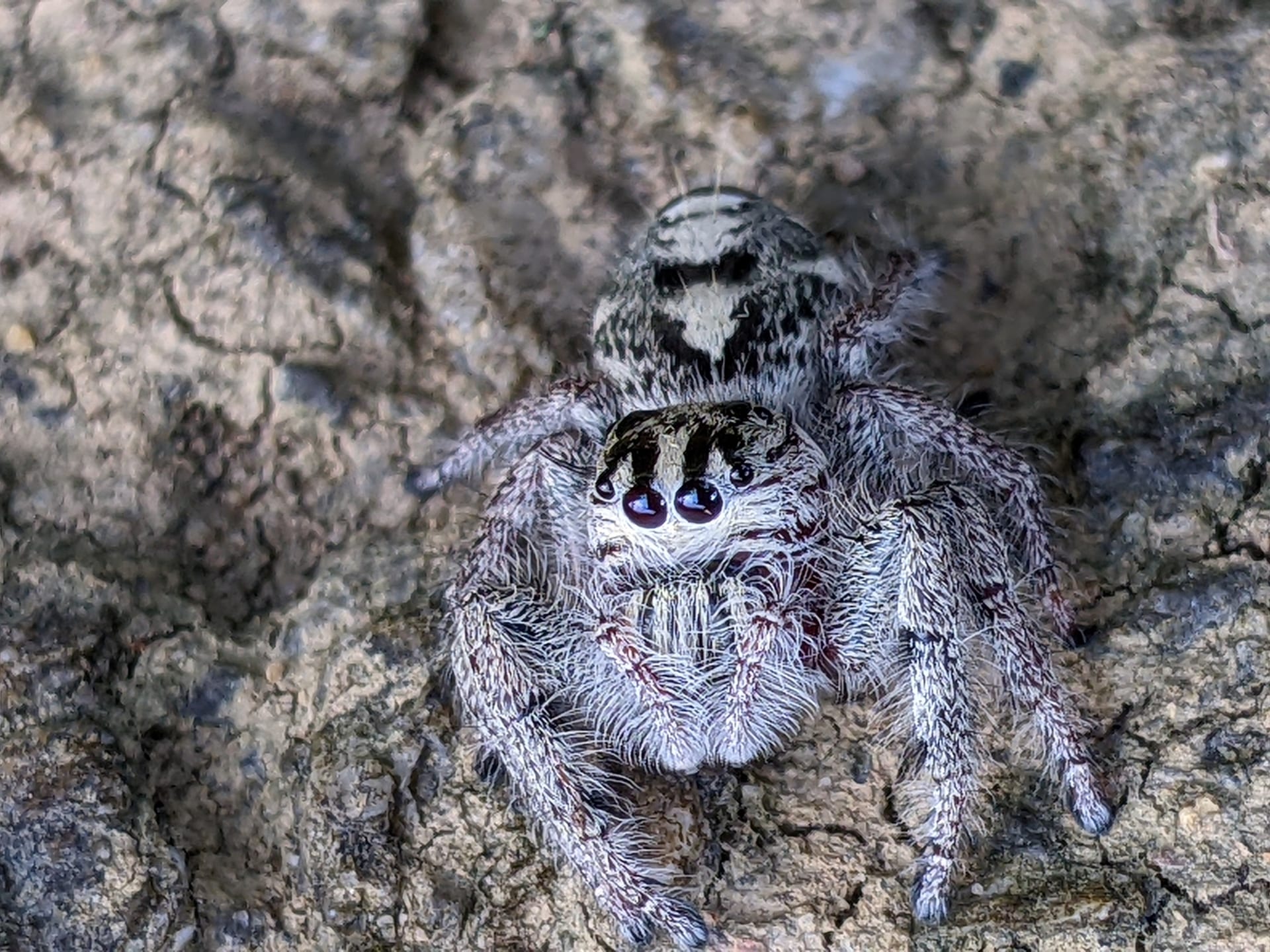
A large jumping spider widespread in Southeast Asia. The brownish-grey body is flecked with iridescent yellow setae, and females carry horn-like tufts of dark setae below the posterior median eyes. It needs more warmth and humidity than many congeners, suiting intermediate keepers.
Difficulty
Intermediate
Temperature
26〜28℃
Lifespan
1-2 years
Size
Body about 1.2cm (suppliers list about 2cm)
Humidity
70〜80%
Diet
Flies, crickets and small cockroaches
About
Hyllus diardi is a jumping spider distributed from southwestern China through Myanmar, Thailand, Laos, Vietnam, Malaysia, the Philippines and Indonesia. Males are about 12mm in total length with a carapace of about 5.8mm; the dark brown carapace is sparsely covered with iridescent metallic yellow setae and carries a central line of white setae, and the yellowish-brown abdomen bears the same yellow setae plus a line of dense white setae. Females are slightly larger at about 12.3mm total with a 4.8mm carapace; the reddish-brown carapace has short yellow setae and two tufts of long dark setae below the posterior median eyes that look like horns, and the yellow abdomen is covered in grey setae with inverted chevron markings. Use a tall enclosure from about 20 x 20 x 30cm, furnished with branches and bark for climbing and cover. It hunts actively and readily takes flies, crickets and small cockroaches.
Source: Wikipedia (CC BY-SA 4.0)
Lifespan of the Heavy Jumping Spider
The Heavy Jumping Spider lives 1-2 years.
Size of the Heavy Jumping Spider
The Heavy Jumping Spider grows to Body about 1.2cm (suppliers list about 2cm).
Note that suppliers list the body size as about 2cm, which differs from the figures in the taxonomic literature.
Temperature & humidity for the Heavy Jumping Spider
The ideal temperature for the Heavy Jumping Spider is 26〜28℃. Ideal humidity is 70〜80%.
The species is more tropical than many congeners and should be kept at 26-28 C with 70-80% humidity.
Basic Info
Care Specifications
PeacefulSolitaryBreeding: Moderate
Sources: Insektenliebe: Hyllus diardi / Wikipedia: Hyllus diardi / GBIF
References & Sources
Edited & verified by: BreederDirect editorial team
The taxonomic, regulatory, and husbandry data on this page are compiled and verified against the authoritative primary sources below.
Taxonomy & Authority
Accepted name: Hyllus diardi (Walckenaer, 1837)
Synonyms: Hyllus janthinus (C. L. Koch, 1846), Hyllus lacertosus (C. L. Koch, 1846)
Authority databases: GBIF
Nomenclature follows global taxonomic authority databases.
Regulations & Conservation Status
Not CITES-listed
Sources: CITES Appendices (species not listed)
Regulations may change. Always verify the latest information with the relevant authorities.
Heavy Jumping Spider Listings
Loading latest listingsFind listings for this species