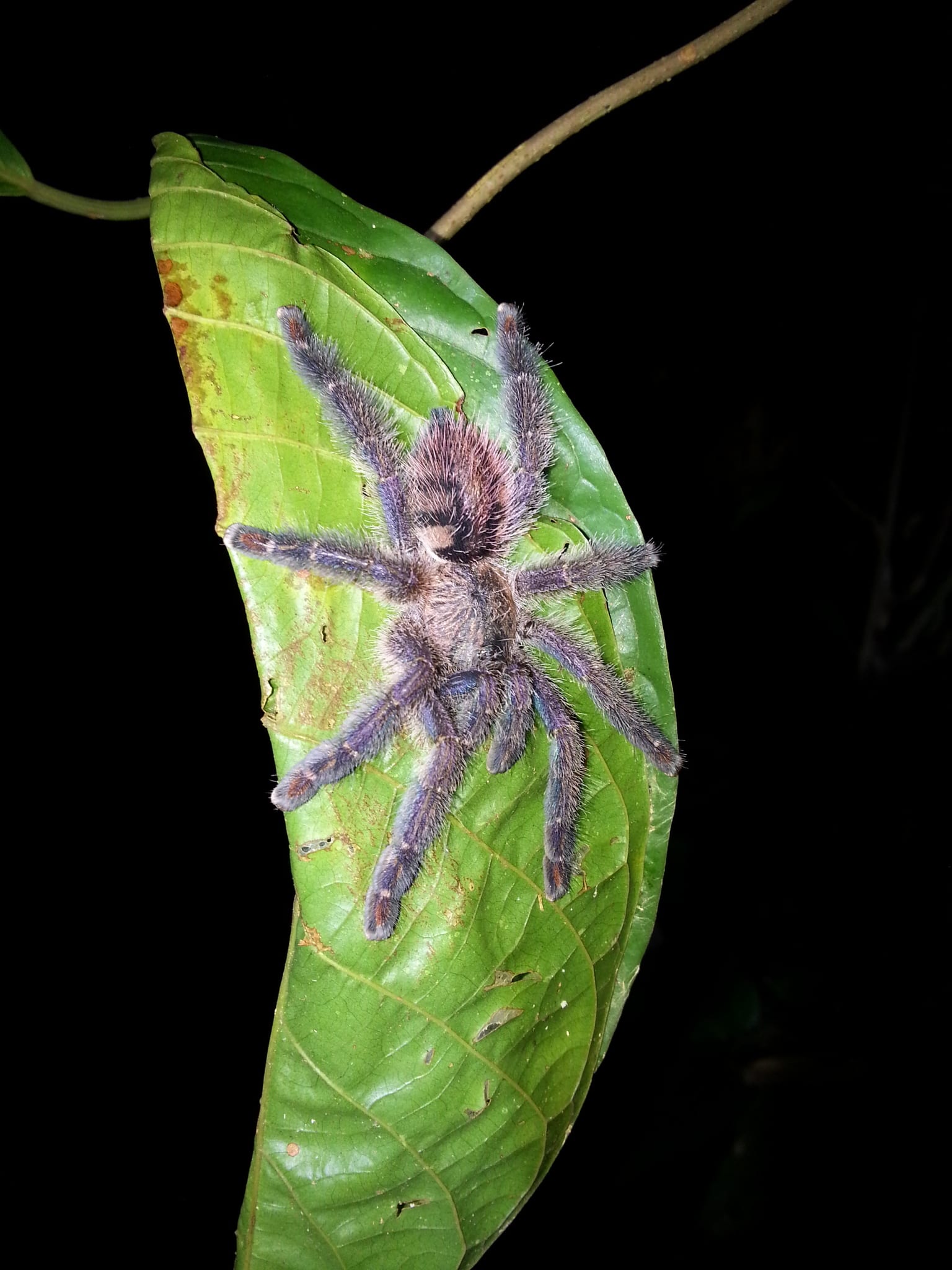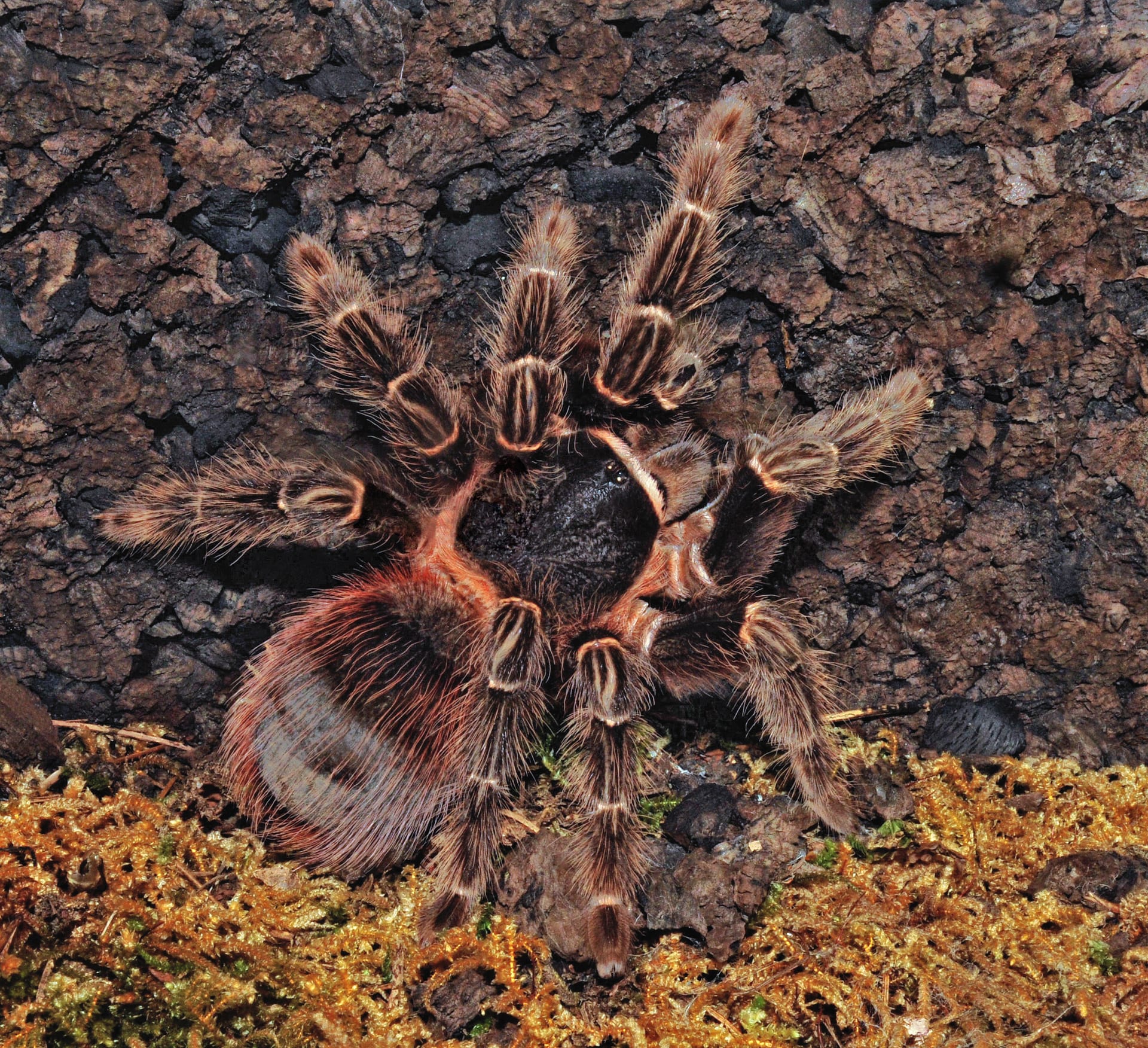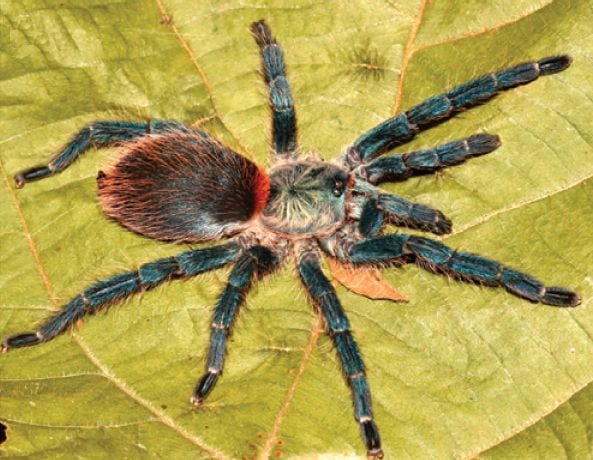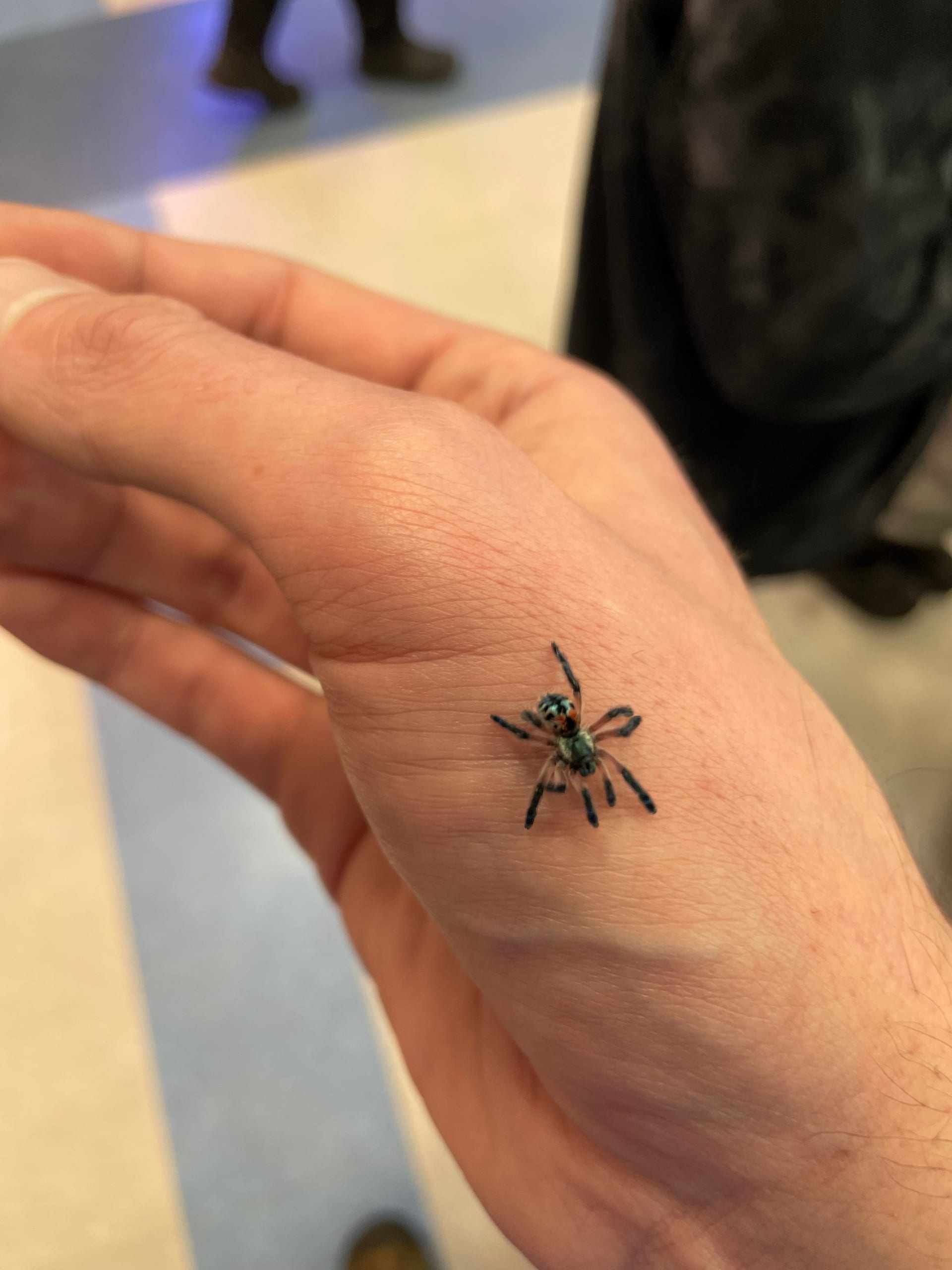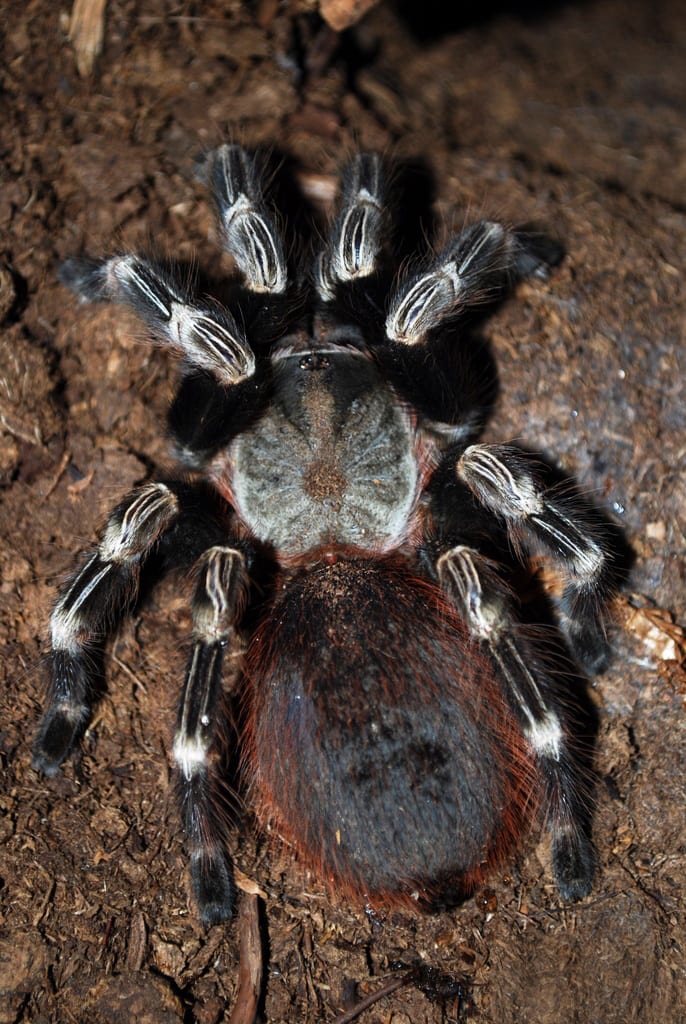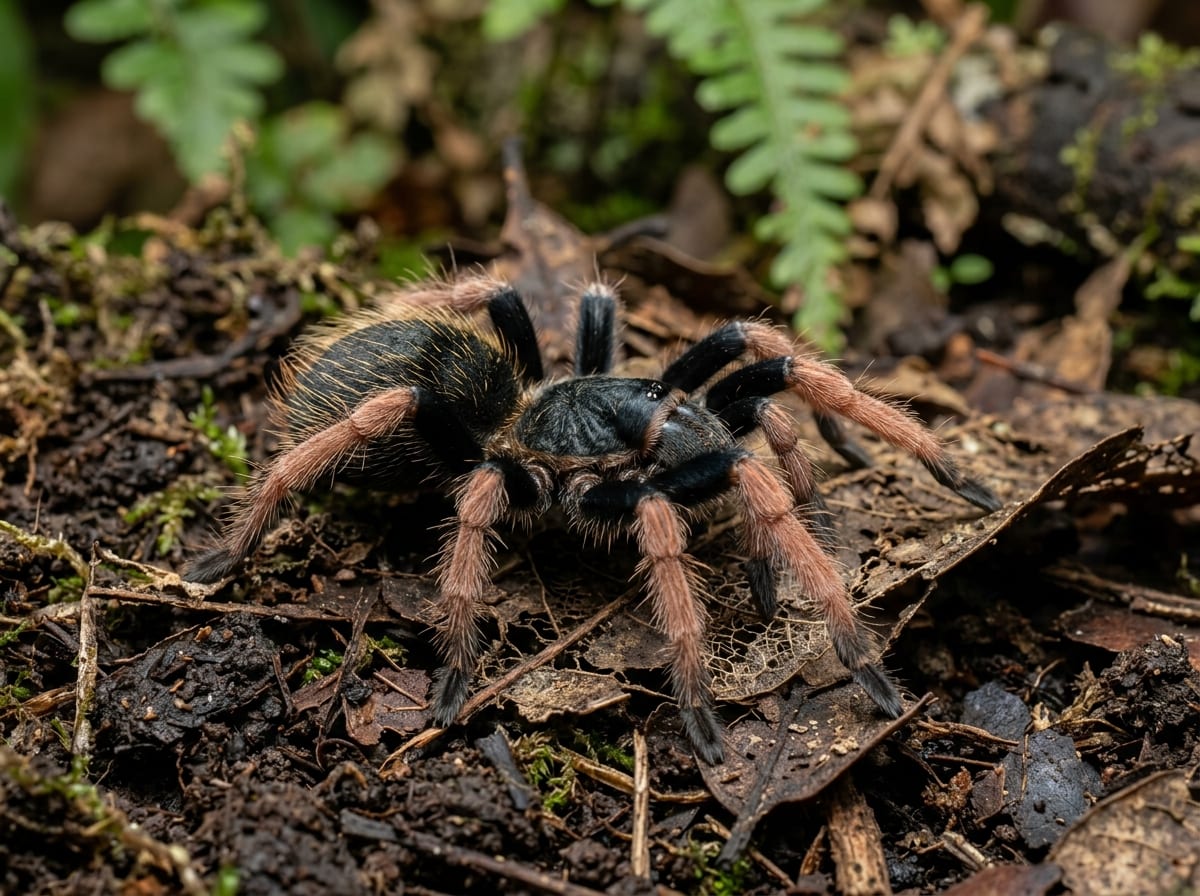
AI-generated image
Dwarf pinkleg tarantula
IntermediateKochiana brunnipes
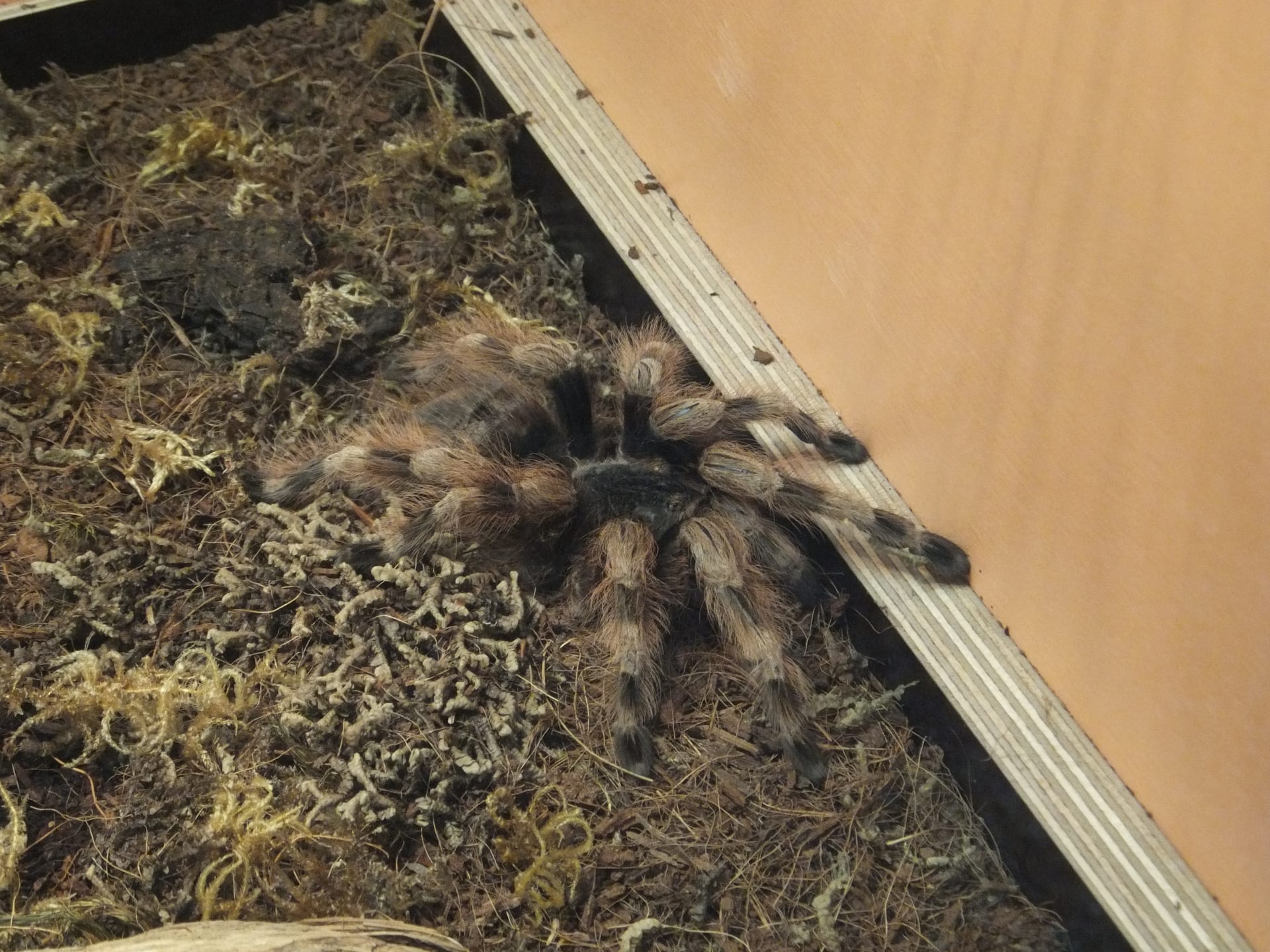
A small Brazilian tarantula with a black body and legs that turn reddish light brown from the patellae outwards. It is the only species of Kochiana and has golden urticating hairs on the abdomen.
Difficulty
Intermediate
Lifespan
Little data
Size
Little data (a small species)
Diet
Carnivorous (small live insects such as crickets and roaches)
About
Kochiana brunnipes (C. L. Koch, 1841) is a tarantula of the family Theraphosidae and the only species in the genus Kochiana. C. L. Koch described it in 1841 as Mygale brunnipes, and it was moved to its own genus in 2008. It is found in Brazil. The carapace and abdomen are black, with golden urticating hairs on the abdomen. The coxae, trochanters and femora are also black, but the patellae, tibiae, metatarsi and tarsi are reddish light brown, which gives the trade name 'pinkleg'. Males differ from others in the subfamily Theraphosinae in having a long, downward-pointing embolus and a first metatarsus that folds between the two branches of the tibial spur. As a New World tarantula it carries urticating hairs, so take care not to disturb them during maintenance. It belongs to a different genus from other 'dwarf' tarantulas such as Cyriocosmus and Dolichothele. In Japan captive-bred animals are occasionally offered by specialist shops.
Source: Wikipedia (CC BY-SA 4.0)
Lifespan of the Dwarf pinkleg tarantula
As its name suggests it is a small species, but no primary source giving its size or lifespan was found.
Basic Info
Origin
Brazil
Lifespan
Little data
Size
Little data (a small species)
Diet
Carnivorous (small live insects such as crickets and roaches)
Care Guide
References & Sources
Edited & verified by: BreederDirect editorial team
The taxonomic, regulatory, and husbandry data on this page are compiled and verified against the authoritative primary sources below.
Taxonomy & Authority
Regulations & Conservation Status
Not CITES-listed
It is not a designated invasive species, an uncategorised alien species or a taxon needing an identification certificate in Japan, and it is not listed by CITES (September 2026). It is a non-native tarantula, so keep it in escape-proof housing and never release captive animals.
Sources: Ministry of the Environment: List of regulated alien species, including taxa needing an identification certificate (JA) / Species+ CITES query (not listed)
Regulations may change. Always verify the latest information with the relevant authorities.
Dwarf pinkleg tarantula Listings
Loading latest listingsFind listings for this species