Source: Wikimedia Commons
Singapore Blue
AdvancedOmothymus violaceopes
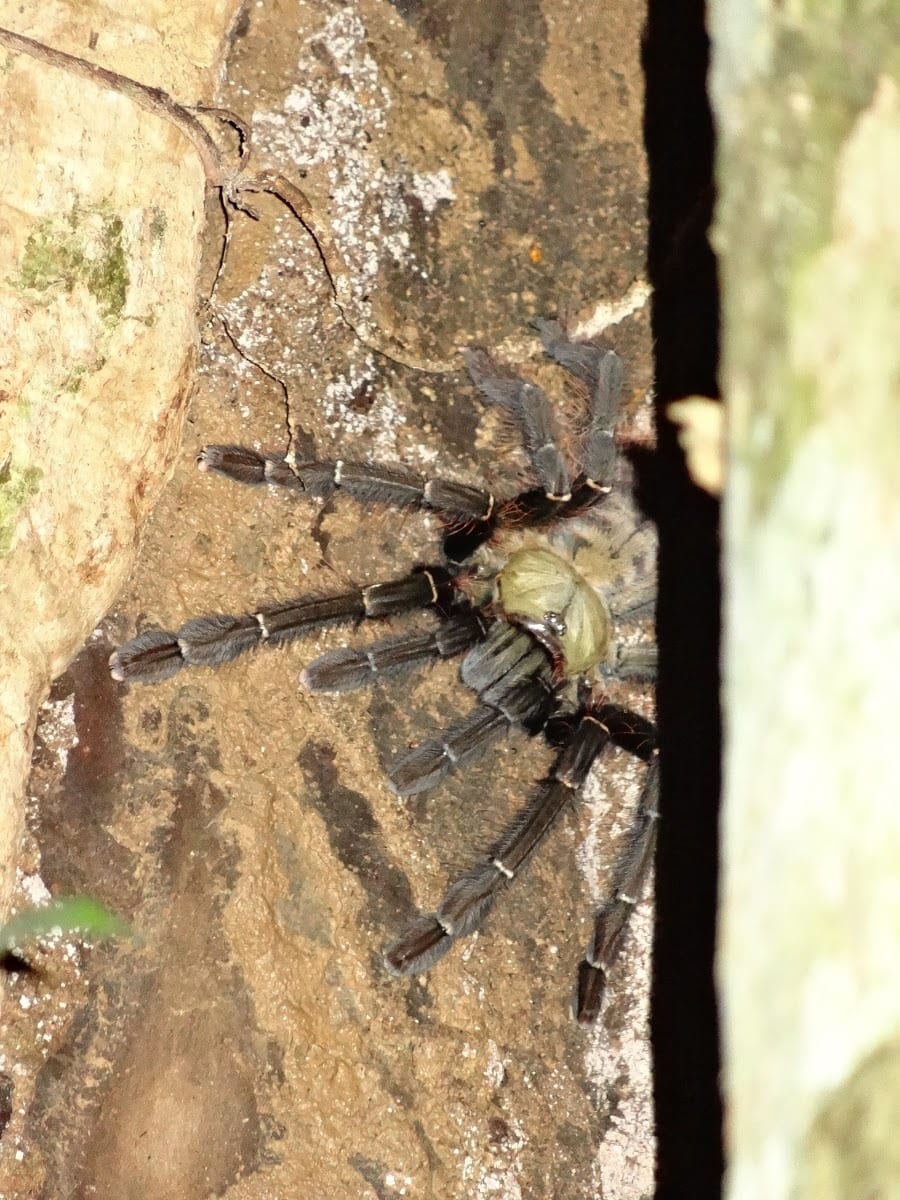
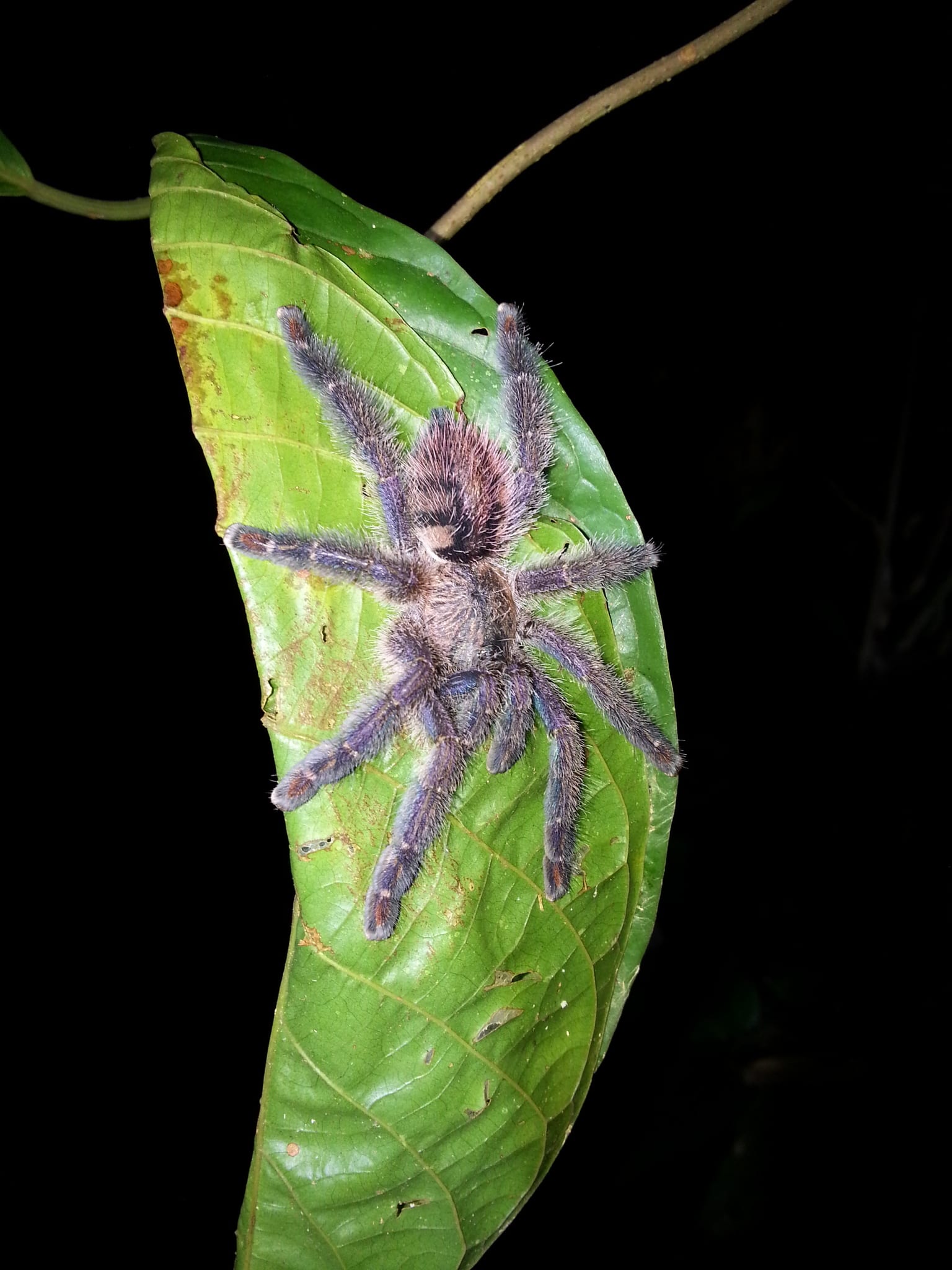
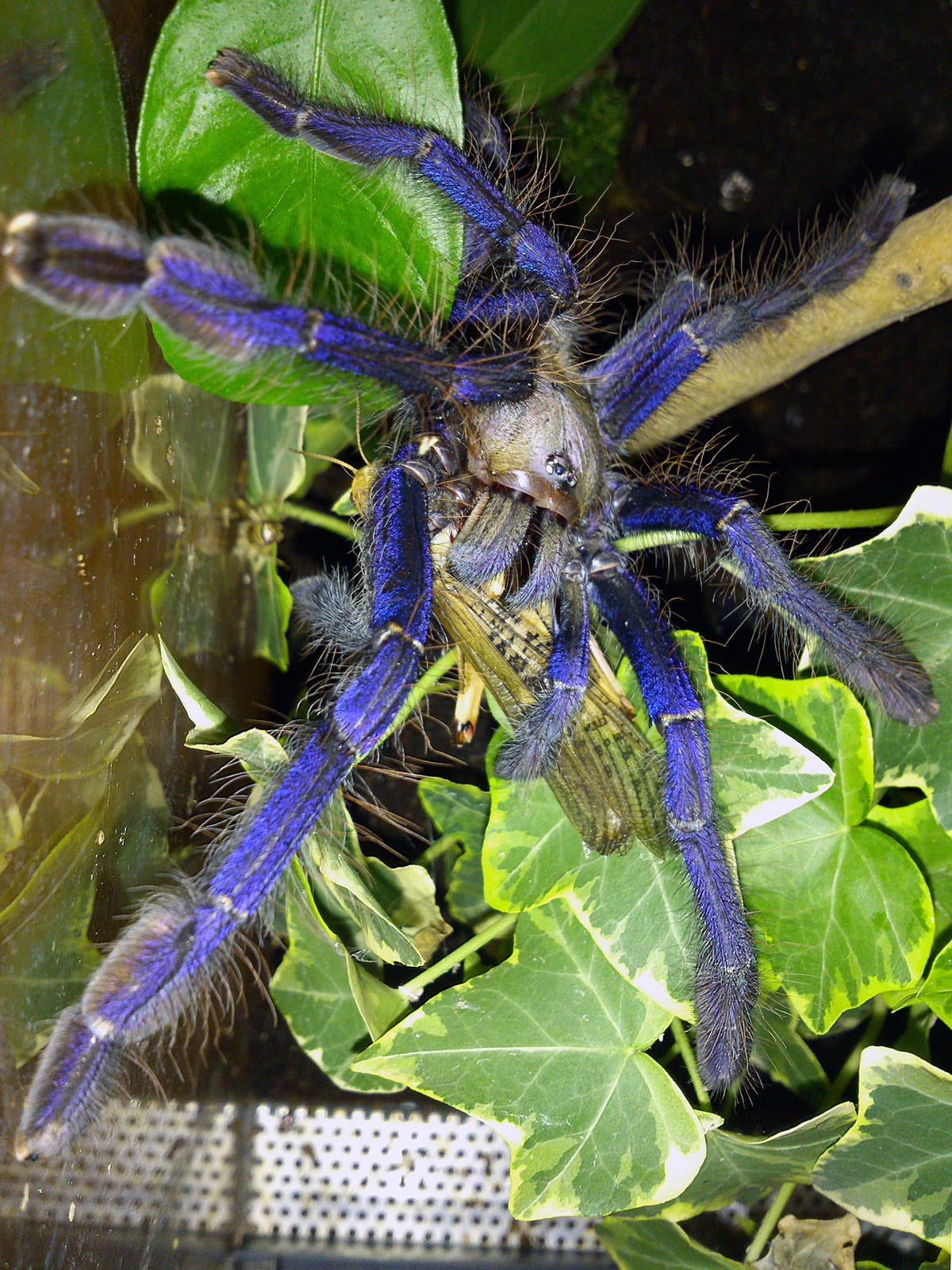
One of the largest arboreal tarantulas in the world. Females have legs that shimmer violet to blue with a grey-green carapace, while mature males turn yellowish green. It is very fast with potent venom, so it suits advanced keepers.
Difficulty
Advanced
Temperature
23〜25℃
Lifespan
Up to about 14 years for females, around 5 years for males
Size
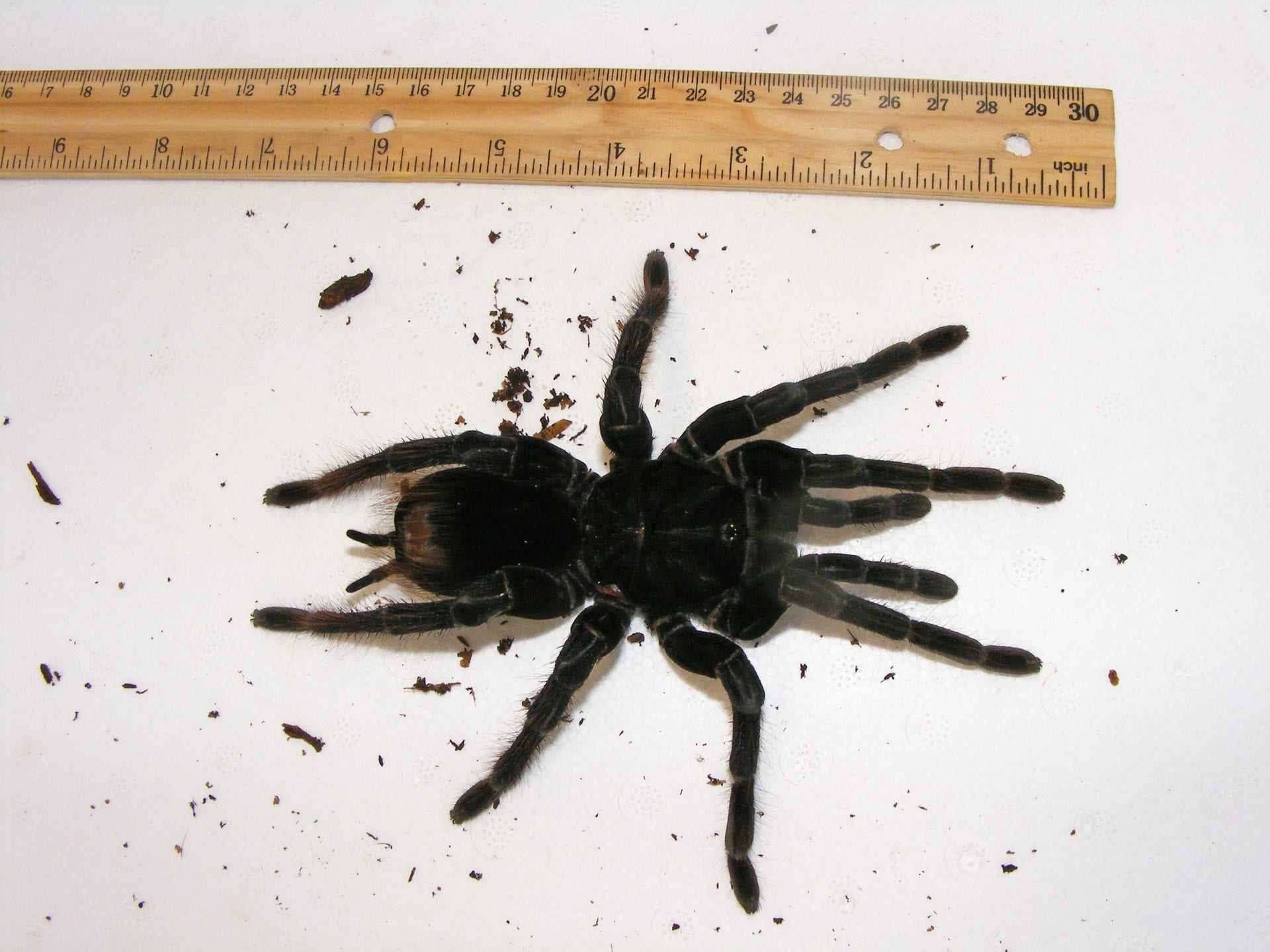
Body up to 8cm, leg span up to about 25cm, carapace up to 3cm
Humidity
60〜75%
Diet
Live insects such as crickets, locusts and roaches
About
Omothymus violaceopes occurs in Singapore, southern Peninsular Malaysia and the Riau Islands of Indonesia, and is regarded as one of the largest arboreal tarantulas known. The legs shimmer violet to blue, the carapace is grey-green to grey-blue and the abdomen greyish blue. Males turn yellowish green at the mature moult, and the sexes can be told apart from the juvenile stage. It lives in primary lowland monsoon forest, preferring tree hollows three to four metres above the ground, though captive animals will also burrow into the substrate. Growth is fast and sexual maturity is reached at one to one and a half years. Egg sacs hold 100 to 150 eggs and hatch in about ten weeks. It is shy and nervous, but when cornered it raises its front legs in threat and will ultimately bite, which can cause severe pain, muscle cramping and nausea.
Source: Wikipedia (CC BY-SA 4.0)
Lifespan of the Singapore Blue
The Singapore Blue lives Up to about 14 years for females, around 5 years for males.
Size of the Singapore Blue
The Singapore Blue grows to Body up to 8cm, leg span up to about 25cm, carapace up to 3cm.
Females approach a leg span of 25cm with a body length of 8cm and a carapace about 3cm long.
Temperature & humidity for the Singapore Blue
The ideal temperature for the Singapore Blue is 23〜25℃. Ideal humidity is 60〜75%.
Basic Info
Origin
Singapore, southern Peninsular Malaysia and the Riau Islands of Indonesia
Care Specifications
AggressiveSolitary
Sources: German Wikipedia: Omothymus violaceopes / Vogelspinnen-Info: Lampropelma violaceopes / The Tarantula Collective: Omothymus violaceopes / GBIF
References & Sources
Edited & verified by: BreederDirect editorial team
The taxonomic, regulatory, and husbandry data on this page are compiled and verified against the authoritative primary sources below.
Taxonomy & Authority
Accepted name: Omothymus violaceopes (Abraham, 1924)
Synonyms: Lampropelma violaceopes Abraham, 1924, Lampropelma violaceopedes Abraham, 1924
Authority databases: GBIF
Nomenclature follows global taxonomic authority databases.
Regulations & Conservation Status
Not CITES-listed
Sources: CITES Appendices (species not listed)
Regulations may change. Always verify the latest information with the relevant authorities.
Singapore Blue Listings
Loading latest listingsFind listings for this species