Source: Wikimedia Commons
Malaysian Earth Tiger
AdvancedOmothymus schioedtei
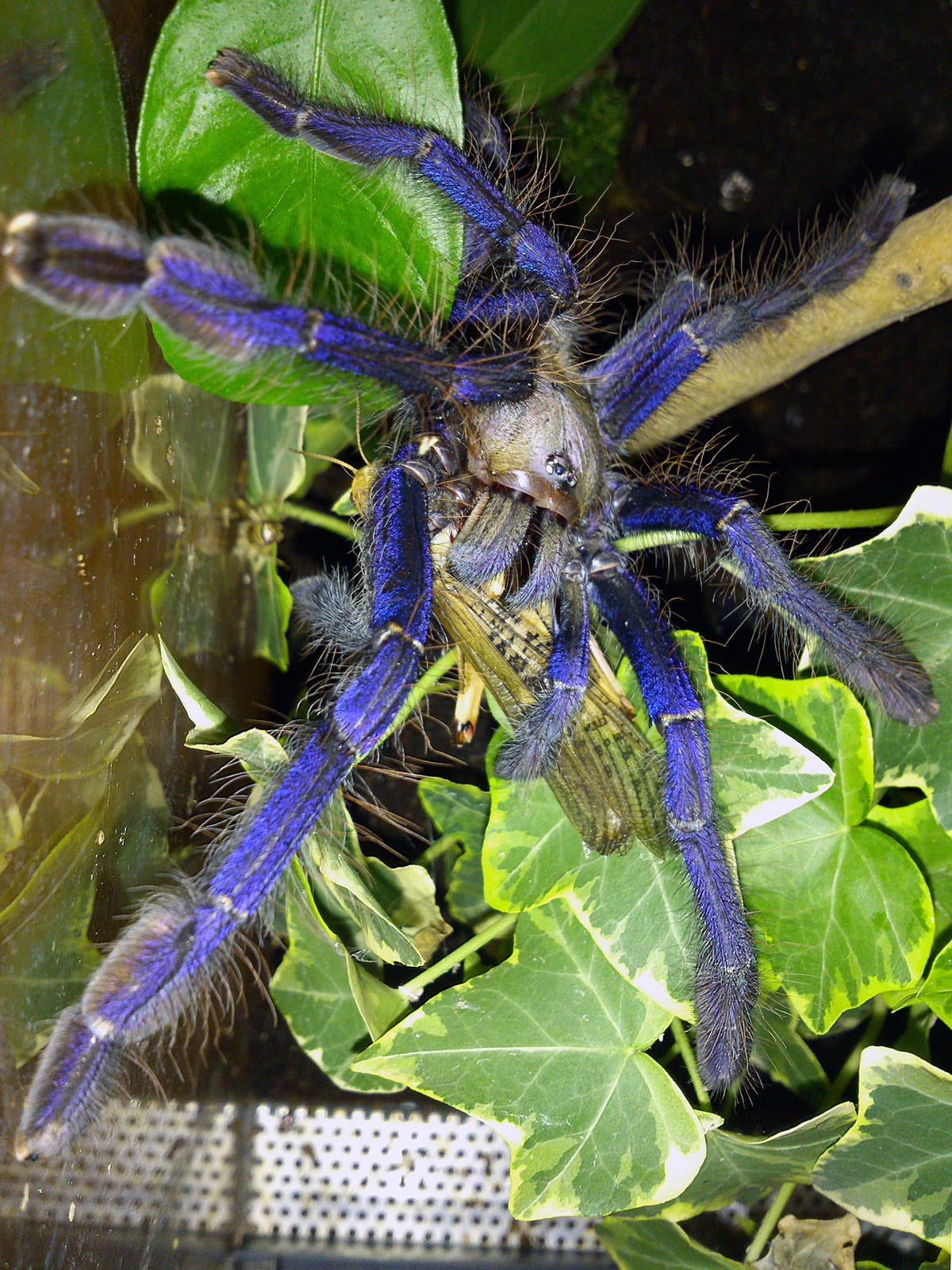
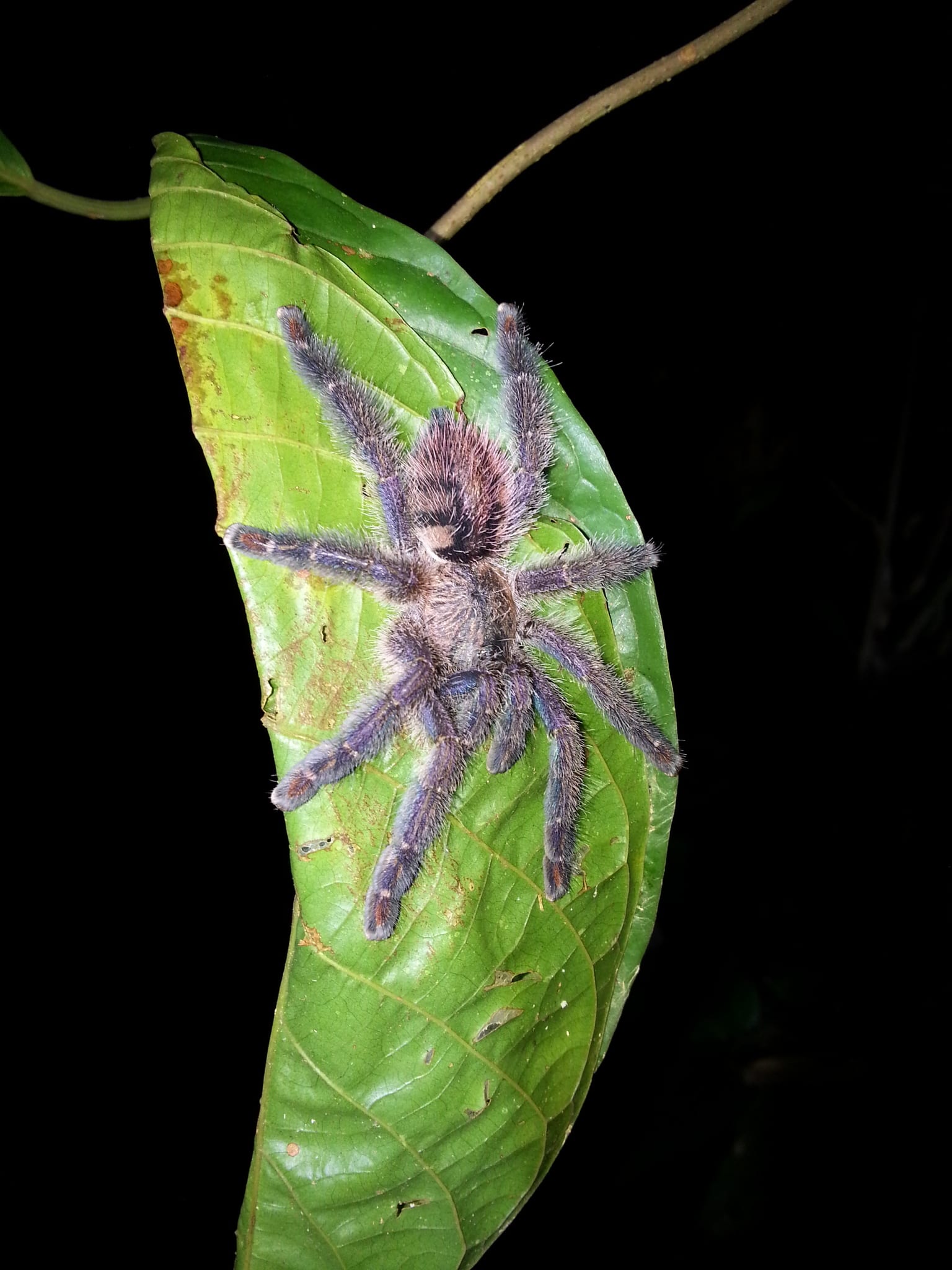
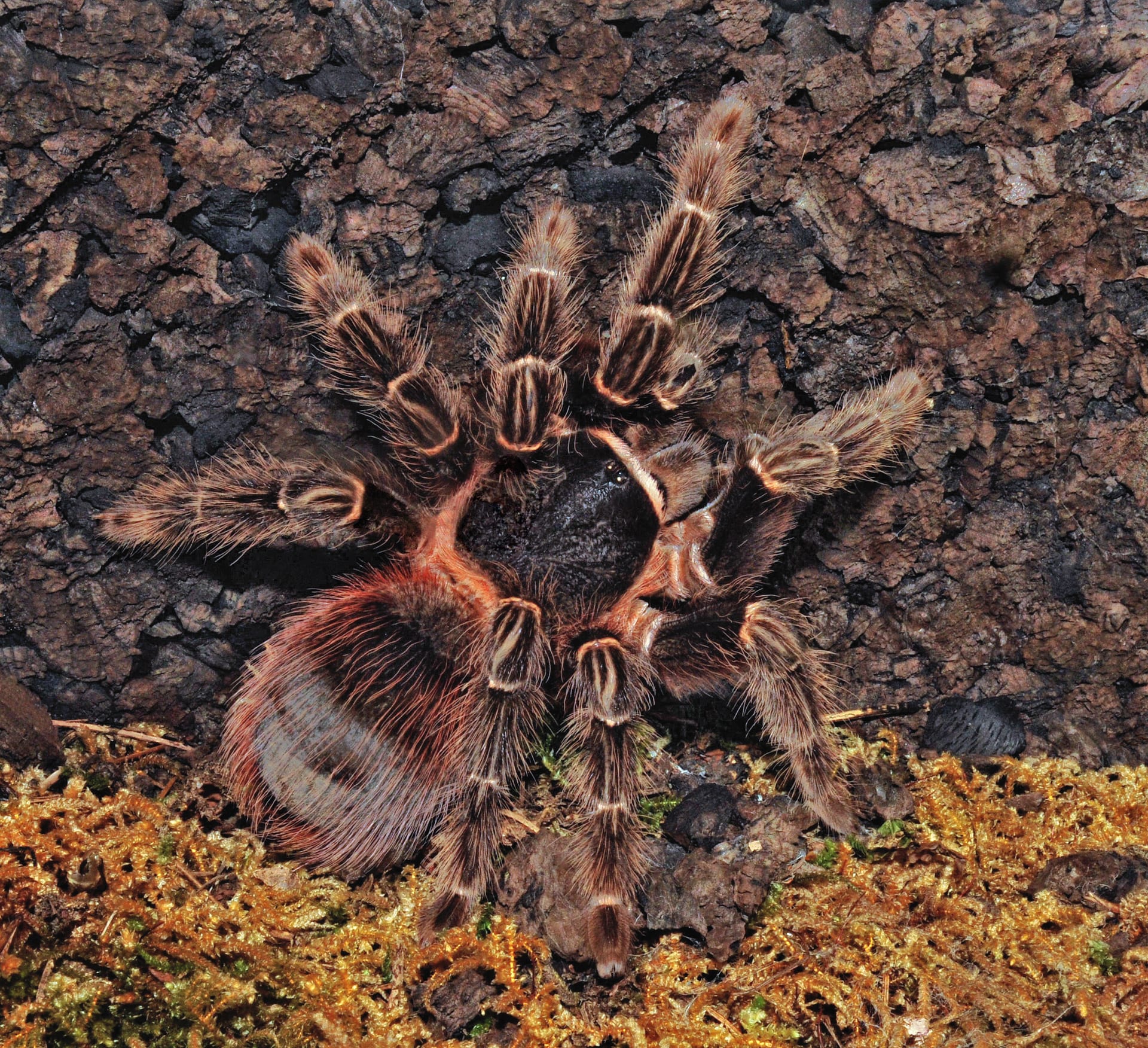
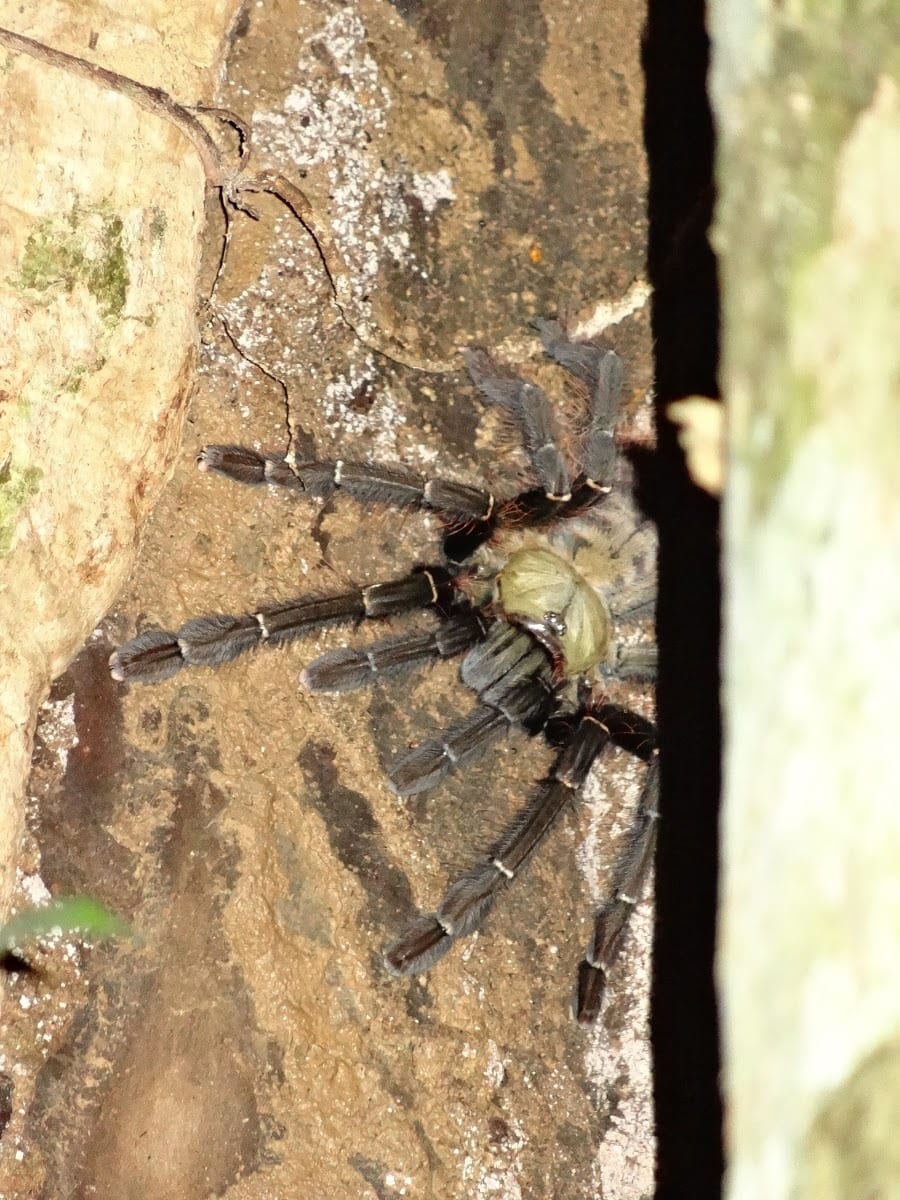
A large arboreal tarantula from lowland forest on the Malay Peninsula. It has a yellow carapace and dark tiger-like stripes across the abdomen, with long red setae on the abdomen and legs. It is fast and must be kept singly.
Difficulty
Advanced
Temperature
28〜30℃
Lifespan
Females 12-15 years / males 4-5 years
Size
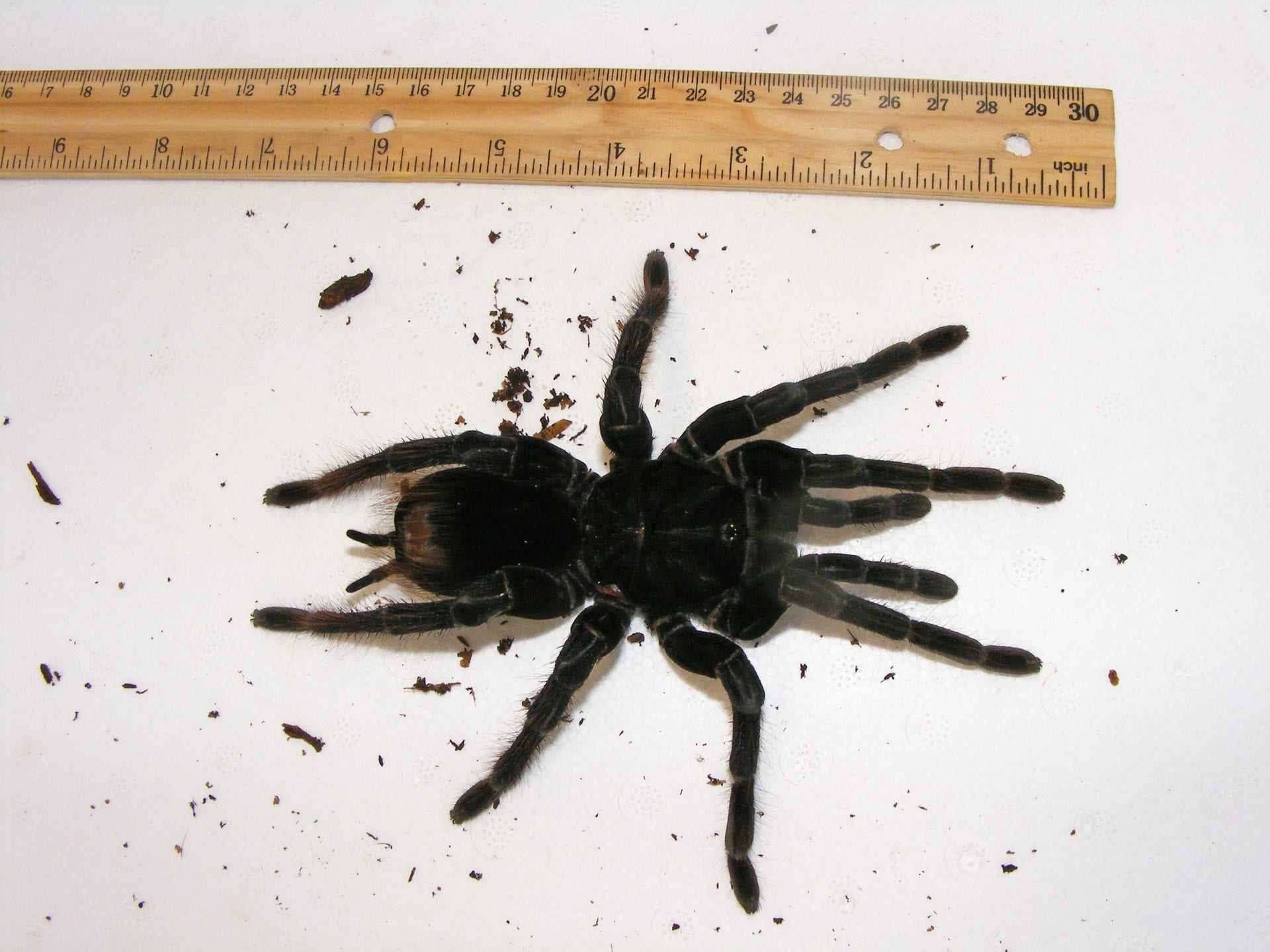
Body about 7cm (female), leg span about 22cm, carapace over 3cm
Humidity
70%
Diet
Live insects such as crickets, roaches and moths
About
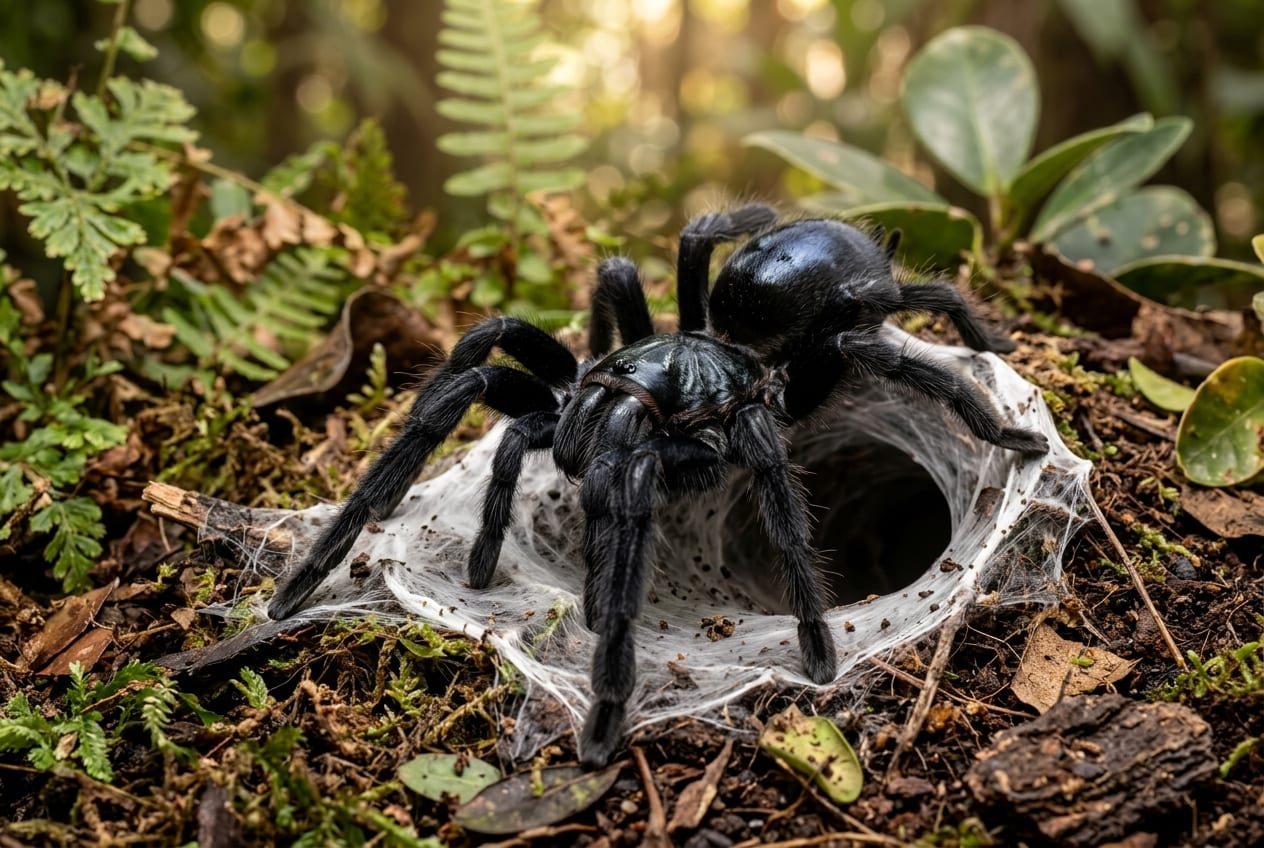
Omothymus schioedtei is a large arboreal tarantula of the subfamily Ornithoctoninae found in Peninsular Malaysia and southern Thailand. It reaches a leg span of 22cm with a carapace over 3cm long. Sexual dimorphism is marked: males become progressively more olive green with each moult, while females change from juvenile brown to a lighter olive green carapace with a dark grey to black abdomen and legs. Both sexes carry long red setae on the abdomen and legs, and the abdomen bears dark bands resembling tiger stripes, which is the origin of the earth tiger trade name. It lives in primary lowland and foothill monsoon forest, webbing hollow trees several metres above the ground. Adult females are found almost entirely in large mature trees, while younger animals also turn up behind loose bark, in rock crevices and in man-made structures such as bridges and boardwalks. In captivity good ventilation and a substrate that is not kept soaking are considered important.
Source: Wikipedia (CC BY-SA 4.0)
Lifespan of the Malaysian Earth Tiger
The Malaysian Earth Tiger lives Females 12-15 years / males 4-5 years.
Size of the Malaysian Earth Tiger
The Malaysian Earth Tiger grows to Body about 7cm (female), leg span about 22cm, carapace over 3cm.
Temperature & humidity for the Malaysian Earth Tiger
The ideal temperature for the Malaysian Earth Tiger is 28〜30℃. Ideal humidity is 70%.
Basic Info
Origin
Malay Peninsula (Malaysia and southern Thailand), Langkawi and Penang islands
Care Specifications
Semi-aggressiveSolitary
Sources: Wikipedia: Malaysian earthtiger tarantula / Terrarium.com.pl: Omothymus schioedtei / GBIF
References & Sources
Edited & verified by: BreederDirect editorial team
The taxonomic, regulatory, and husbandry data on this page are compiled and verified against the authoritative primary sources below.
Taxonomy & Authority
Accepted name: Omothymus schioedtei Thorell, 1891
Synonyms: Cyriopagopus schioedtei (Thorell, 1891), Omothymus thorelli Simon, 1901
Authority databases: GBIF
Nomenclature follows global taxonomic authority databases.
Regulations & Conservation Status
Not CITES-listed
Sources: CITES Appendices (species not listed)
Regulations may change. Always verify the latest information with the relevant authorities.
Malaysian Earth Tiger Listings
Loading latest listingsFind listings for this species