Source: Wikimedia Commons
Malaysian Forest Scorpion
IntermediateHeterometrus silenus
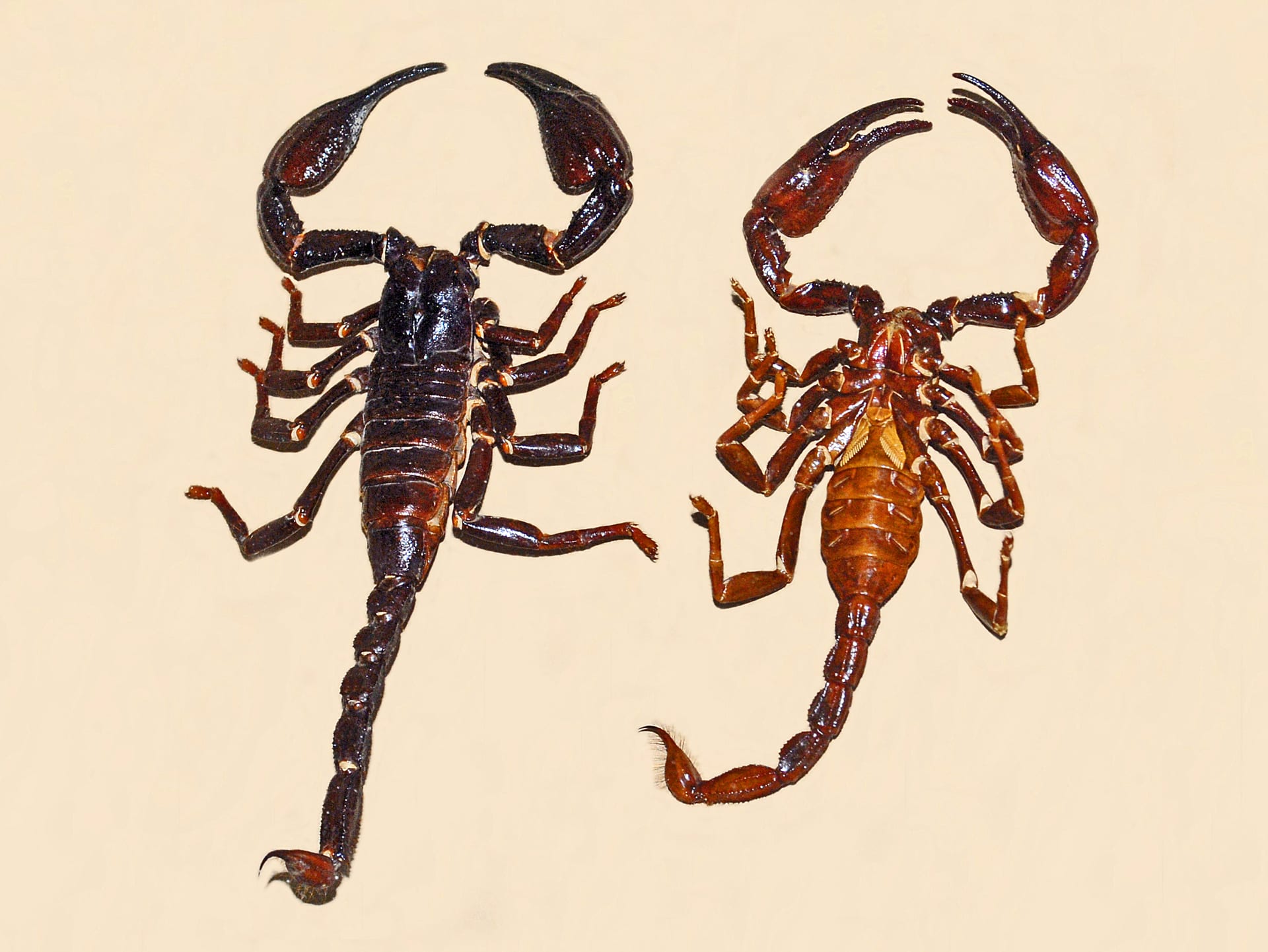
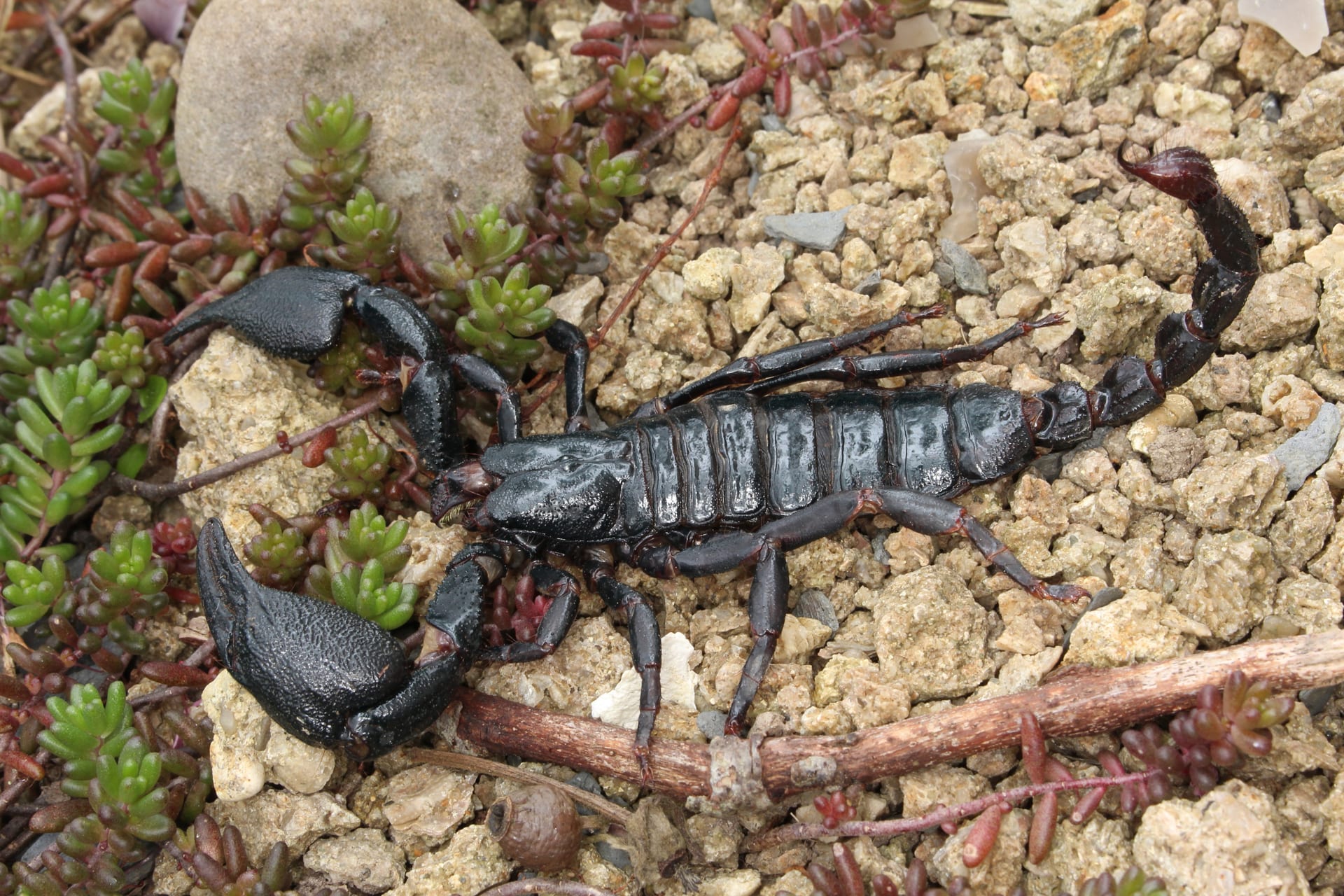
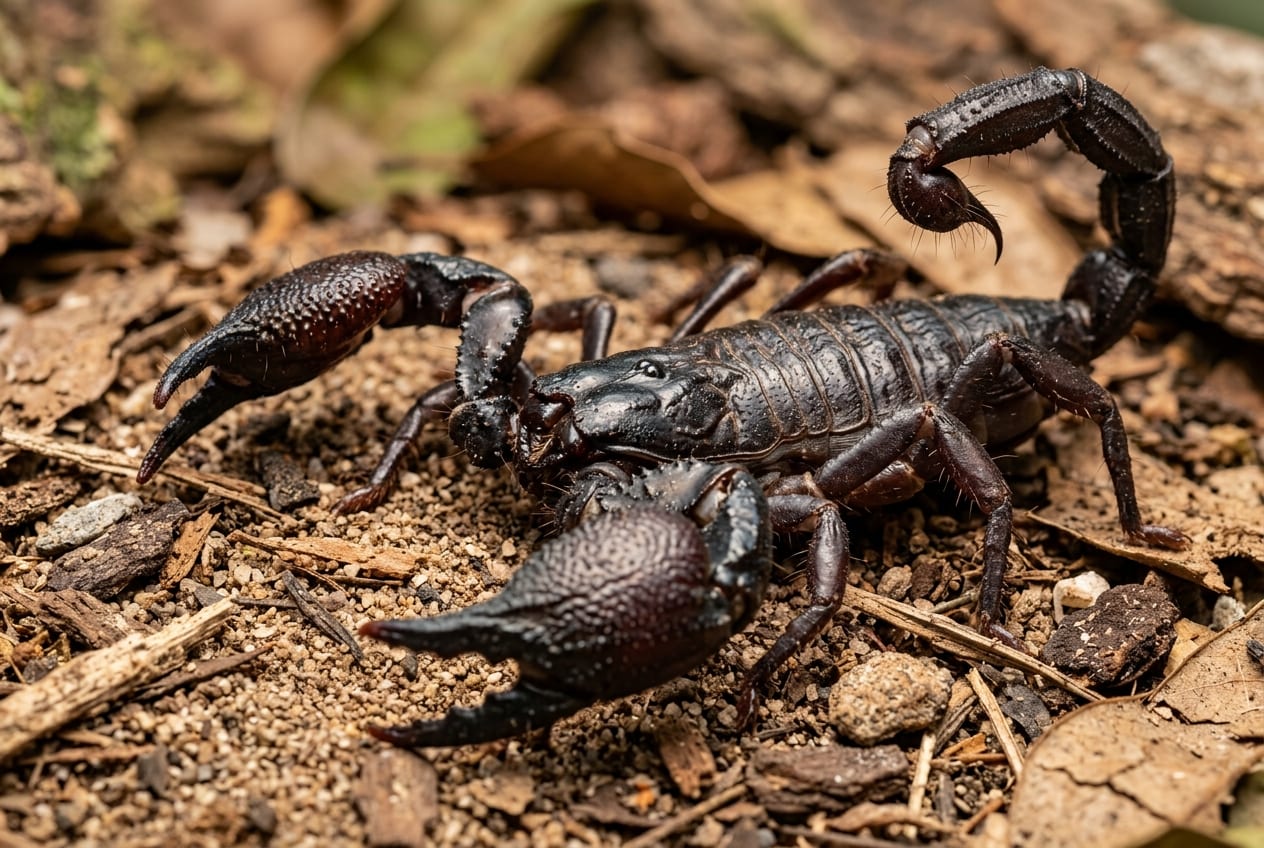
A large black scorpion of mainland Indochina. Despite the trade name, records concentrate in Vietnam, Cambodia and Thailand. It is hard to separate from its congeners and often traded under other names.
Difficulty
Intermediate
Lifespan
6-8 years
Size
10-20cm total length (guideline for the genus Heterometrus)
Humidity
80%
Diet
Live insects such as crickets
About
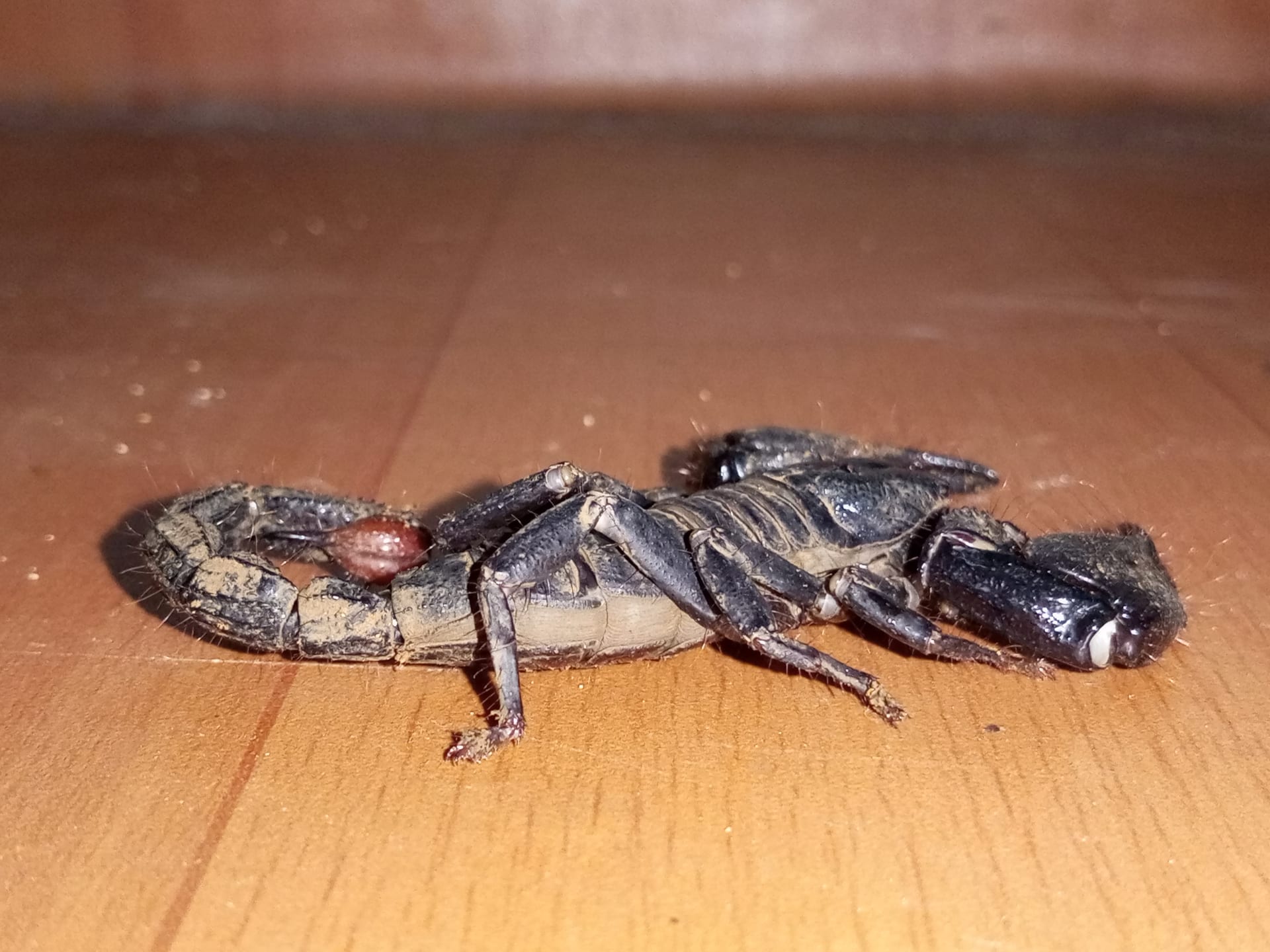
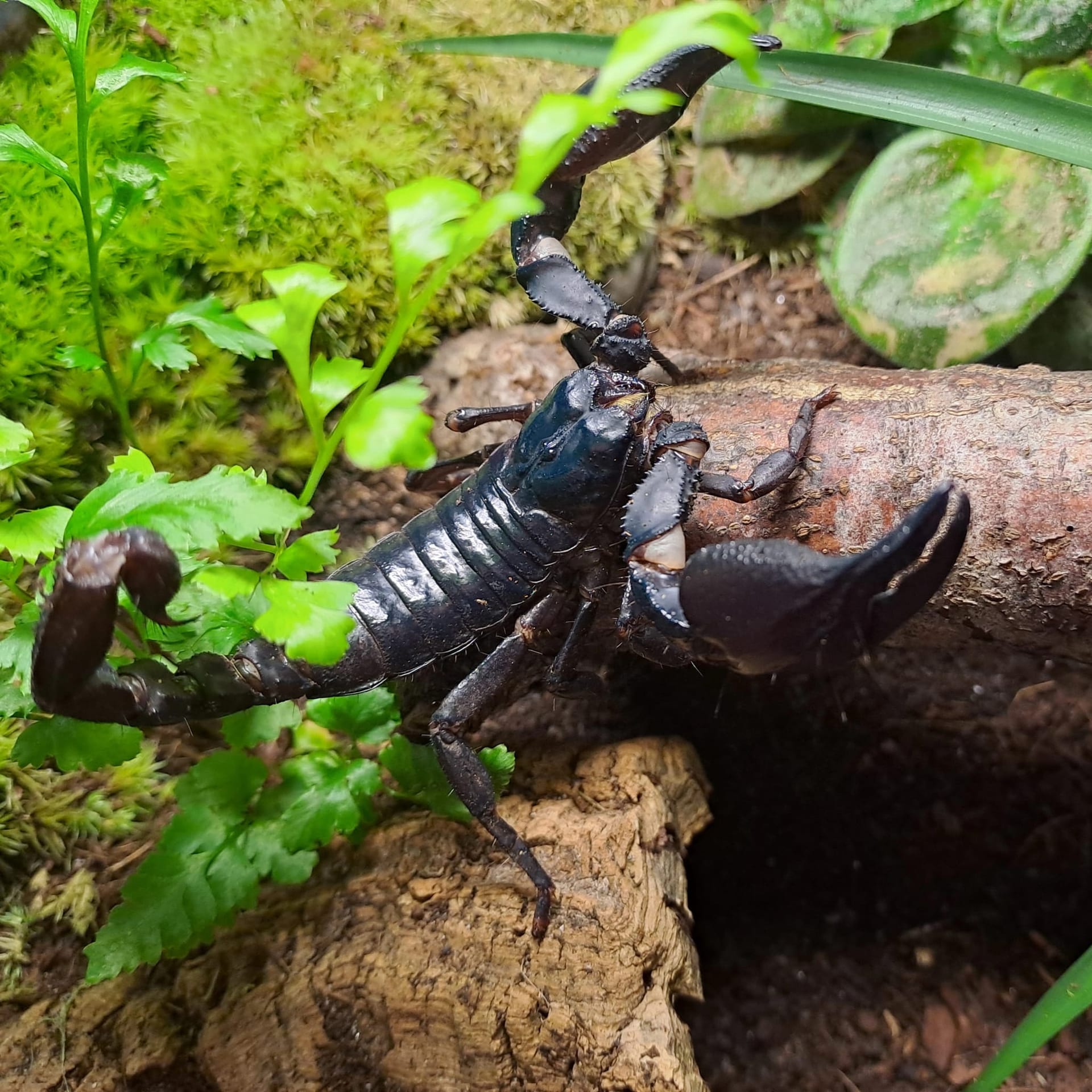
Heterometrus silenus was described by Simon in 1884 as Palamnaeus silenus; GBIF records cluster in Vietnam, Cambodia and Thailand, with no confirmed Malaysian records despite the trade name. The genus comprises large scorpions of 10-20 cm sharing a black body with heavily built, globose pedipalp pincers and a slender metasoma. The species look so alike that identification from photographs is essentially impossible, so trade names map poorly onto scientific ones, and much of the stock handled as Heterometrus petersii is said to belong to this species. The 2020 revision by Prendini and Loria raised three former subgenera to genus rank and produced 28 new combinations. The venom is weak and no human fatalities are known. The species lives on humid, well-vegetated subtropical to tropical forest floor, is nocturnal, and spends the day in burrows or under fallen logs.
Source: Wikipedia (CC BY-SA 4.0)
Lifespan of the Malaysian Forest Scorpion
The Malaysian Forest Scorpion lives 6-8 years.
Size of the Malaysian Forest Scorpion
The Malaysian Forest Scorpion grows to 10-20cm total length (guideline for the genus Heterometrus).
Basic Info
Origin
Mainland Indochina; GBIF records from Vietnam, Cambodia and Thailand
Lifespan
6-8 years
Size
10-20cm total length (guideline for the genus Heterometrus)
Care Specifications
PeacefulGroup
Sources: Exotic-pets.eu: Heterometrus spp. as beginner scorpions (Internet Archive) / Wikipedia: Heterometrus (genus) / GBIF
References & Sources
Edited & verified by: BreederDirect editorial team
The taxonomic, regulatory, and husbandry data on this page are compiled and verified against the authoritative primary sources below.
Taxonomy & Authority
Accepted name: Heterometrus silenus (Simon, 1884)
Synonyms: Palamnaeus silenus Simon, 1884
Authority databases: GBIF
Nomenclature follows global taxonomic authority databases.
Regulations & Conservation Status
Not CITES-listed
Sources: CITES Appendices (species not listed)
Regulations may change. Always verify the latest information with the relevant authorities.
Malaysian Forest Scorpion Listings
Loading latest listingsFind listings for this species