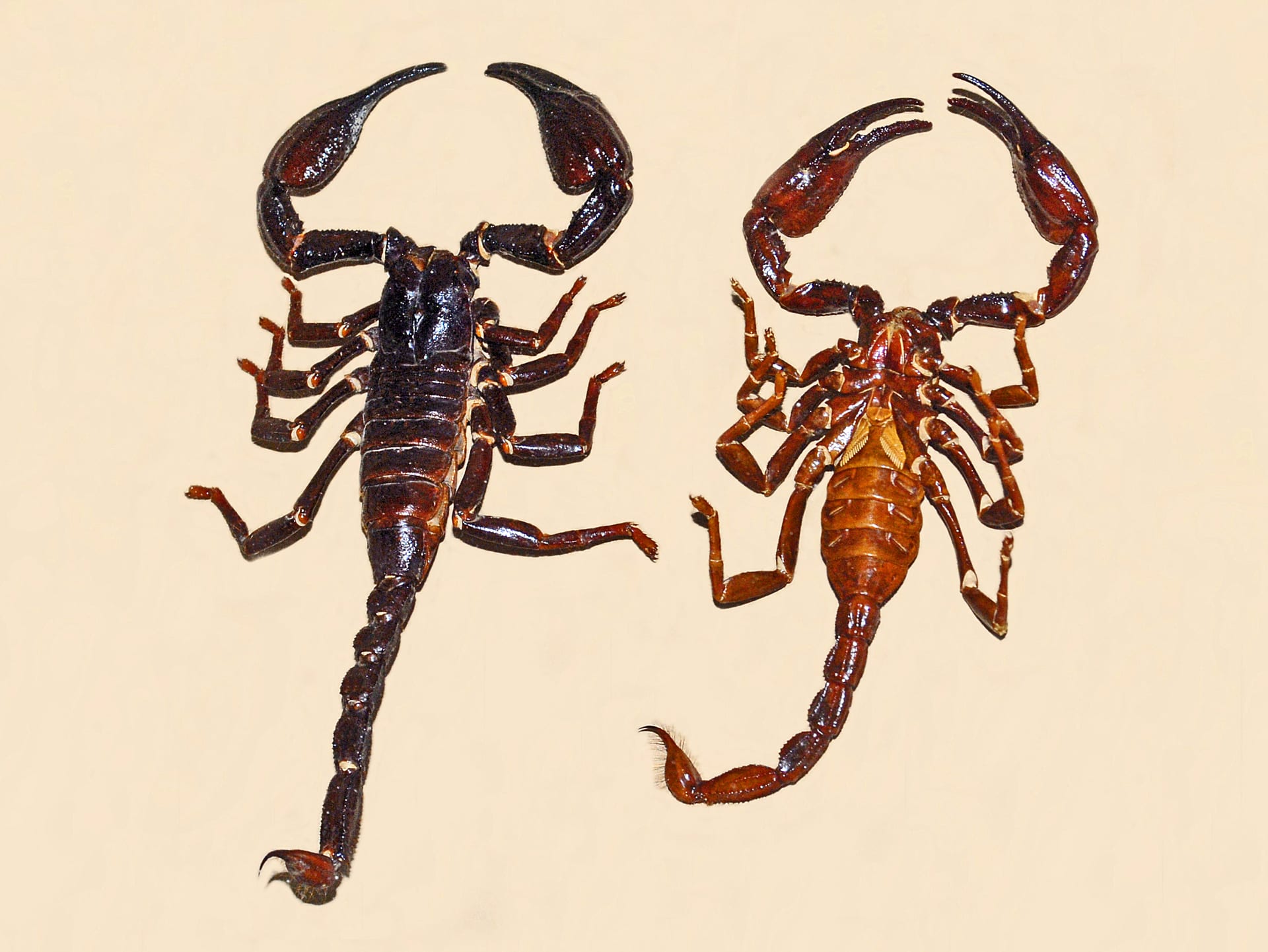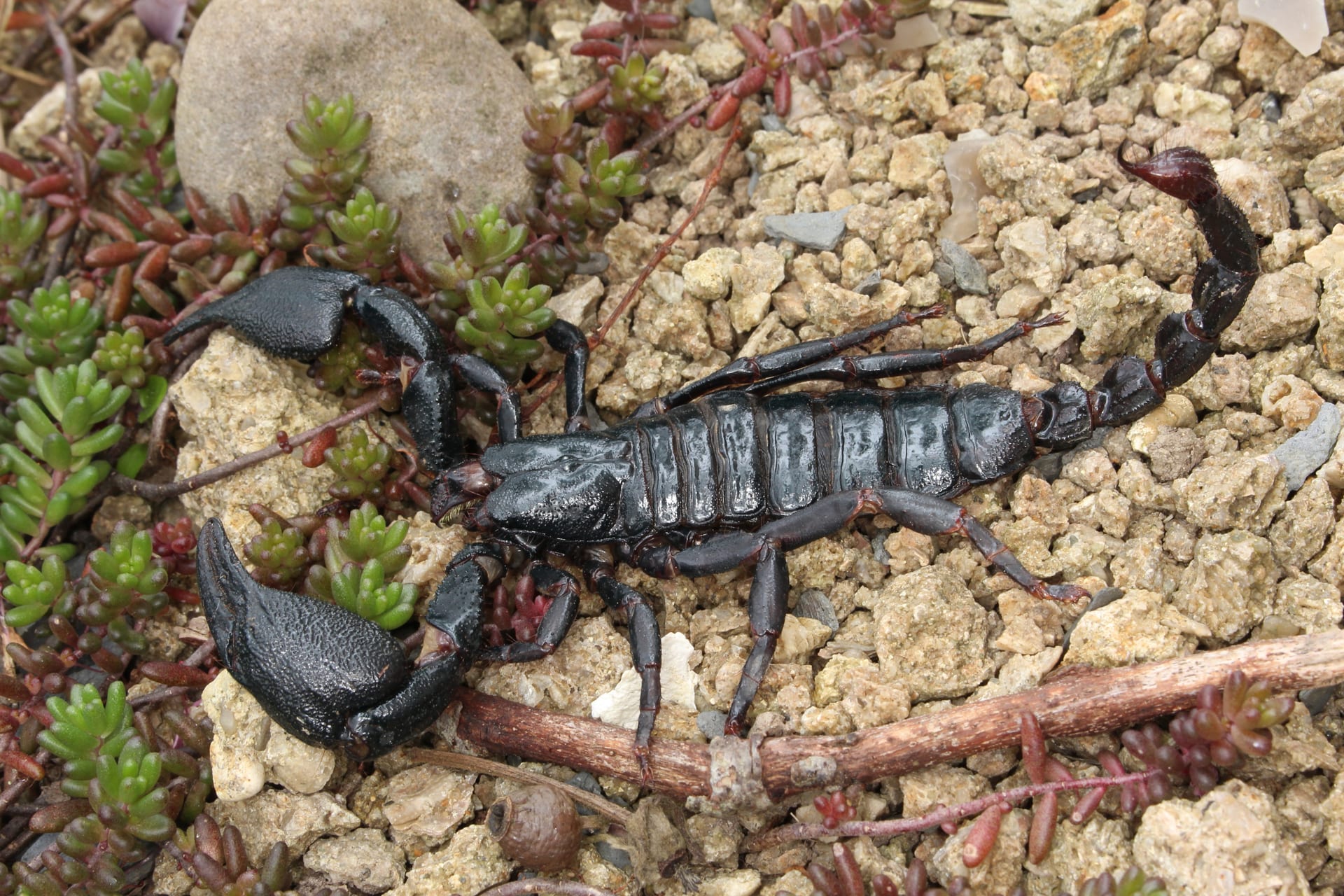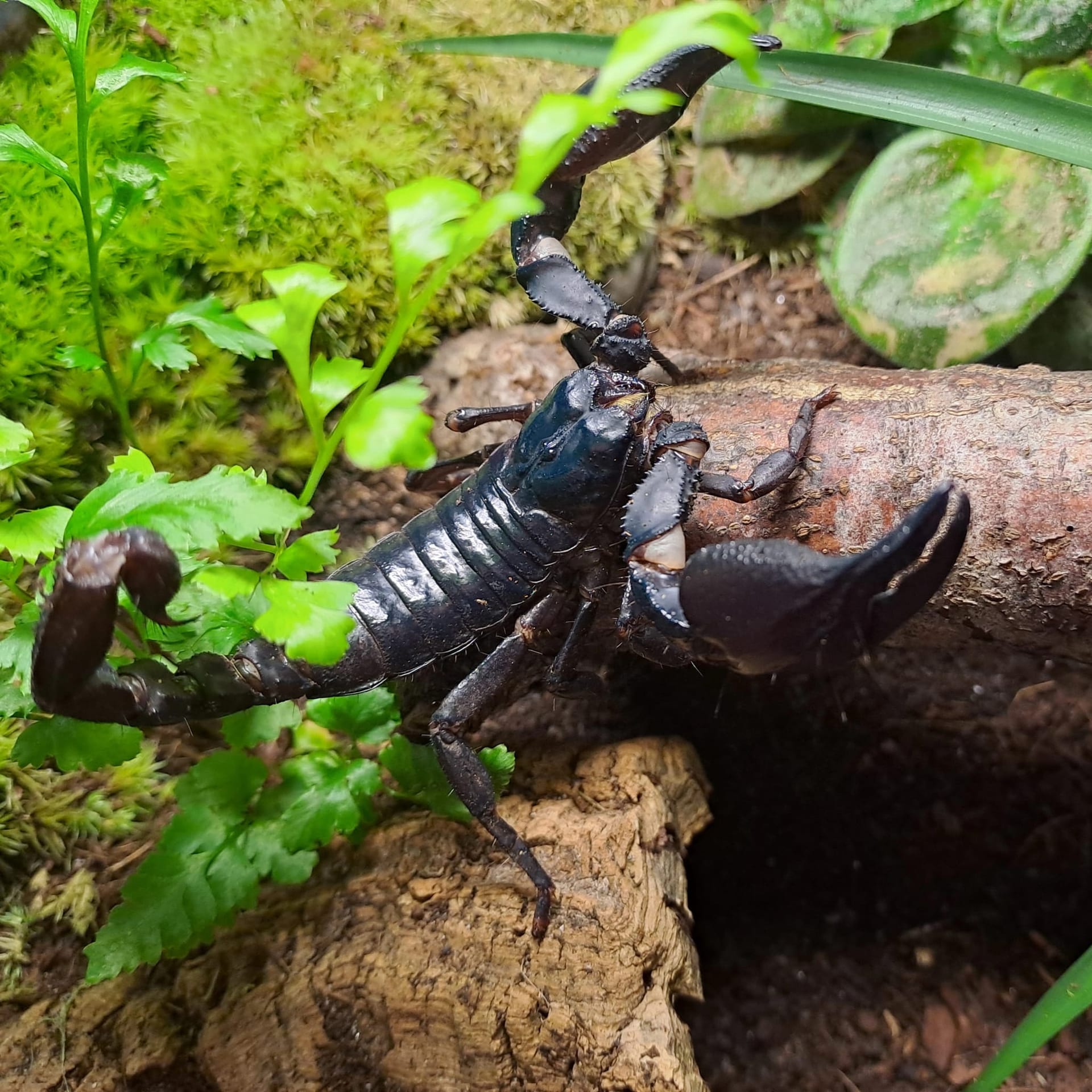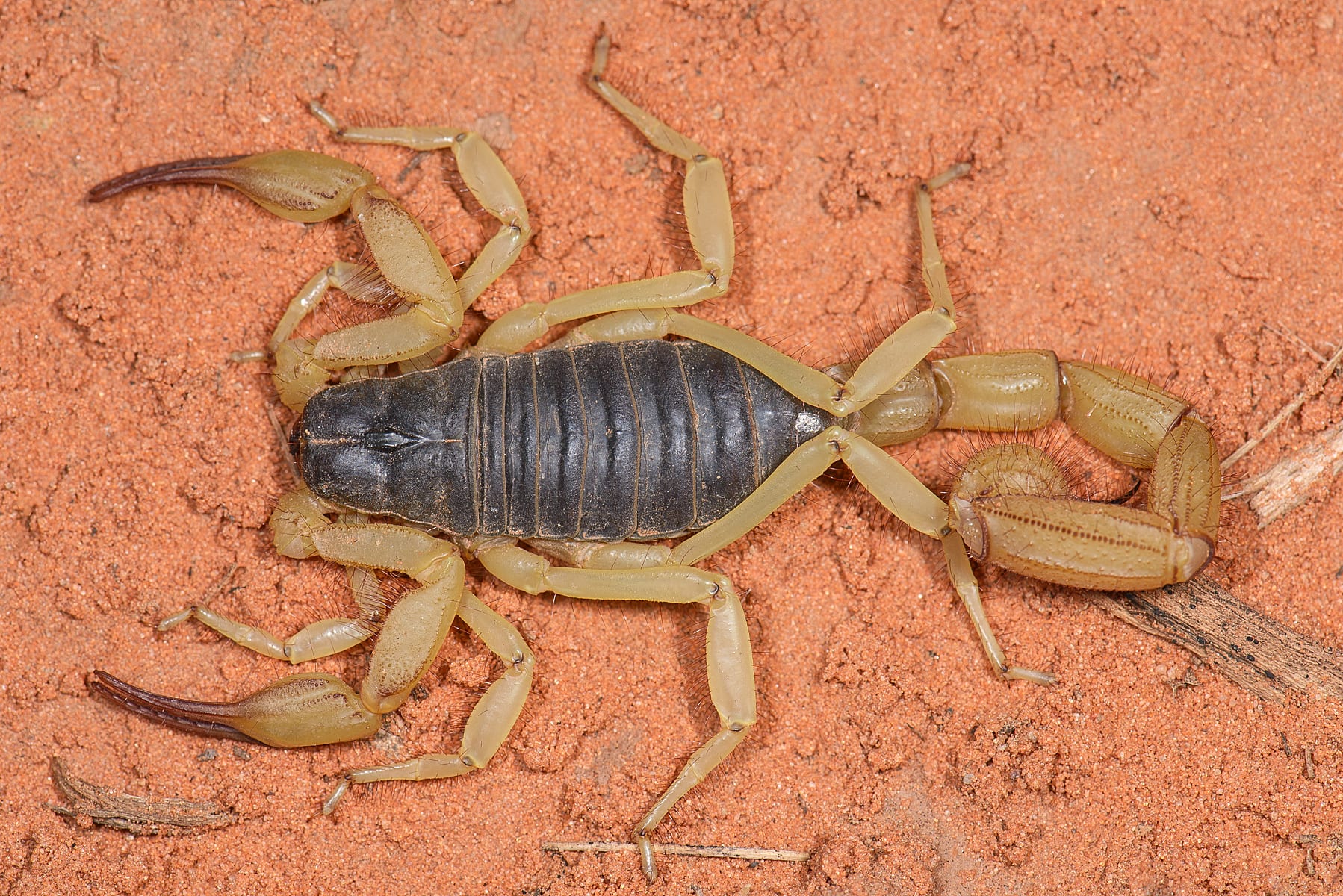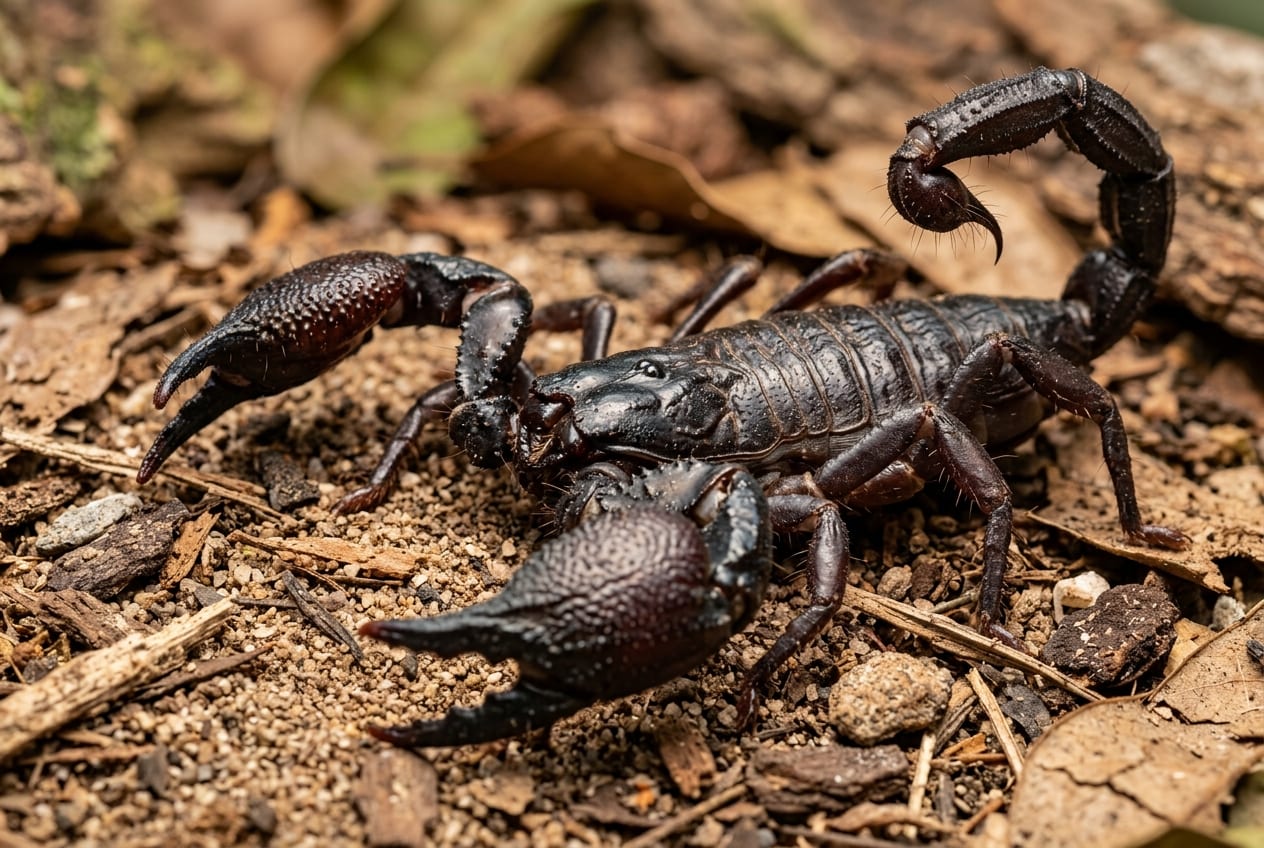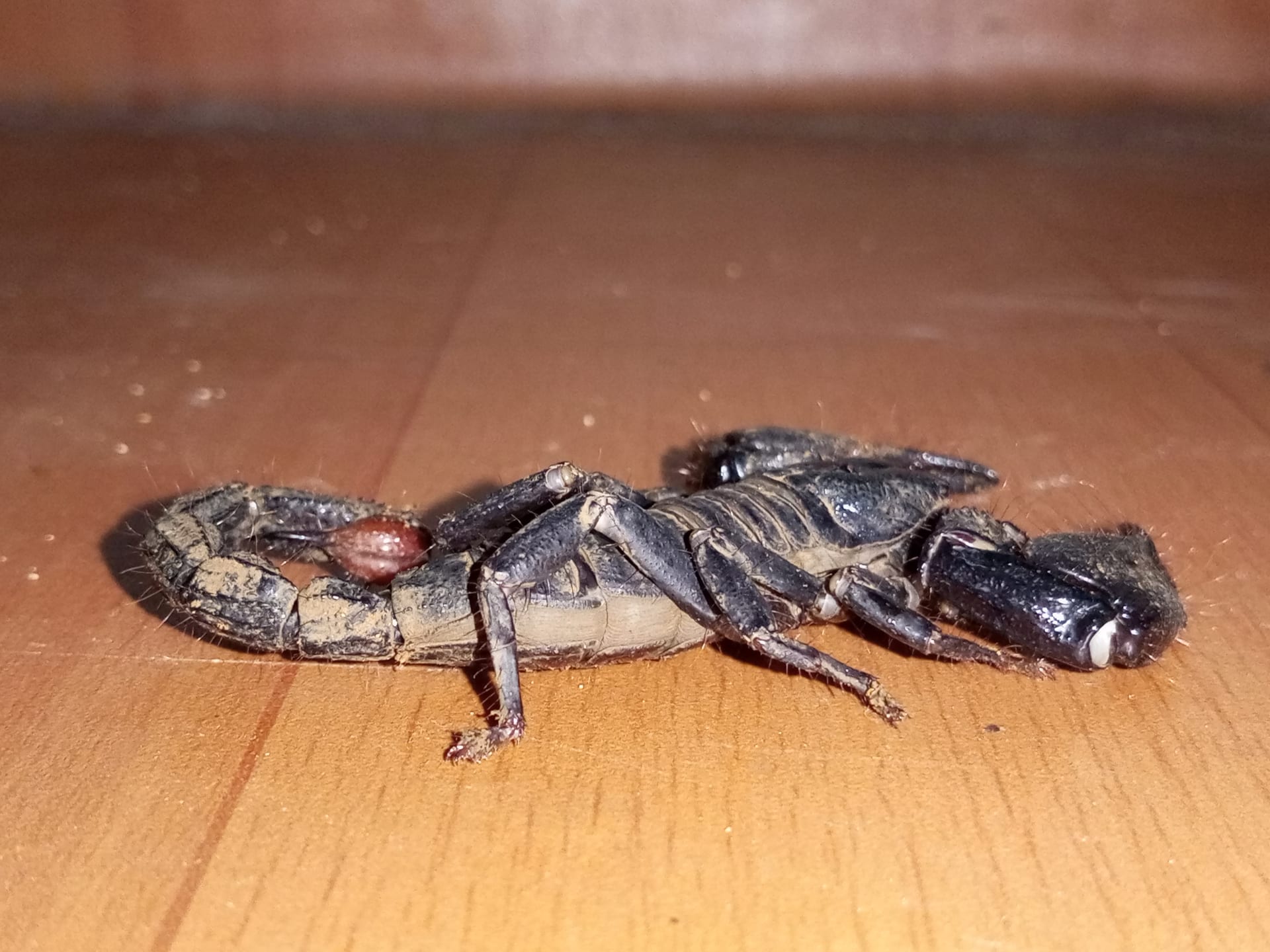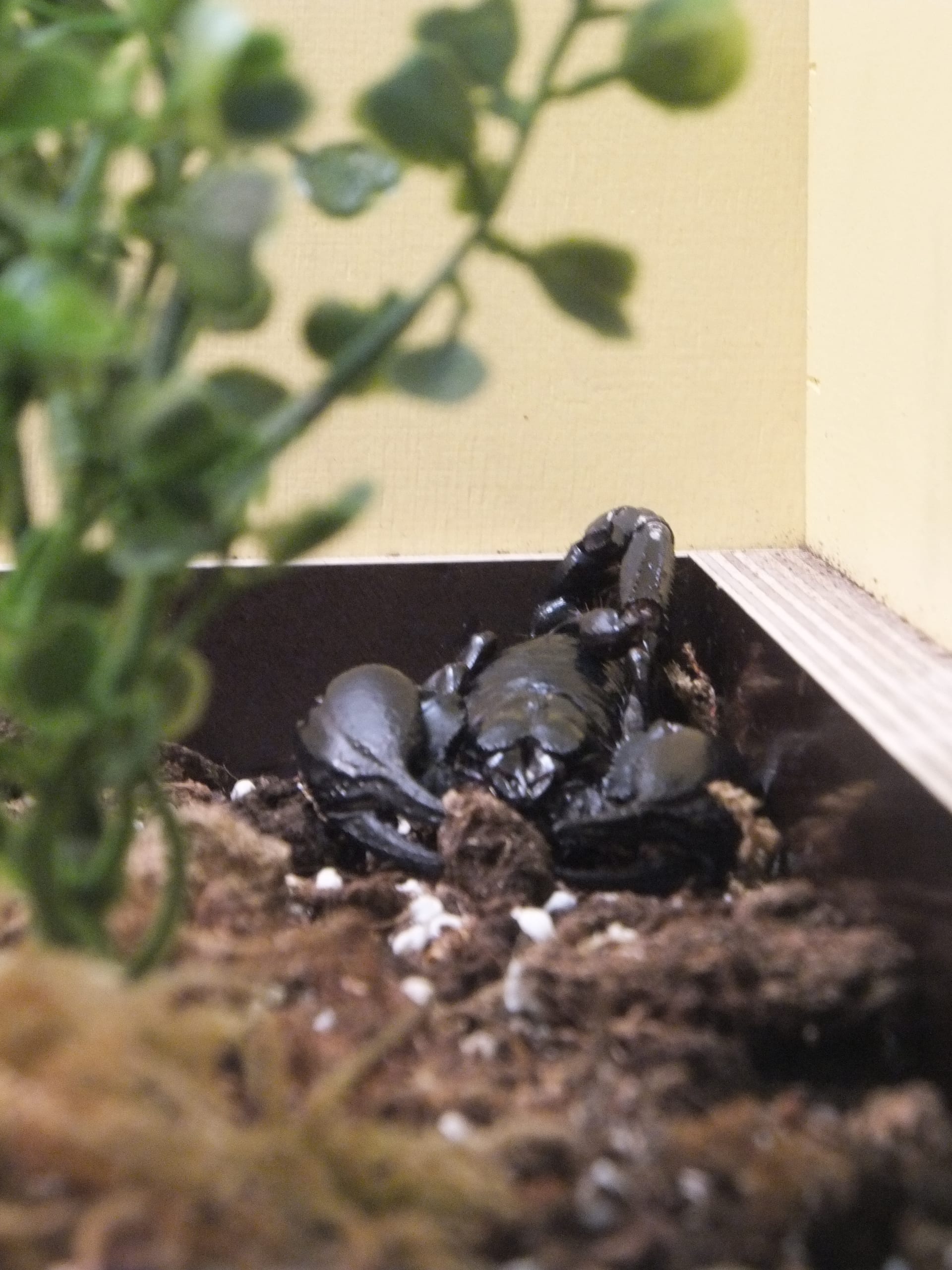
Source: Wikimedia Commons
Vietnamese Forest Scorpion
IntermediateHeterometrus laoticus
A large black scorpion from peaty ground in Vietnam and Laos, reaching 12cm. It is described as communal, yet cannibalism occurs and captured animals attack even their own kind fiercely. The venom is weak.
Difficulty
Intermediate
Lifespan
7-10 years
Size
Up to 12cm in total length
Humidity
80%
Diet
Live insects such as crickets
About
Heterometrus laoticus is a large scorpionid from peaty ground in Vietnam and Laos, reaching up to 12 cm in total length. As in the rest of the family its venom is weak and no human fatalities are known; stings cause local pain, inflammation, oedema and redness lasting hours to a few days. The main component of its venom is a protein called heteroscorpine-1, whose action is paralytic rather than lethal. The venom shows antimicrobial activity against Bacillus subtilis, Klebsiella pneumoniae, Pseudomonas aeruginosa and Staphylococcus aureus among others, and is studied as a pharmaceutical source. In Vietnam the species is farmed as a novelty food and for scorpion wine. It is regarded as communal and can be kept in groups, but cannibalism occurs and captured individuals will attack even their own kind. Species in Heterometrus are so similar that photographic identification is barely possible, so trade names carry limited confidence.
Source: Wikipedia (CC BY-SA 4.0)
Lifespan of the Vietnamese Forest Scorpion
The Vietnamese Forest Scorpion lives 7-10 years.
Size of the Vietnamese Forest Scorpion
The Vietnamese Forest Scorpion grows to Up to 12cm in total length.
Basic Info
Origin
Peaty areas of Vietnam and Laos
Lifespan
7-10 years
Size
Up to 12cm in total length
Humidity
Care Specifications
Semi-aggressiveGroup
Sources: Exotic-pets.eu: Heterometrus spp. as beginner scorpions (Internet Archive) / Wikipedia / Wikipedia: Heterometrus (genus) / GBIF
References & Sources
Edited & verified by: BreederDirect editorial team
The taxonomic, regulatory, and husbandry data on this page are compiled and verified against the authoritative primary sources below.
Taxonomy & Authority
Accepted name: Heterometrus laoticus Couzijn, 1981
Authority databases: GBIF
Nomenclature follows global taxonomic authority databases.
Regulations & Conservation Status
Not CITES-listed
Sources: CITES Appendices (species not listed)
Regulations may change. Always verify the latest information with the relevant authorities.
Vietnamese Forest Scorpion Listings
Loading latest listingsFind listings for this species