Source: Wikimedia Commons
Javan Blue Forest Scorpion
IntermediateJavanimetrus cyaneus
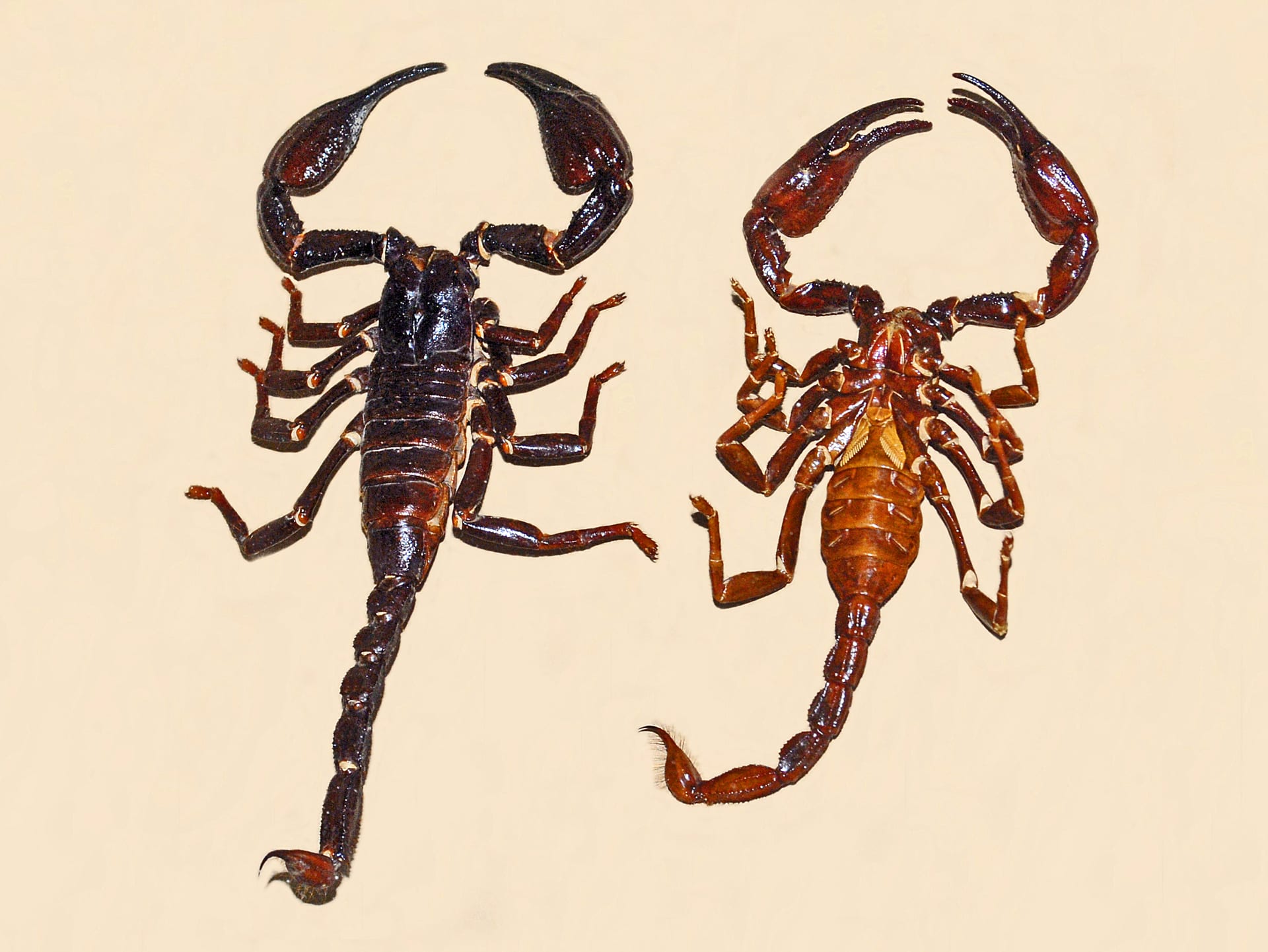
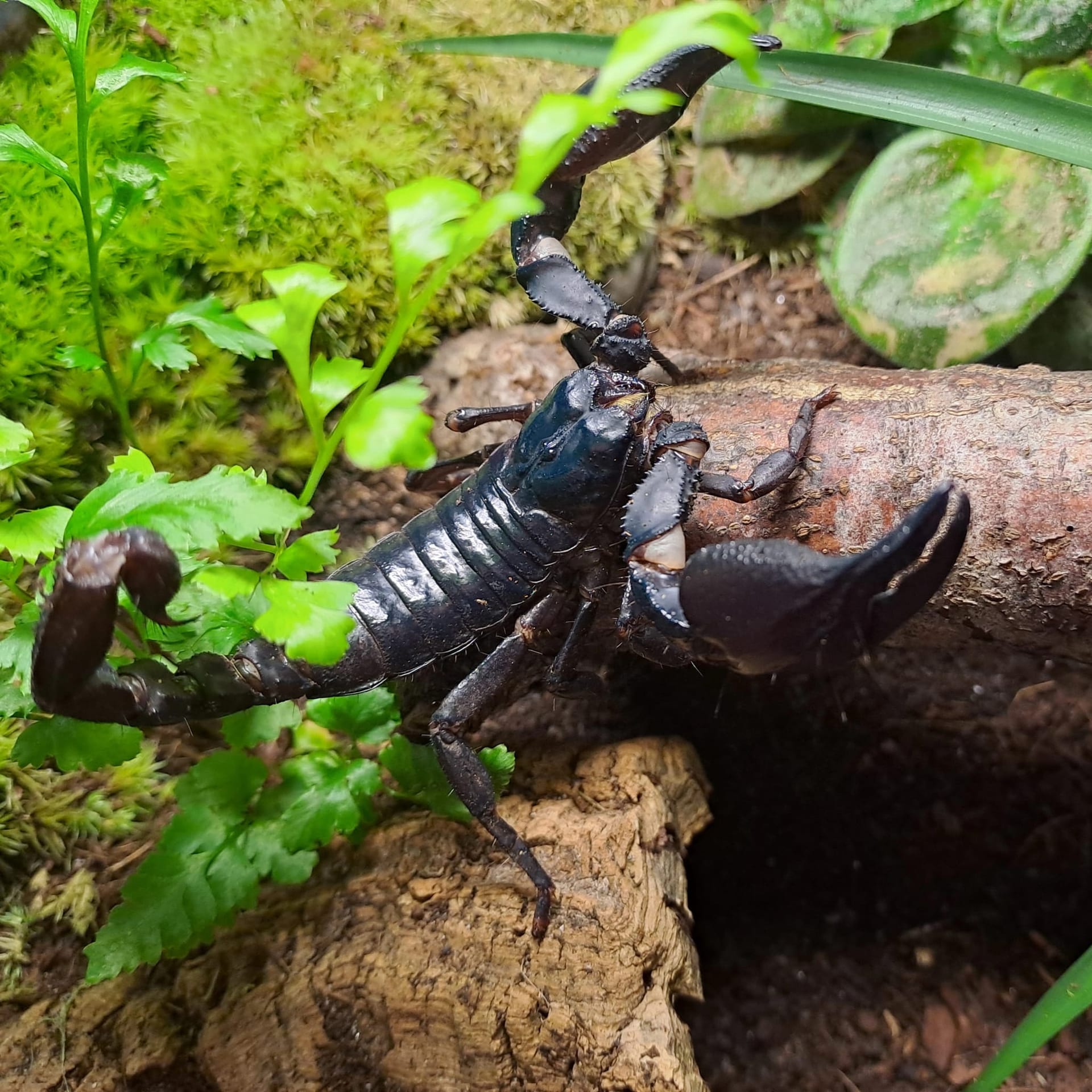
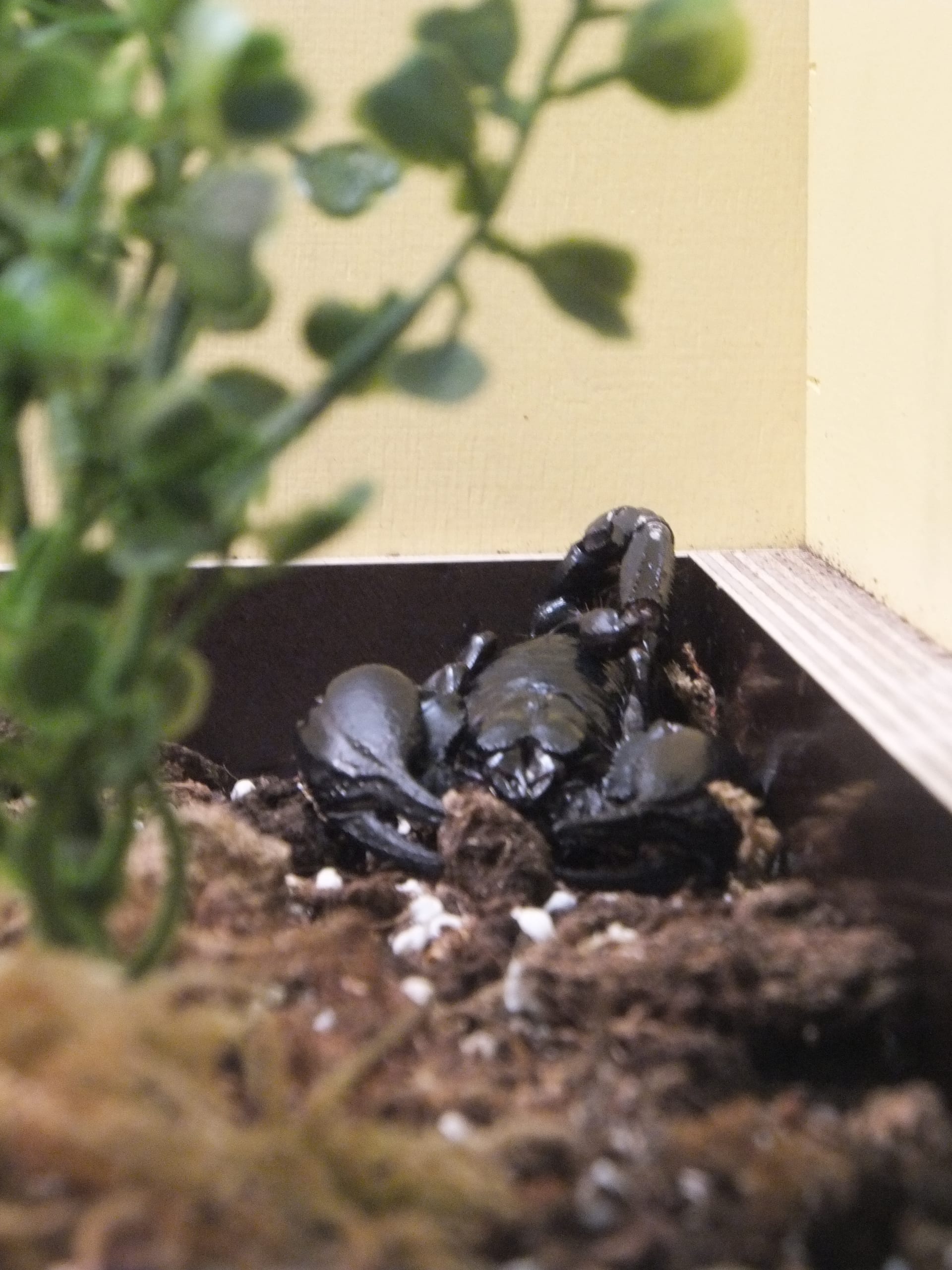
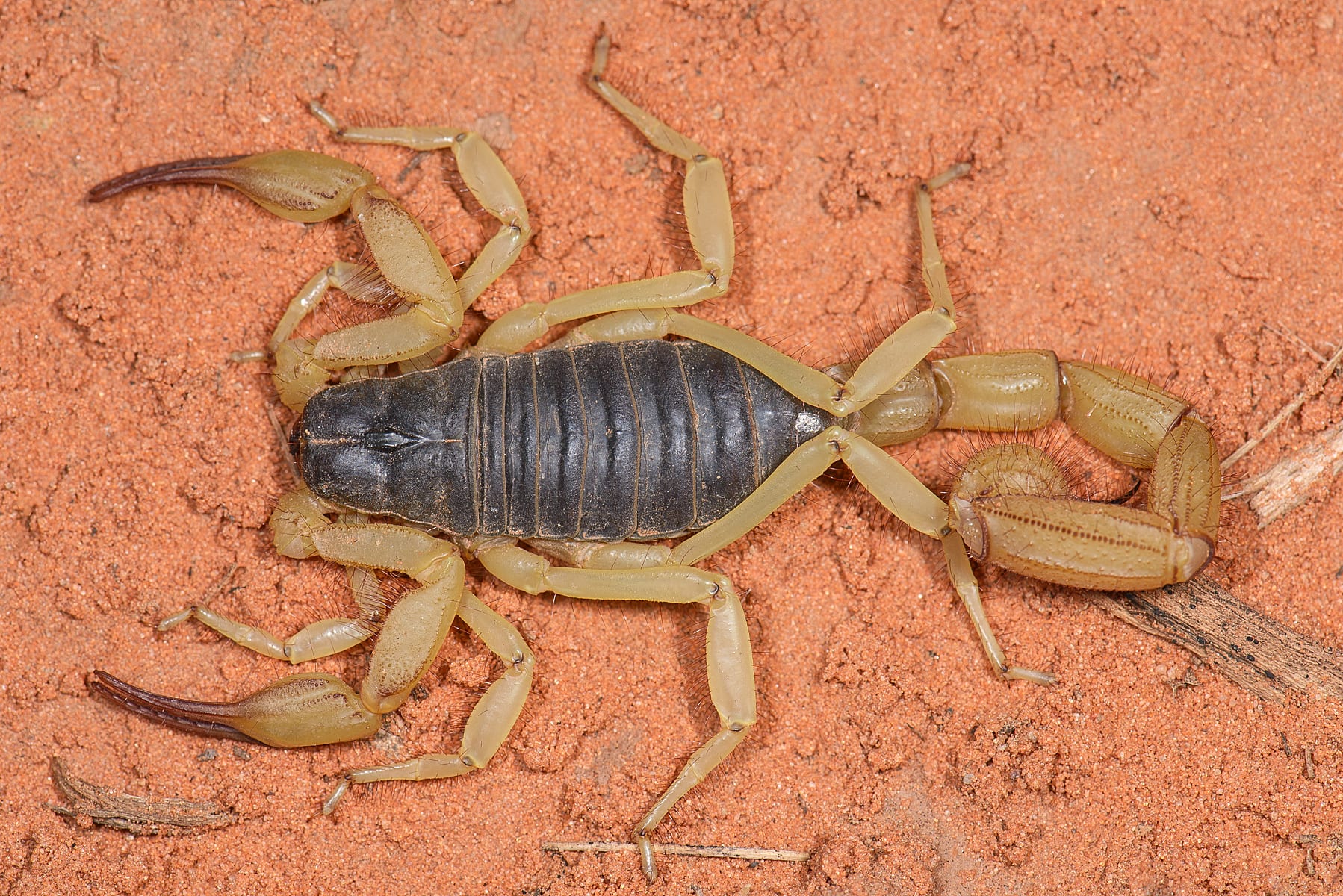
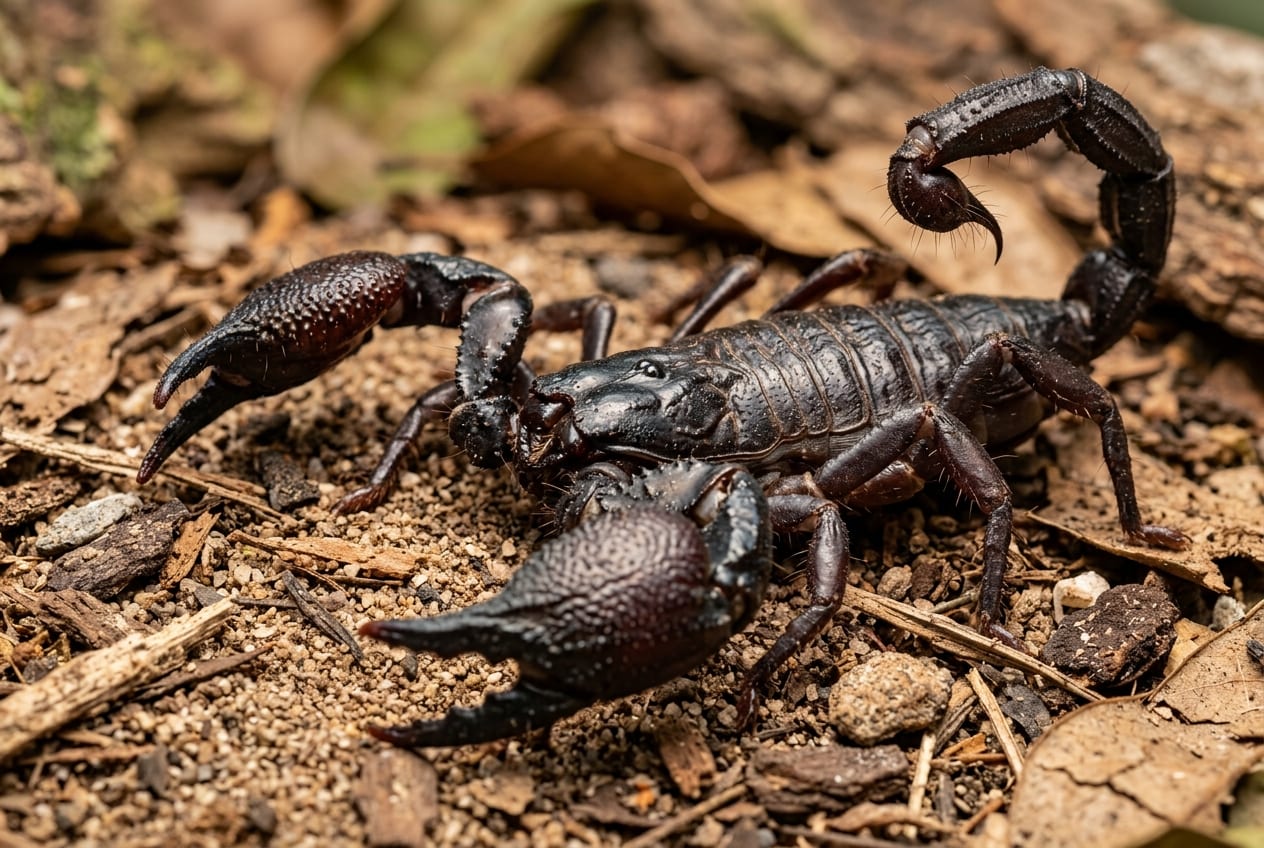
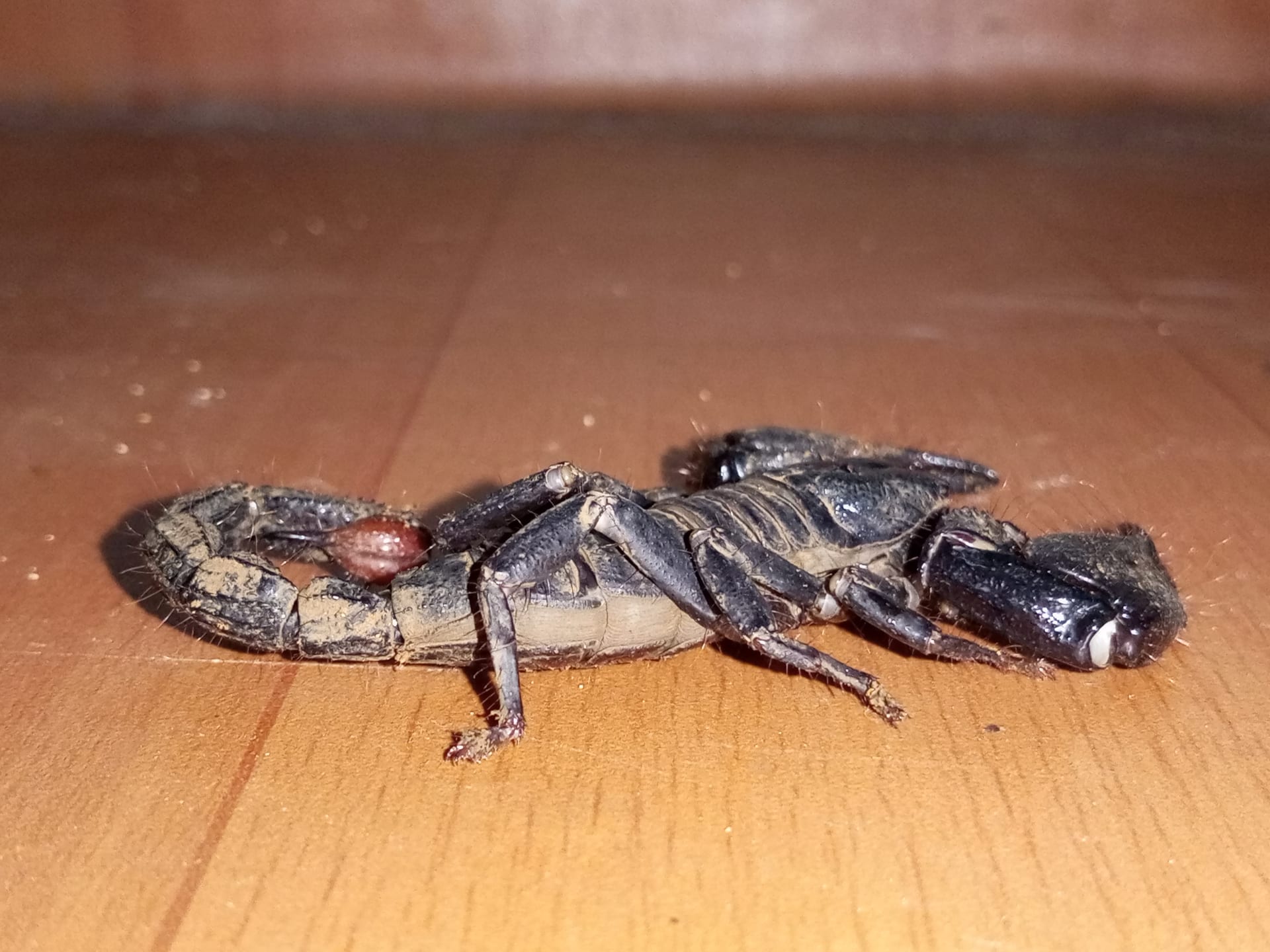
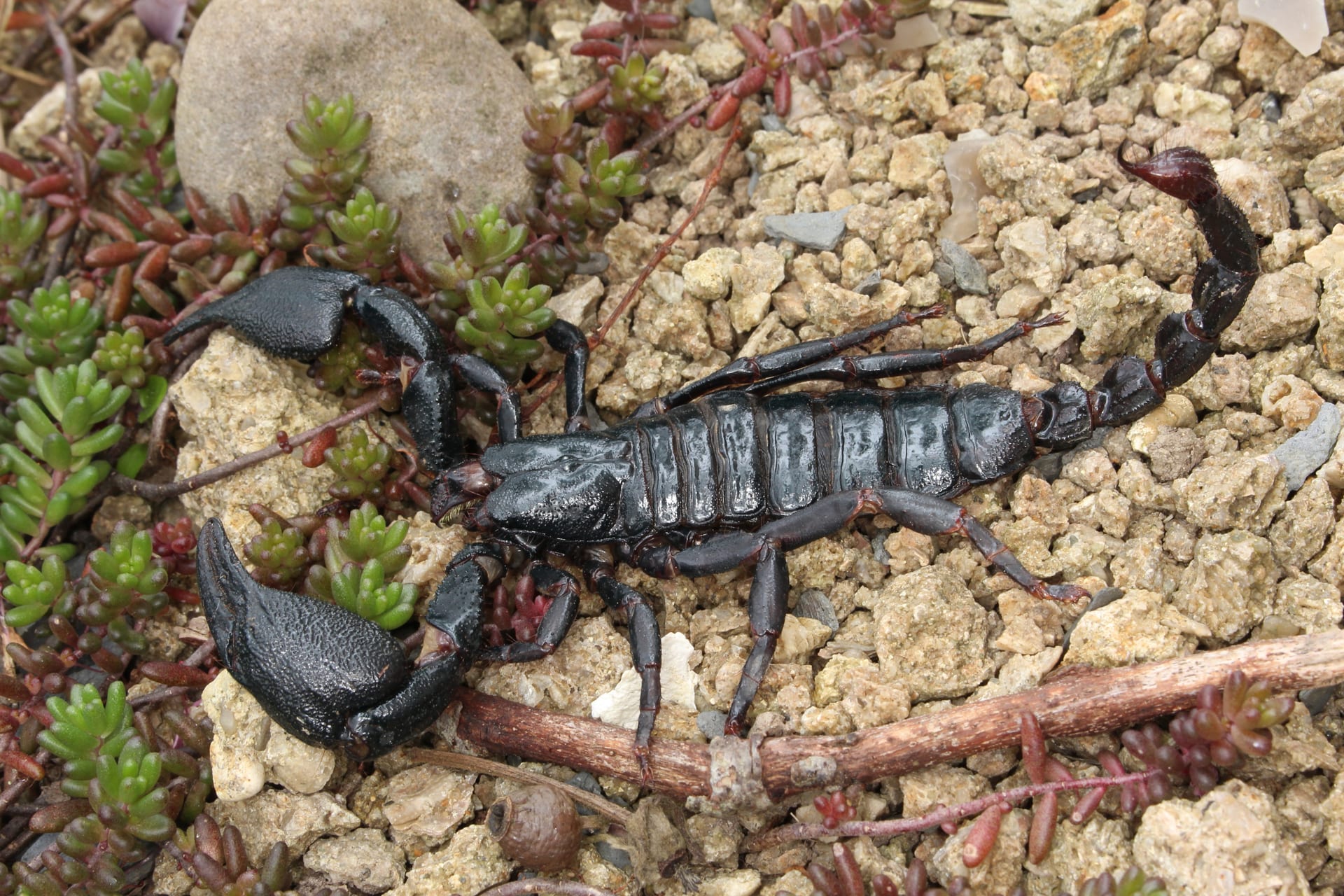
A large scorpion whose black body carries blue metallic reflections. It reaches 12-15cm and the strongly granulated cuticle has a rough texture. Stings cause moderate to severe pain, so it is classed as harmful.
Difficulty
Intermediate
Lifespan
4-6 years
Size
12-15cm in total length
Humidity
80%
Diet
Live insects such as crickets
About
Javanimetrus cyaneus occurs in Borneo, the Philippines and Indonesia, where it is found under stones and fallen trees in tropical rainforest and wetland forest. It reaches 12-15 cm in total length. The body is deep black with blue reflections that catch the light, the source of the English name Asian blue forest scorpion, and the cuticle is strongly granulated. Described by C. L. Koch in 1836 and long treated as Heterometrus cyaneus, it was moved to the genus Javanimetrus in the 2020 revision by Prendini and Loria. The species is classified as harmful because its sting causes moderate to severe pain, although no further consequences are reported. Its requirements are essentially those of Heterometrus: warm, humid conditions and substrate deep enough to burrow into. It is nocturnal and stays in cover by day.
Source: Wikipedia (CC BY-SA 4.0)
Lifespan of the Javan Blue Forest Scorpion
The Javan Blue Forest Scorpion lives 4-6 years.
Size of the Javan Blue Forest Scorpion
The Javan Blue Forest Scorpion grows to 12-15cm in total length.
Basic Info
Origin
Borneo, the Philippines and Indonesia
Lifespan
4-6 years
Size
12-15cm in total length
Humidity
80%
Care Specifications
Semi-aggressiveGroup
Sources: Exotic-pets.eu: Heterometrus spp. as beginner scorpions (Internet Archive) / Wikipedia / Wikipedia: Heterometrus (genus) / GBIF
References & Sources
Edited & verified by: BreederDirect editorial team
The taxonomic, regulatory, and husbandry data on this page are compiled and verified against the authoritative primary sources below.
Taxonomy & Authority
Accepted name: Javanimetrus cyaneus (C. L. Koch, 1836)
Synonyms: Heterometrus cyaneus (C. L. Koch, 1836)
Authority databases: GBIF
Nomenclature follows global taxonomic authority databases.
Regulations & Conservation Status
Not CITES-listed
Sources: CITES Appendices (species not listed)
Regulations may change. Always verify the latest information with the relevant authorities.
Javan Blue Forest Scorpion Listings
Loading latest listingsFind listings for this species