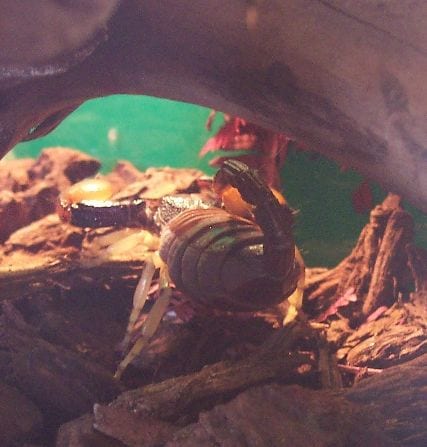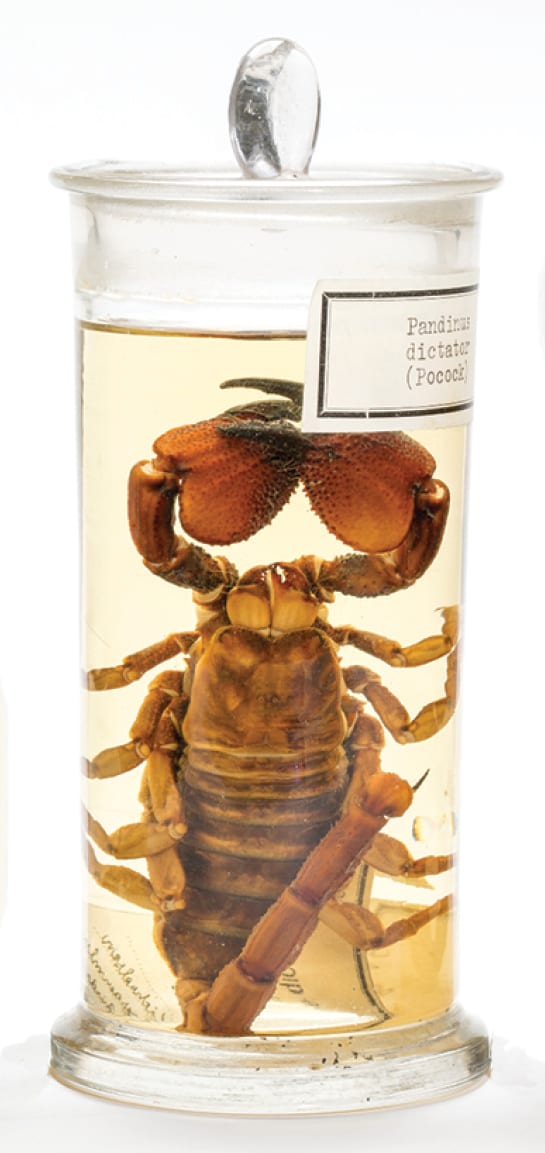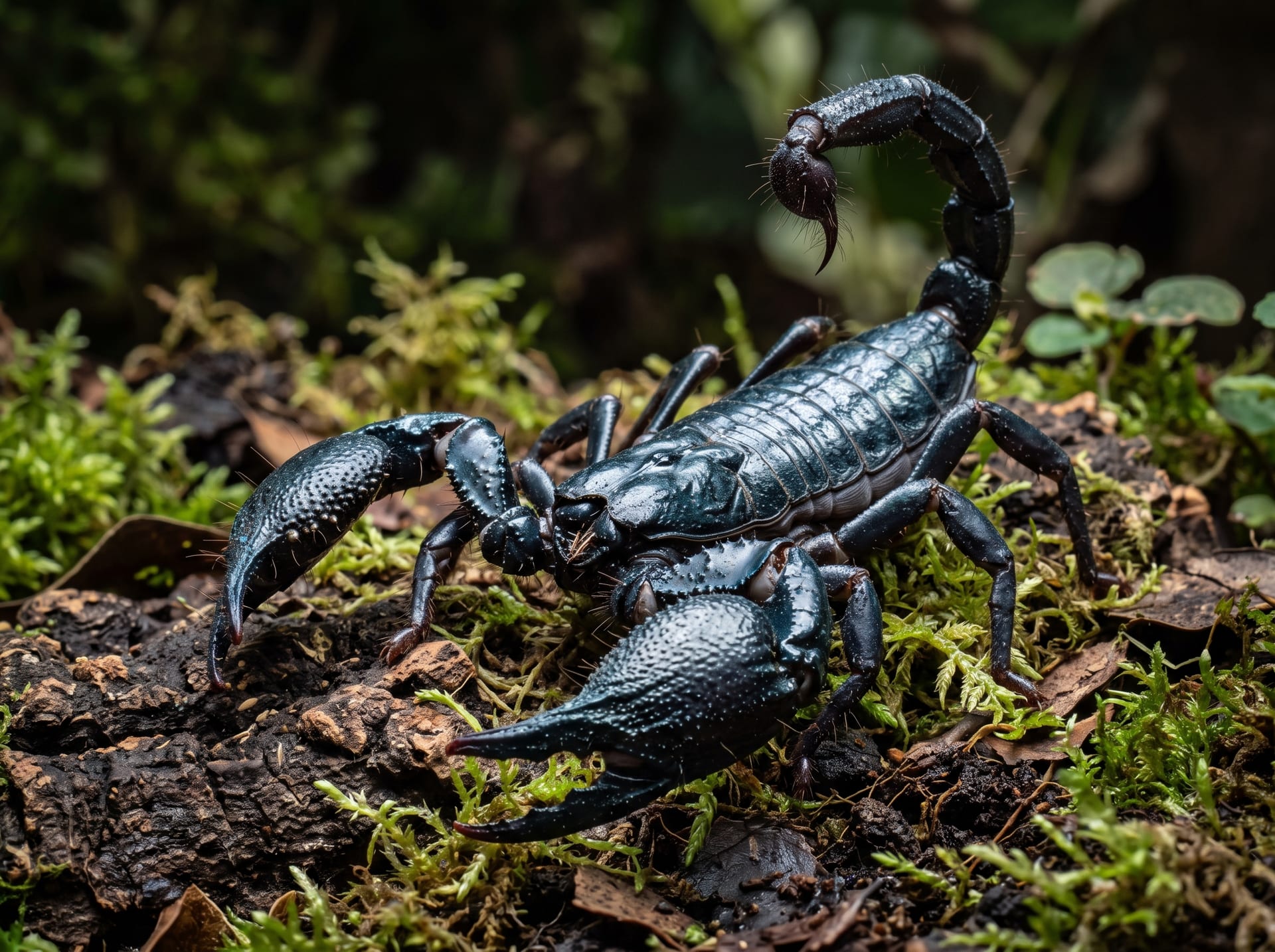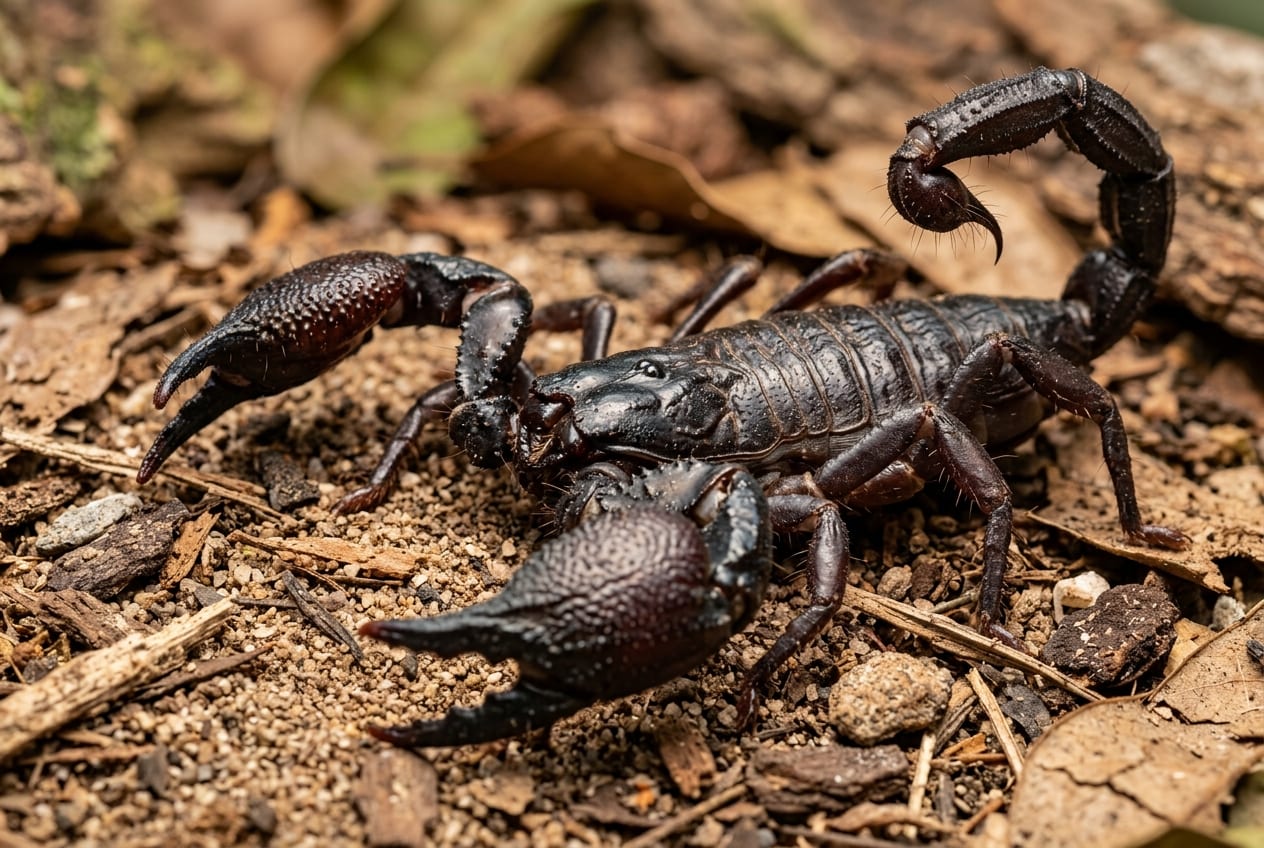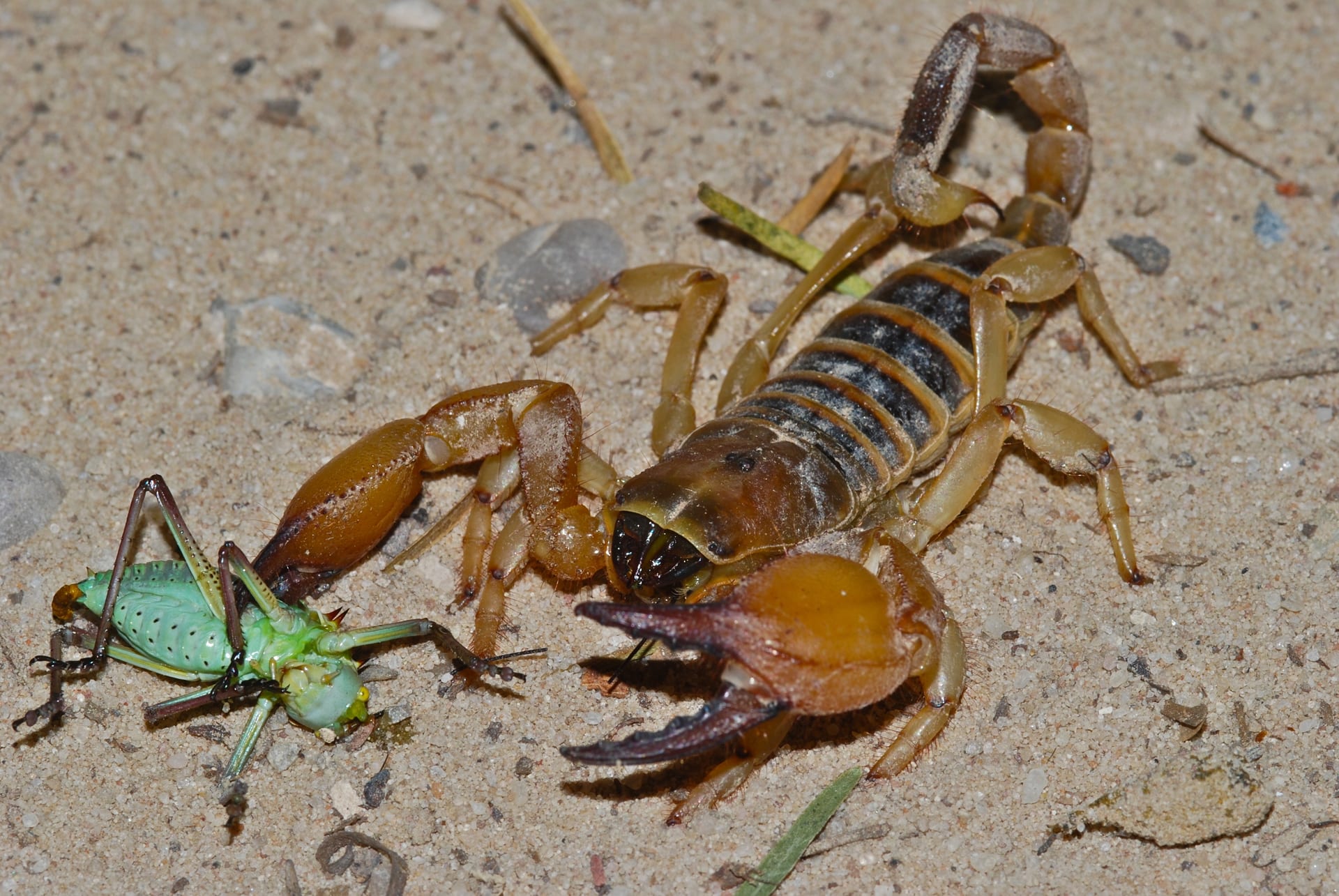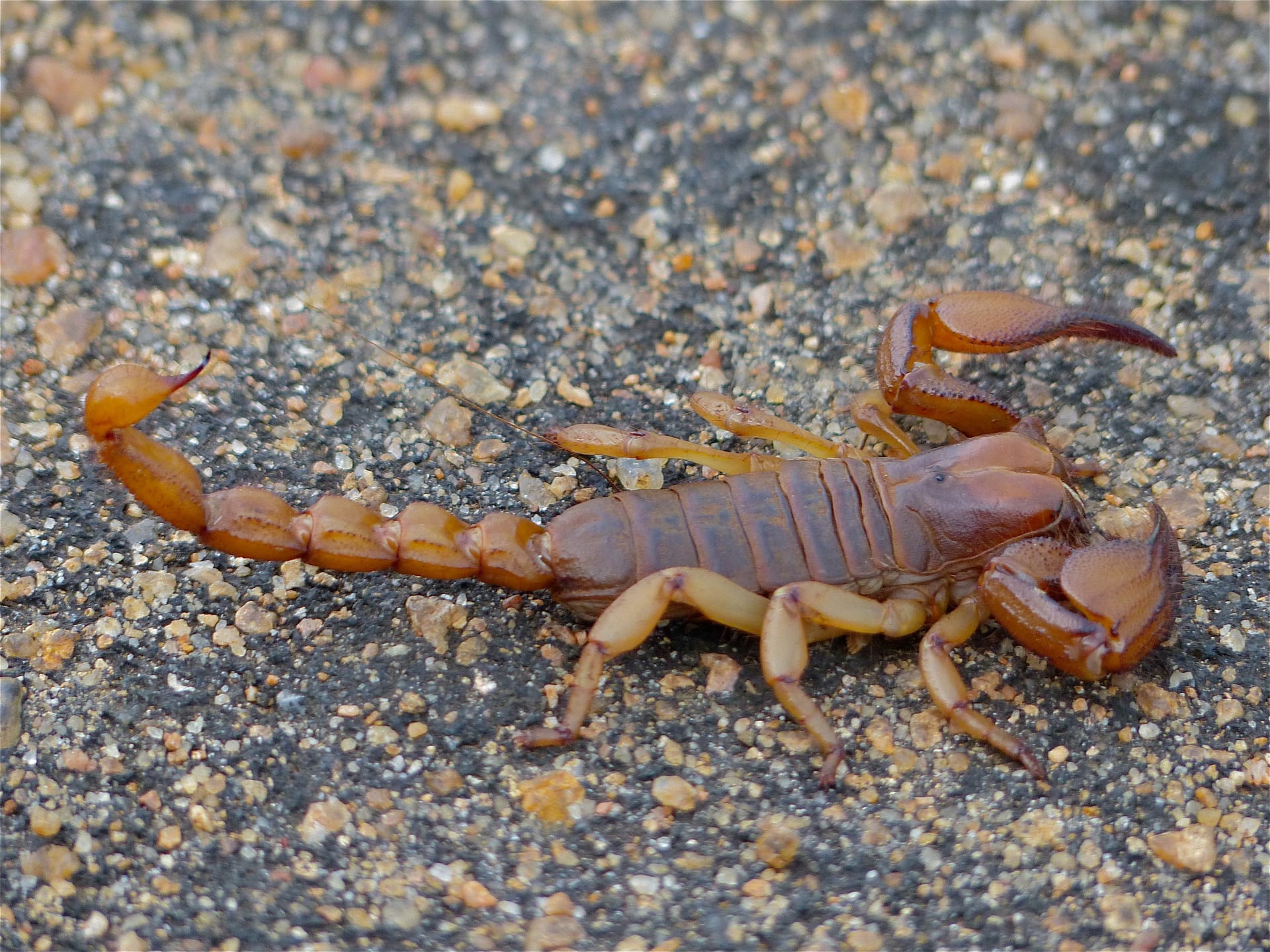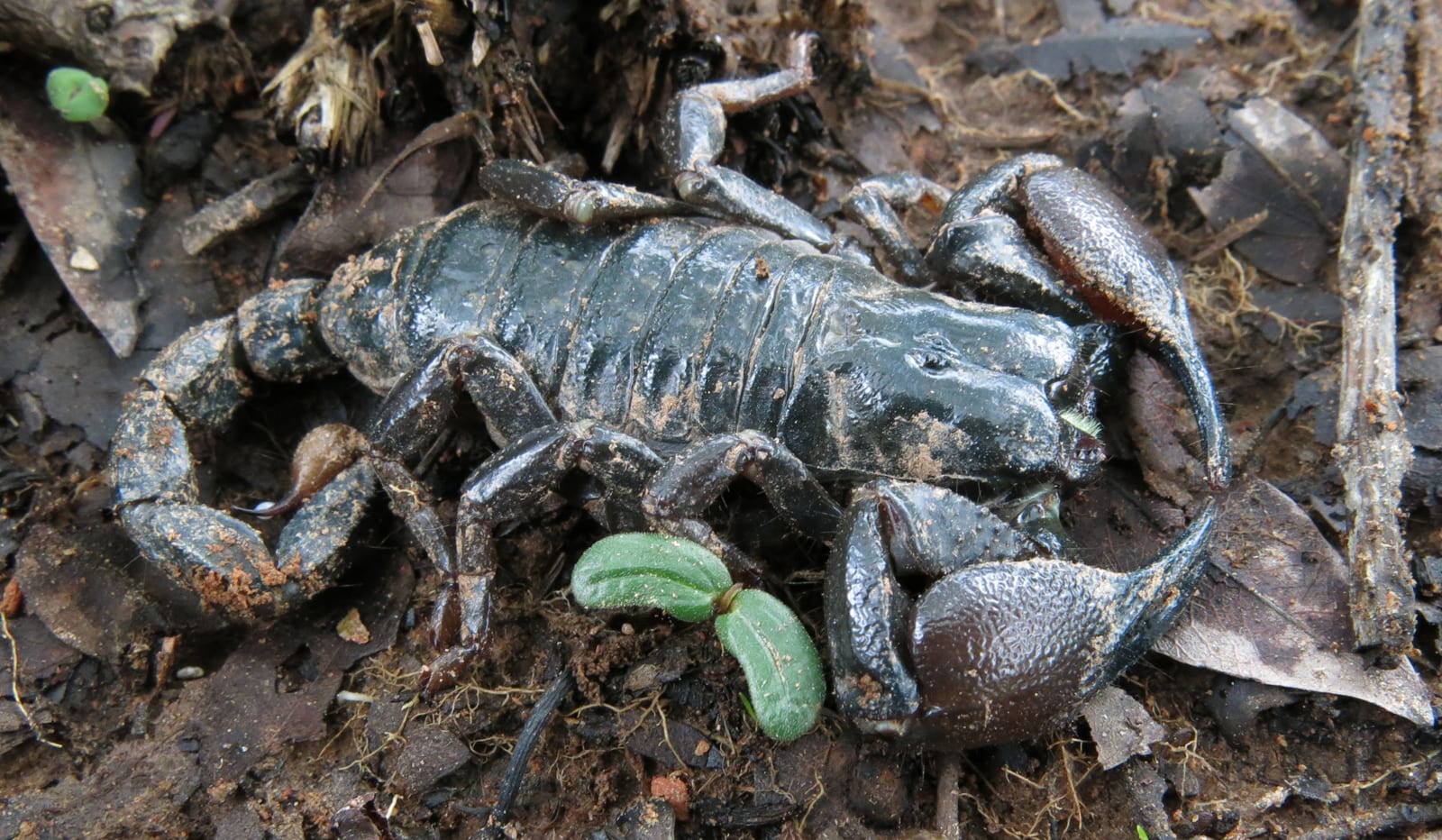
Source: Wikimedia Commons
Cave claw scorpion
IntermediatePandipalpus viatoris
A large-clawed African scorpion of the family Scorpionidae. It was once placed in Pandinus with the emperor scorpion and now belongs to Pandipalpus, a genus of just two species.
Difficulty
Intermediate
Diet
Carnivorous (live insects such as crickets and roaches)
About
Pandipalpus viatoris (Pocock, 1890) is a scorpion of the family Scorpionidae described by Pocock in 1890. For a long time it was treated in Pandinus with the emperor scorpion (as Pandinus viatoris) and was later moved to Pandipalpus, a genus erected in 2015 that now contains only this species and P. lowei. GBIF gives its distribution as Africa, and it has been photographed around Lusaka, Zambia. The trade name comes from the English 'cave claw scorpion', and its large pedipalp claws are its selling point. Most members of the family are considered relatively harmless, and this species does not appear on The Scorpion Files list of scorpions of medical importance. It is in a different genus from the emperor scorpion (Pandinus imperator) and the other species listed in CITES Appendix II, and it is not itself listed. Its size and life history are not well understood, and in Japan several specialist shops sell it under this trade name.
Basic Info
Origin
Africa (including Zambia)
Diet
Carnivorous (live insects such as crickets and roaches)
Care Guide
Enclosure
Provide a deep substrate with hides under flat stones or bark, and a water dish. Keep singly.
Temperature & Humidity
The temperature and humidity suited to this species are not clear. Avoid winter cold and keep part of the substrate moist with a drier area as well.
Diet & Feeding
Live prey such as crickets and roaches sized to the scorpion. Hold off feeding around moults.
References & Sources
Edited & verified by: BreederDirect editorial team
The taxonomic, regulatory, and husbandry data on this page are compiled and verified against the authoritative primary sources below.
Taxonomy & Authority
Accepted name: Pandipalpus viatoris (Pocock, 1890)
Synonyms: Pandinus viatoris Pocock, 1890, Pandinurus viatoris (Pocock, 1890)
Authority databases: GBIF · GBIF · The Scorpion Files
Nomenclature follows global taxonomic authority databases.
Regulations & Conservation Status
Not CITES-listed
It is not a member of the Buthidae, so it is not a designated invasive alien species in Japan. However, every scorpion species is on Japan's list of taxa that need an identification certificate, so imports must be accompanied by documents certifying the species. It is not listed by CITES (September 2026). Keep it in escape-proof housing and never release captive animals.
Sources: Ministry of the Environment: List of regulated alien species, including taxa needing an identification certificate (JA) / Species+ CITES query (not listed)
Regulations may change. Always verify the latest information with the relevant authorities.
Cave claw scorpion Listings
Loading latest listingsFind listings for this species