Hermit Crabs: The Unsung Heroes of Saltwater Aquariums
There are two main purposes for keeping hermit crabs in saltwater aquariums. The first is their role as a "cleanup crew (CUC)" to remove uneaten food, algae, and detritus. The second is for pure ornamental purposes, enjoying their adorable movements and shell-changing behavior. Hermit crabs are generally hardy and easy to keep, making them accessible to beginners in saltwater fishkeeping.
Popular Species of Hermit Crabs for Saltwater Aquariums
Scarlet Reef Hermit Crab (Red-Spotted Hermit Crab)
The most popular cleanup crew hermit crab. A small species measuring 1-2 cm in length that actively eats algae, seaweed, and uneaten food. Low aggression makes cohabitation with shells and corals relatively problem-free. Their red legs stand out well in the aquarium.
Best for: Nano reef tanks to medium-sized reef tanks in general
Elegant Hermit Crab (Star-Spotted Hermit Crab)
A medium-sized hermit crab (2-4 cm in length) that is particularly effective at removing algae and cyanobacteria. More powerful than the scarlet reef hermit, it may attack shells, so caution is needed.
Blue Leg Hermit Crab
A small to medium-sized hermit crab characterized by blue legs. Highly effective against algae and cyanobacteria. Relatively high reproductive capacity, sometimes reproducing naturally in the aquarium.
Polynesian Crab and Caribbean Hermit Crab
A medium-sized hermit crab from the Caribbean. While it has strong cleaning abilities, its aggression toward other invertebrates may increase as it grows. Care should be taken with stocking numbers.
Coenobita Clypeatus (Land Hermit Crab)
While typically kept separately as terrestrial hermit crabs rather than in saltwater aquariums, some species can adapt to brackish and saltwater. Not suitable for saltwater aquariums but can be enjoyed in paludarium or brackish environments.
Benefits of Keeping Hermit Crabs
Algae and Seaweed Control
Extremely effective at cleaning green algae, diatoms (brown algae), and filamentous algae. Hermit crabs physically eat algae that cannot be completely removed by protein skimmers or refugiums alone. They are particularly useful for cleaning algae in crevices of live rock and on the sand bed surface, areas difficult to clean by other methods.
Processing Uneaten Food and Detritus
They consume uneaten fish food, dead zooplankton, and organic matter from the substrate. This helps slow the rise of nitrate levels.
Increased Biodiversity
Hermit crabs themselves promote bacterial colonization on live rock and sand beds. Their substrate-stirring behavior contributes to maintaining a deep sand bed (DSB).
Ornamental Value
The moment of shell-changing (the behavior of finding an empty shell and moving into it) is highly entertaining to watch. Placing multiple empty shells of different sizes in the aquarium allows you to frequently observe this behavior.
Hermit Crab Care Environment
Water Quality Requirements
| Parameter | Ideal Range |
|---|
| Temperature | 22-28°C |
| Specific Gravity | 1.023-1.026 |
| pH | 8.1-8.3 |
| Ammonia | 0 ppm |
| Nitrite | 0 ppm |
Hermit crabs are extremely sensitive to copper ions (Cu²⁺). Do not add hermit crabs to aquariums being treated with copper medication for ich. Even after copper treatment is complete, hermit crabs will die unless copper has been thoroughly removed with activated carbon.
Stocking Density
As a guideline, 1-2 hermit crabs per 30 liters is appropriate. Too many hermit crabs increases the risk of attacking shells, sea urchins, small shrimp, and other animals. When introducing them as CUC, maintain appropriate numbers considering the balance between tank size and bioload.
Preparing Shells (Hermit Crab Homes)
The most important item for hermit crab care is "empty shells."
- Keep multiple empty shells of different sizes in the aquarium at all times (prepare several shells slightly larger than their current home)
- Hermit crabs move to larger shells each time they grow
- The absence of appropriately sized shells causes stress, leading them to attack other hermit crabs and snails to steal their shells
- Popular options include commercially available "hermit crab shells," cowrie shells, and rounded gastropods like turbo snails
Caution: Commercially available decorative (dyed or processed) shells may be treated with chemicals, so rinse them thoroughly before placing in saltwater and ensure they are safe.
Hermit Crab Compatibility with Other Animals
Compatible Species
- Gobies: Their territories overlap around the sand bed, but they typically don't interfere
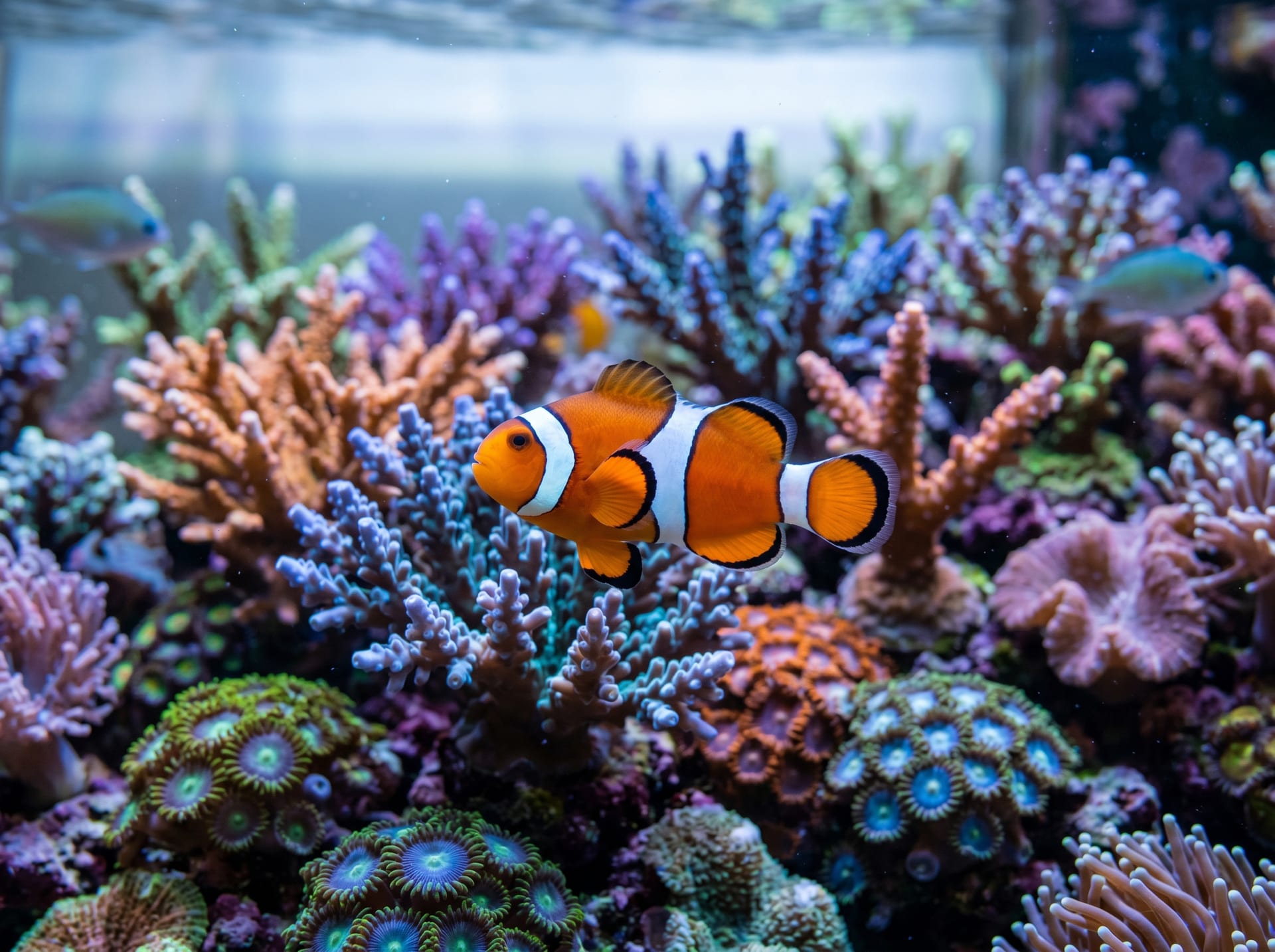
- Clownfish: Spend time in the mid-water column, causing little interaction
- Snails (Cowries, Turban Snails): Cooperate as fellow CUC members
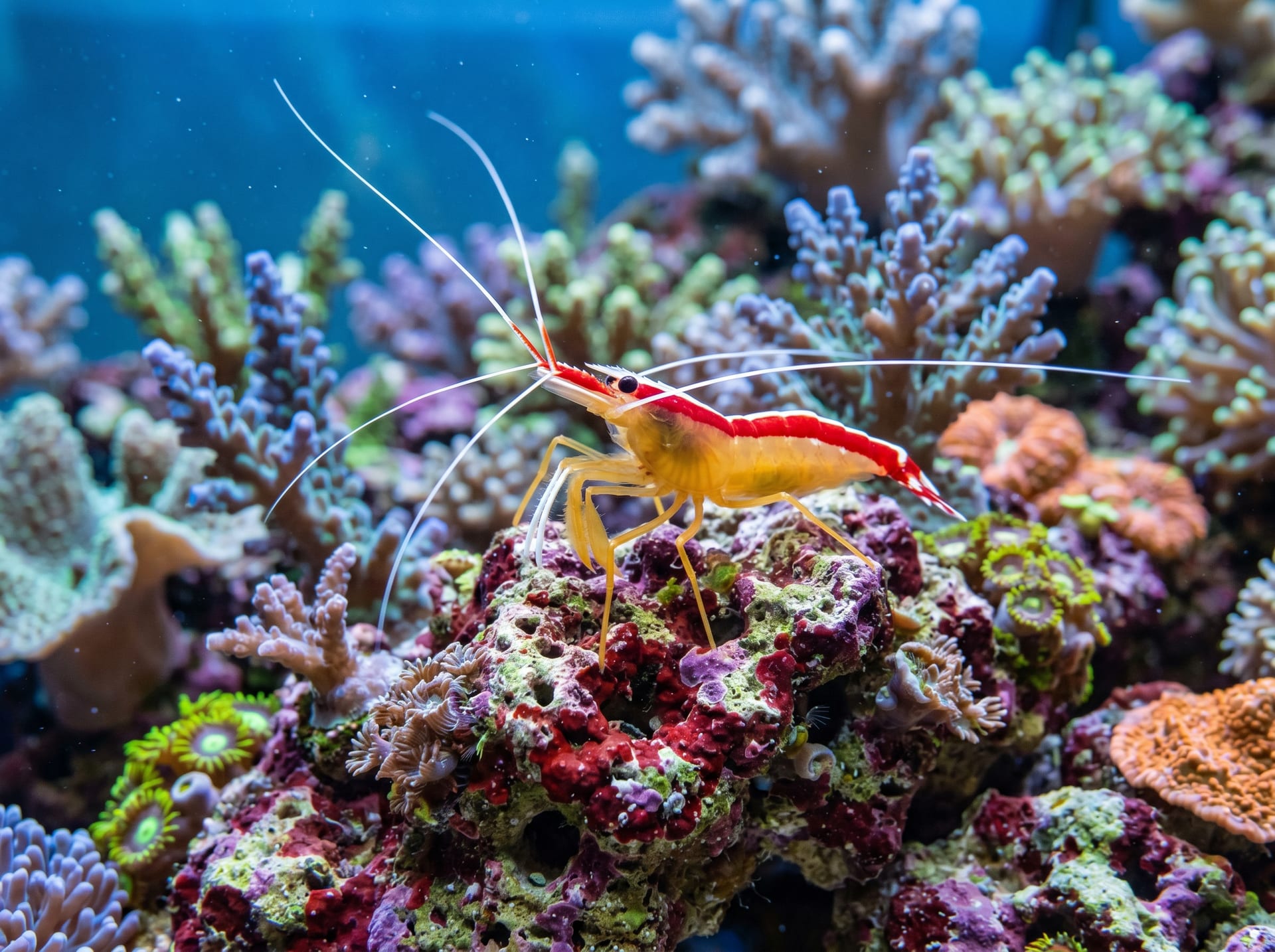
- Cleaning Shrimp (Skunk Cleaner Shrimp, White Socks Shrimp): Good compatibility due to different ecological niches
Species Requiring Caution
- Sea Urchins (White, Black): Hermit crabs may attack them
- Sea Cucumbers: Large hermit crabs may attack small sea cucumbers
- Octopuses: Octopuses predate on hermit crabs (never house together)
- Large Crabs and Spider Crabs: They predate on or attack hermit crabs
Coral Compatibility
- Soft Corals (Soft Tree Corals, Waving Hand Corals): Large hermit crabs may trample them. Small hermit crabs (such as scarlet reef hermits) are relatively safe
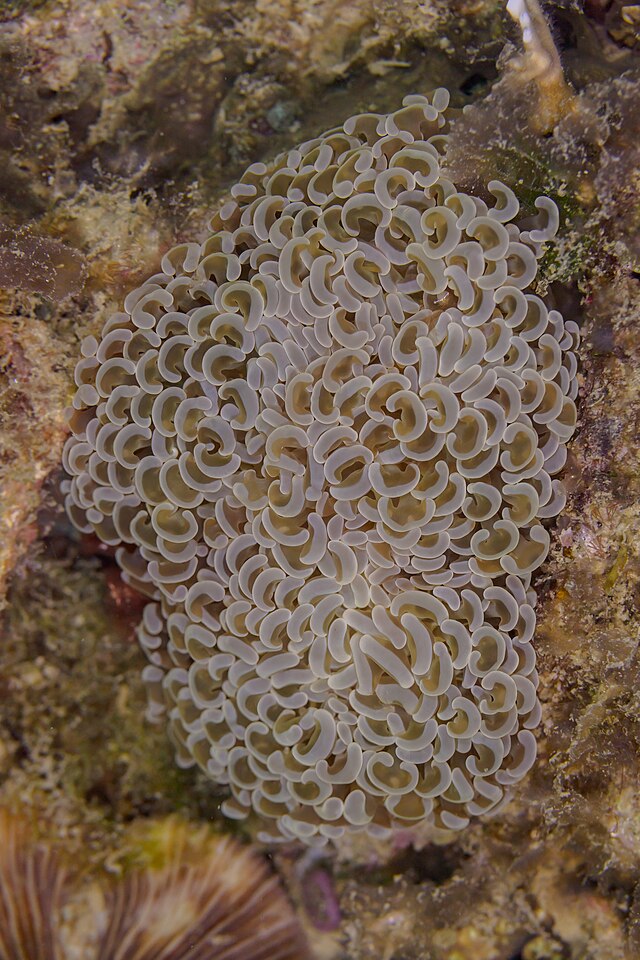
- LPS Corals (Trumpet Corals, Hammer Corals): Use caution with their tentacles
- SPS Corals: Hermit crabs may break branches, so for serious SPS reefs, only small species in limited numbers are recommended
Feeding Hermit Crabs
Basically, they obtain sufficient nutrition from algae, uneaten food, and detritus, but supplemental feeding may be needed in clean tanks with little algae.
- Seaweed flakes and nori: Break into small pieces and drop to the substrate
- Frozen brine shrimp and copepods: Protein supplementation
- Fish leftovers: Usually reaches them naturally
Hungry hermit crabs become more aggressive toward other animals, so supplemental feeding should be done intentionally in clean tanks.
Hermit Crab Health Management
Signs of Molting
Hermit crabs molt periodically to grow. They become inactive before and after molting and may bury themselves in the sand.
Molting Precautions:
- Never touch them (exoskeleton is soft and extremely fragile)
- White exoskeletons left after molting can be left in place for calcium supplementation
- Confirm water parameters are stable after molting
How to Identify Dead Hermit Crabs
If a hermit crab remains outside its shell and motionless for an extended period, it may be dead. You can pull the body from the shell to check, but right after molting they may be buried in the sand without their shell. If dead, remove promptly to prevent water quality deterioration.
Conclusion
Hermit crabs are fascinating creatures that serve a practical role as the "cleanup crew" of the saltwater aquarium while also providing enjoyment through observing their behavior. As long as you follow three key principles—selecting appropriate species, maintaining proper stocking density, and providing empty shells—they can be kept healthy for the long term. Don't forget to be mindful of copper treatments, and enjoy the presence of hermit crabs by selecting the right number and species for your tank.