Source: Wikimedia Commons
Brown land crab
IntermediateCardisoma carnifex
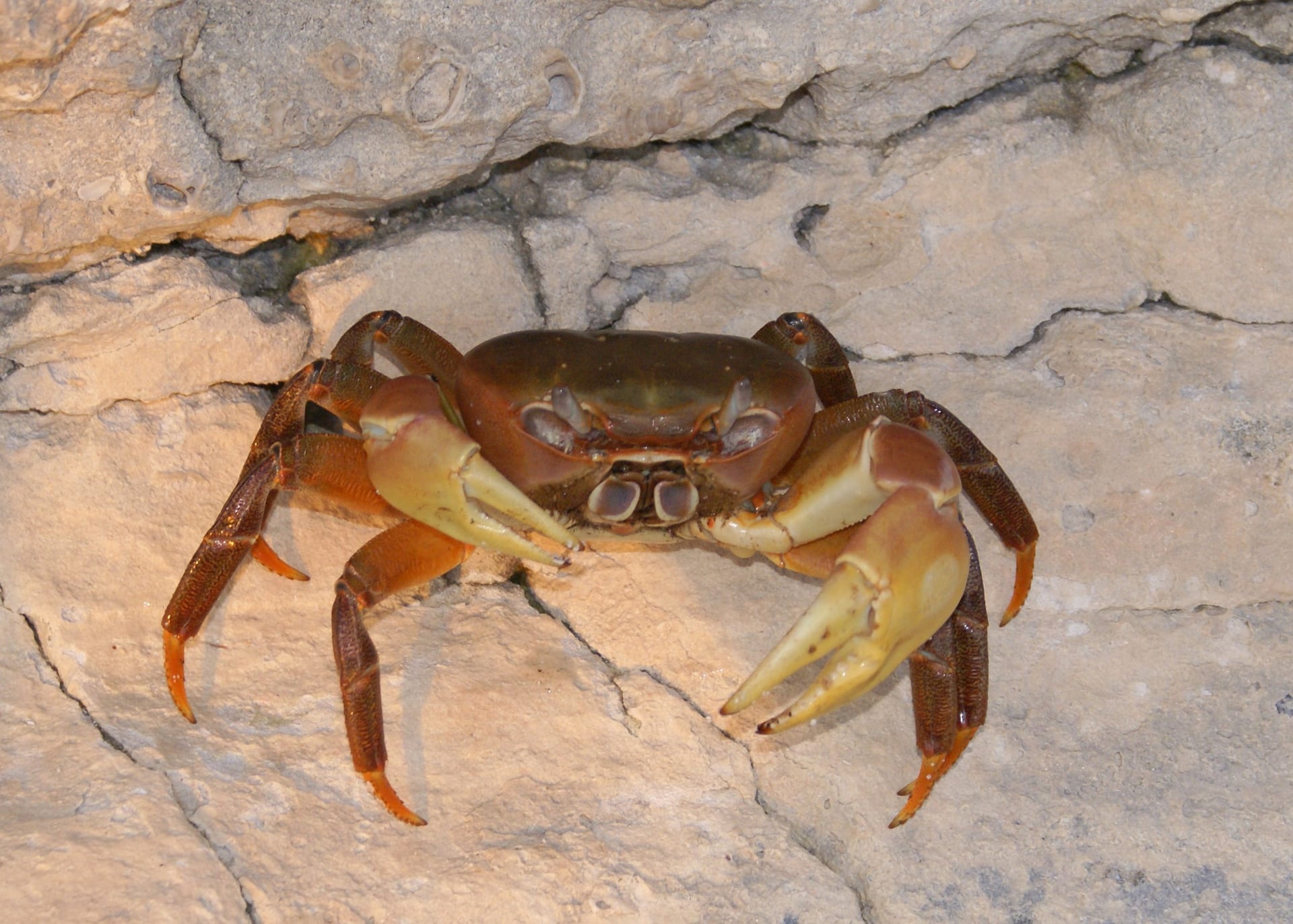
A large Indo-Pacific land crab with a rounded, swollen carapace up to 12 cm wide. Mature males have one greatly enlarged claw. It is omnivorous, feeding mainly on fallen leaves and fruit.
Difficulty
Intermediate
Lifespan
Little data
Size
Carapace width up to 12 cm (males)
Diet
Omnivorous (mainly fallen leaves, fruit and seeds; sometimes insects or small animals)
About
Cardisoma carnifex (Herbst, 1796) is a terrestrial crab of the family Gecarcinidae found in coastal regions from East Africa and the Red Sea across the Indo-Pacific to the Line Islands and the Tuamotus, including northern Australia and the Cocos (Keeling) Islands. GBIF holds records from Okinawa and Kagoshima prefectures, and in Japan it occurs in the Nansei Islands. The carapace is subovate, swollen and smooth, reaching 12 cm across in males, and mature males have one claw greatly enlarged. The colour is brown to brownish grey. It is omnivorous, feeding mainly on fallen leaves, fruit, seeds and other organic matter, and sometimes catching insects or small animals. Adult land crabs of this family can take oxygen directly from the air as well as through their gills, adapting them to life on land, but they still need moisture. The larvae can develop only in the sea, so egg-bearing females move to the shore just before hatching and release them into the water. In Japan animals from the Nansei Islands are regularly offered by shops specialising in land crabs; breeding in captivity is difficult.
Source: Wikipedia (CC BY-SA 4.0)
Size of the Brown land crab
The Brown land crab grows to Carapace width up to 12 cm (males).
Basic Info
Origin
Coastal Indo-West Pacific (in Japan, the Nansei Islands)
Lifespan
Little data
Size
Carapace width up to 12 cm (males)
Diet
Omnivorous (mainly fallen leaves, fruit and seeds; sometimes insects or small animals)
Care Guide
Enclosure
Provide a large land area of damp substrate deep enough to dig in, and a water area the crab can fully submerge in. It is big and strong, so use heavy, stable water bowls and shelters.
Temperature & Humidity
Little data on keeping temperatures exist. It is a tropical to subtropical species, so avoid winter cold. It still breathes with its gills, so never let the enclosure dry out.
Diet & Feeding
Feed mainly plant matter such as leaf litter, fruit and vegetables, with occasional animal food.
Temperament & Venom
Not venomous. Mature males have one large claw that can injure, so do not pick it up bare-handed.
Notes
Land crabs are skilled escapers, so secure the lid. The larvae develop only in the sea, making captive breeding difficult. Never release captive animals, to avoid disturbing native populations.
Land crabGecarcinidaeNansei IslandsCrustacean
Brown land crab FAQ
QHow difficult is it to keep Brown land crab?
A
Intermediate. This is an intermediate-level species. Some prior experience and knowledge of environmental management are recommended.
QHow large does Brown land crab get?
A
Brown land crab typically reaches Carapace width up to 12 cm (males) as an adult. Size may vary depending on care conditions and individual genetics.
QWhat should I feed Brown land crab?
A
Brown land crab feeds on: Omnivorous (mainly fallen leaves, fruit and seeds; sometimes insects or small animals). Aim for a balanced diet with appropriate feeding frequency.
QWhat is the typical price for Brown land crab?
A
The price of Brown land crab varies significantly depending on morph, size, and lineage. Check our market price page for the latest pricing information.
Last updated: September 23, 2026
References & Sources
Edited & verified by: BreederDirect editorial team
The taxonomic, regulatory, and husbandry data on this page are compiled and verified against the authoritative primary sources below.
Primary sources
- Wikipedia
- Ministry of the Environment: Nationally rare species list (JA)
- Ministry of the Environment: List of regulated alien species, including taxa needing an identification certificate (JA)
- Species+ CITES query (not listed)
- SeaLifeBase: Cardisoma carnifex
- Grapsoidea - Wikipedia (JA), on land-crab breathing and larval life
- GBIF: Cardisoma carnifex (Herbst, 1796)
Taxonomy & Authority
Accepted name: Cardisoma carnifex (Herbst, 1796)
Synonyms: Cancer carnifex Herbst, 1796, Cardisoma obesum Dana, 1851, Cardisoma urvillei H. Milne Edwards, 1854
Authority databases: GBIF · GBIF · SeaLifeBase
Nomenclature follows global taxonomic authority databases.
Regulations & Conservation Status
Not CITES-listed
It is not covered by the Invasive Alien Species Act or the Act on Conservation of Endangered Species and is not listed by CITES (September 2026). Native populations exist in the Nansei Islands, so never release captive animals.
Sources: Ministry of the Environment: Nationally rare species list (JA) / Ministry of the Environment: List of regulated alien species, including taxa needing an identification certificate (JA) / Species+ CITES query (not listed)
Regulations may change. Always verify the latest information with the relevant authorities.
Related Species
Brown land crab Listings
Loading latest listingsFind listings for this species
Related Articles
Cat Odor Care Guide: Breath, Body, and Anal Gland Care | Causes, Daily Care, and When to See Your Veterinarian
Diagnose the causes of cat bad breath, body odor, and anal gland issues, and learn daily care methods and decision criteria for veterinary visits. This guide explains health signs indicated by odors, including periodontal disease, anal gland blockage, skin disease, and kidney disease.
Kakariki (New Zealand Parakeet) Care Guide | Water Bathing, Ground Walking, Breeding and More
A comprehensive guide to caring for the Kakariki (genus Cyanoramphus), a small parakeet native to New Zealand. Learn about their unique behaviors including active personality, love of water bathing, and ground-feeding habits, plus detailed information on proper cage sizing, temperature management, feeding, taming, and breeding considerations.
Complete Guide to Raising Hermit Crabs in Saltwater Aquariums | Species, Shells, Compatibility, and How to Use Them as Cleanup Crew
A complete guide to raising hermit crabs in saltwater aquariums. Explains the characteristics of popular species like scarlet reef and blue leg hermits, the importance of empty shells, compatibility with copper treatment, precautions for cohabitation with corals and fish, and how to effectively use them as cleanup crew (CUC).
Dubia & Madagascar Hissing Cockroach Care Guide | How to Keep Feeder Insects and Pet Cockroaches
A comprehensive guide to caring for Dubia roaches (Blaptica dubia) and Madagascar Hissing Cockroaches (Gromphadorhina portentosa), popular as feeder insects for reptiles and amphibians and as ornamental pets. Covers essentials from container selection and temperature management to feeding, home breeding, feeder colony maintenance, and proper disposal methods—a practical guide for successfully keeping and breeding cockroach species.