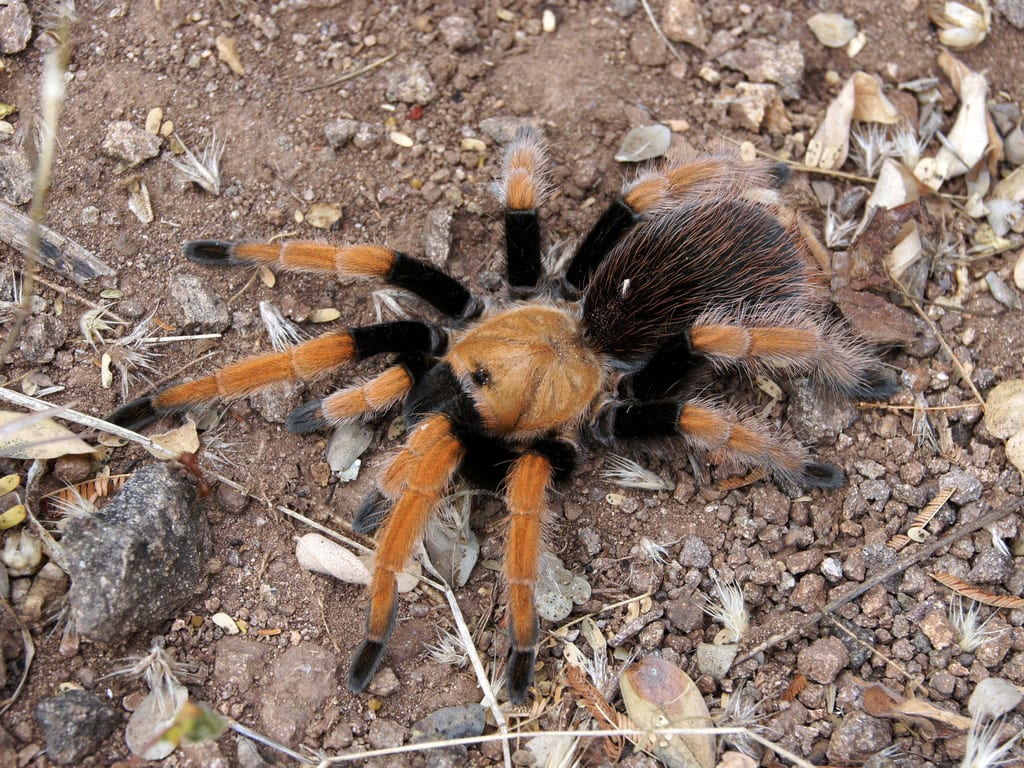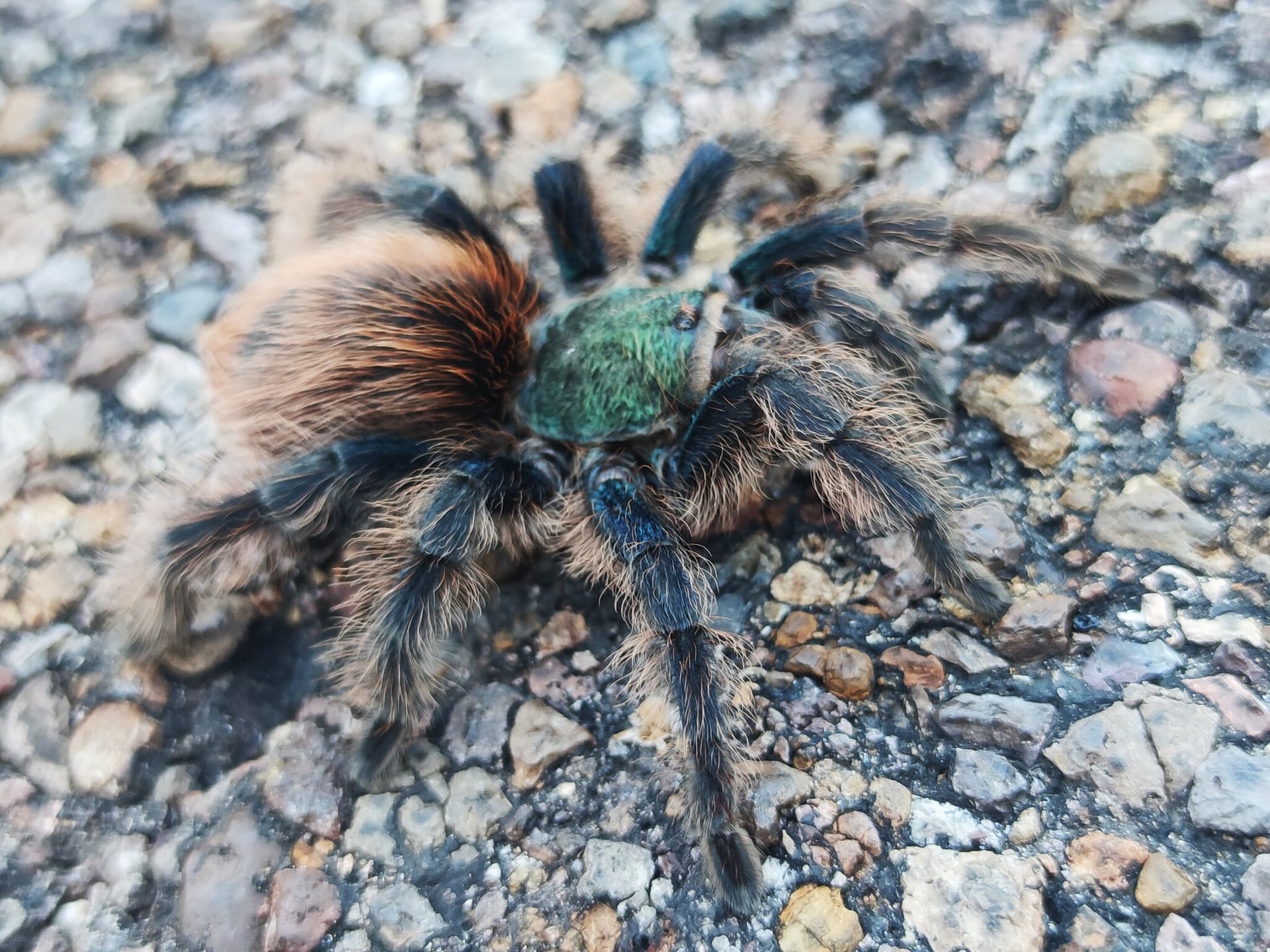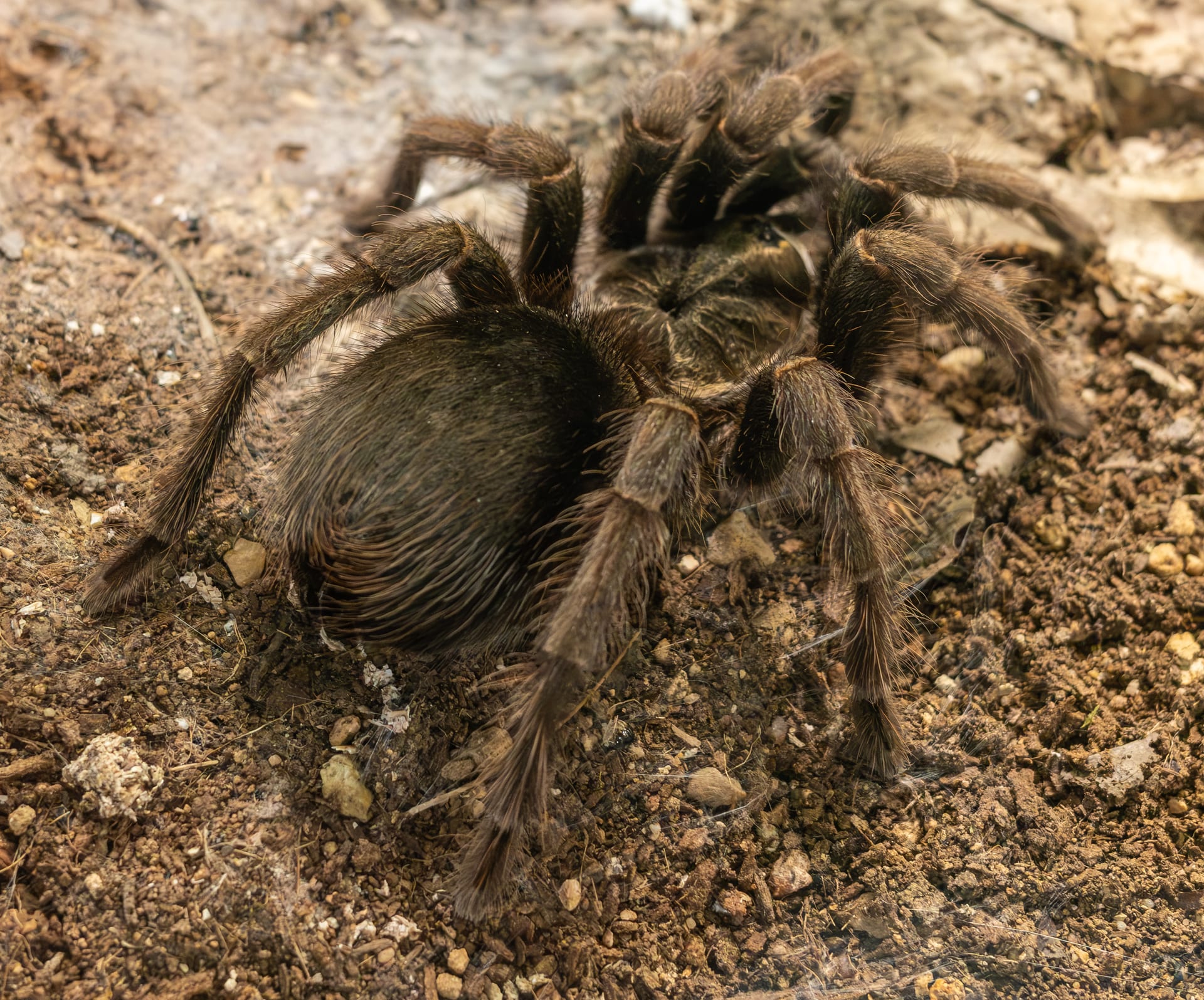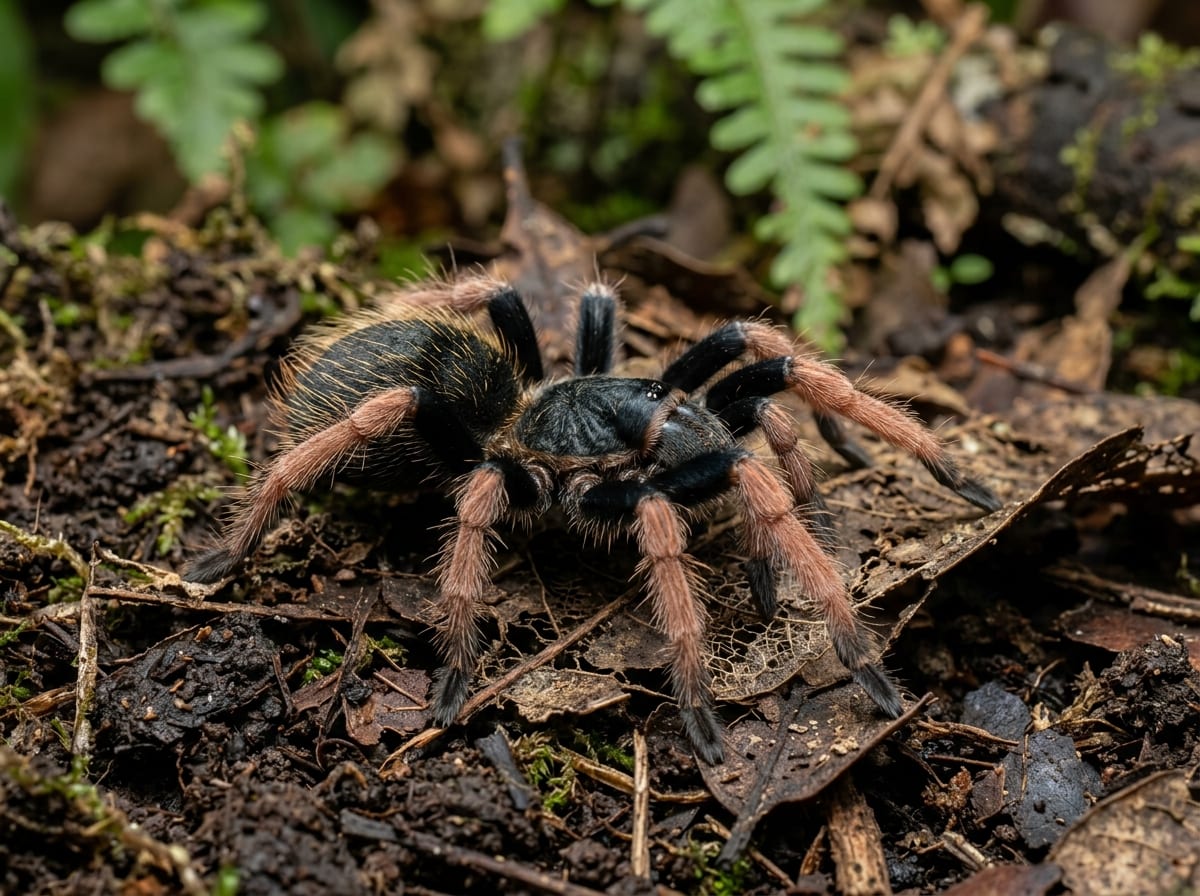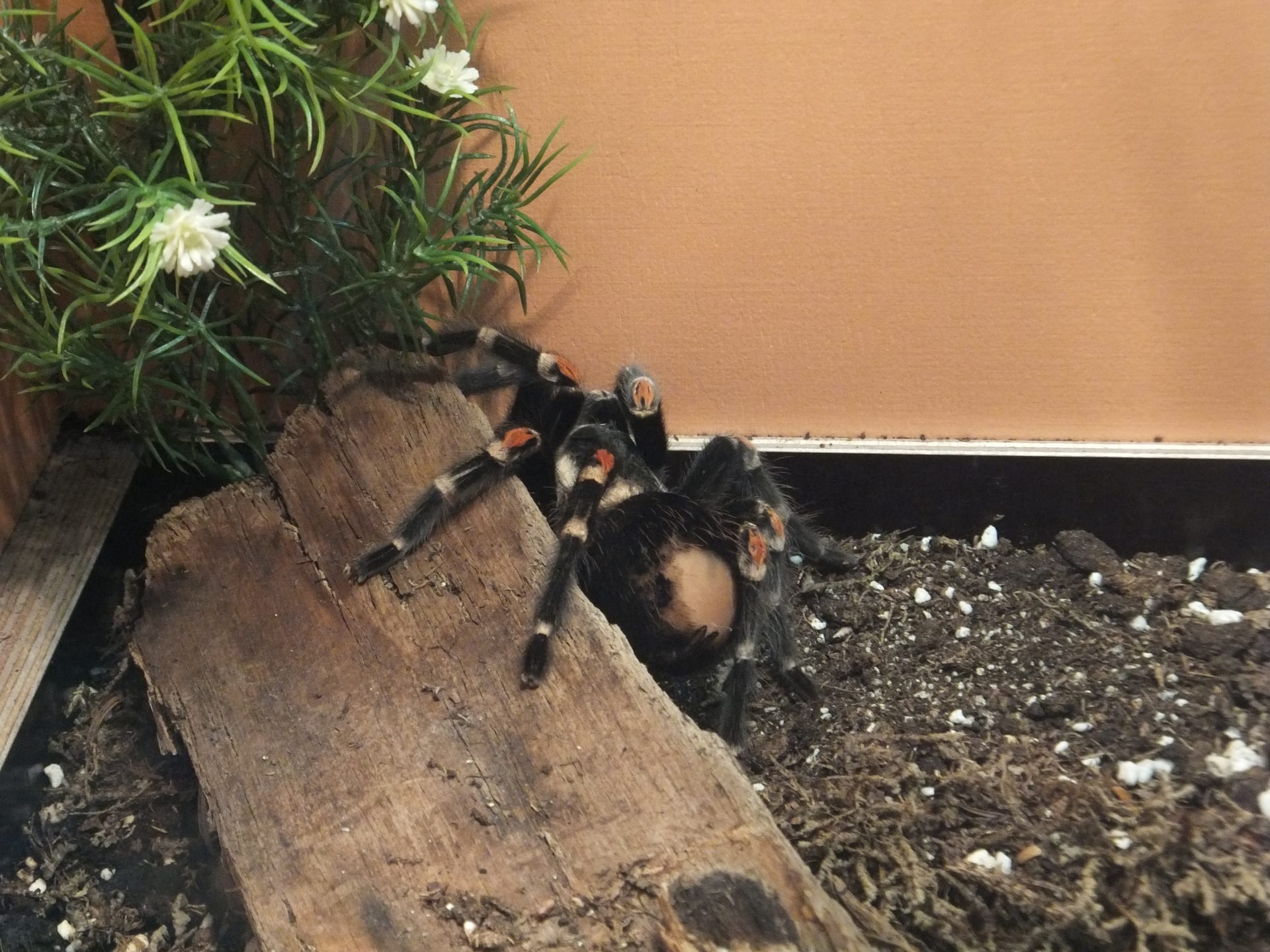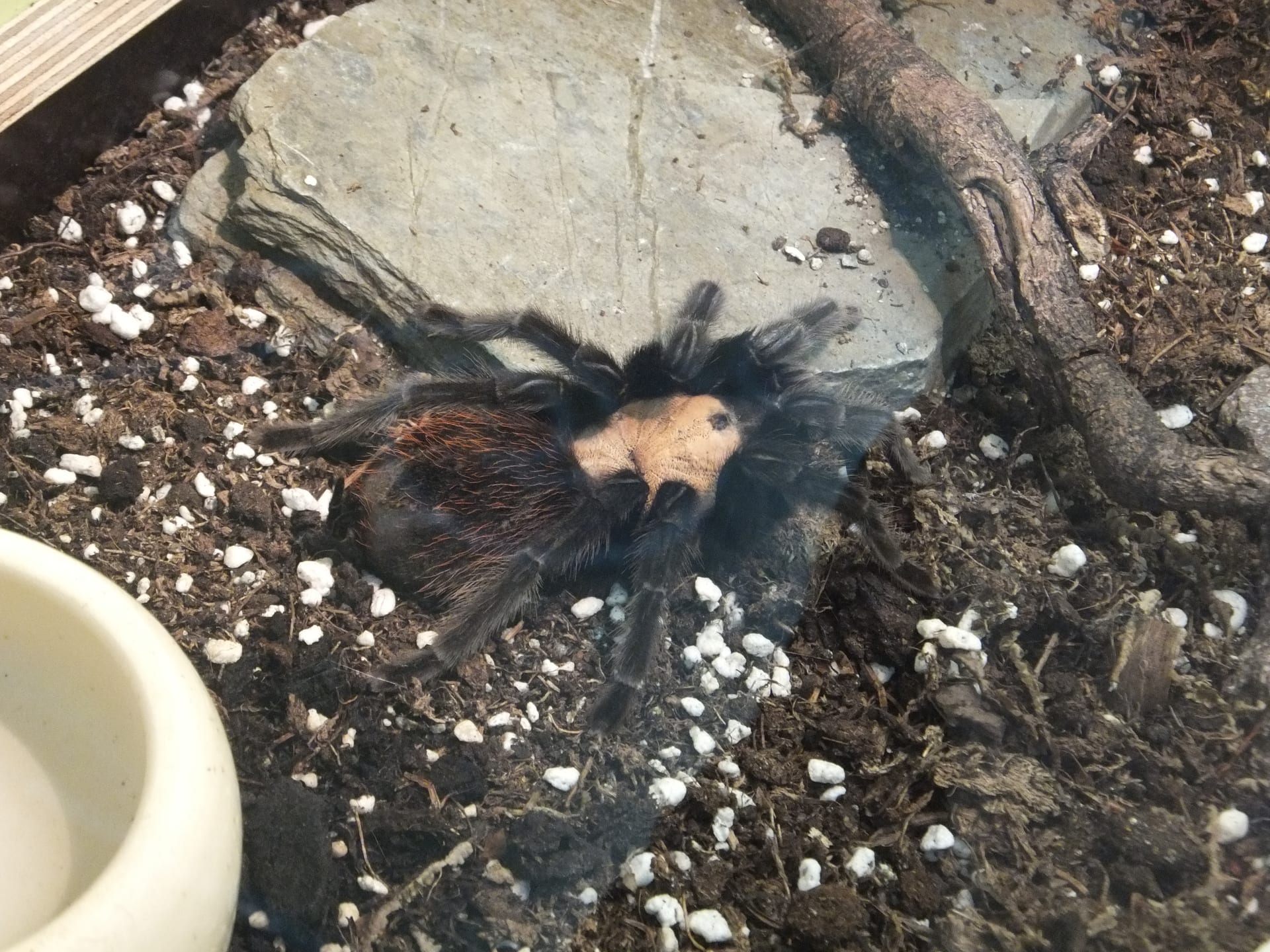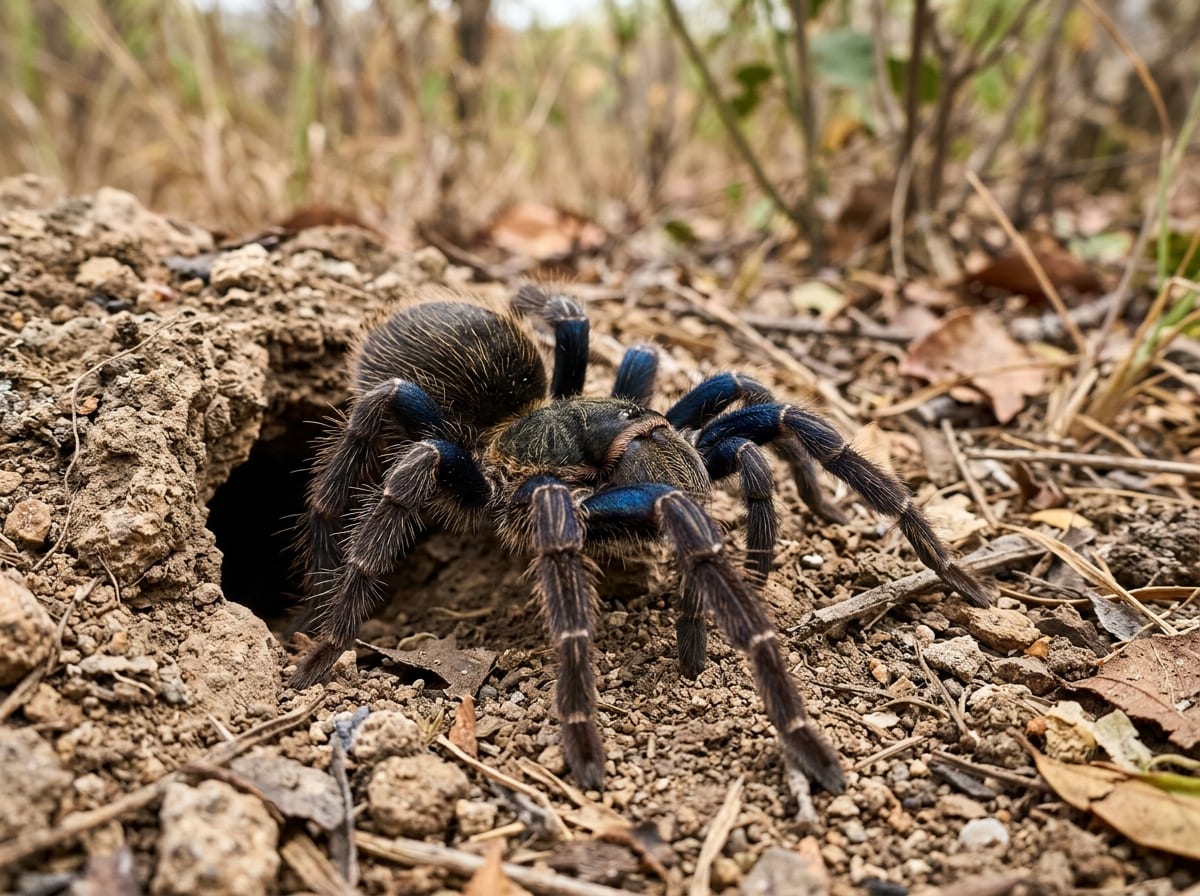
AI-generated image
Guerrero blue femur tarantula
IntermediateBonnetina papalutlensis
A small terrestrial Bonnetina from southern Mexico whose femora are said to look blue, as the trade name suggests. Described from Guerrero in 2012.
Difficulty
Intermediate
Diet
Carnivorous (live insects such as crickets and roaches)
About
Bonnetina papalutlensis Mendoza, 2012 is a tarantula of the Mexican genus Bonnetina, described in a paper titled 'a new species of tarantula from Guerrero, Mexico, with notes on reproduction'. GBIF records come mainly from Guerrero, with some from Morelos. Bonnetina contains 16 small species, all Mexican; a 2018 molecular study found that many species share appearance without being closely related, and revision continues. The trade name 'blue femur' refers to femora that look blue, but the type species B. cyaneifemur also means 'blue femur', so check the scientific name rather than relying on the common name. Like most New World tarantulas it is expected to carry urticating setae. Young spiders are sold by Japanese specialist shops.
Source: Wikipedia (CC BY-SA 4.0)
Basic Info
Origin
Southern Mexico (Guerrero, Morelos)
Diet
Carnivorous (live insects such as crickets and roaches)
Care Guide
Enclosure
A small terrestrial species. Provide a fairly deep substrate, a hide and a shallow water dish. Keep singly.
Temperature & Humidity
The temperature and humidity suited to this species are unclear. Following other terrestrial New World species, keep at room temperature or slightly above with good ventilation and part of the substrate lightly moist.
Diet & Feeding
Live prey such as crickets and roaches sized to the spider. Remove uneaten prey and wait a few days after a moult before feeding.
References & Sources
Edited & verified by: BreederDirect editorial team
The taxonomic, regulatory, and husbandry data on this page are compiled and verified against the authoritative primary sources below.
Taxonomy & Authority
Regulations & Conservation Status
Not CITES-listed
Not listed in the CITES Appendices (checked on Species+). Theraphosidae are neither designated invasive alien species nor taxa requiring an identification certificate on import in Japan (September 2026). Use a lockable enclosure to prevent escapes, and never release captive animals.
Sources: Species+ CITES query (not listed) / Ministry of the Environment: list of regulated alien species, including taxa needing an identification certificate
Regulations may change. Always verify the latest information with the relevant authorities.
Guerrero blue femur tarantula Listings
Loading latest listingsFind listings for this species