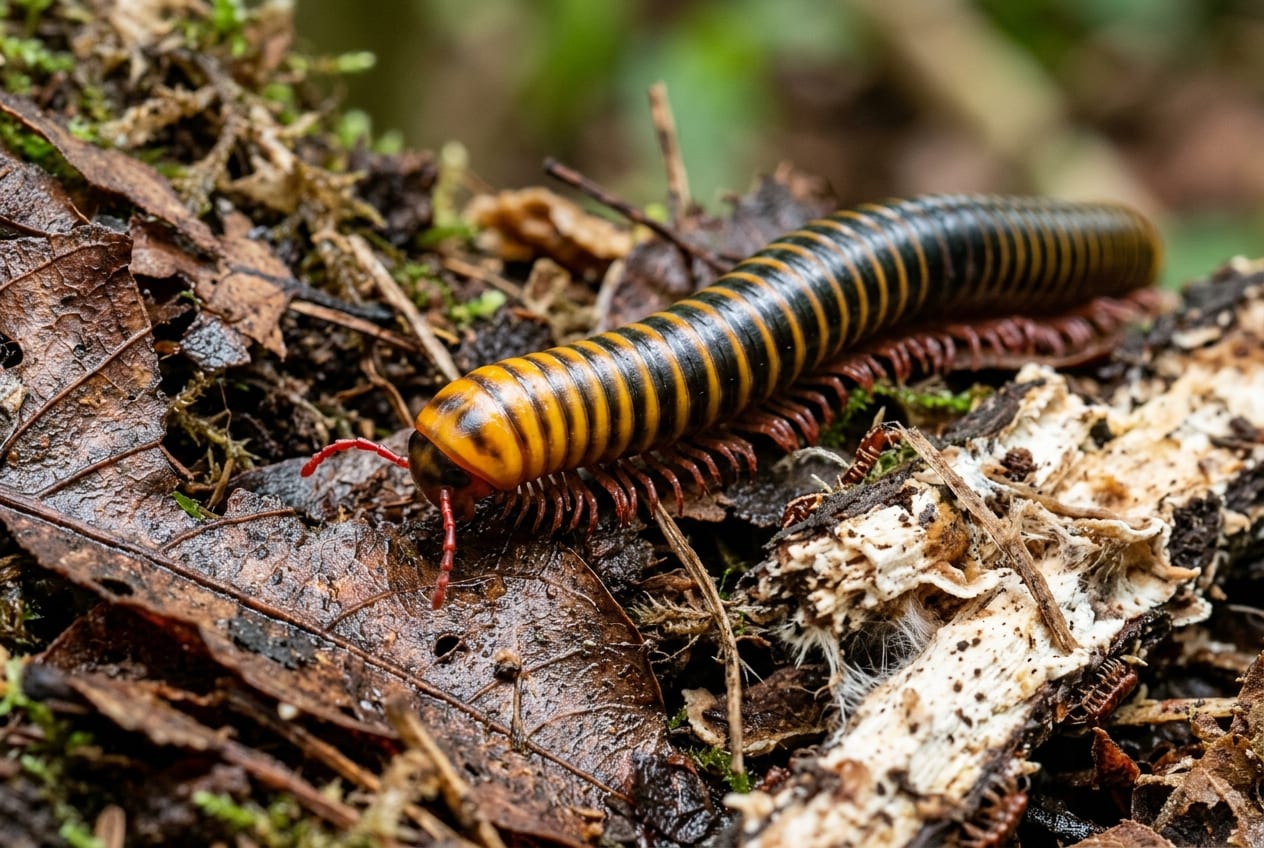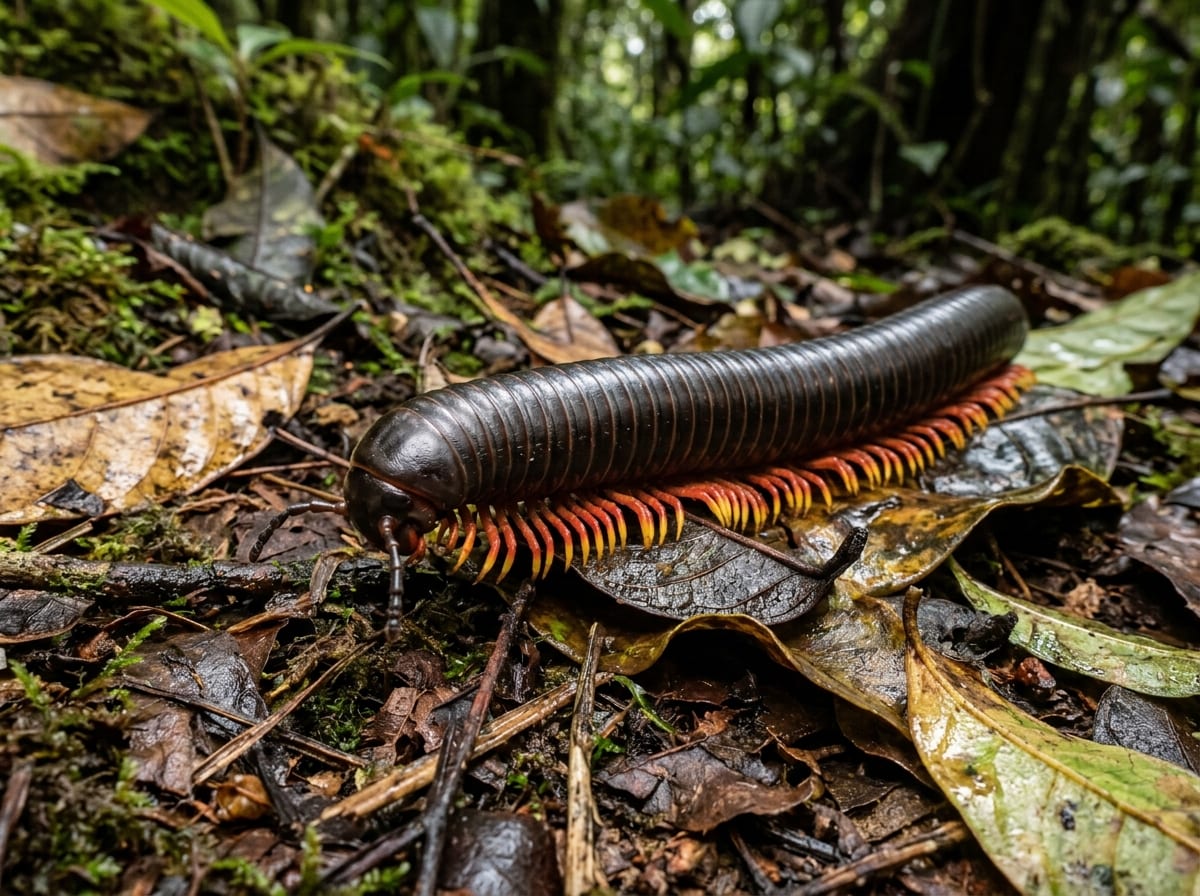
AI-generated image
Vietnam giant millipede
IntermediateAlienostreptus bicoloripes
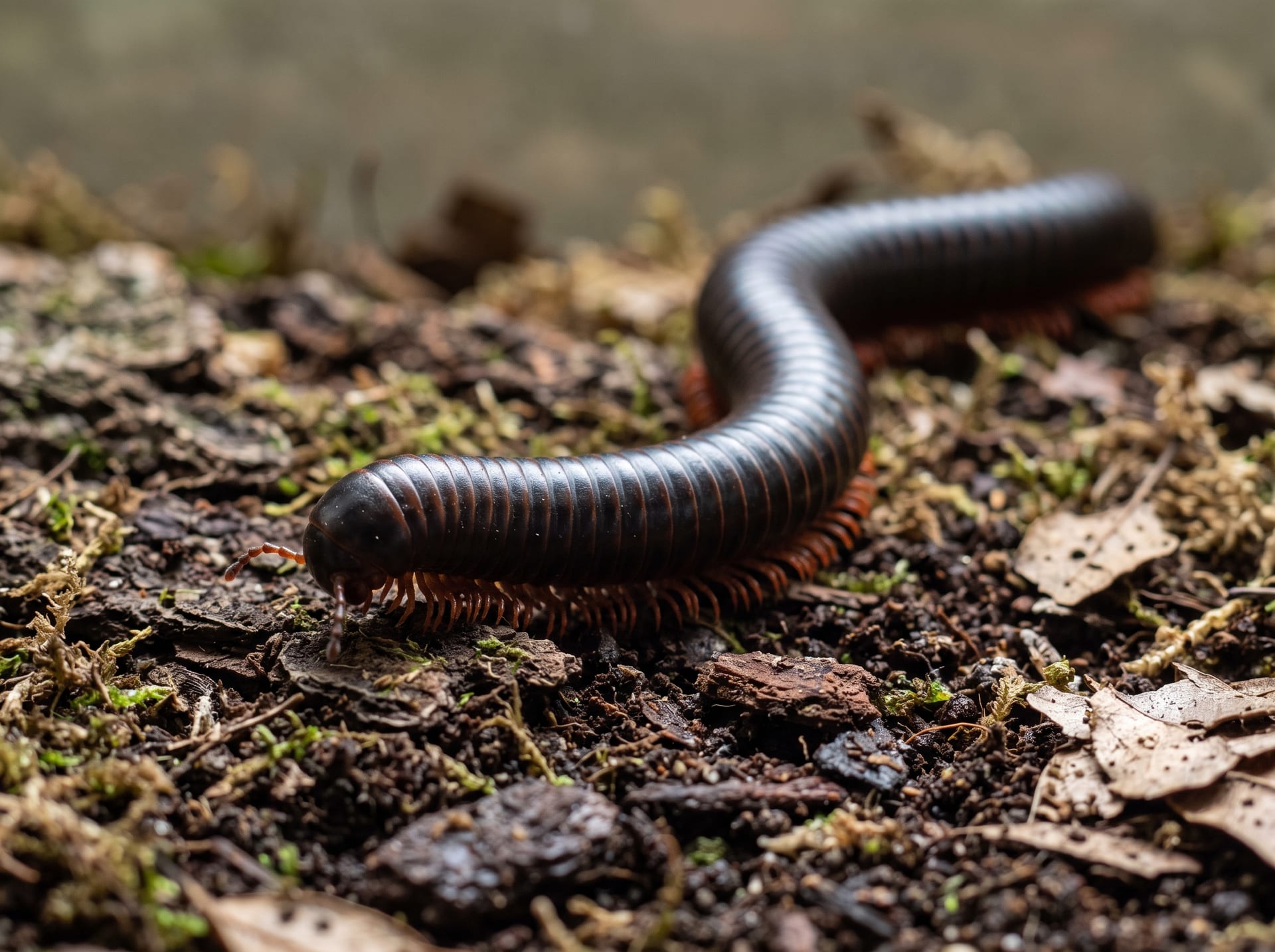
A giant millipede from the central highlands of Vietnam with an almost black body and bicoloured legs, orange-brown at the base and yellow at the tips. Described in 2020, it reaches 16-18 cm.
Difficulty
Intermediate
Size
Body length 16-17 cm (males), 16-18 cm (females)
Diet
Leaf litter (leaf mould), mushrooms
About
Alienostreptus bicoloripes Pimvichai, Akkari, Semenyuk, Constant & Enghoff, 2020 is a giant millipede of the family Harpagophoridae, described in 2020 from Gia Lai and Kon Tum provinces in Vietnam. Males measure 16-17 cm and females 16-18 cm. In life the body is dark brown, almost black, and the legs and antennae are bicoloured: brownish orange from the coxae to the postfemora and yellow on the tibiae and tarsi. The duplicated femoral spine separates the genus from others in its subfamily. According to the original description it lives in mixed tropical forest of broadleaf trees and tree ferns; adults were active by day and night and ranged from valley bottoms to dry ridges with coniferous forest. Juveniles stayed in soaking wet clumps of leaf litter along streams and in wet litter in rotten fallen trees, feeding on the leaves, and adults were seen eating mushrooms. A very similar but separate species with bicoloured legs occurs in Borneo, and a millipede resembling it circulates in the pet trade under names such as 'flameleg millipede'. In Japan specialist shops regularly sell it under trade names based on leg colour, and animals with different leg colours may include other species.
Size of the Vietnam giant millipede
The Vietnam giant millipede grows to Body length 16-17 cm (males), 16-18 cm (females).
Basic Info
Origin
Central Vietnam (Gia Lai and Kon Tum provinces)
Size
Body length 16-17 cm (males), 16-18 cm (females)
Diet
Leaf litter (leaf mould), mushrooms
Care Guide
References & Sources
Edited & verified by: BreederDirect editorial team
The taxonomic, regulatory, and husbandry data on this page are compiled and verified against the authoritative primary sources below.
Primary sources
Taxonomy & Authority
Accepted name: Alienostreptus bicoloripes Pimvichai, Akkari, Semenyuk, Constant & Enghoff, 2020
Authority databases: GBIF · GBIF · European Journal of Taxonomy 722 (2020)
Nomenclature follows global taxonomic authority databases.
Regulations & Conservation Status
Not CITES-listed
It is not a designated invasive species, an uncategorised alien species or a taxon needing an identification certificate in Japan, and it is not listed by CITES (September 2026). It is a non-native millipede, so never release captive animals.
Sources: Ministry of the Environment: List of regulated alien species, including taxa needing an identification certificate (JA) / Species+ CITES query (not listed)
Regulations may change. Always verify the latest information with the relevant authorities.
Vietnam giant millipede Listings
Loading latest listingsFind listings for this species