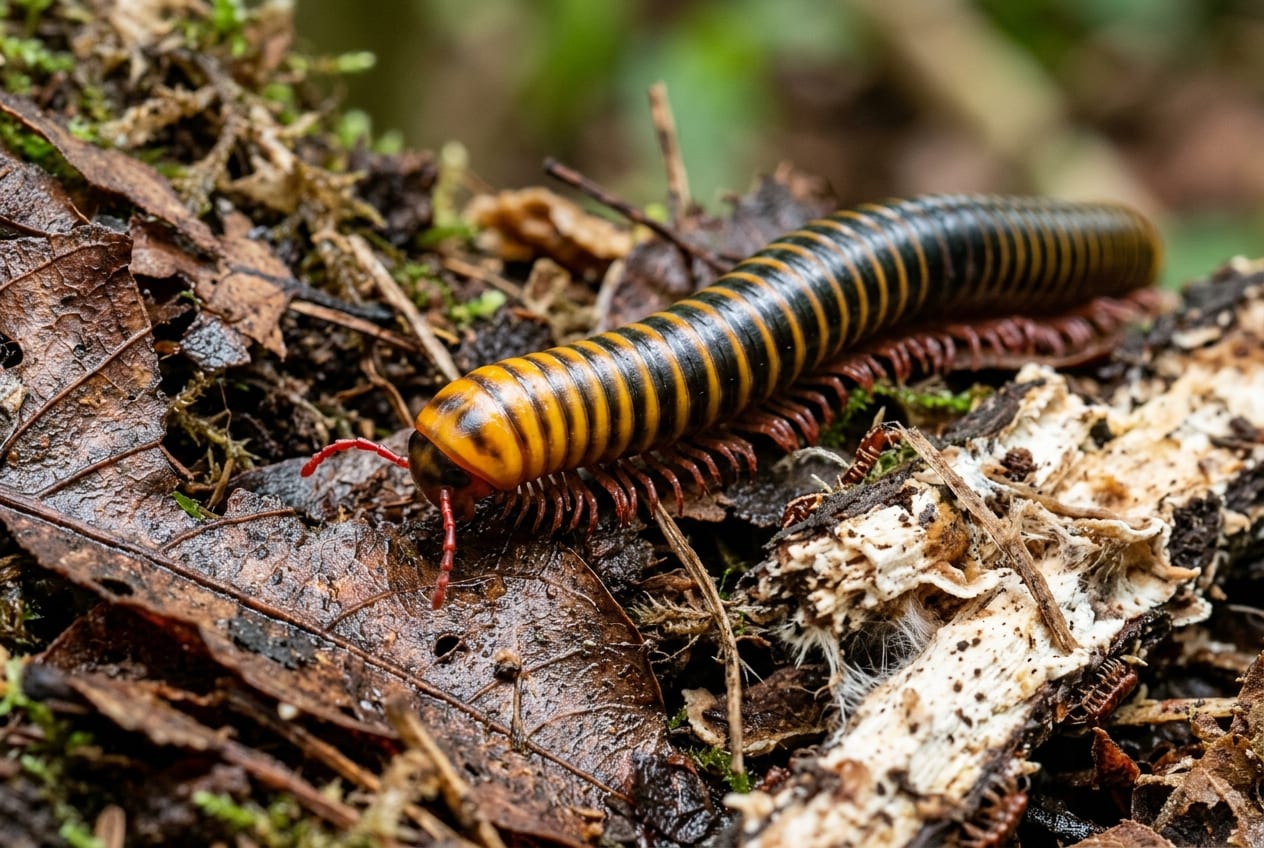
AI-generated image
West African Red-legged Millipede
IntermediatePelmatojulus ligulatus
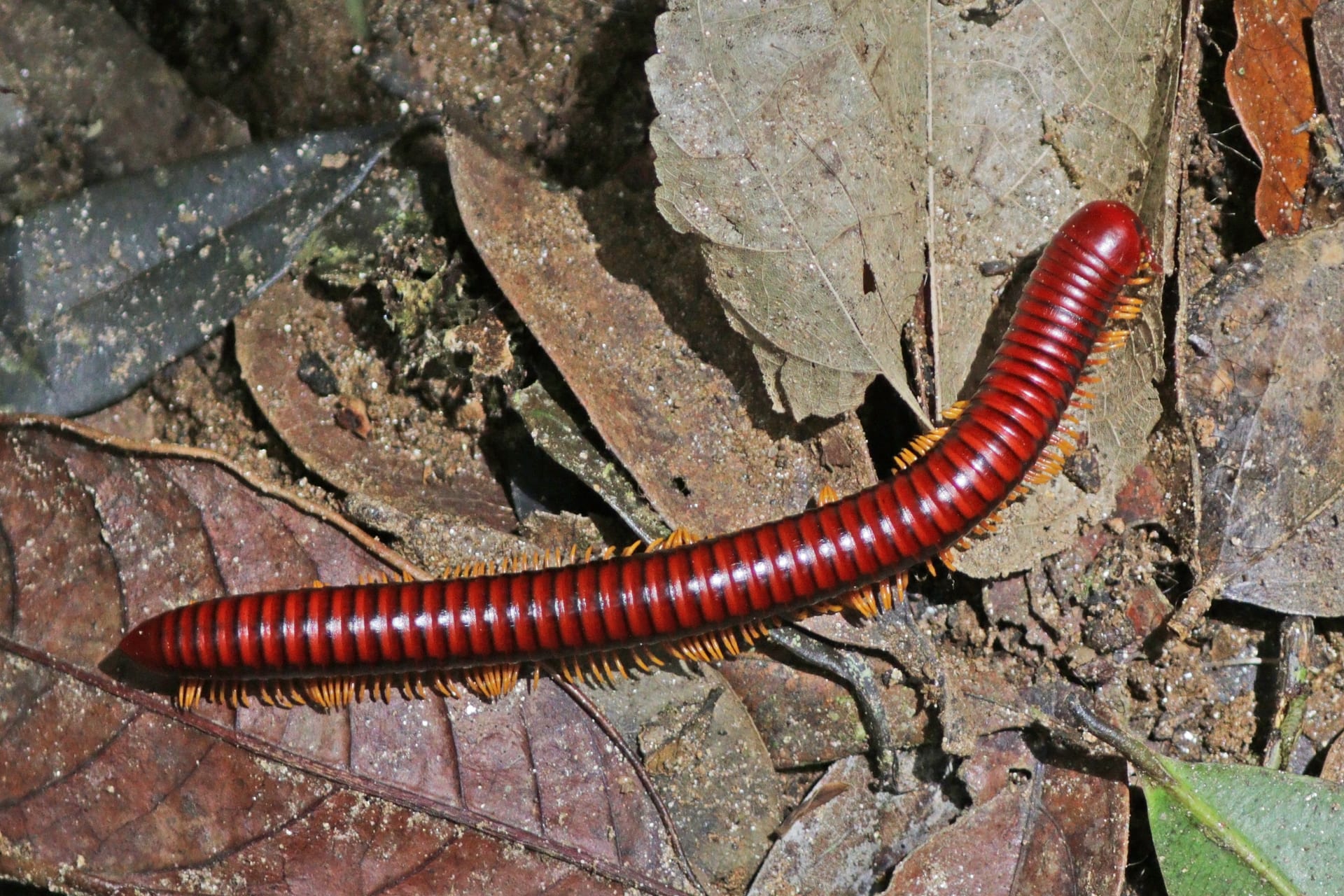
A medium-sized millipede from the secondary rainforests of West Africa. The front half of each ring is yellow to yellow-orange and the rear half dark brown to almost black, with a conspicuously glossy body, red antennae and short reddish-brown legs. It eats leaf litter and white rotten wood and needs high humidity.
Difficulty
Intermediate
Temperature
25〜28℃
Lifespan
3-5 years
Size
Up to 14cm (about 15mm wide)
Diet
Leaf litter and white rotten wood as the staple; flowers, vegetables and protein are rarely accepted
About
Pelmatojulus ligulatus is a pachybolid millipede ranging from Benin through Togo to Nigeria, where it mainly inhabits secondary rainforest. At up to 14cm long and about 15mm wide it counts as a medium-sized species. On each double segment the front section above the defensive glands is yellow to yellow-orange and the rear section dark brown to almost black, and the whole body is conspicuously glossy. The head and anal segments are dark brown, the antennae red, and the legs reddish brown and short. Adult males show sole pads on the tarsi. The species is crepuscular and nocturnal and hardly ever climbs, so neither extra lighting nor climbing structures are required. Keep it in an enclosure with a floor area of at least 30 x 40cm, with 10cm or more of substrate topped by a layer of leaves. Leaf litter and white rotten wood form the main diet and must never run out. The animals mature at roughly two years old and breed readily once settled, but sourcing enough leaf litter and rotten wood makes this only a qualified beginner species.
Source: GBIF
Lifespan of the West African Red-legged Millipede
The West African Red-legged Millipede lives 3-5 years.
Size of the West African Red-legged Millipede
The West African Red-legged Millipede grows to Up to 14cm (about 15mm wide).
Temperature & humidity for the West African Red-legged Millipede
The ideal temperature for the West African Red-legged Millipede is 25〜28℃.
Hold the temperature at 25-28 C and the humidity around 90%.
Basic Info
Care Specifications
PeacefulGroupBreeding: Moderate
Sources: Insektenliebe: Pelmatojulus ligulatus / GBIF: Pelmatojulus ligulatus
References & Sources
Edited & verified by: BreederDirect editorial team
The taxonomic, regulatory, and husbandry data on this page are compiled and verified against the authoritative primary sources below.
Taxonomy & Authority
Accepted name: Pelmatojulus ligulatus (Voges, 1878)
Nomenclature follows global taxonomic authority databases.
Regulations & Conservation Status
Not CITES-listed
Sources: CITES Appendices (species not listed)
Regulations may change. Always verify the latest information with the relevant authorities.
West African Red-legged Millipede Listings
Loading latest listingsFind listings for this species