Source: Wikimedia Commons
Japanese giant wood cockroach
IntermediatePanesthia angustipennis spadica
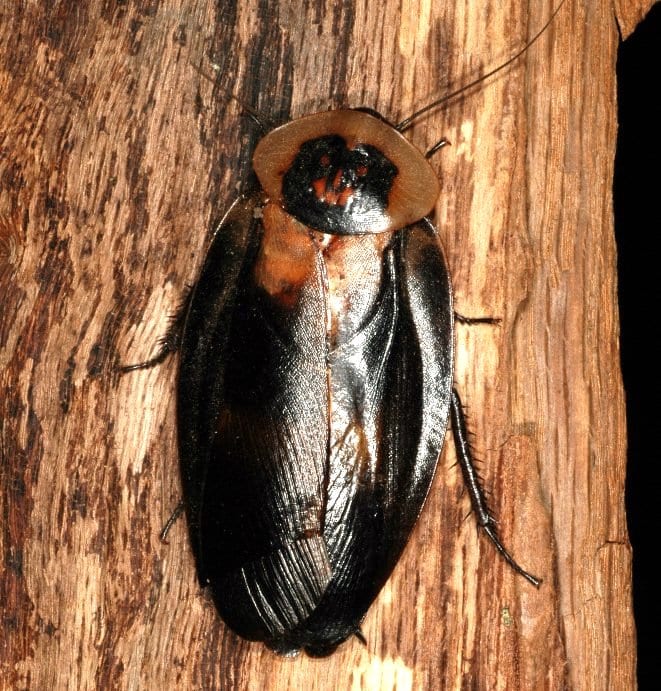
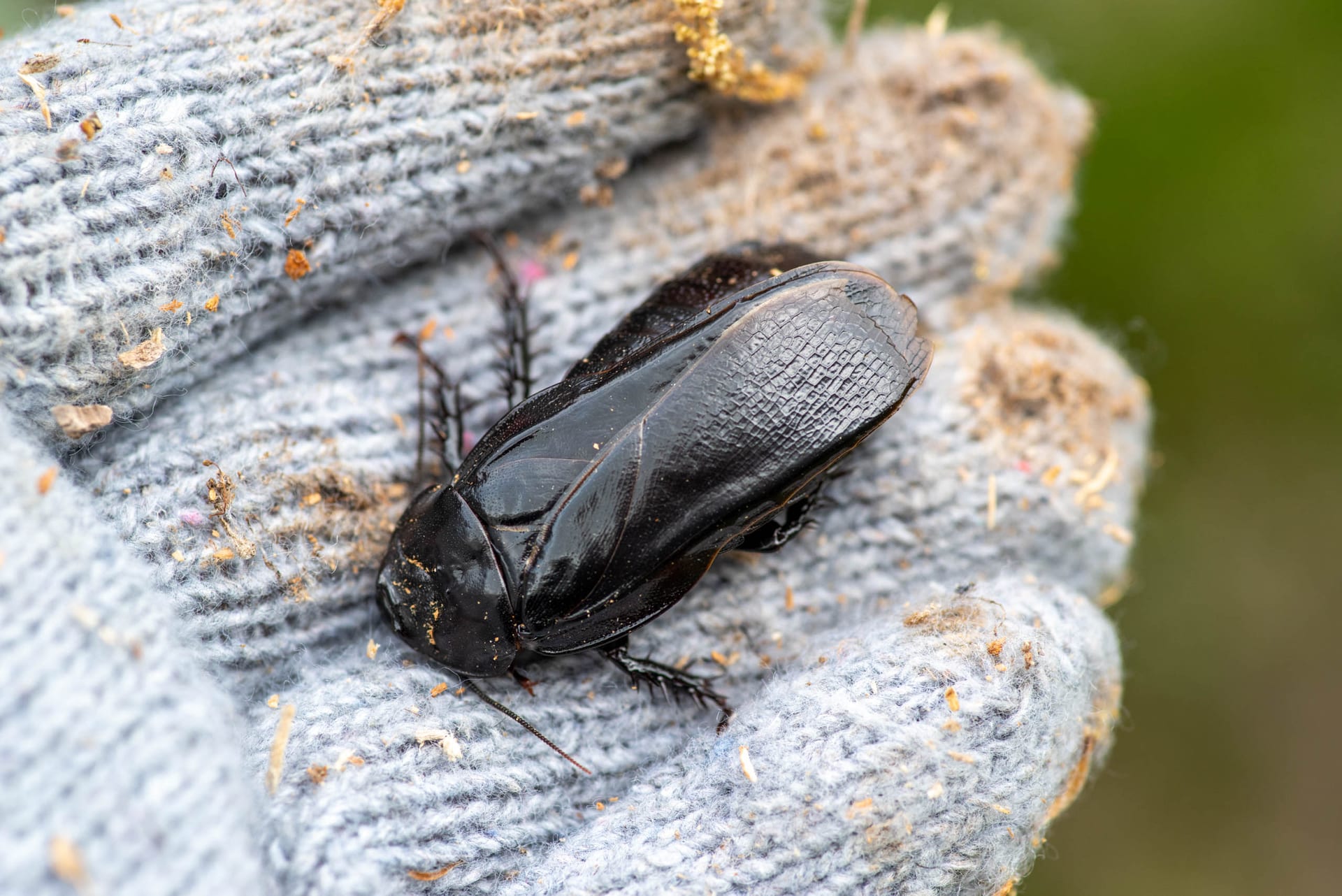
A glossy black forest cockroach about 4 cm long. It lives in groups inside rotting logs in evergreen broadleaf forest and feeds on the wood. Nymphs take four to five years or more to mature, so breeding is slow.
Difficulty
Intermediate
Lifespan
Nymphal period 4-5 years or more; adults 2.5-3 years
Size
Body length 40-45 mm
Diet
Rotting wood (well-decayed hardwood)
About
Panesthia angustipennis spadica is a cockroach of the family Blaberidae, the Japanese and Taiwanese subspecies of P. angustipennis, which ranges widely across Southeast Asia. Adults are 40-45 mm long and jet black, and males have a pair of weak horn-like projections on the front edge of the pronotum. The hind wings are developed, but the insects are thought to fly very rarely. It occurs in Honshu (from Aomori southward), Shikoku, Kyushu and nearby islands, and Taiwan, living in groups inside fallen logs and stumps, mainly in the remnant evergreen broadleaf forests dominated by Castanopsis. It eats the wood of rotting logs, digesting it with the help of gut symbionts. In one study nymphs took four to five years or more to mature, adults lived two and a half to three years, and females produced a brood of twenty-odd nymphs once a year in summer, a very low reproductive rate for a cockroach. It has declined in some areas through forest loss and drying of the forest floor, and Miyagi lists it as Vulnerable while Aomori, Ishikawa and Aichi list it as Near Threatened. In Japan it is occasionally sold by specialist shops as a native forest cockroach.
Source: Wikipedia (CC BY-SA 4.0)
Lifespan of the Japanese giant wood cockroach
The Japanese giant wood cockroach lives Nymphal period 4-5 years or more; adults 2.5-3 years.
Size of the Japanese giant wood cockroach
The Japanese giant wood cockroach grows to Body length 40-45 mm.
Basic Info
Origin
Japan (Honshu, Shikoku, Kyushu and nearby islands) and Taiwan
Lifespan
Nymphal period 4-5 years or more; adults 2.5-3 years
References & Sources
Edited & verified by: BreederDirect editorial team
The taxonomic, regulatory, and husbandry data on this page are compiled and verified against the authoritative primary sources below.
Primary sources
- Wikipedia
- Ministry of the Environment: Nationally rare species list (JA)
- Ministry of the Environment: List of regulated alien species, including taxa needing an identification certificate (JA)
- Species+ CITES query (not listed)
- Asahina (1988) Medical Entomology and Zoology 39(1) (JA)
- GBIF: Panesthia angustipennis spadica (Shiraki, 1906)
Taxonomy & Authority
Regulations & Conservation Status
Not CITES-listed
It is not covered by the Invasive Alien Species Act or the Act on Conservation of Endangered Species of Wild Fauna and Flora and is not listed by CITES (September 2026). It has declined locally, however: Miyagi lists it as Vulnerable and Aomori, Ishikawa and Aichi as Near Threatened. Follow local rules when collecting and never release captive or non-local animals.
Sources: Ministry of the Environment: Nationally rare species list (JA) / Ministry of the Environment: List of regulated alien species, including taxa needing an identification certificate (JA) / Species+ CITES query (not listed)
Regulations may change. Always verify the latest information with the relevant authorities.
Japanese giant wood cockroach Listings
Loading latest listingsFind listings for this species