Source: Wikimedia Commons
Togo Starburst Baboon
AdvancedHeteroscodra maculata
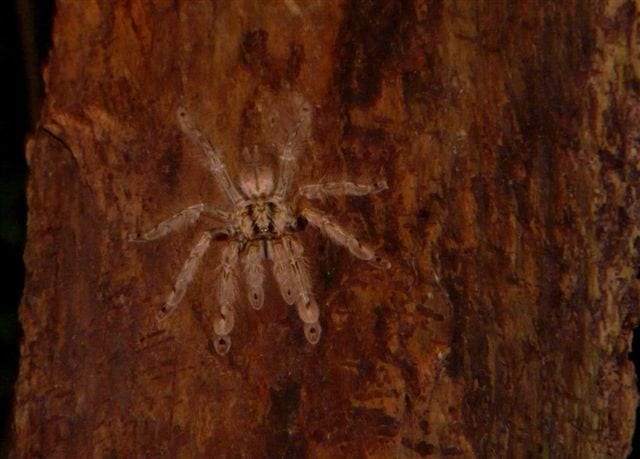
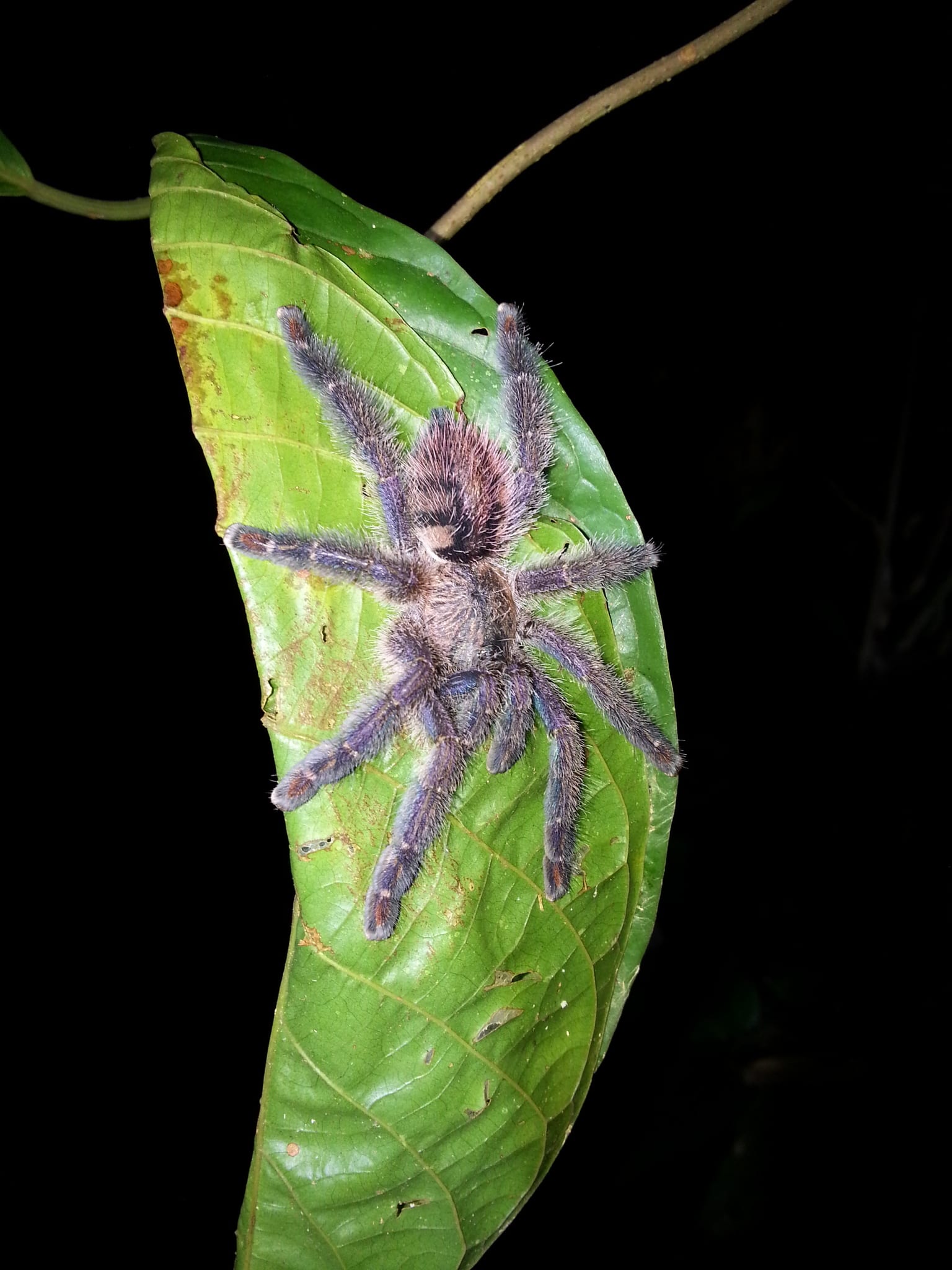
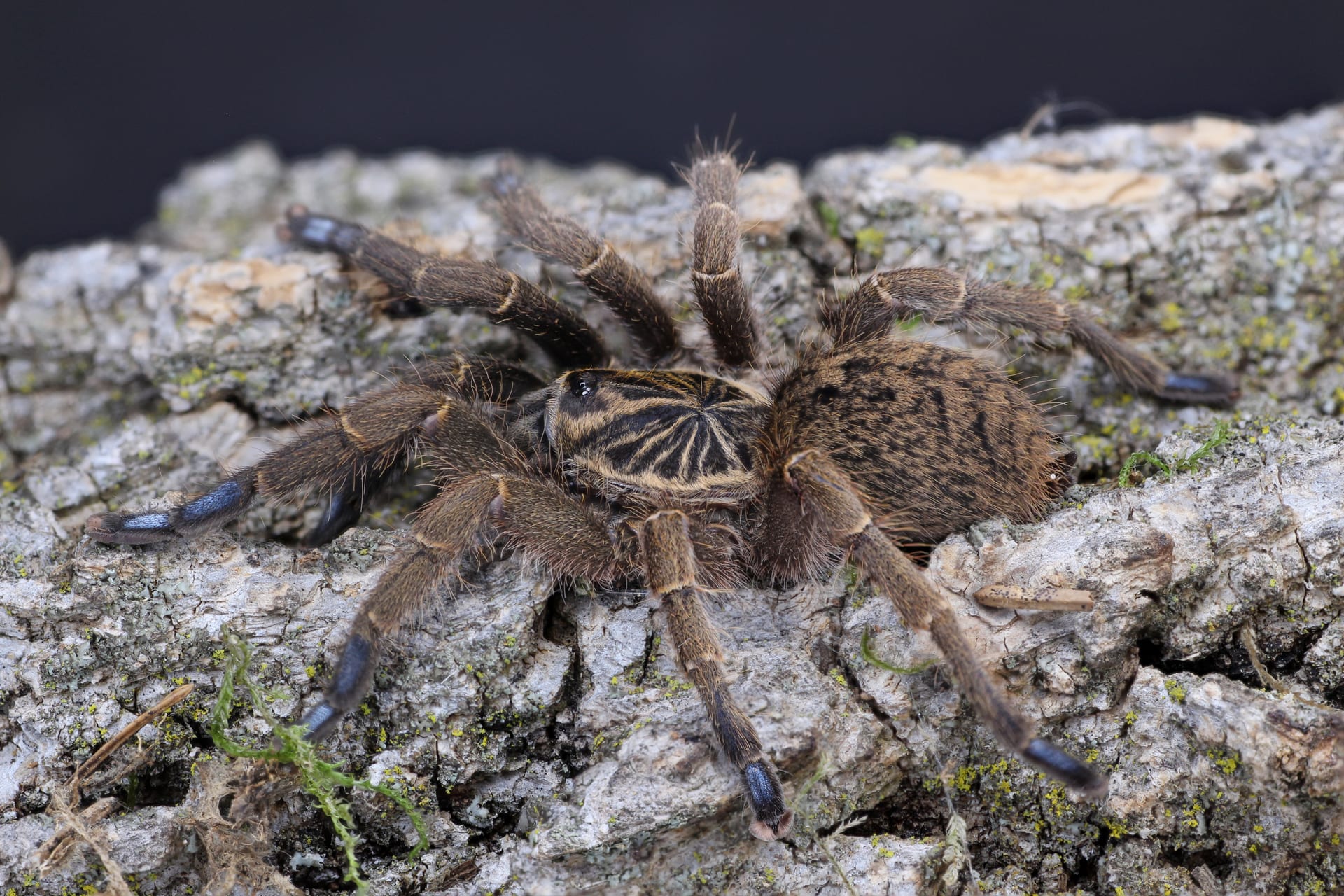
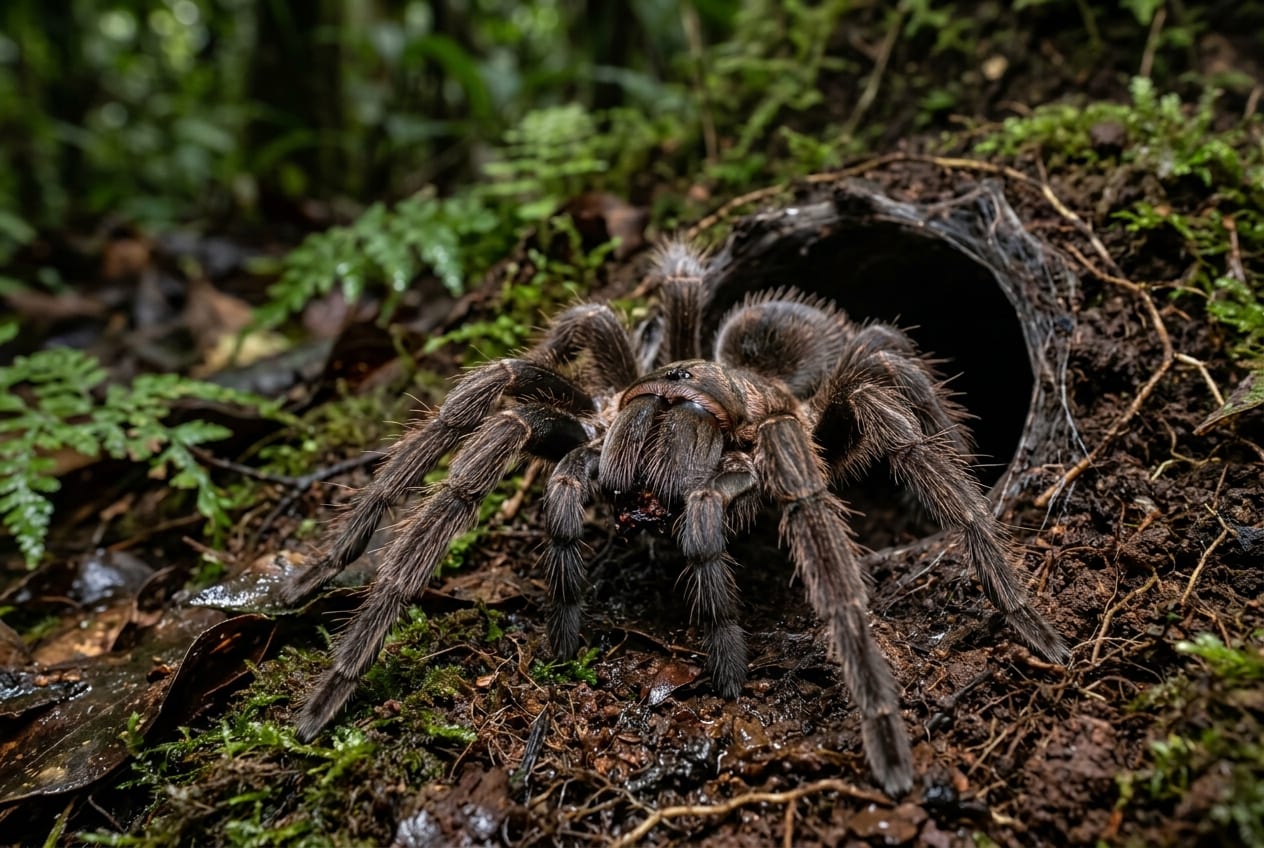
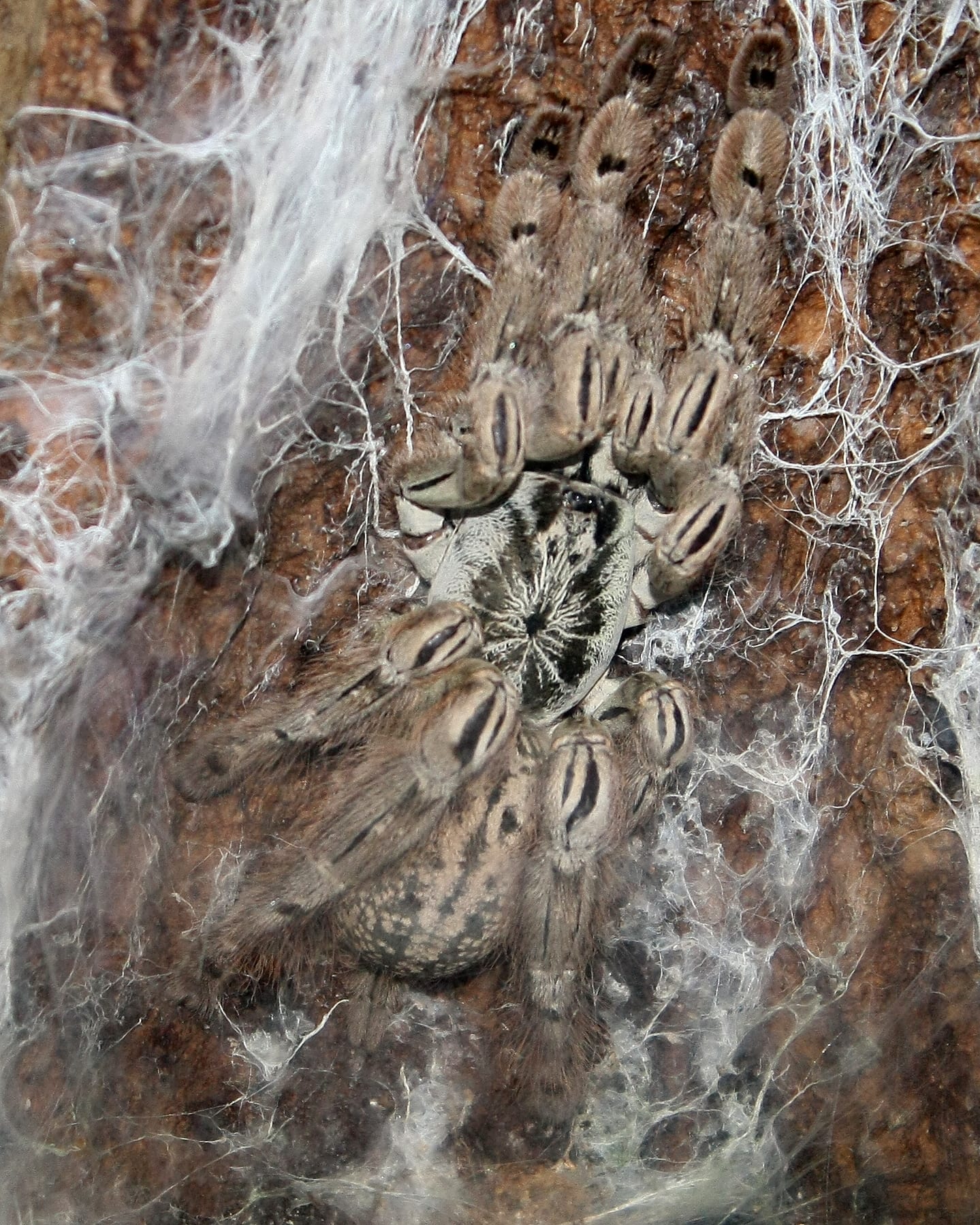
An arboreal tarantula from West Africa, chalky white with mottled black and brown markings and notably thick rear legs. It is fast and has medically significant venom, so it is for advanced keepers.
Difficulty
Advanced
Temperature
22〜26℃
Lifespan
Females 10-12 years / males 2-3 years
Size
Body 5-7cm, leg span 11-13cm
Humidity
70〜80%
Diet
Live insects such as crickets and roaches
About
Heteroscodra maculata was described by Pocock in 1899 and belongs to the Stromatopelminae, ranging from West to Central Africa with Togo and Ghana at the centre of its distribution. Its distinctive chalky white ground colour with mottled black and brown markings has also earned it the name ornamental baboon. Its markedly thick rear legs lead many to call it a baboon spider, although it does not belong to the Harpactirinae. It is arboreal, spinning a tube web in crevices such as bark and sheltering inside by day, although juveniles have been observed burrowing during their first few months. Being an Old World species it has no urticating hairs and can only flee or bite. Its venom is regarded as medically significant and handling is not recommended. Females breed readily but sexual cannibalism can occur, and an egg sac yields between 75 and 130 spiderlings.
Source: Wikipedia (CC BY-SA 4.0)
Lifespan of the Togo Starburst Baboon
The Togo Starburst Baboon lives Females 10-12 years / males 2-3 years.
Size of the Togo Starburst Baboon
The Togo Starburst Baboon grows to Body 5-7cm, leg span 11-13cm.
It measures 5-7cm in body length with a leg span of 11-13cm and reaches adult size in about three years.
Temperature & humidity for the Togo Starburst Baboon
The ideal temperature for the Togo Starburst Baboon is 22〜26℃. Ideal humidity is 70〜80%.
Basic Info
Origin
West and Central Africa (mainly Togo and Ghana)
Care Specifications
AggressiveSolitaryBreeding: Moderate
Sources: The Spider Shop: Heteroscodra maculata / Tarantupedia: Heteroscodra maculata / Wikipedia: Heteroscodra maculata / German Wikipedia: Heteroscodra maculata / GBIF
References & Sources
Edited & verified by: BreederDirect editorial team
The taxonomic, regulatory, and husbandry data on this page are compiled and verified against the authoritative primary sources below.
Taxonomy & Authority
Accepted name: Heteroscodra maculata Pocock, 1899
Authority databases: GBIF
Nomenclature follows global taxonomic authority databases.
Regulations & Conservation Status
Not CITES-listed
Sources: CITES Appendices (species not listed)
Regulations may change. Always verify the latest information with the relevant authorities.
Togo Starburst Baboon Listings
Loading latest listingsFind listings for this species