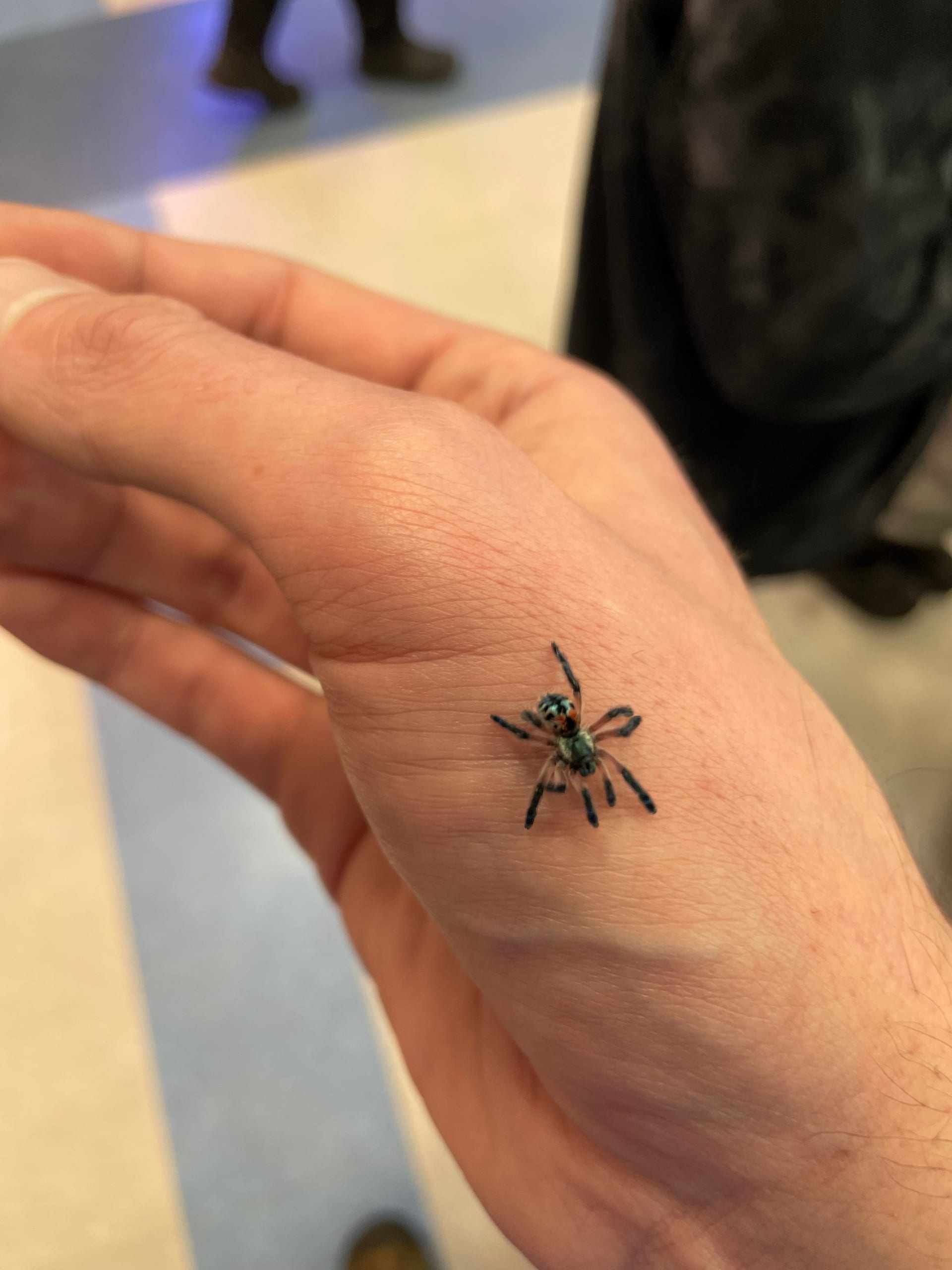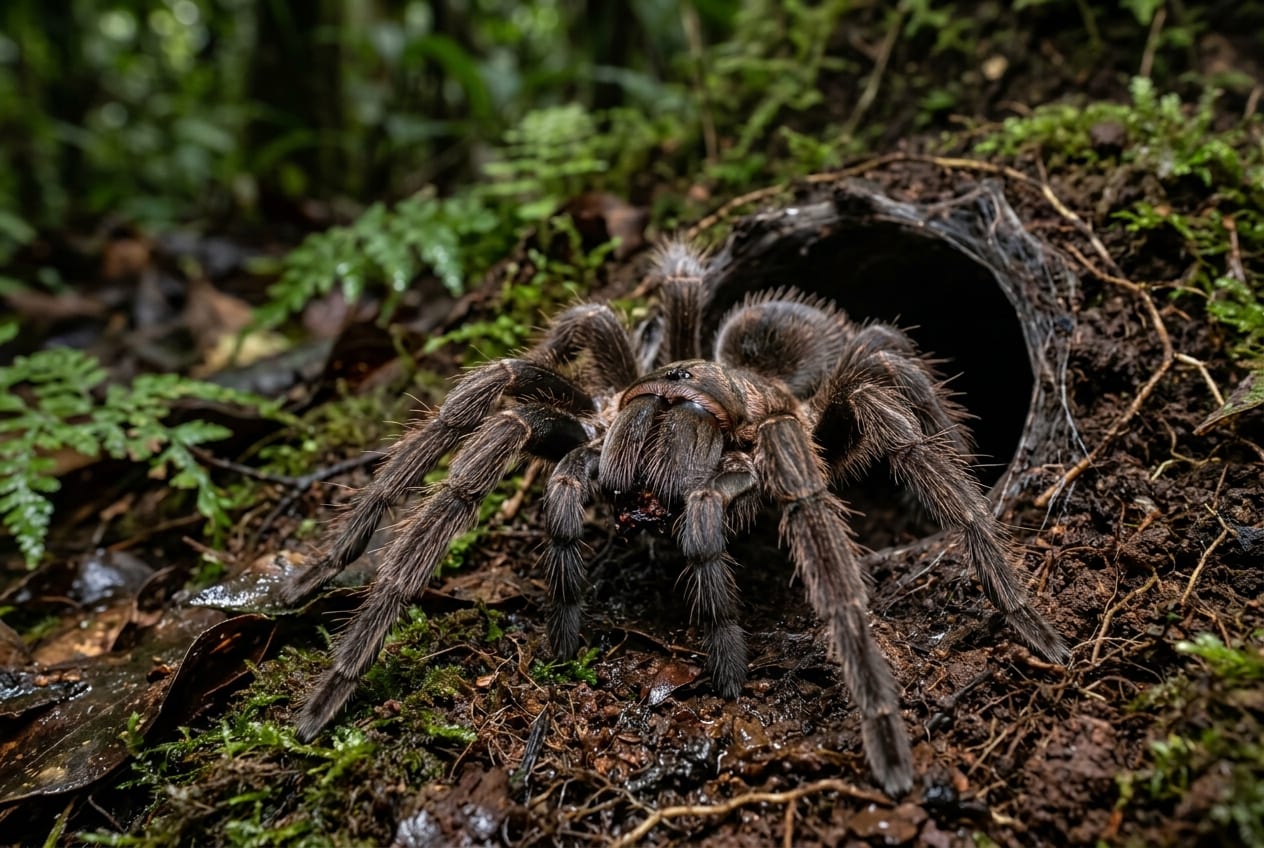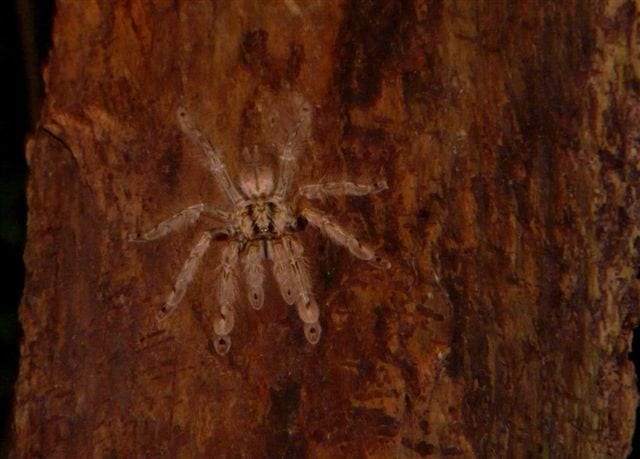
Source: Wikimedia Commons
Feather Leg Baboon
AdvancedStromatopelma calceatum
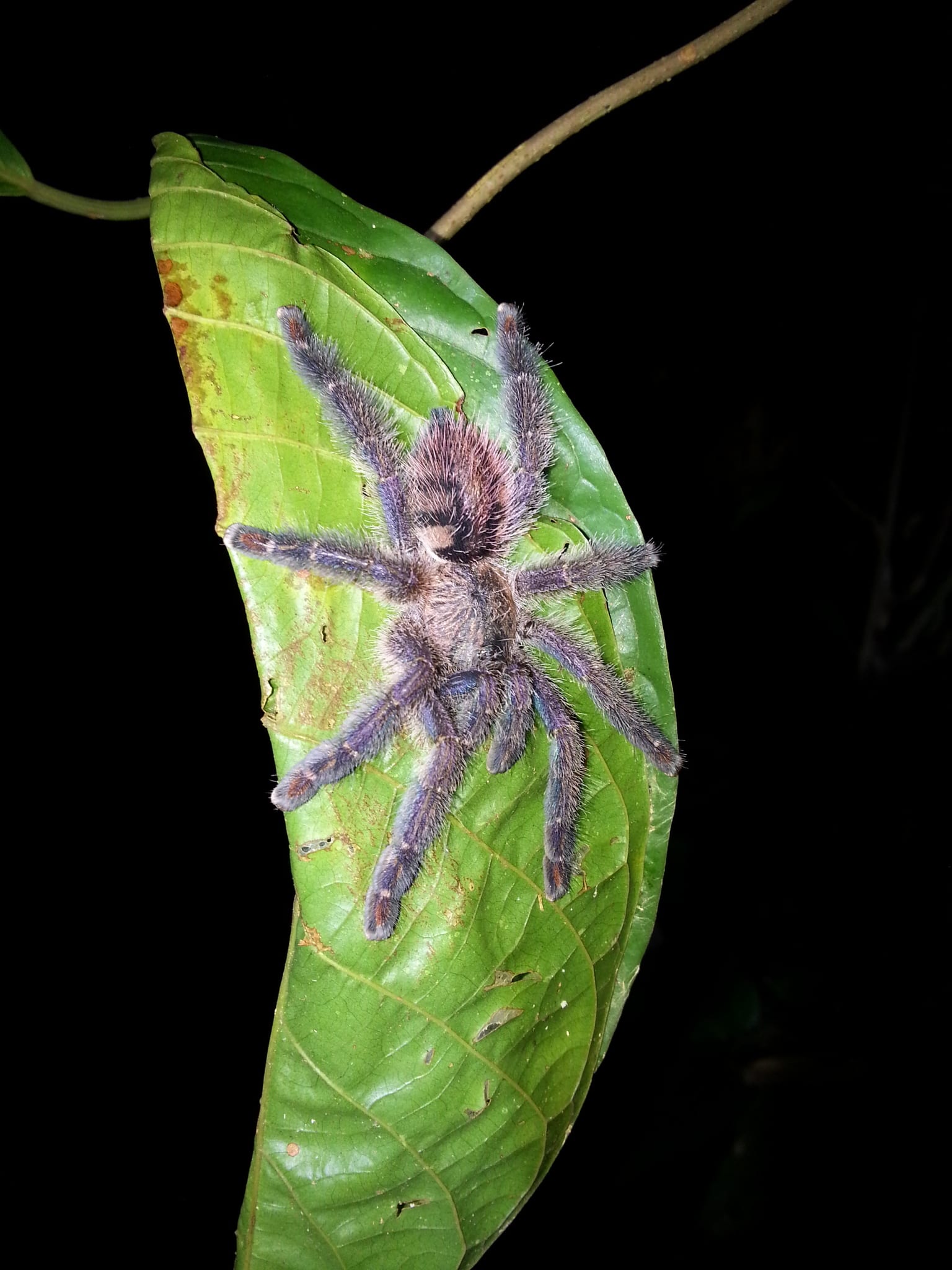
An arboreal tarantula from West Africa whose legs carry dense orange setae that look like feathers. Highly defensive and known for potent venom, it is among the most advanced species to keep.
Difficulty
Advanced
Temperature
22〜26℃
Lifespan
Females up to 15 years, males about 4 years
Size
Body 5.5-6cm (female), leg span about 15cm
Humidity
70〜80%
Diet
Live insects such as crickets and roaches
About
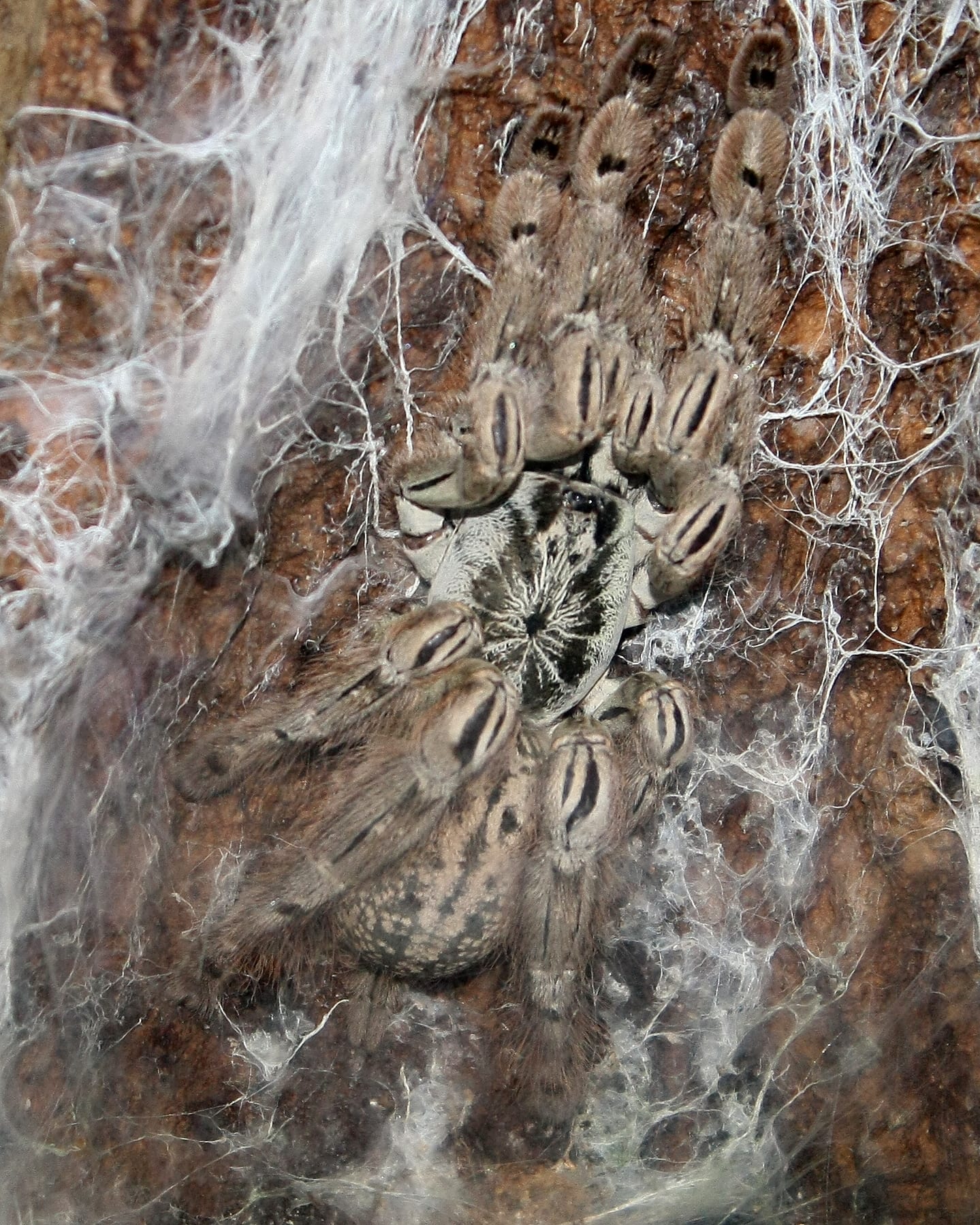
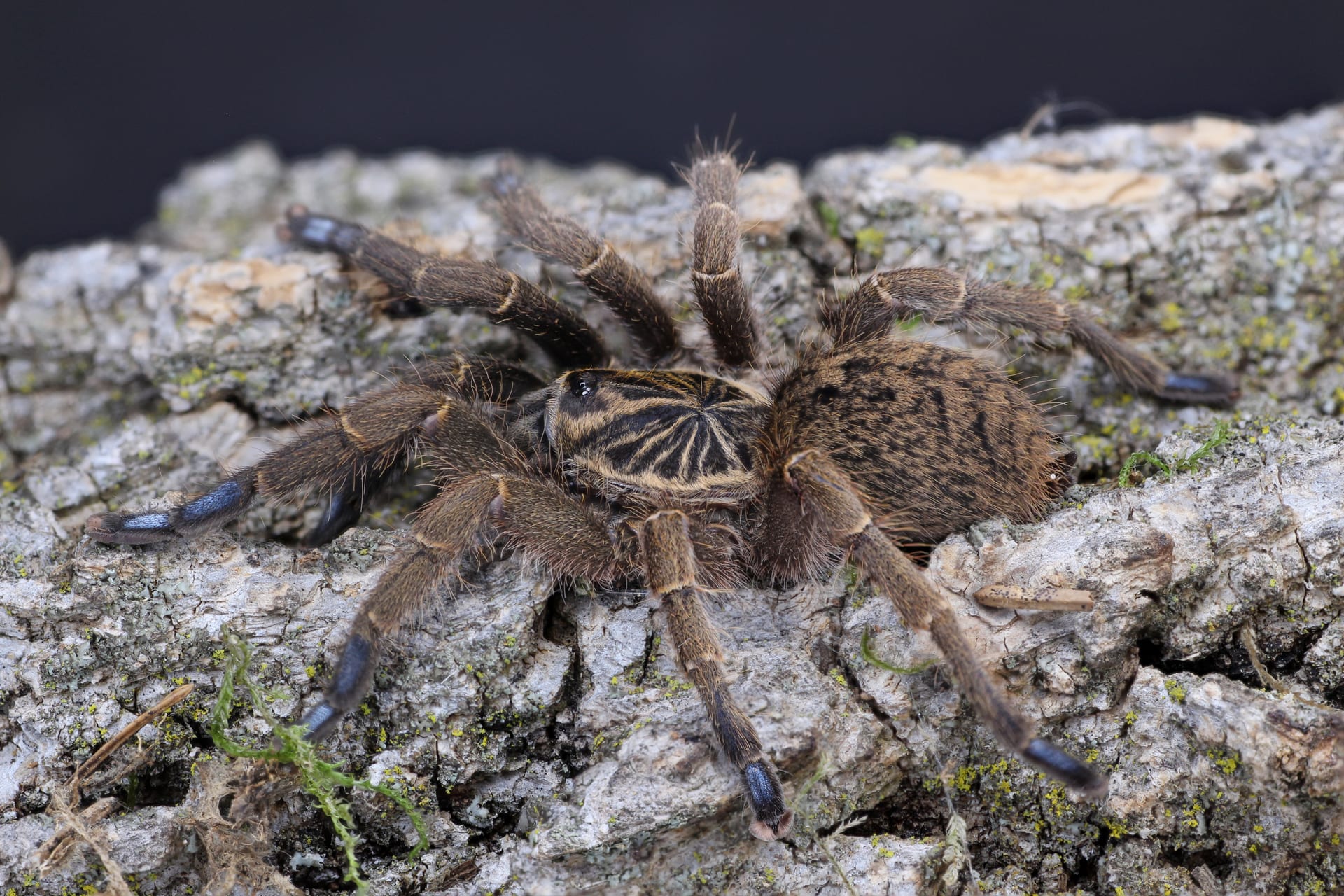
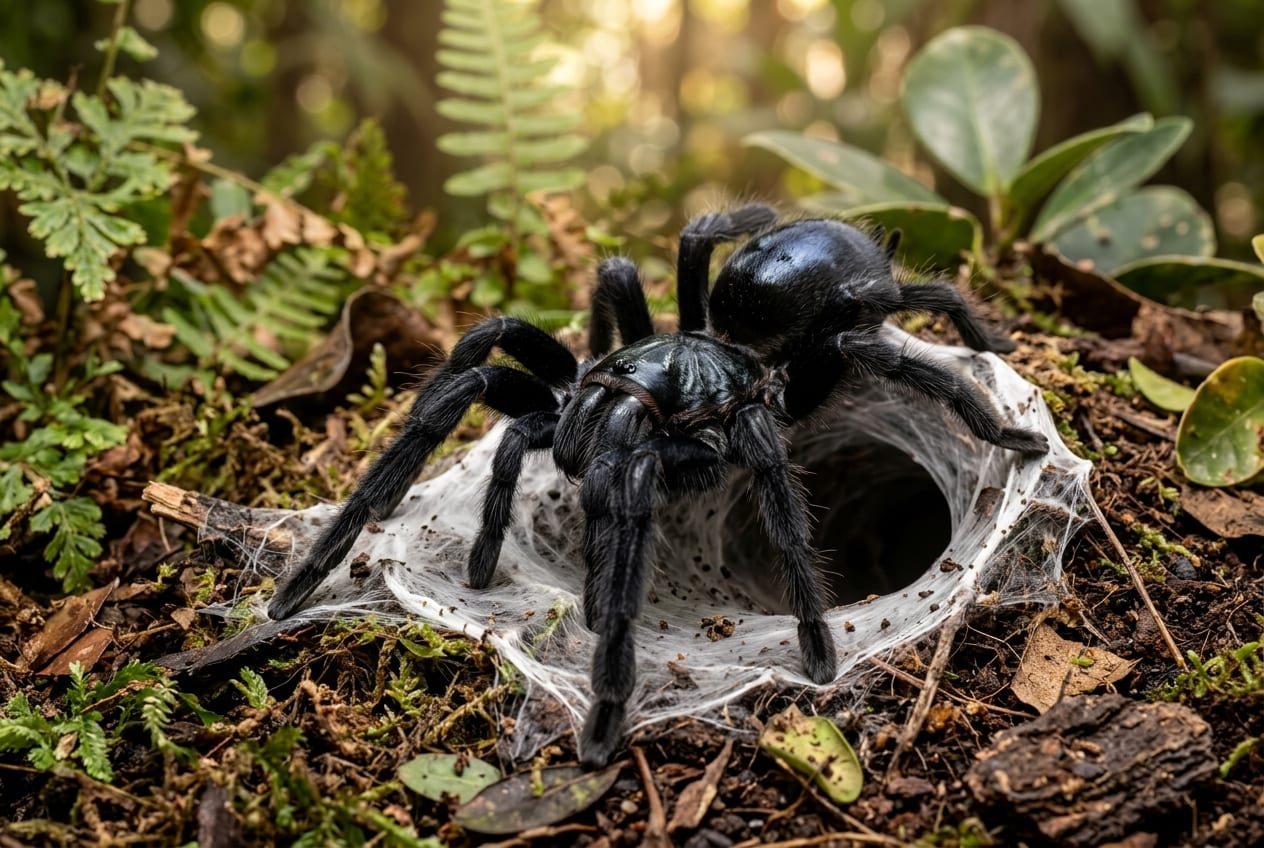
Stromatopelma calceatum was described by Fabricius in 1793 and belongs to the Stromatopelminae, occurring in West Africa. Described early, it has passed through several scientific names over the years. The carapace and abdomen are a creamy tan, with black striping on the carapace and a black fishbone pattern on the abdomen. Dense orange setae on the legs give it the feather-leg name. Females live up to 15 years and males about 4. It is arboreal, spinning a tube web in the lower forest layer and staying inside by day to emerge at night, though juveniles have been observed burrowing. It favours warm, humid conditions, with habitat temperatures reported around 27-29C. Being an Old World species it has no urticating hairs, and its extreme defensiveness restricts it to advanced keepers.
Source: Wikipedia (CC BY-SA 4.0)
Lifespan of the Feather Leg Baboon
The Feather Leg Baboon lives Females up to 15 years, males about 4 years.
Size of the Feather Leg Baboon
The Feather Leg Baboon grows to Body 5.5-6cm (female), leg span about 15cm.
Females measure 5.5-6cm in body length with a leg span of about 15cm, while males are smaller at around 3cm.
Temperature & humidity for the Feather Leg Baboon
The ideal temperature for the Feather Leg Baboon is 22〜26℃. Ideal humidity is 70〜80%.
Basic Info
Origin
West Africa (Ghana and elsewhere)
Care Specifications
AggressiveSolitary
Sources: The Spider Shop: Stromatopelma calceatum / Tarantupedia: Stromatopelma calceatum / Wikipedia: Stromatopelma calceatum / Polish Wikipedia: Stromatopelma calceatum / GBIF
References & Sources
Edited & verified by: BreederDirect editorial team
The taxonomic, regulatory, and husbandry data on this page are compiled and verified against the authoritative primary sources below.
Taxonomy & Authority
Accepted name: Stromatopelma calceatum (Fabricius, 1793)
Authority databases: GBIF
Nomenclature follows global taxonomic authority databases.
Regulations & Conservation Status
Not CITES-listed
Sources: CITES Appendices (species not listed)
Regulations may change. Always verify the latest information with the relevant authorities.
Feather Leg Baboon Listings
Loading latest listingsFind listings for this species