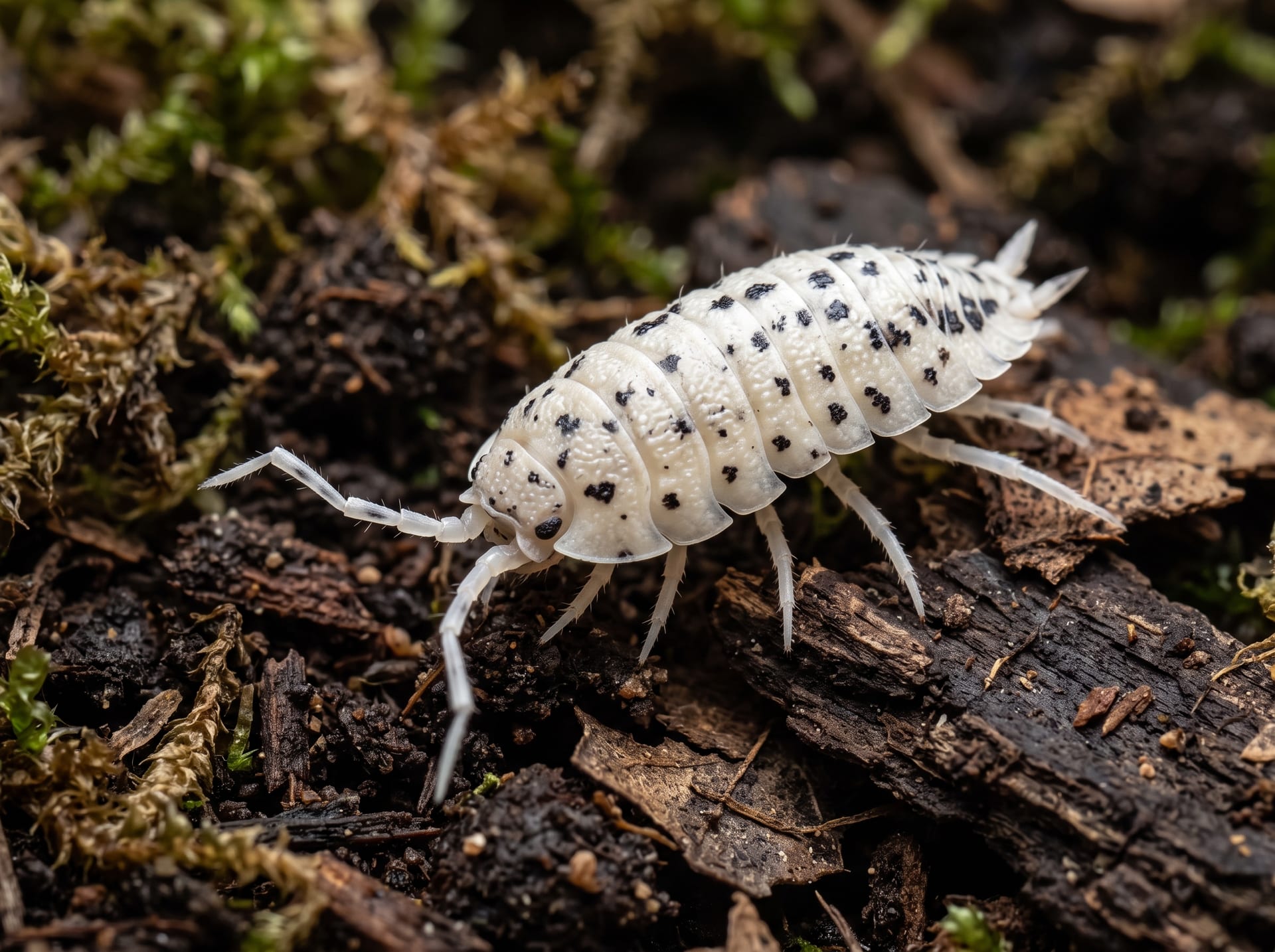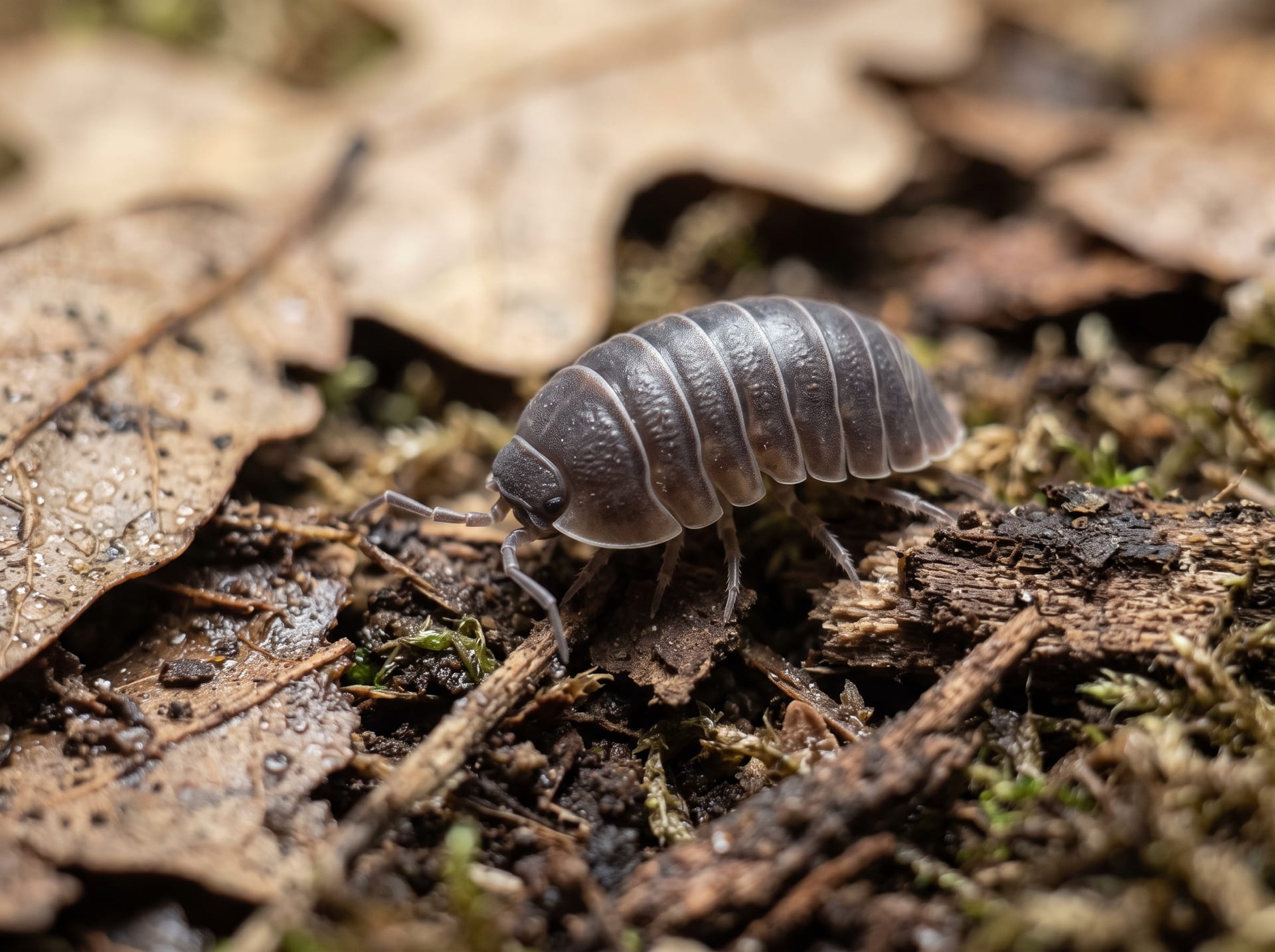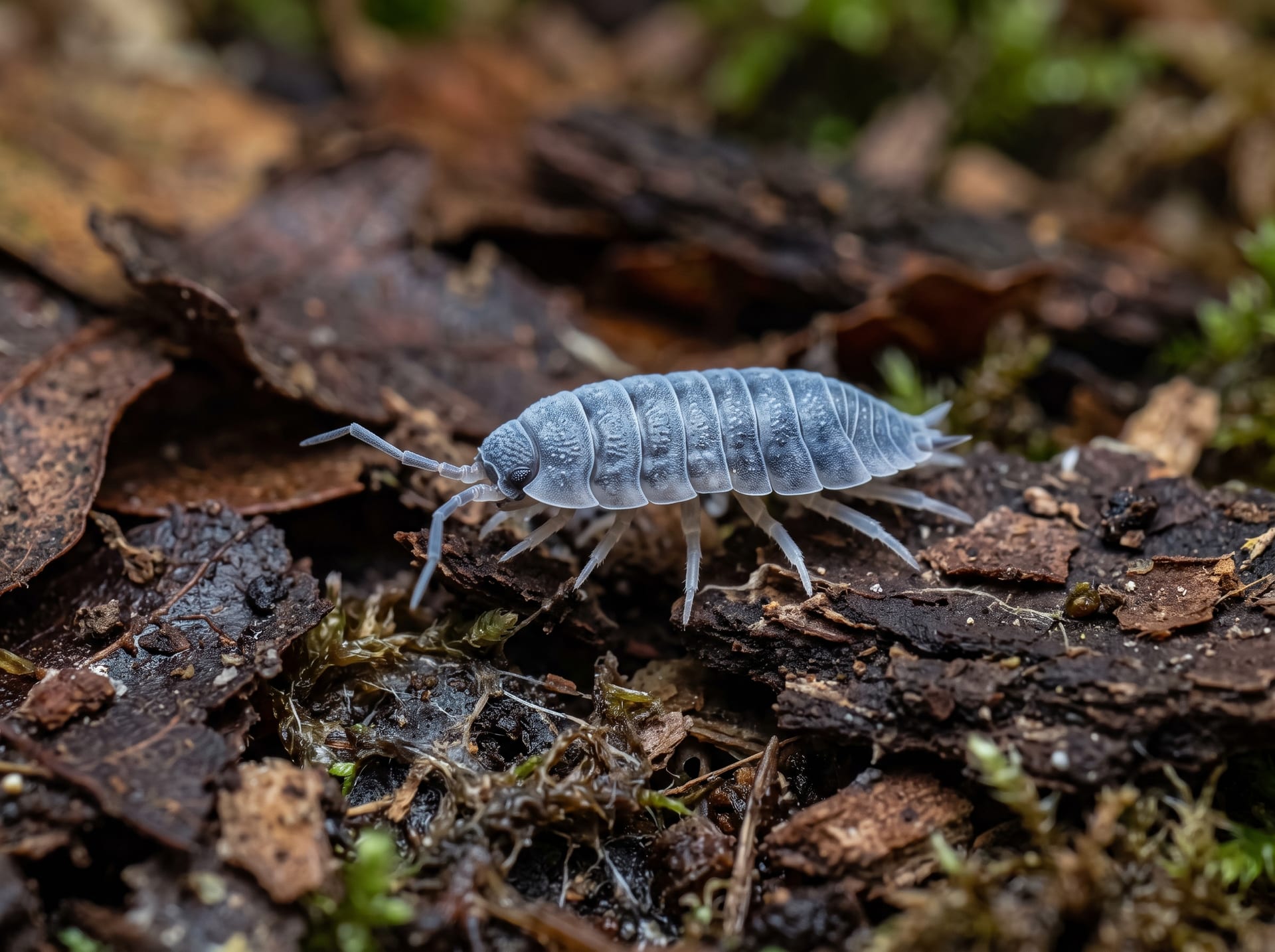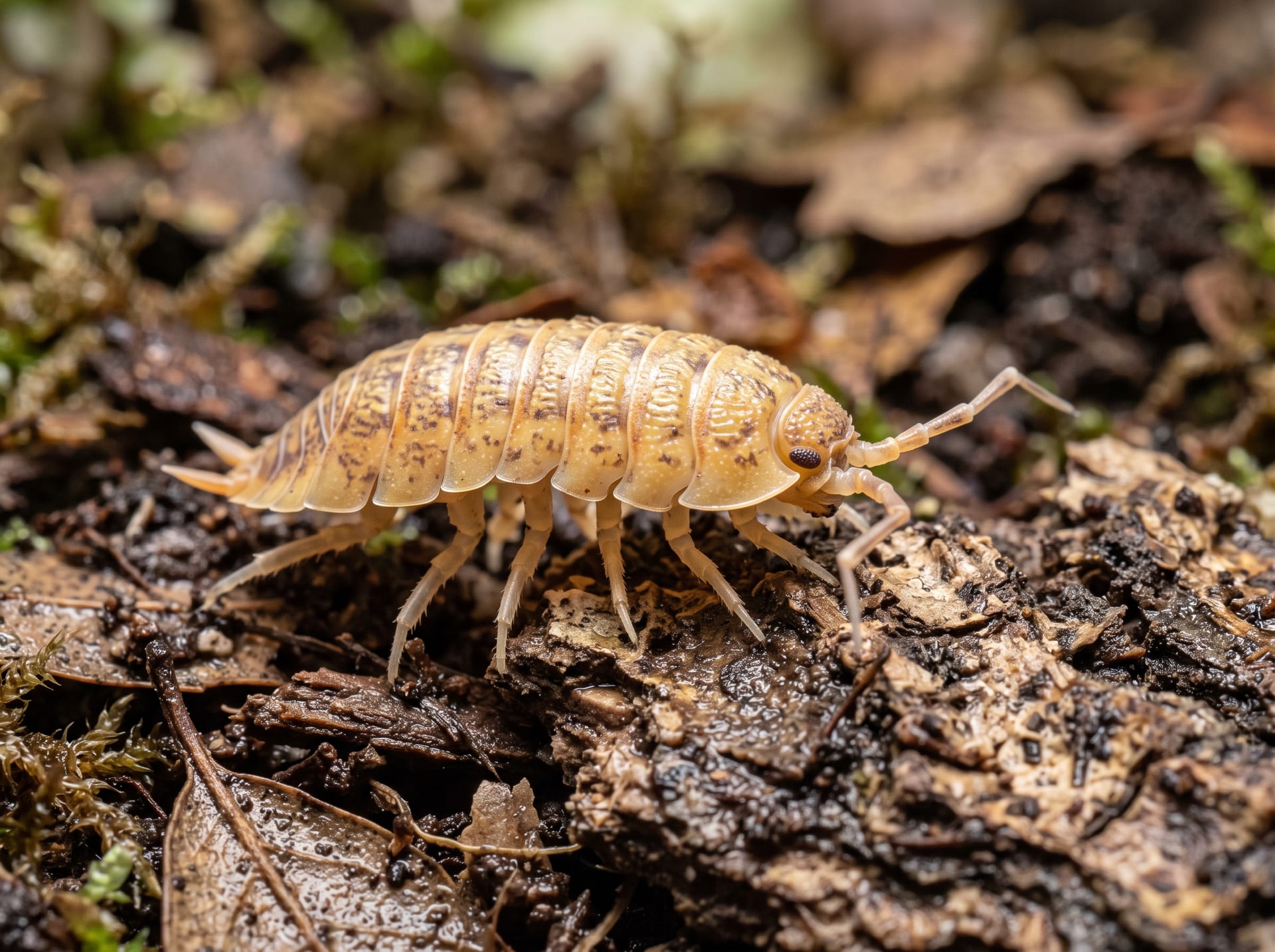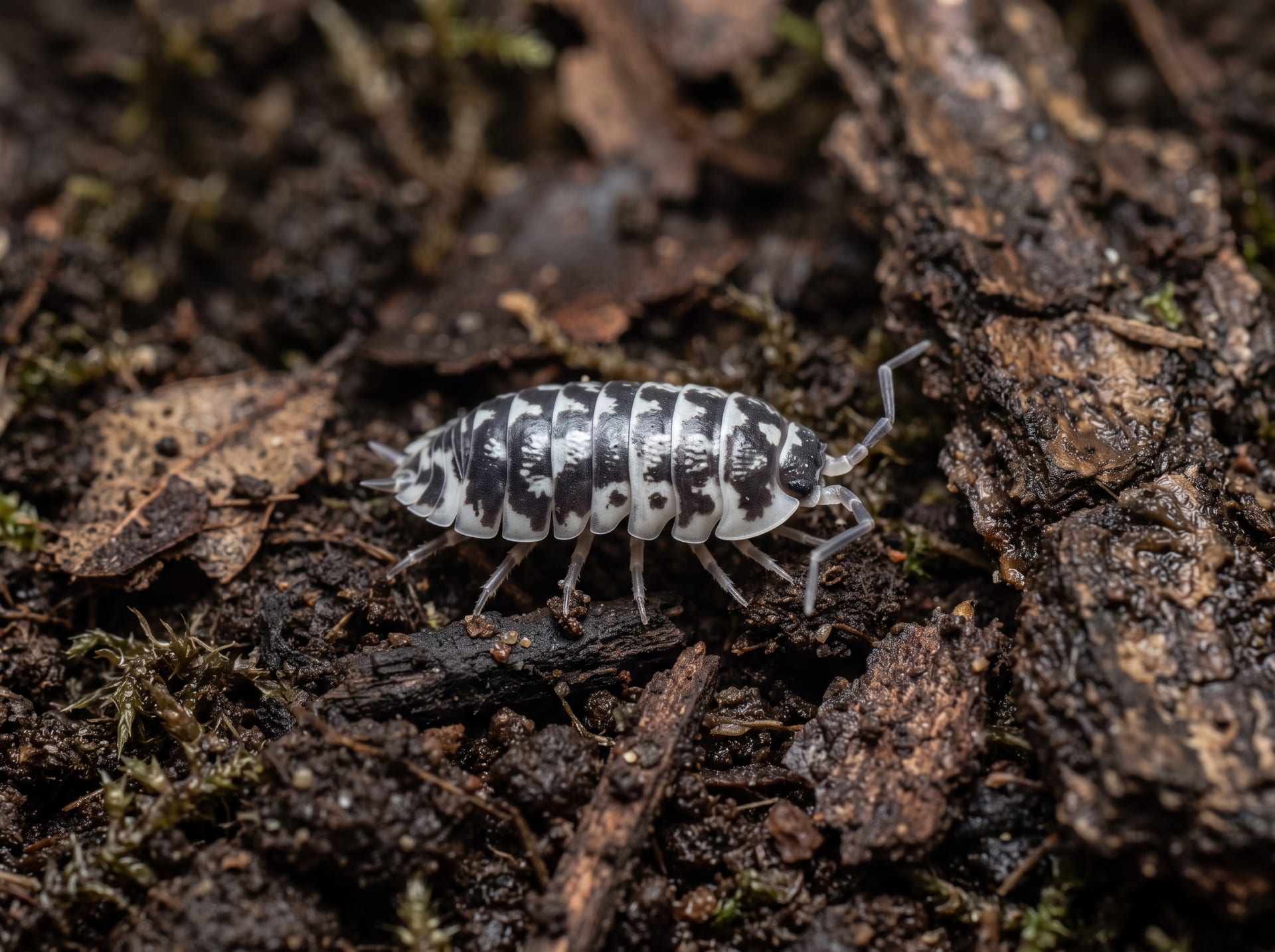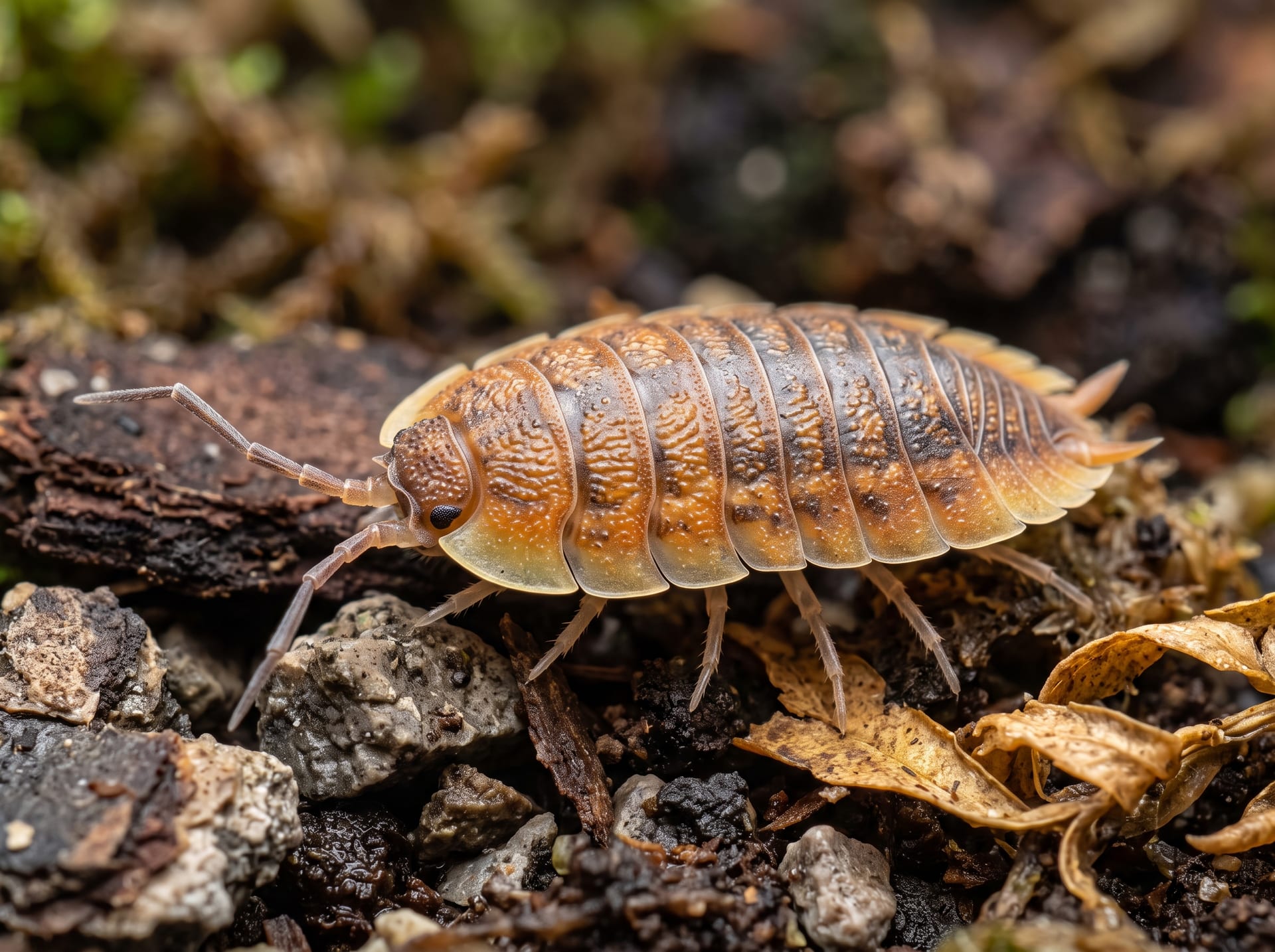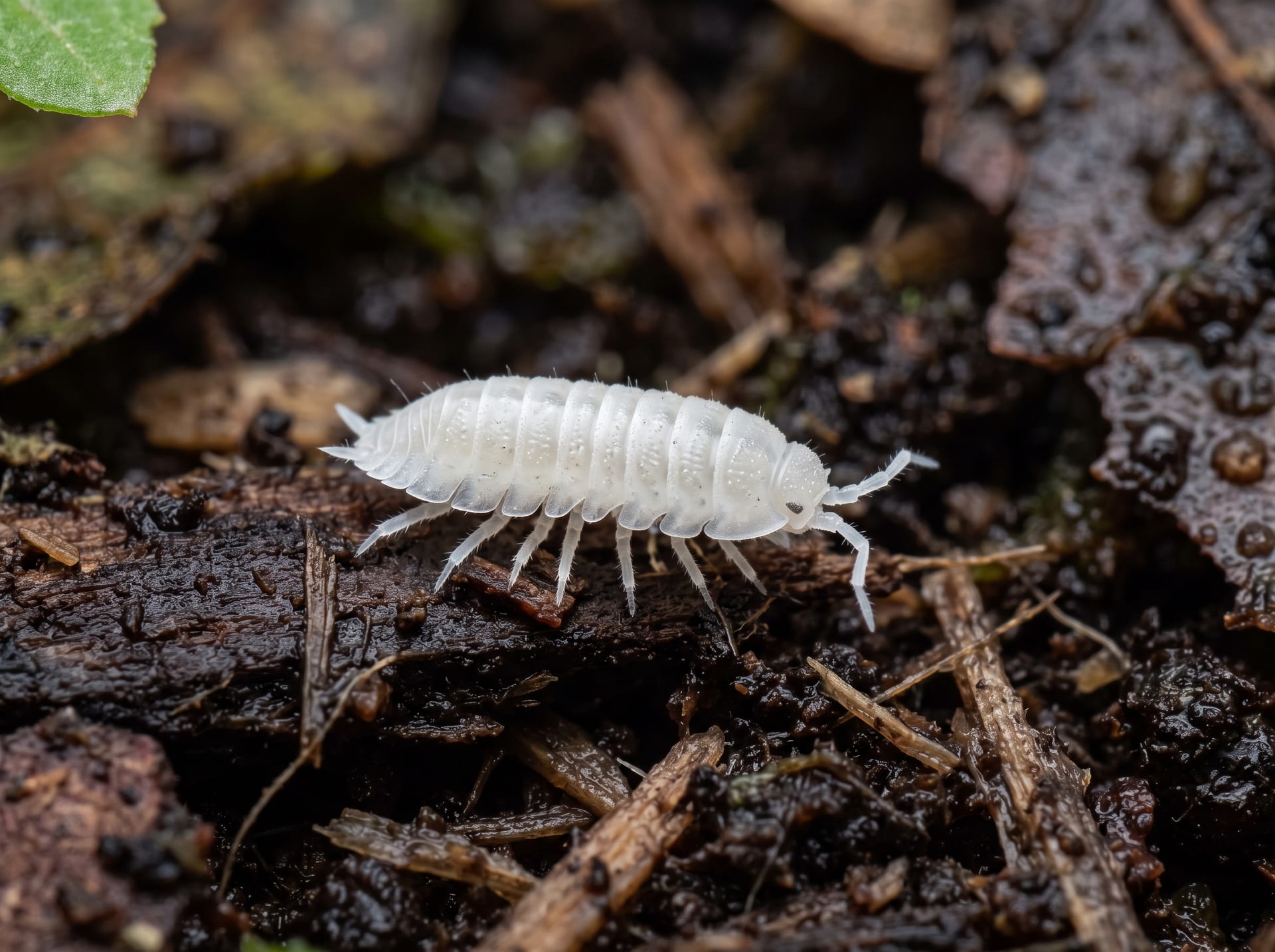
AI-generated image
Dwarf White Isopod
BeginnerTrichorhina tomentosa
A tiny white isopod that reproduces parthenogenetically and multiplies rapidly. A staple microfauna clean-up crew and feeder culture; a harmless detritivore with no bite or venom.
Difficulty
Beginner
Temperature
20〜27℃
Lifespan
About 6 months to 1 year
Size
About 0.3-0.5 cm
Humidity
70〜90%
Diet
Mainly leaf litter and decaying matter, with small amounts of protein (e.g., fish food) and vegetable scraps.
About
Trichorhina tomentosa is a tiny white isopod of about 0.3–0.5cm that reproduces parthenogenetically, multiplying rapidly without males. Native to the Neotropics of South America and found in greenhouses worldwide, it eats leaf litter and detritus with small amounts of fish food or vegetables. A staple clean-up crew and feeder culture, it is harmless with no bite or venom and is easy for beginners.
Lifespan of the Dwarf White Isopod
The Dwarf White Isopod lives About 6 months to 1 year.
It prefers humid conditions (20–27°C, 70–90% humidity) and has a relatively short lifespan of about six months to a year.
Size of the Dwarf White Isopod
The Dwarf White Isopod grows to About 0.3-0.5 cm.
Temperature & humidity for the Dwarf White Isopod
The ideal temperature for the Dwarf White Isopod is 20〜27℃. Ideal humidity is 70〜90%.
Basic Info
Origin
Neotropical (South American) origin, now found in greenhouses worldwide
Lifespan
About 6 months to 1 year
Size
About 0.3-0.5 cm
Temperature
20〜27℃
References & Sources
Edited & verified by: BreederDirect editorial team
The taxonomic, regulatory, and husbandry data on this page are compiled and verified against the authoritative primary sources below.
Dwarf White Isopod Listings
Loading latest listingsFind listings for this species