Source: Wikimedia Commons
Costa Rican Orange Mouth
IntermediatePsalmopoeus reduncus
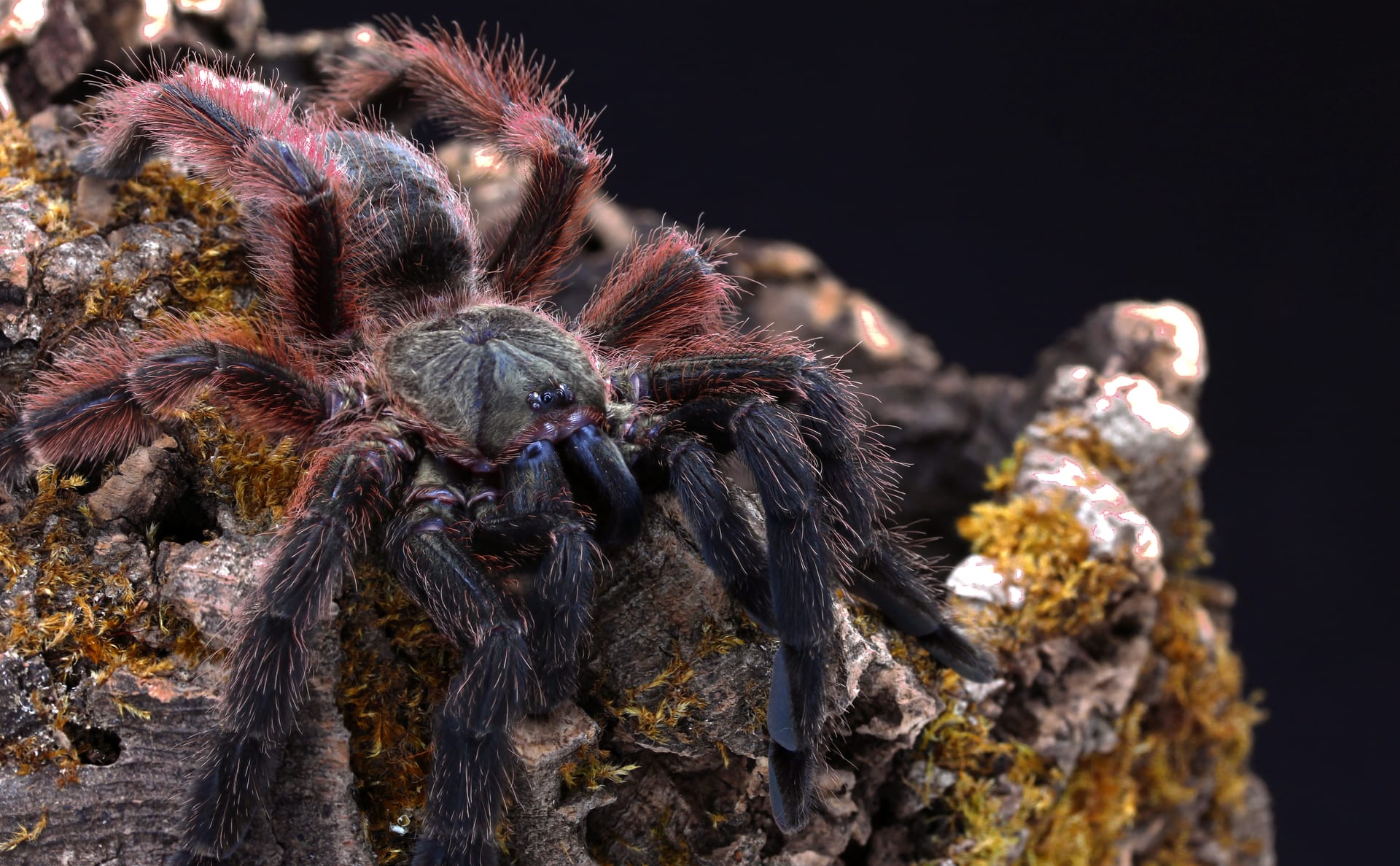
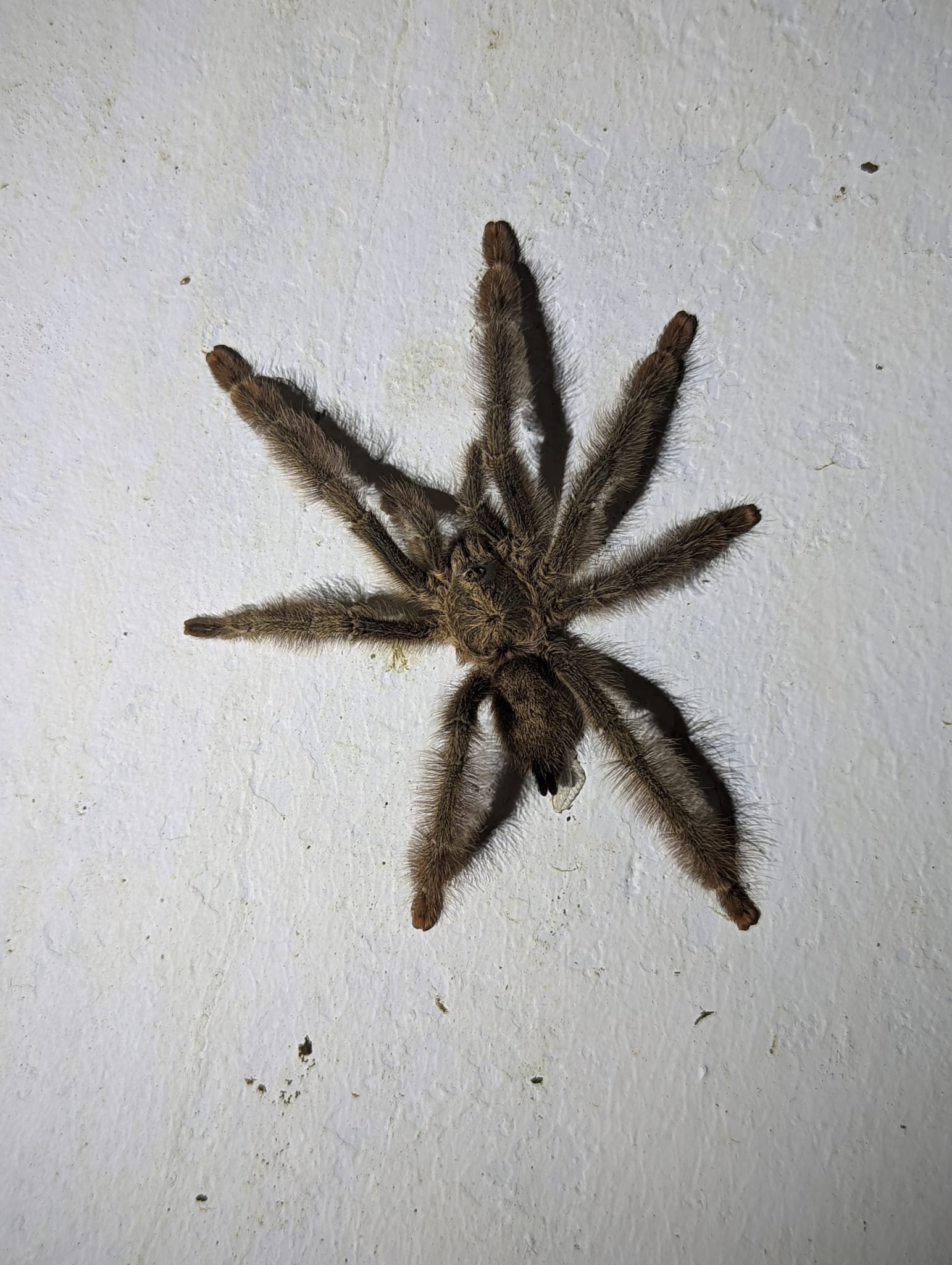
An arboreal tarantula from Central America. Orange setae around the chelicerae give it its common name; the body is chestnut brown and the abdomen may show chevrons. It has no urticating hairs and is extremely fast.
Difficulty
Intermediate
Temperature
20〜24℃
Lifespan
Females up to about 12 years, males up to about 3 years
Size
Up to about 15cm leg span
Humidity
65〜75%
Diet
Live insects such as crickets and roaches
About
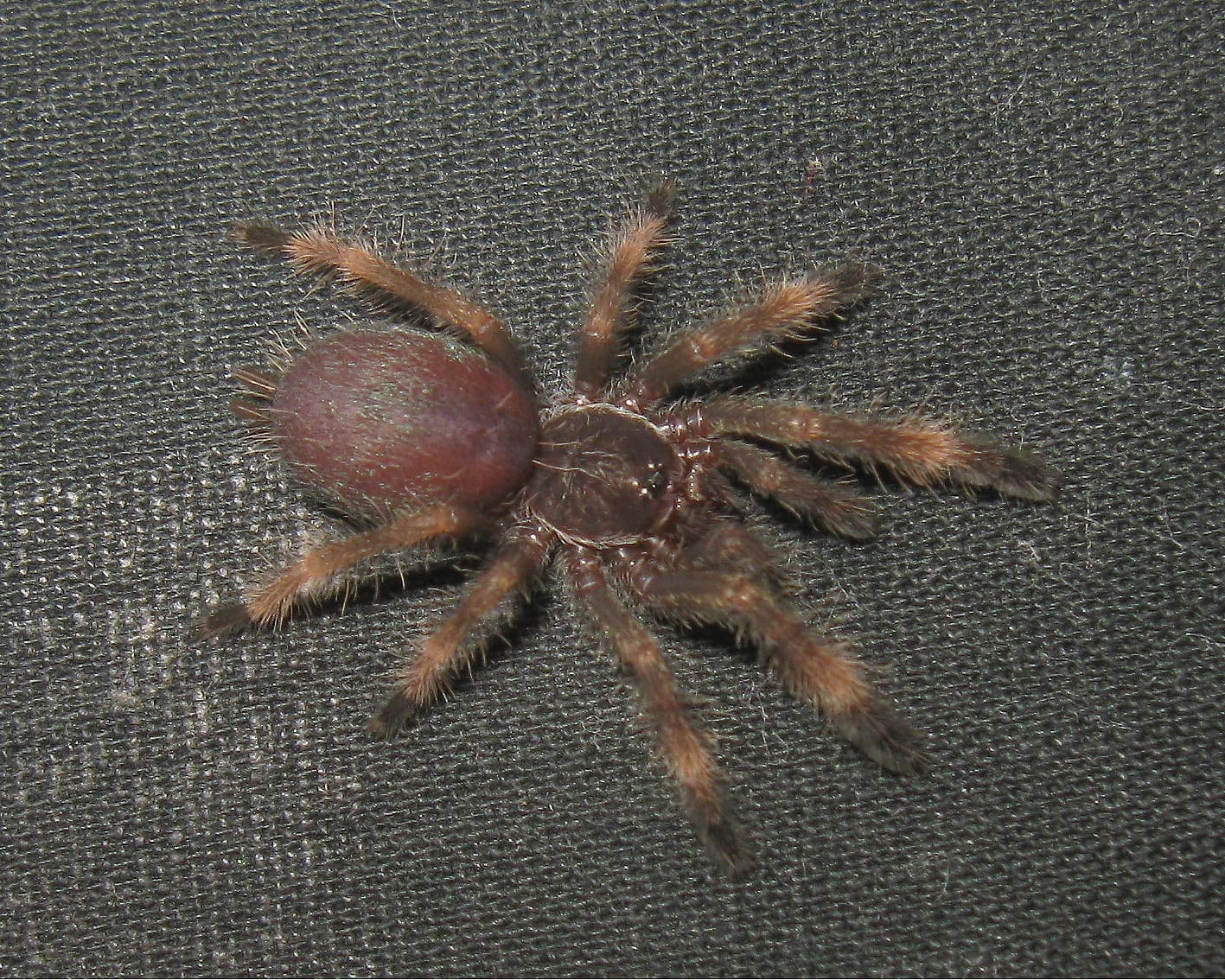
Psalmopoeus reduncus is an arboreal tarantula found in Costa Rica, Panama and Nicaragua, described by Karsch in 1880. Its common name comes from the orange setae around the chelicerae. The body is chestnut brown and may develop chevrons on the abdomen, while juveniles have a more golden to copper-coloured abdomen. Leg span reaches about 15 cm; females live up to about 12 years and males up to three. Like others in the genus it lacks urticating hairs and relies on flight and biting for defence. It is a very fast-moving spider that runs rather than standing its ground, and it is fairly reclusive, staying in its hide for most of the day. Members of the genus have stridulatory lyra on the maxillae, a feature said to be unique to Psalmopoeus among New World tarantulas.
Source: Wikipedia (CC BY-SA 4.0)
Lifespan of the Costa Rican Orange Mouth
The Costa Rican Orange Mouth lives Females up to about 12 years, males up to about 3 years.
Size of the Costa Rican Orange Mouth
The Costa Rican Orange Mouth grows to Up to about 15cm leg span.
Temperature & humidity for the Costa Rican Orange Mouth
The ideal temperature for the Costa Rican Orange Mouth is 20〜24℃. Ideal humidity is 65〜75%.
Basic Info
Origin
Costa Rica, Panama and Nicaragua
Lifespan
Females up to about 12 years, males up to about 3 years
Care Specifications
Semi-aggressiveSolitary
Sources: Wikipedia / GBIF / The Tarantula Collective: Psalmopoeus irminia (congener reference)
References & Sources
Edited & verified by: BreederDirect editorial team
The taxonomic, regulatory, and husbandry data on this page are compiled and verified against the authoritative primary sources below.
Taxonomy & Authority
Accepted name: Psalmopoeus reduncus (Karsch, 1880)
Synonyms: Psalmopoeus intermedius Chamberlin, 1940
Authority databases: GBIF
Nomenclature follows global taxonomic authority databases.
Regulations & Conservation Status
Not CITES-listed
Sources: CITES Appendices (species not listed)
Regulations may change. Always verify the latest information with the relevant authorities.
Costa Rican Orange Mouth Listings
Loading latest listingsFind listings for this species