Source: Wikimedia Commons
Panama Blonde
IntermediatePsalmopoeus pulcher
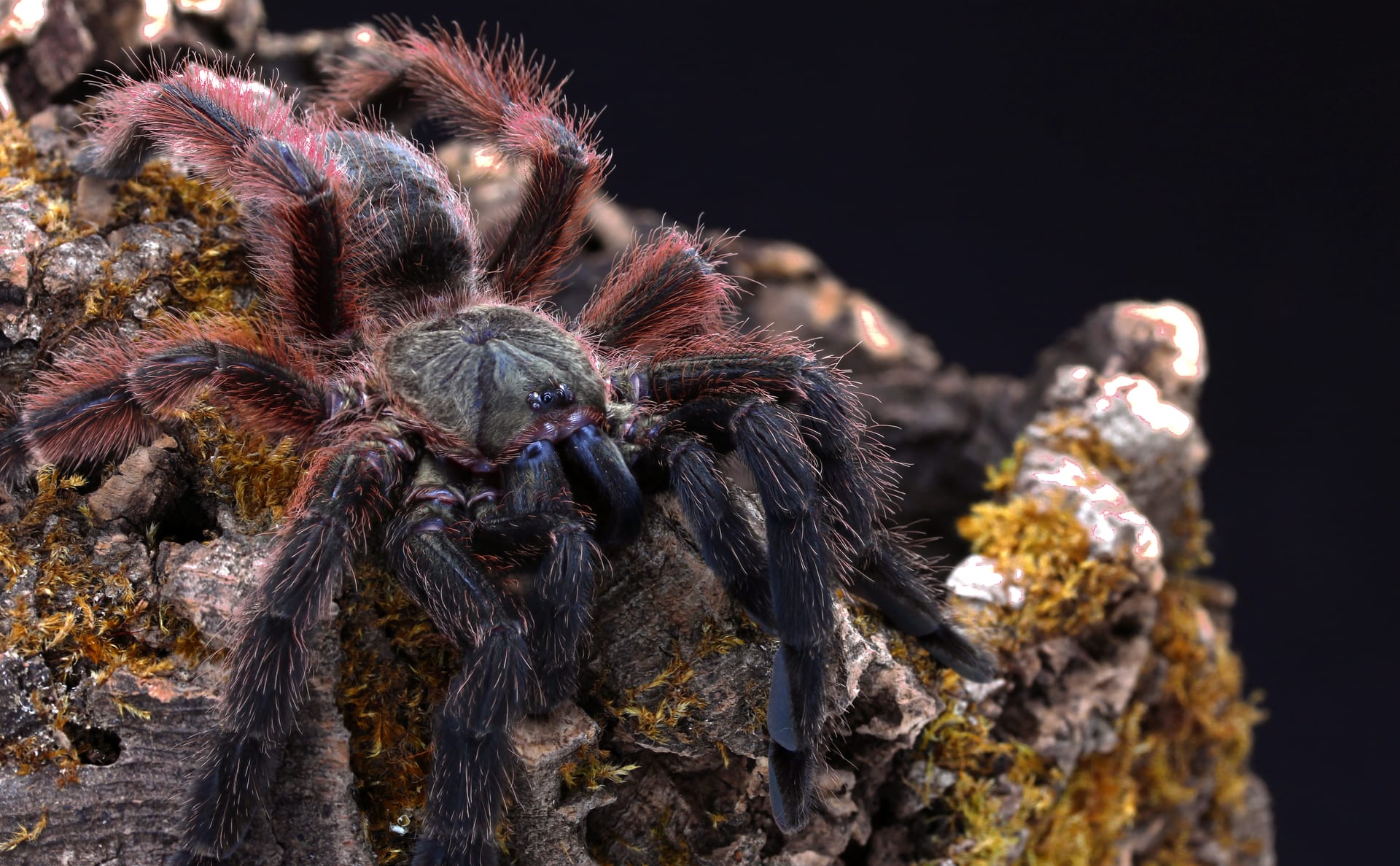
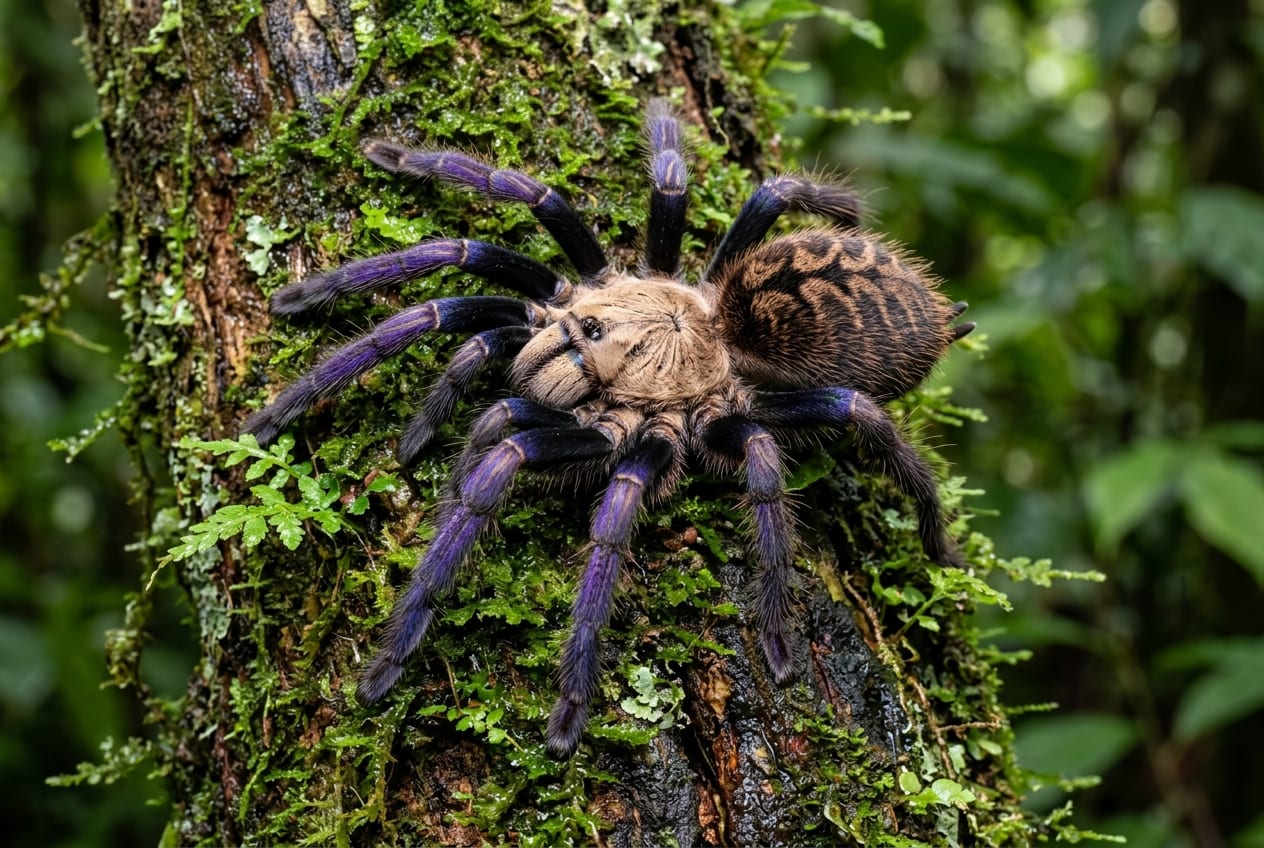
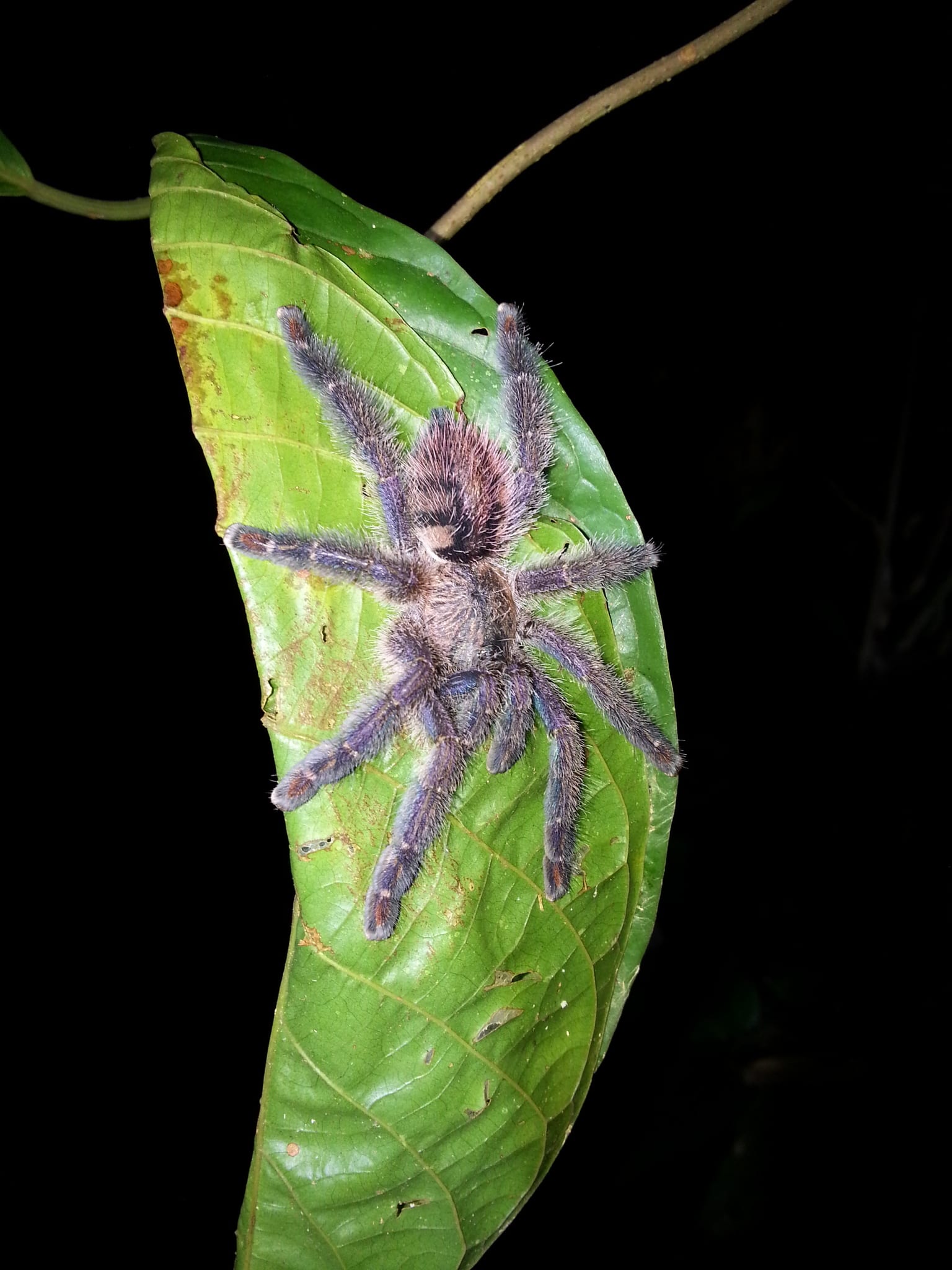
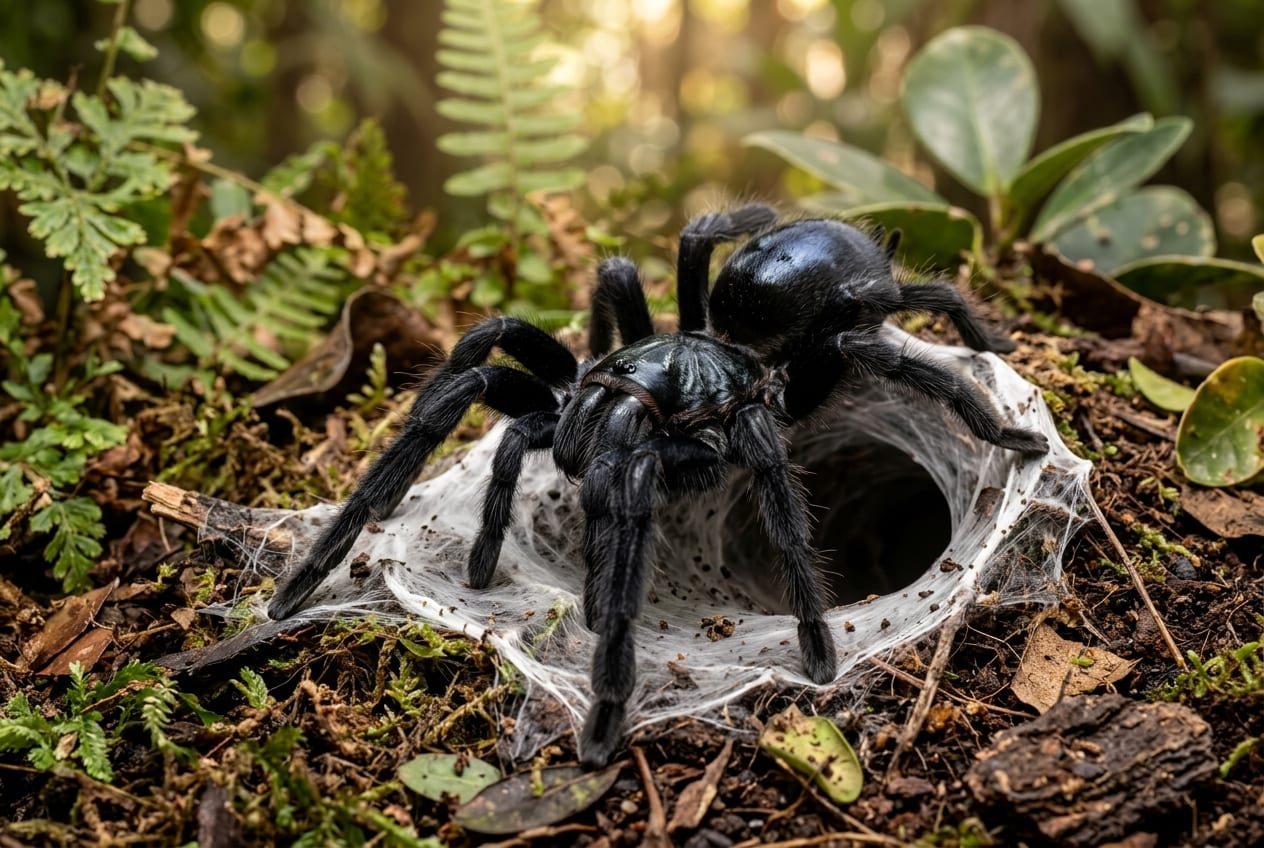
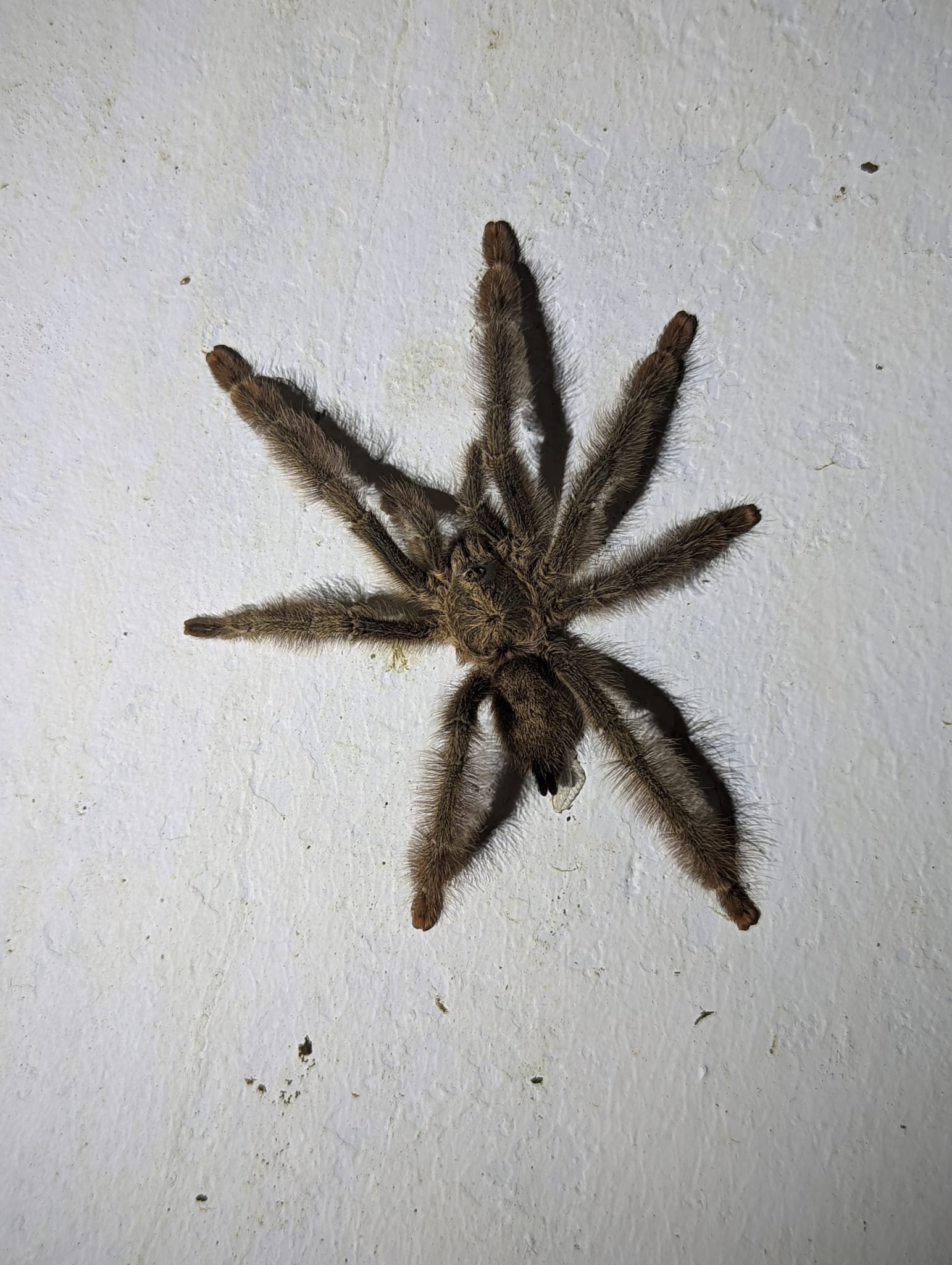
An arboreal tarantula from Panama and Colombia. The body is grey to pale beige with peach tones on the limbs and a dark marking down the centre of the abdomen. The undersides of the feet are iridescent blue-green. It has no urticating hairs.
Difficulty
Intermediate
Temperature
26〜28℃
Lifespan
Females 10-12 years / males 3-4 years
Size
Leg span up to about 15cm in females and 12.5cm in males
Humidity
65〜75%
Diet
Live insects such as crickets and roaches
About
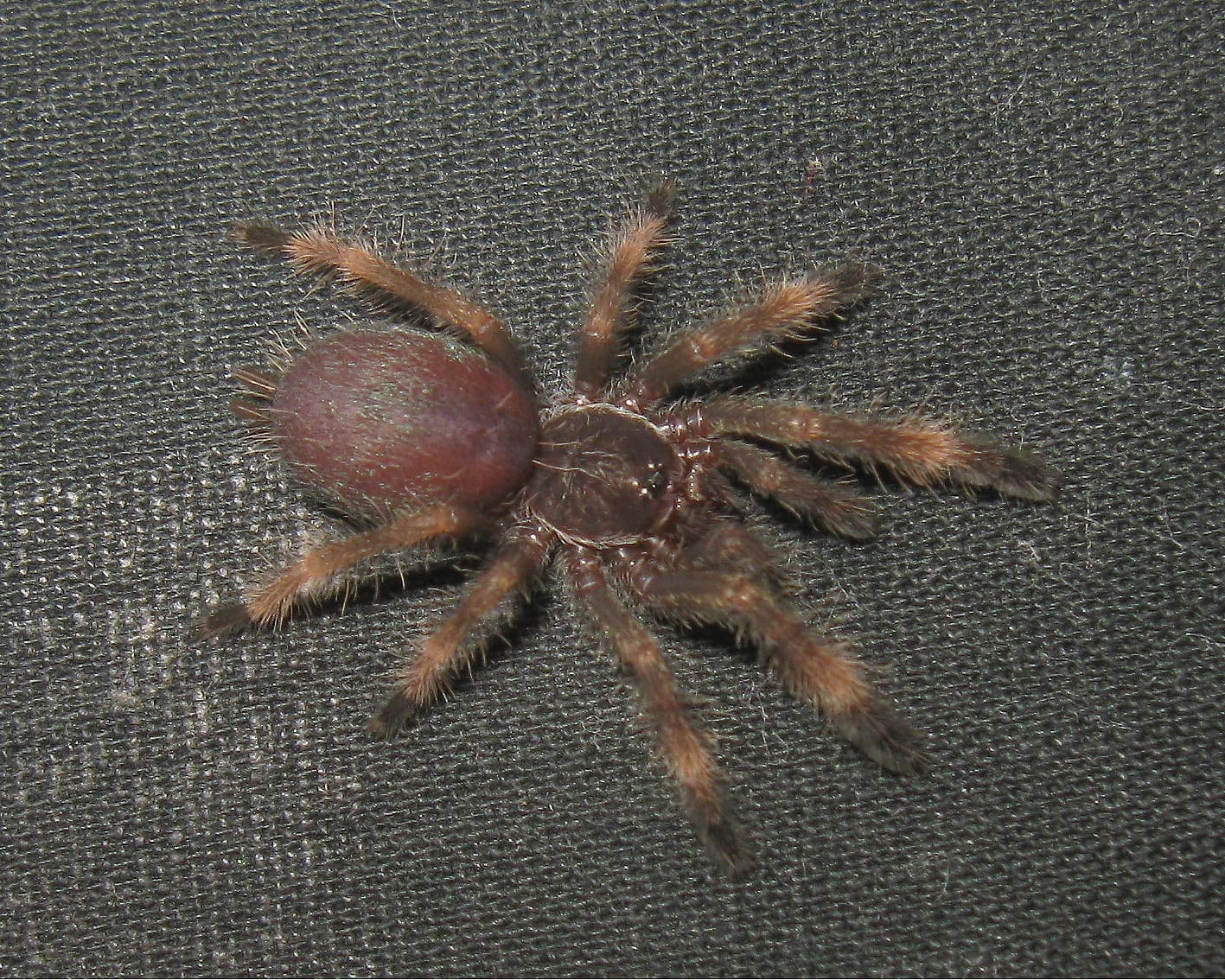
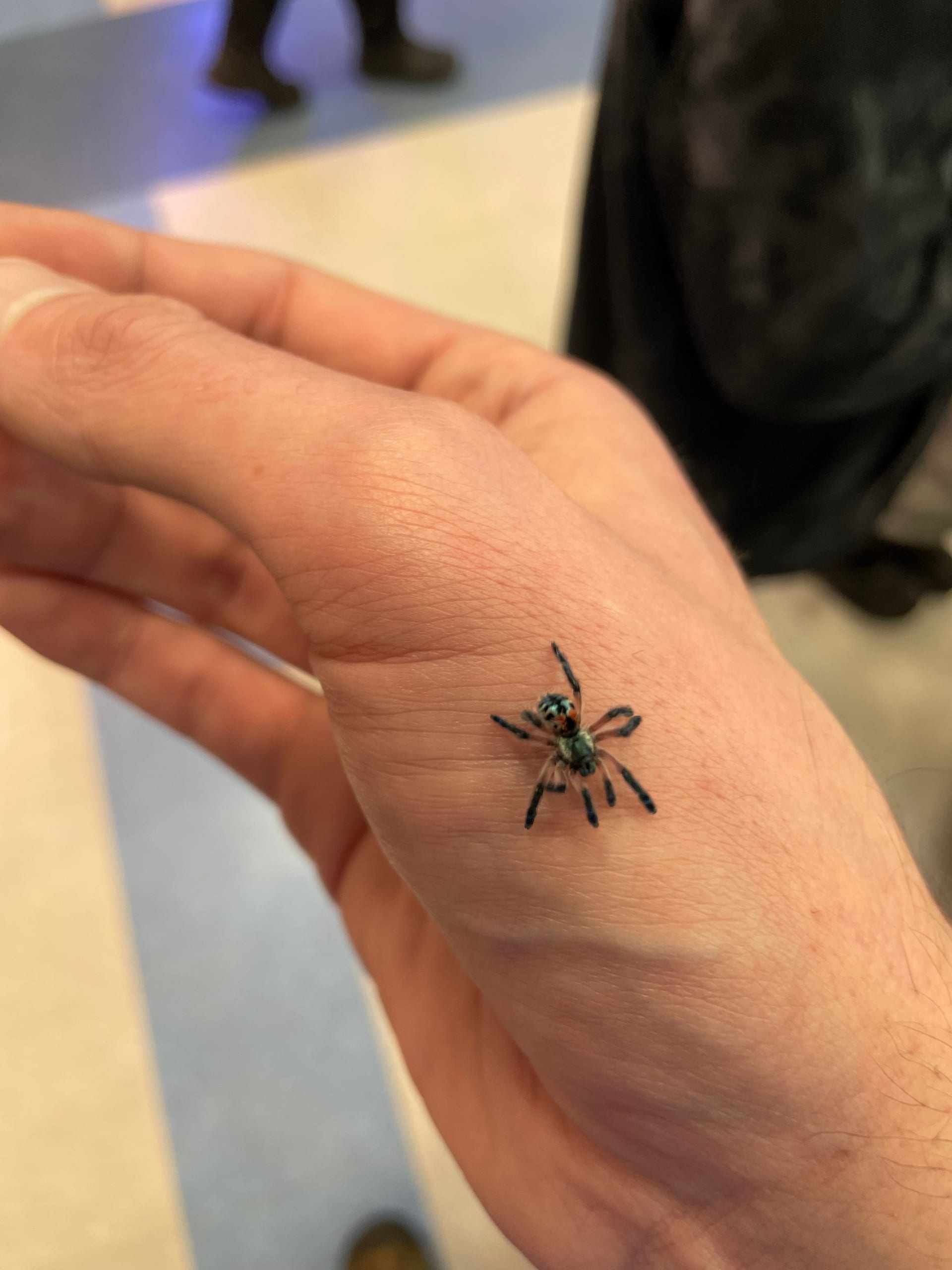
Psalmopoeus pulcher is an arboreal tarantula found in Panama and parts of Colombia. Petrunkevitch described it in 1925 from a male collected in what was then the Panama Canal Zone, and the specific name is Latin for beautiful. It is predominantly grey or beige with peach tones on the limbs, a paler abdomen bearing a dark central marking, and black spinnerets. The undersides of the feet are iridescent blue-green, which may add to its deimatic display. Colour changes markedly with growth: spiderlings are almost entirely black apart from beige-orange legs with black tarsi, and their abdomen has a dark green sheen, while mature males develop long, plumose legs and turn an almost uniform grey or beige. It lives an arboreal, opportunistic life and has been found in man-made structures in populated areas. The genus is unique among New World tarantulas in having stridulatory lyra on the maxillae. The species is regularly bred in captivity.
Source: Wikipedia (CC BY-SA 4.0)
Lifespan of the Panama Blonde
The Panama Blonde lives Females 10-12 years / males 3-4 years.
Size of the Panama Blonde
The Panama Blonde grows to Leg span up to about 15cm in females and 12.5cm in males.
Temperature & humidity for the Panama Blonde
The ideal temperature for the Panama Blonde is 26〜28℃. Ideal humidity is 65〜75%.
Basic Info
Origin
Panama and Colombia
Lifespan
Care Specifications
Semi-aggressiveSolitary
Sources: Tarantula Friendly: Panama Blonde Tarantula / Wikipedia / GBIF
References & Sources
Edited & verified by: BreederDirect editorial team
The taxonomic, regulatory, and husbandry data on this page are compiled and verified against the authoritative primary sources below.
Taxonomy & Authority
Accepted name: Psalmopoeus pulcher Petrunkevitch, 1925
Synonyms: Psalmopoeus rufus Petrunkevitch, 1925
Authority databases: GBIF
Nomenclature follows global taxonomic authority databases.
Regulations & Conservation Status
Not CITES-listed
Sources: CITES Appendices (species not listed)
Regulations may change. Always verify the latest information with the relevant authorities.
Panama Blonde Listings
Loading latest listingsFind listings for this species