Cleaner Shrimp Care Guide: Skunk Cleaner Shrimp & White Socks Shrimp | Cleaning Behavior, Tank Mates, Water Quality Management | ブリちょく
Marine Fish| ✍️ BreederDirect Editorial
Cleaner Shrimp Care Guide: Skunk Cleaner Shrimp & White Socks Shrimp | Cleaning Behavior, Tank Mates, Water Quality Management
A comprehensive care guide comparing two major cleaner shrimp species for saltwater aquariums—Skunk Cleaner Shrimp (Lysmata amboinensis) and White Socks Shrimp (Lysmata debelius). Learn how cleaning behavior works, their critical sensitivity to copper-based medications, proper water quality parameters, compatible and dangerous tank mates, molting management and iodine supplementation, and in-tank breeding observations (egg-bearing and zoea larvae).
Key Takeaways
A comprehensive care guide comparing two major cleaner shrimp species for saltwater aquariums—Skunk Cleaner Shrimp (Lysmata amboinensis) and White Socks Shrimp (Lysmata debelius). Learn how cleaning behavior works, their critical sensitivity to copper-based medications, proper water quality parameters, compatible and dangerous tank mates, molting management and iodine supplementation, and in-tank breeding observations (egg-bearing and zoea larvae).
Saltwater Tank Cleaner Shrimp Explained
✍️
BreederDirect Editorial
The BreederDirect editorial team specializes in care information for animals, covering veterinary care and breeding to deliver beginner-friendly guides.
Find Marine Fish on BreederDirect
Buy directly from verified breeders
Browse Related Listings
Find Marine Fish listings related to this article on BreederDirect. Buy directly from verified breeders.
Related Tools
Related Articles
Browse by Category
🪸Coral
🐠Marine Fish
🐟Tropical Fish
🐡Goldfish
🐟Medaka
🦎Reptiles
Share
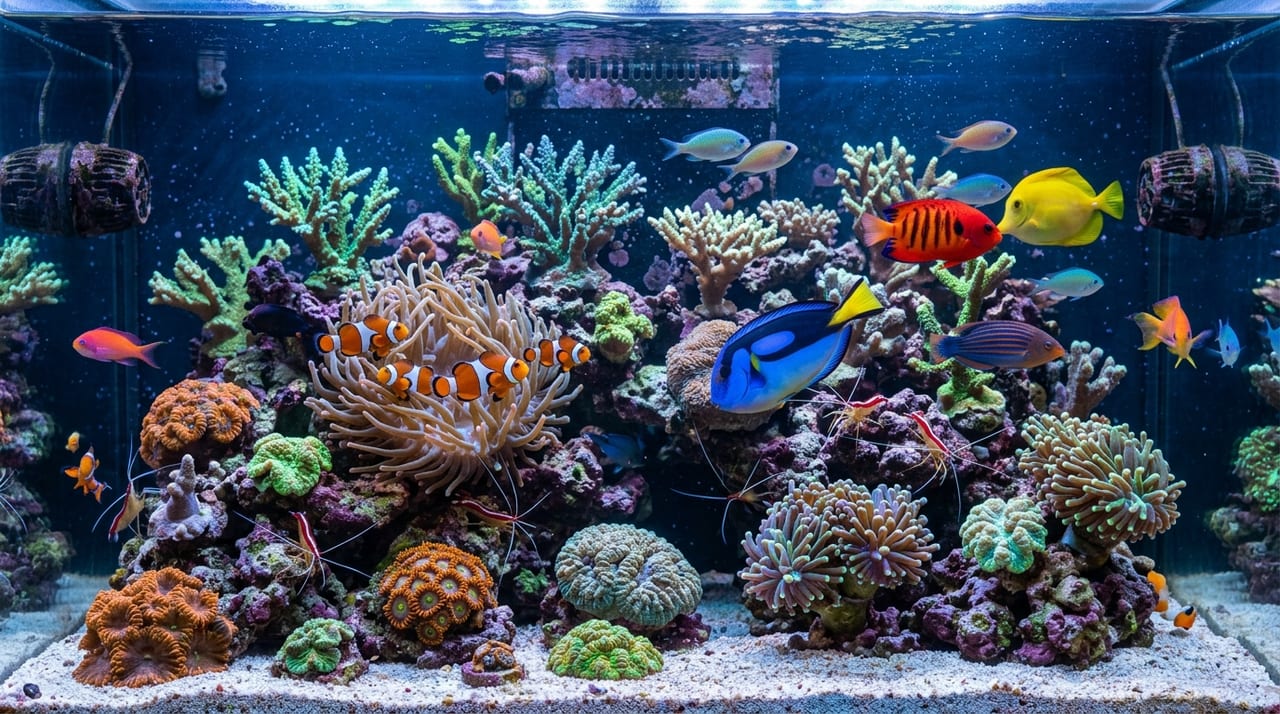
Saltwater tank cleaner shrimp are a collective term for crustaceans that perform "cleaning behavior"—removing parasites, damaged tissue, and uneaten food from the bodies of other fish. Beyond improving tank hygiene, their vibrant colors and charming behavior provide aesthetic value, making them essential tank mates for reef aquariums.
Common Cleaner Shrimp Species
Common Name
Scientific Name
Body Length
Characteristics
Skunk Cleaner Shrimp
Lysmata amboinensis
5–7 cm
Most popular species; distinctive white striped pattern; active cleaning behavior
White Socks Shrimp
Lysmata debelius
4–6 cm
Deep red body with white spotted pattern; somewhat delicate
Peppermint Shrimp
Lysmata wurdemanni
3–5 cm
Effective at controlling Aiptasia (pest anemones)
Camel Shrimp
Rhynchocinetes durbanensis
3–5 cm
Docile but some species may feed on certain corals
Skunk Cleaner Shrimp Care
Characteristics and Appeal
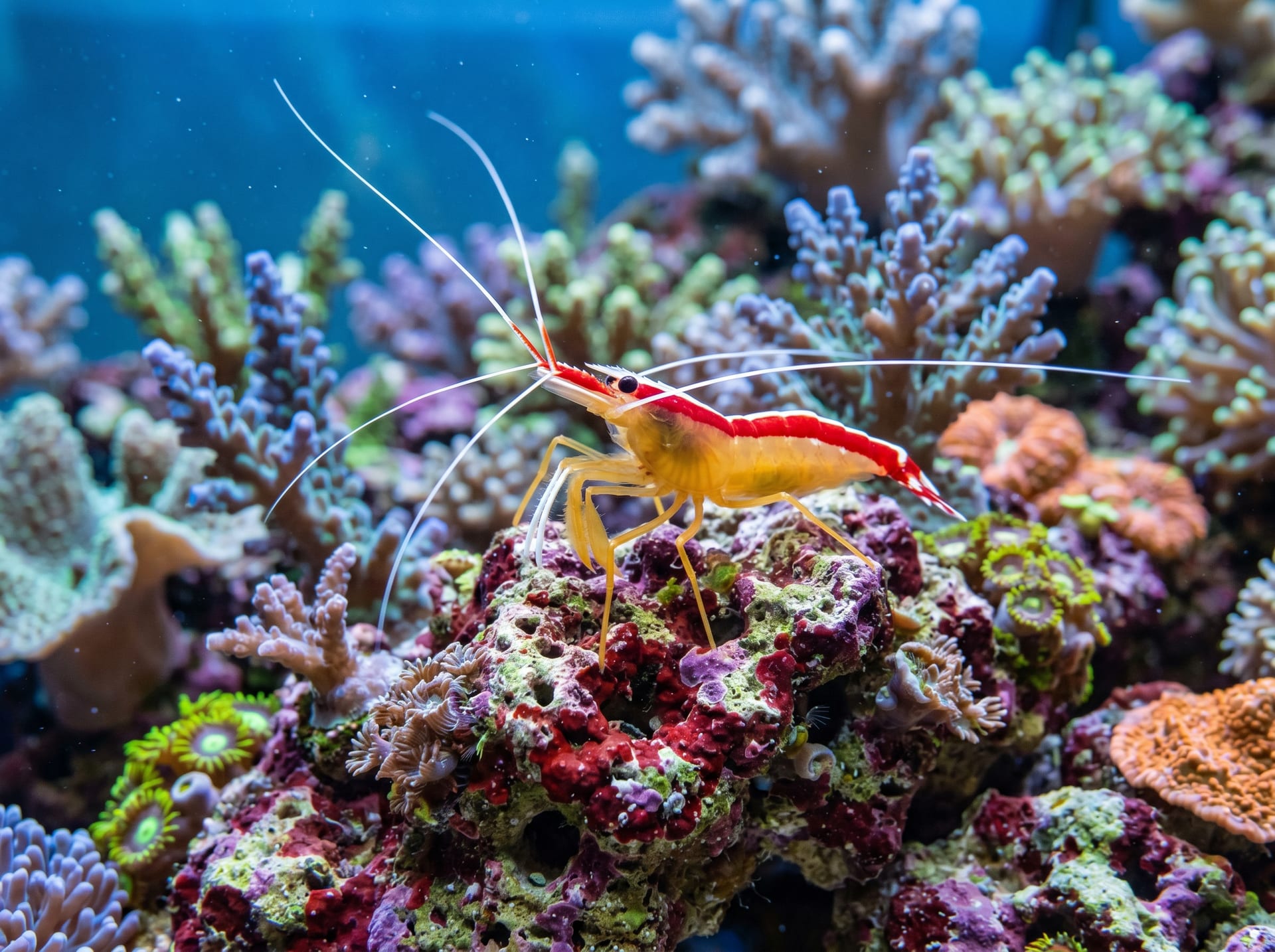
Skunk Cleaner Shrimp (Lysmata amboinensis) are found throughout the Indian and Pacific Oceans and are the representative cleaner shrimp species, distinguished by white stripes down their backs. They function as a "cleaning station," and watching fish voluntarily approach the shrimp to receive cleaning is one of the highlights of observing a saltwater tank.
Unique Reproductive Form: Skunk Cleaner Shrimp, as members of the Lysmata genus, exhibit sequential hermaphroditism (functioning first as males, then becoming females)—a distinctive reproductive strategy. Natural breeding is possible when maintaining two or more individuals together.
Breeding Environment
Tank Size: 60 liters or larger (40 liters minimum for single specimens, but 100+ liters recommended for multiple shrimp or community tanks)
Water Quality Parameters
Parameter
Recommended Value
Temperature
23–27°C
Specific Gravity (Salinity)
1.024–1.026
pH
8.1–8.3
Ammonia
0
Nitrite
0
Nitrate
20 mg/L or less
Copper (Cu)
0 (must be maintained at 0; crustaceans are critically sensitive to copper ions)
Critical Warning: Crustaceans are extremely sensitive to copper-based medications (such as white spot disease treatments), and even trace amounts can be fatal. Always transfer shrimp to a separate tank before using medicated treatments.
Feeding
Skunk Cleaner Shrimp obtain food not only through cleaning behavior but also by scavenging food debris and organic matter from the tank bottom. The following are effective supplementary feedings:
Frozen Brine Shrimp: 2–3 times per week in small quantities
Specialty Shrimp Food (sinking pellets): Small amounts daily
Flake Food: Scavenged from the substrate
Overfeeding causes water quality deterioration, so provide only amounts that will be fully consumed.
Tank Mate Compatibility
Compatible Fish: Peaceful saltwater fish in general (clownfish, gobies, butterflyfishes, etc.). Fish will gradually accept cleaning once acclimated.
Dangerous Tank Mates
Dangerous Species
Reason
Lionfish & Scorpionfish
Predatory toward crustaceans
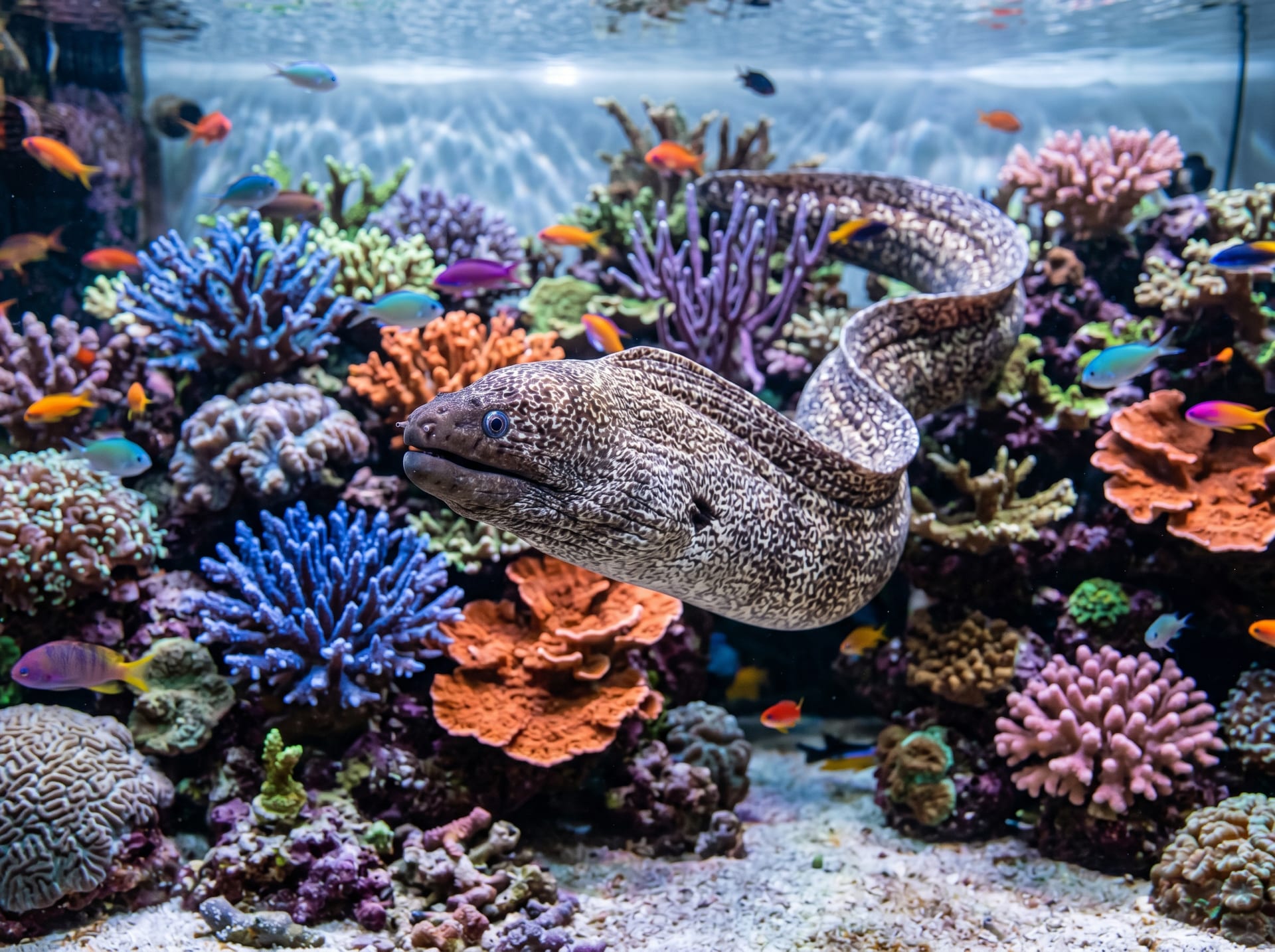
Octopus & Moray Eels
Natural predators of crustaceans
Large Triggerfishes
Many species feed on crustaceans
Hard Coral-Feeding Nudibranchs
Degrade living conditions
White Socks Shrimp Care
Characteristics and Appeal
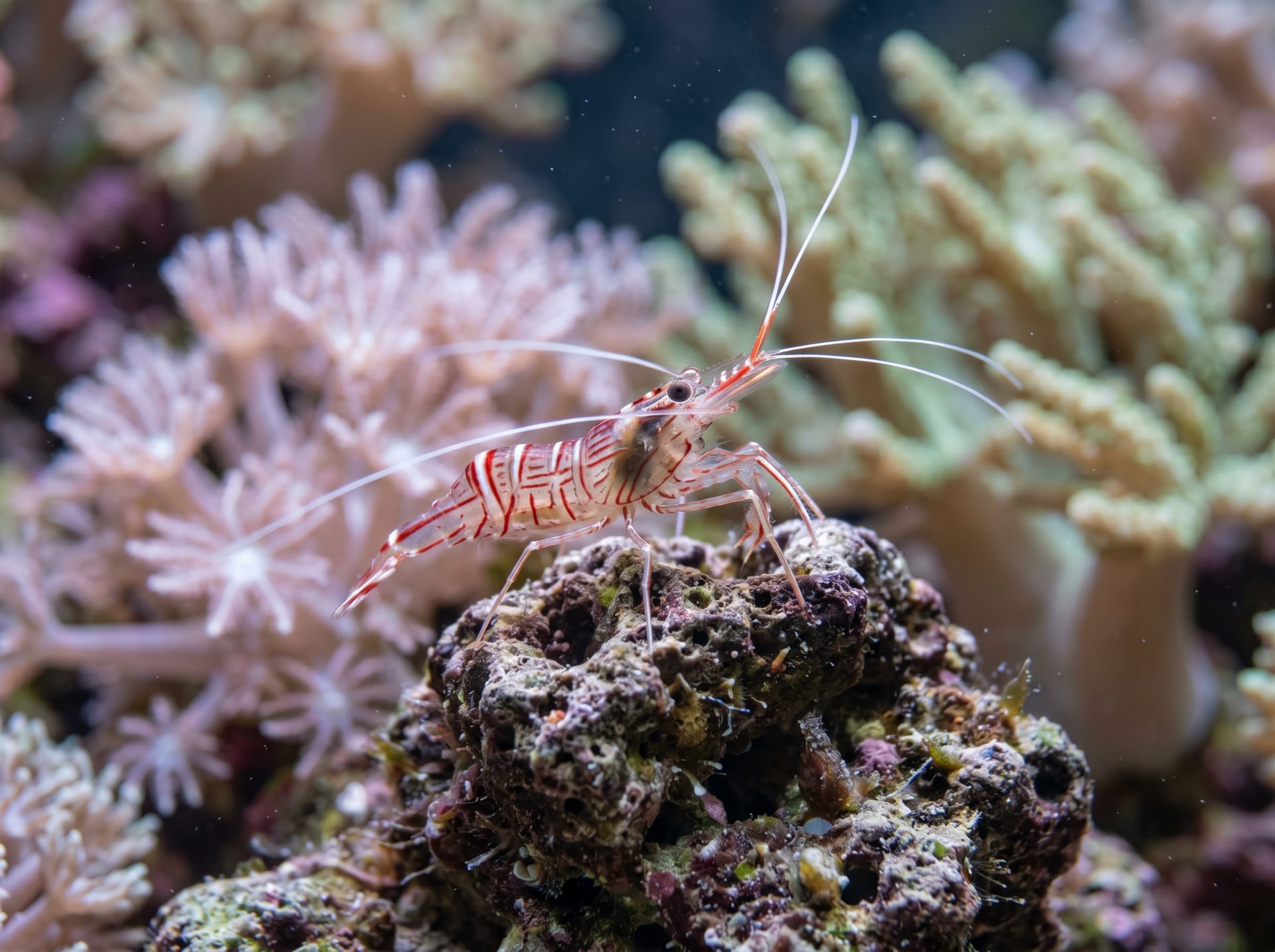
White Socks Shrimp (Lysmata debelius) are prized for their exceptional beauty—a deep red body adorned with white spotted patterns, making them particularly valued for their aesthetic appeal. Like Skunk Cleaner Shrimp, they exhibit cleaning behavior but tend toward shyness and prefer shelter areas.
Comparison with Skunk Cleaner Shrimp
Factor
Skunk Shrimp
White Socks Shrimp
Body Color
Red with white stripes
Deep red with white dots
Temperament
Active and friendly
Somewhat shy; prefers hiding
Cleaning Behavior
Very active
Present but somewhat passive
Care Difficulty
Easy
Somewhat delicate
Multiple Specimens
Good compatibility
Limit to 2–3 (territorial disputes)
Optimal Environment for White Socks Shrimp
White Socks Shrimp prefer spaces within live rock crevices and cave-like areas. Provide abundant live rock with suitable shelter, and place it in areas with gentle water flow.
Strong Lighting Causes Hiding: Maintain moderate lighting to encourage activity, and create an environment where the shrimp can thrive comfortably.
Molting and Management
Cleaner shrimp molt regularly (approximately once every 2–4 weeks). Shed exoskeletons can be left in the tank without issue (other inhabitants typically consume them).
Post-Molting Considerations
Immediately after molting, the body is soft and vulnerable to predation (1–2 hours)
Sudden water quality fluctuations can disrupt molting cycles
Iodine (I₂) is essential for crustacean molting. Replenish through monthly water changes or use iodine supplements
In-Tank Breeding
Skunk Cleaner Shrimp and White Socks Shrimp can breed in captivity.
When two or more mature individuals are kept together, they naturally breed (no need to determine sex due to hermaphroditism)
Fertilized eggs are carried on the abdomen (egg-bearing), visible as a green egg cluster
They hatch after 2–3 weeks, releasing larvae (zoea larvae) that float freely
Rearing larvae requires microalgae (phytoplankton) and rotifers, and raising them to juvenile shrimp is extremely challenging
Raising juveniles to full maturity requires a dedicated larvae rearing tank and careful food management. However, simply observing egg-bearing females provides ample enjoyment in itself.
Cleaner shrimp are vital components that enrich your tank's ecosystem. While contributing to fish health management, their vibrant colors and endearing behavior greatly enhance the joy of observing your aquarium. With proper avoidance of copper-based medications and stable water quality management, these shrimp can thrive for years to come.