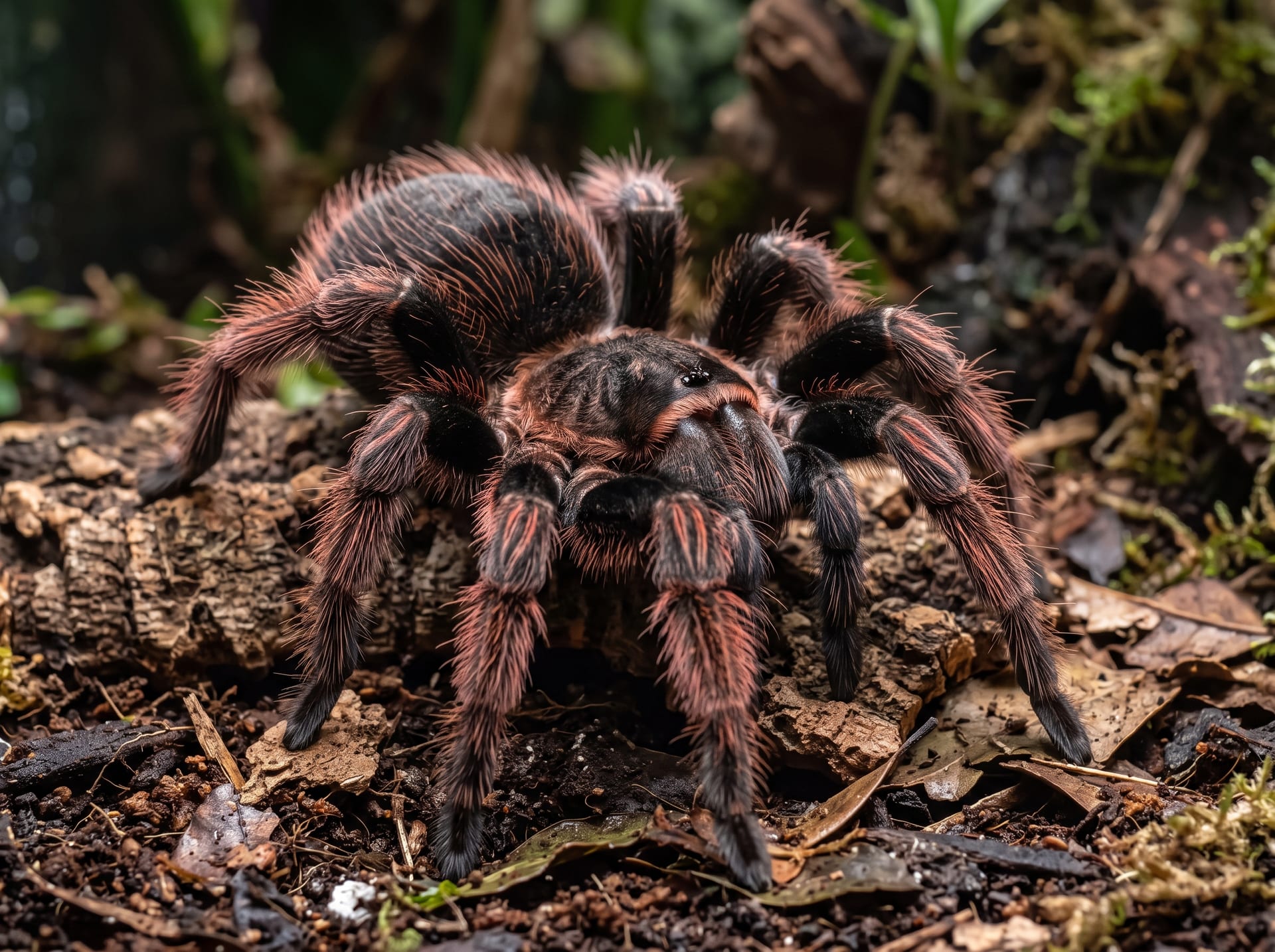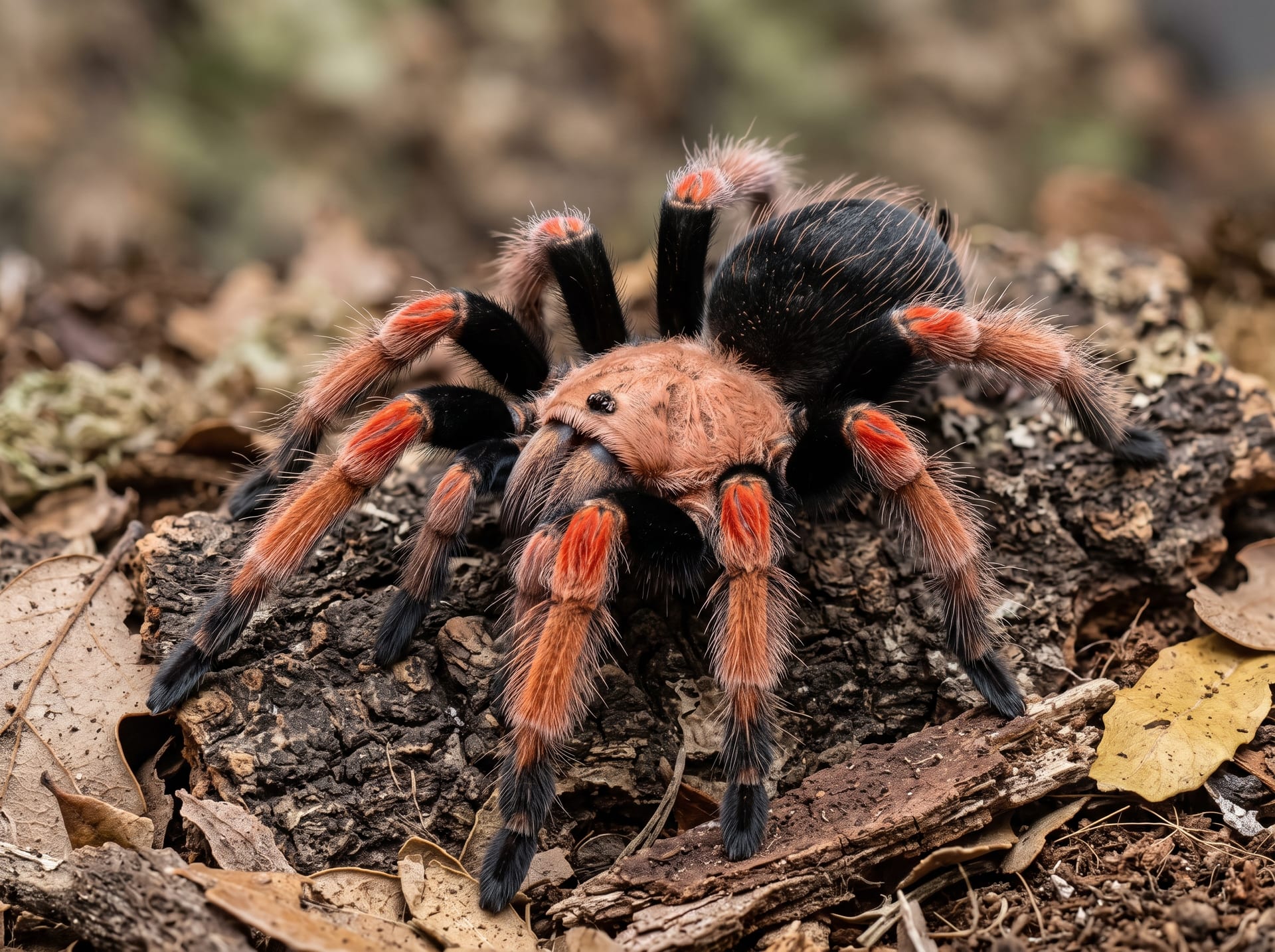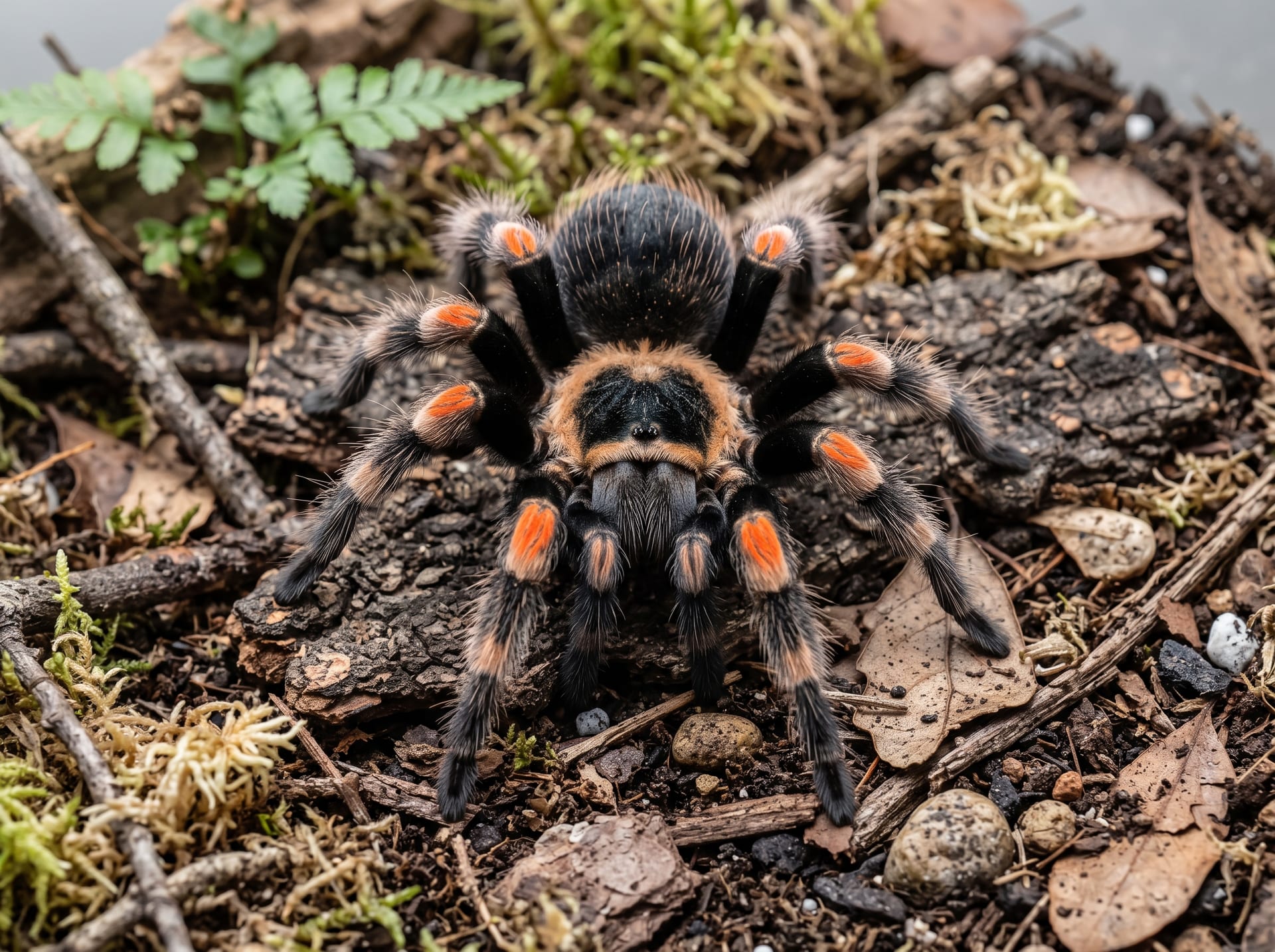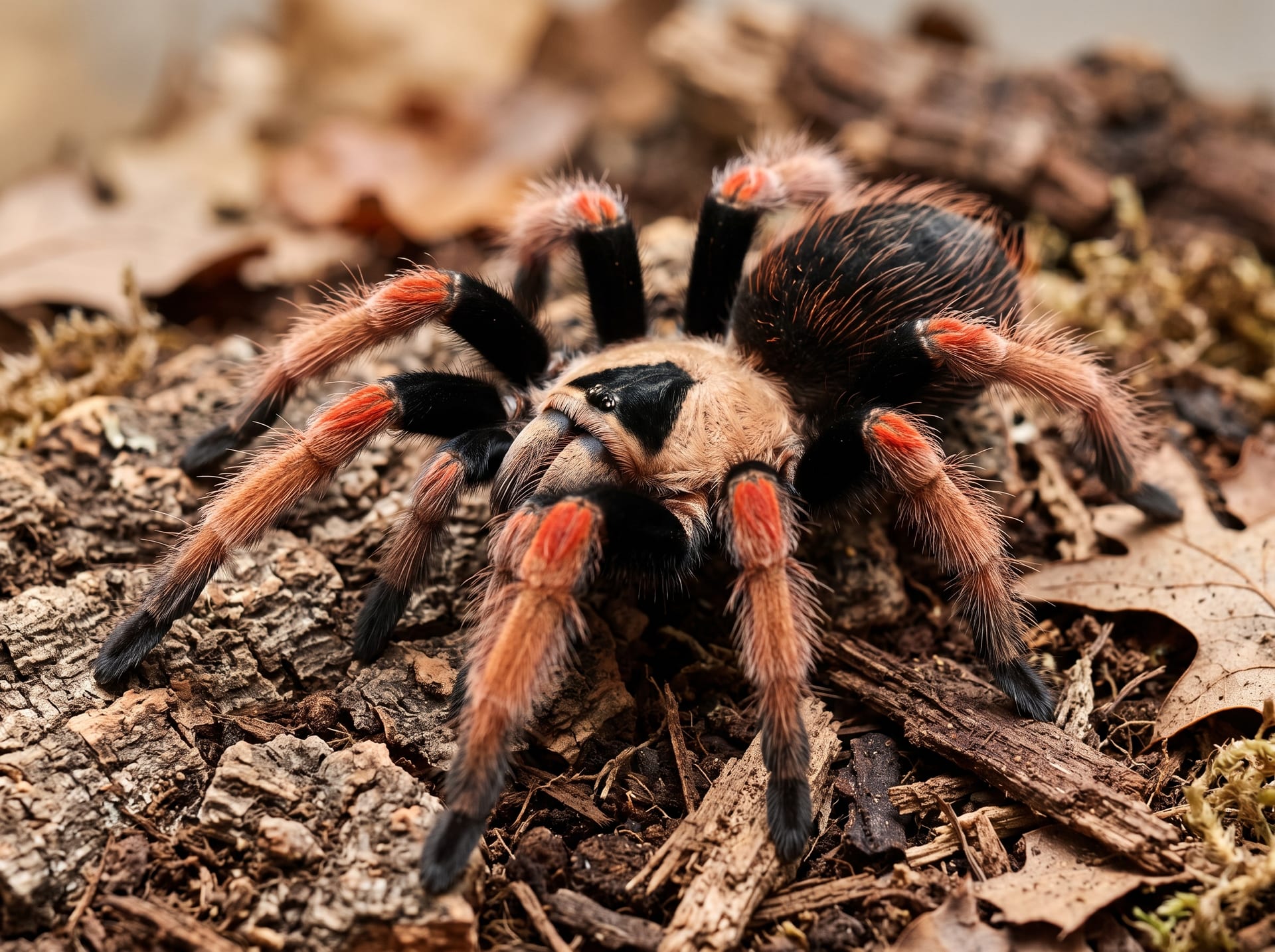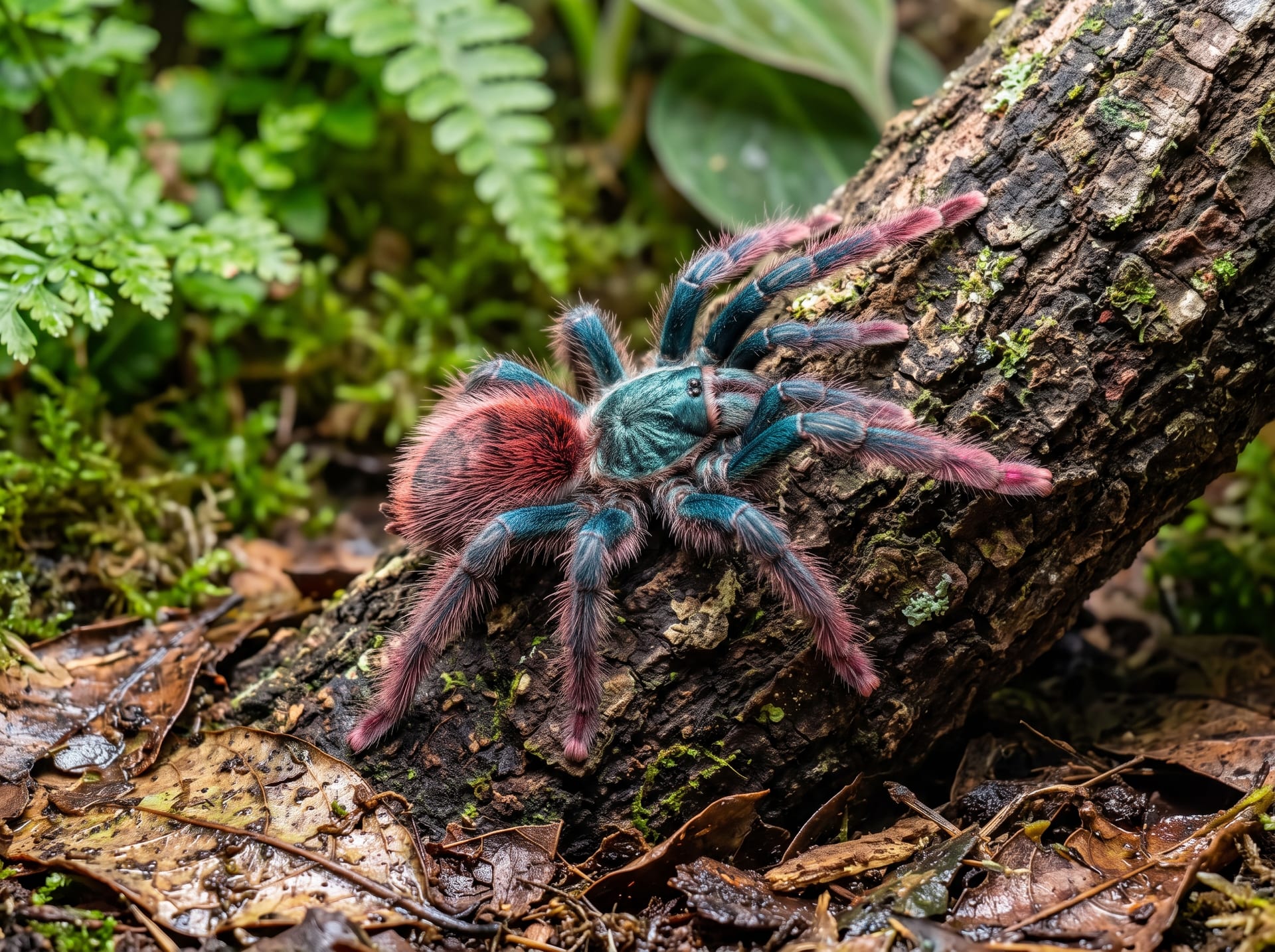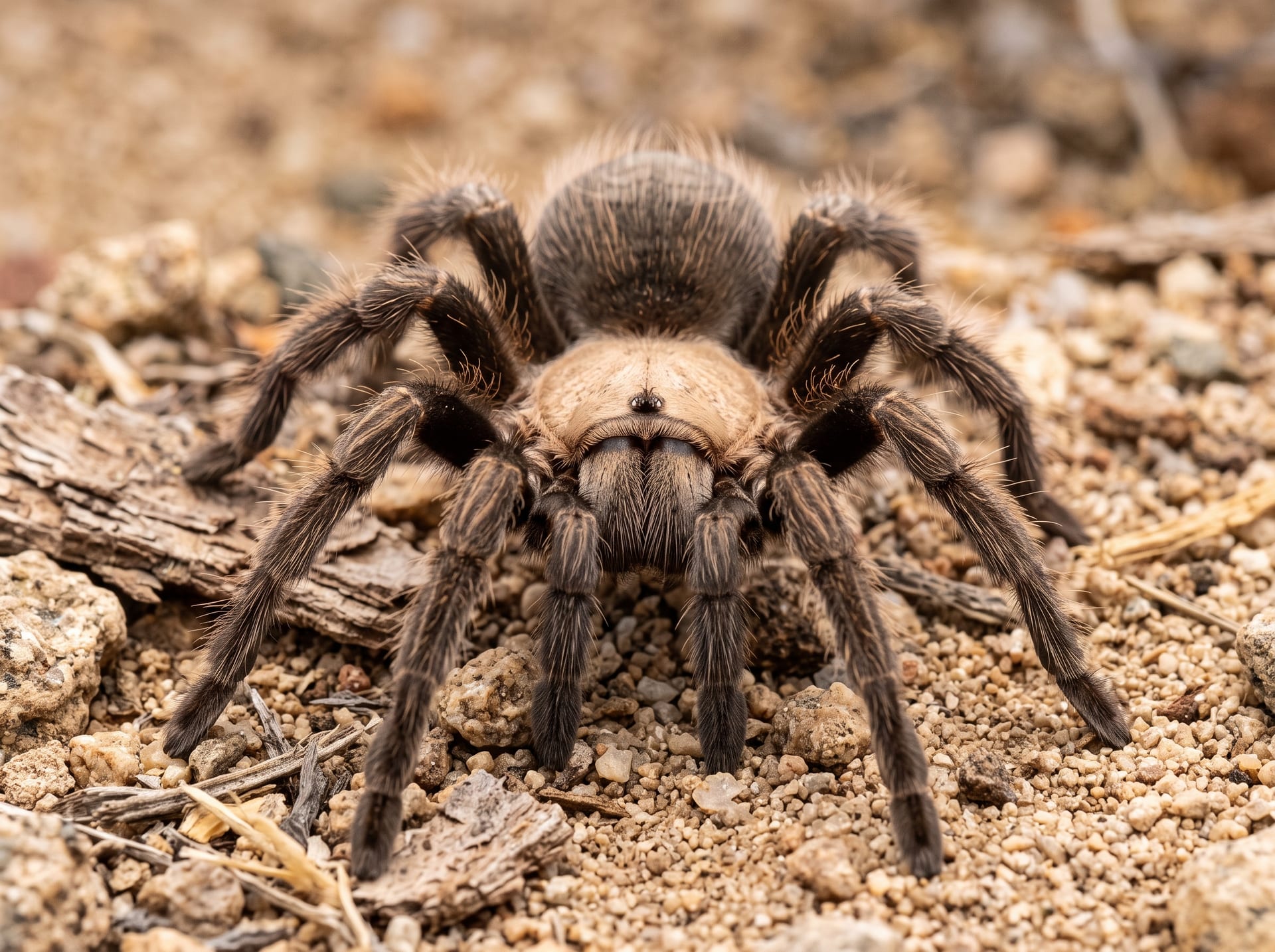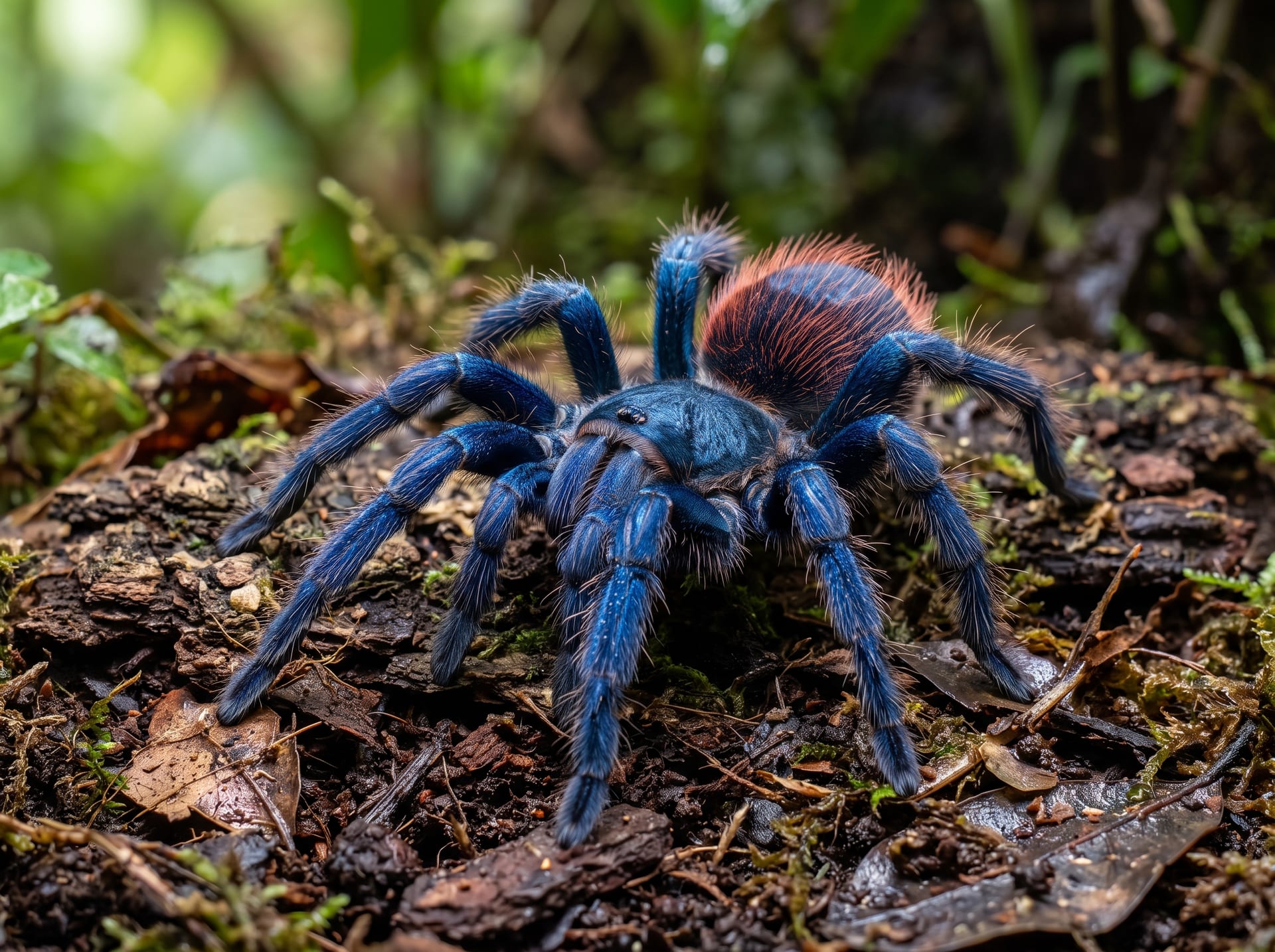
AI-generated image
Brazilian Jewel
IntermediatePterinopelma sazimai
A Brazilian terrestrial species with a jewel-like body that glows blue at the right angle. Fairly hardy but prefers moderate humidity; an attractive intermediate species with urticating hairs.
Difficulty
Intermediate
Temperature
23〜28℃
Lifespan
Female 12-15 years / Male 3-4 years
Size
Leg span 13-16 cm
Humidity
65〜75%
Diet
Live insects such as crickets and roaches, offered roughly weekly.
About
The Brazilian Jewel (Pterinopelma sazimai) is a terrestrial tarantula from the highlands of Bahia, Brazil, with a jewel-like body that glows blue at the right angle. Growing to about 13-16 cm, it prefers a moderately humid setup at 23-28°C and 65-75% humidity. Fairly hardy and well suited to intermediate keepers, it has urticating hairs, so take care during maintenance.
Basic Info
Origin
Highlands of Bahia, Brazil
Lifespan
Female 12-15 years / Male 3-4 years
Size
Leg span 13-16 cm
Temperature
23〜28℃
Humidity
65〜75%
Diet
Live insects such as crickets and roaches, offered roughly weekly.
Care Guide
Habitat
Terrestrial setup with deep substrate, a hide and water dish.
Temp & Humidity
23-28°C, 65-75% humidity; keep part of the substrate damp.
Feeding
Steady eater; weekly feeding suffices.
References & Sources
Edited & verified by: br-choku editorial team
The taxonomic, regulatory, and husbandry data on this page are compiled and verified against the authoritative primary sources below.
Brazilian Jewel Listings
Loading latest listingsFind listings for this species