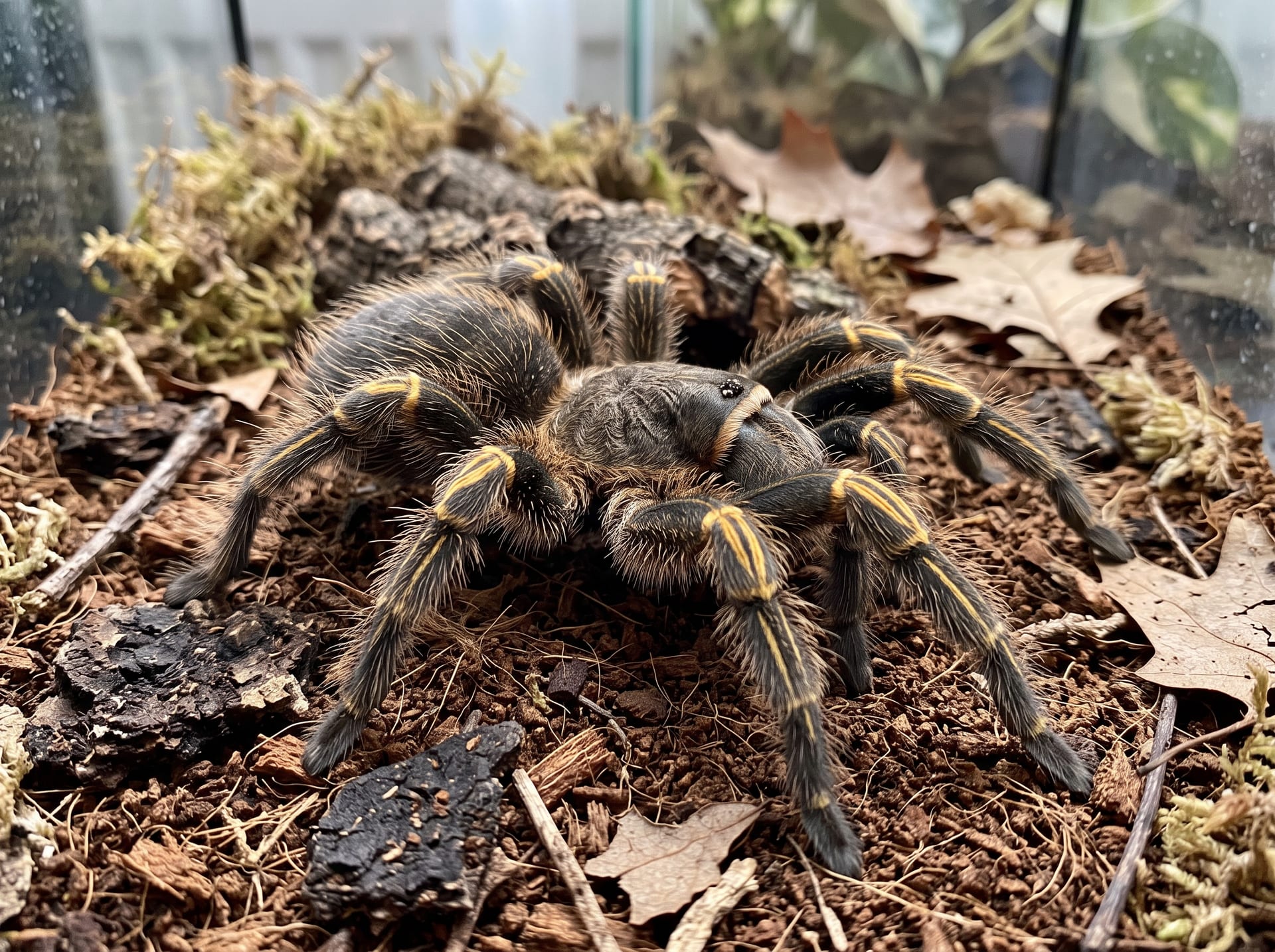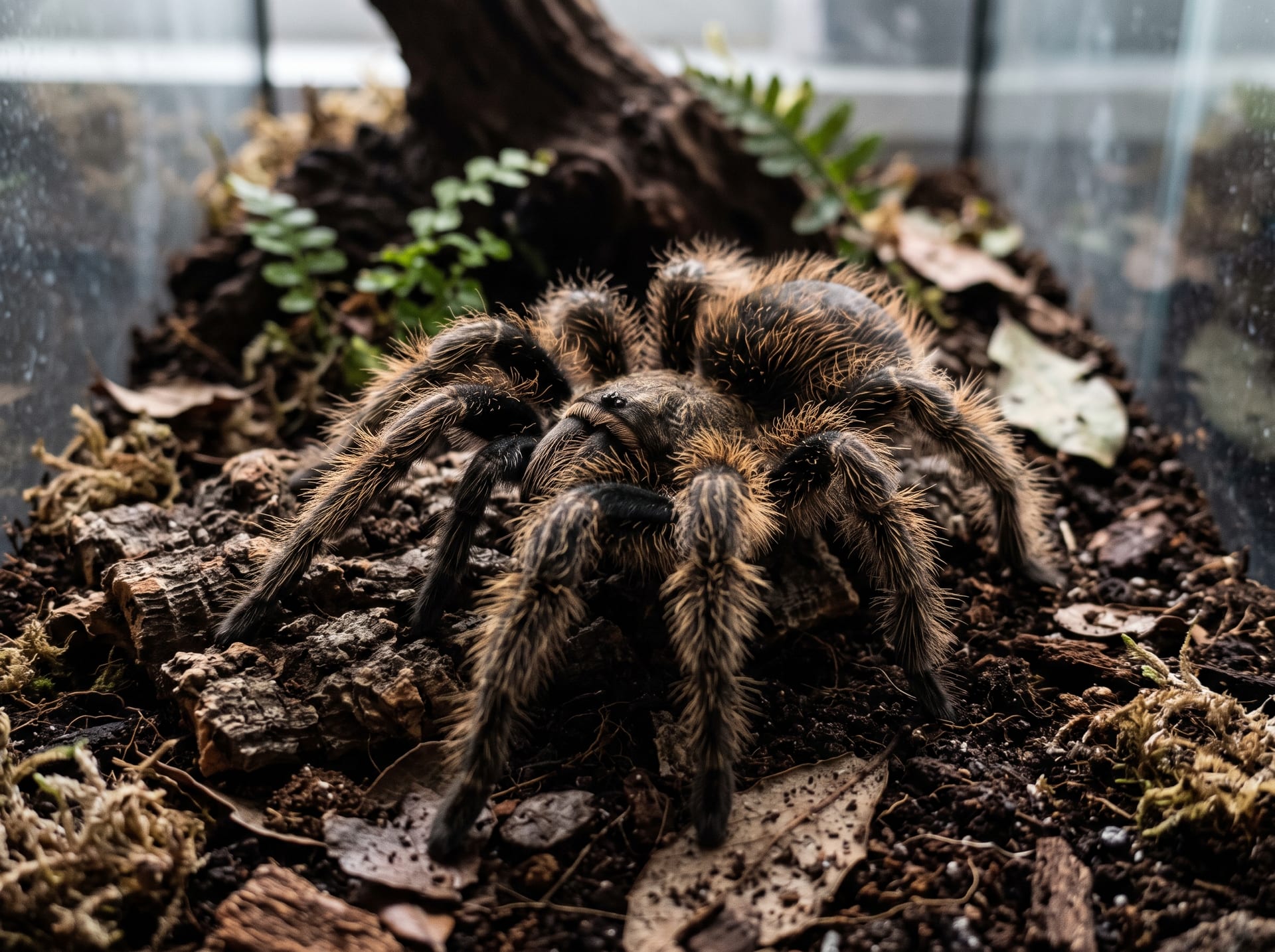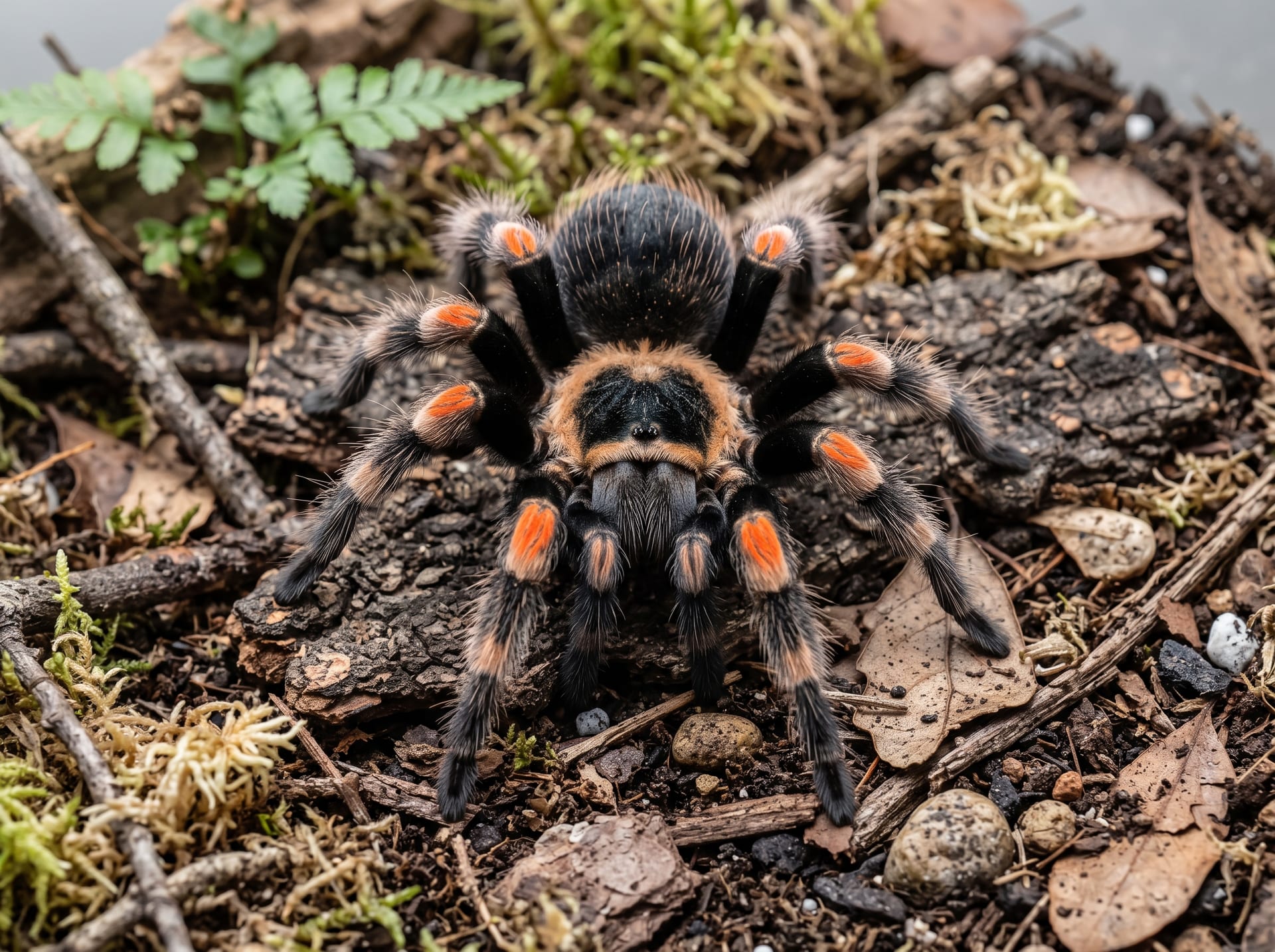
AI-generated image
Mexican Redknee
BeginnerBrachypelma hamorii
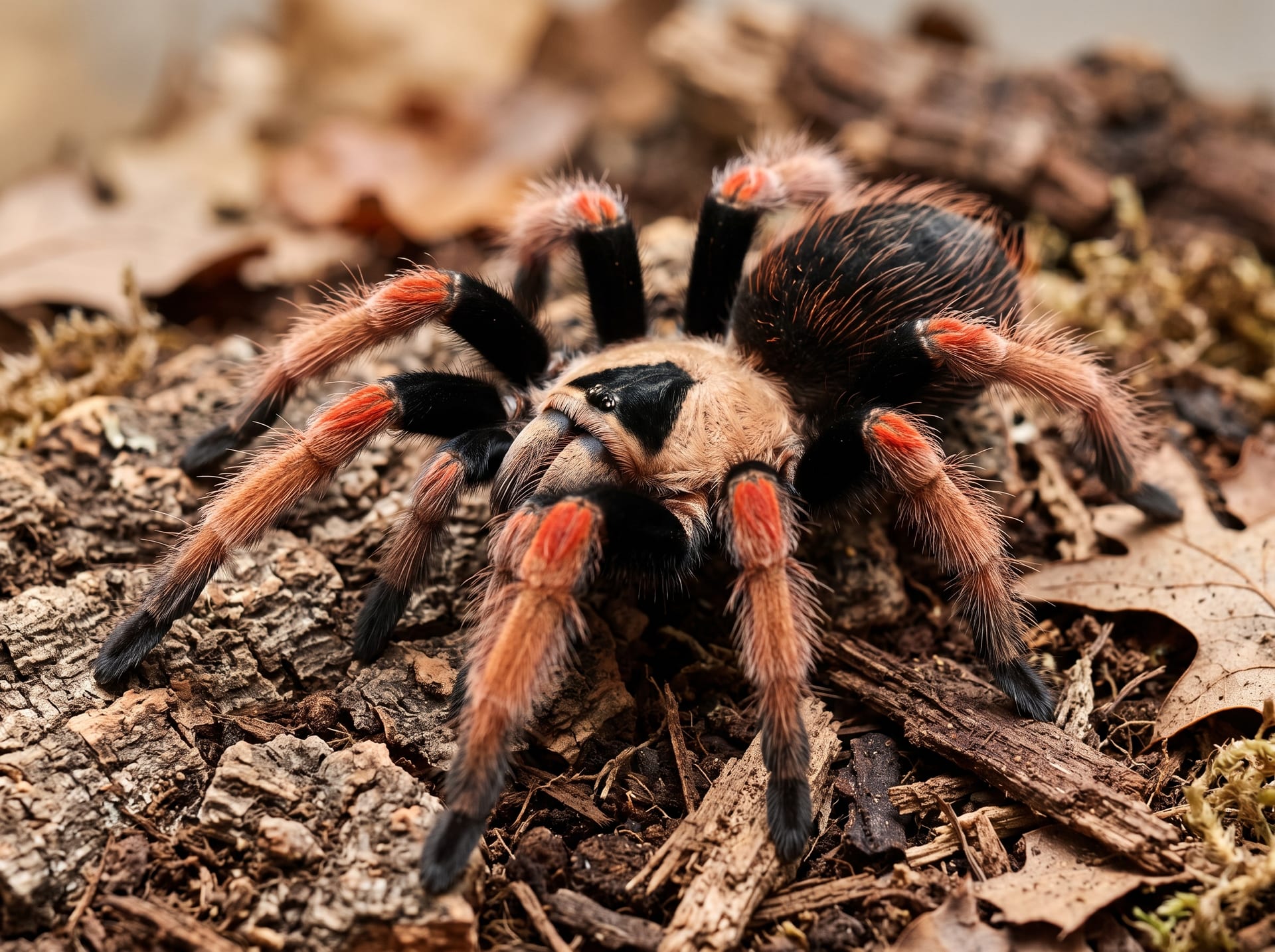
A classic terrestrial tarantula from Mexico with iconic red-orange leg markings. Docile, slow-moving, hardy and long-lived, it is one of the most popular beginner species worldwide.
Difficulty
Beginner
Temperature
24〜28℃
Lifespan
Female 20-30 years / Male 5-7 years
Size
Leg span 12-14 cm
Humidity
55〜65%
Diet
Live insects such as crickets and roaches, offered about once a week.
About
The Mexican Redknee (Brachypelma hamorii) is a terrestrial tarantula from the dry scrubland of Mexico's Pacific coast, instantly recognizable by the vivid red-orange bands on its leg joints. Females can live 20-30 years, making it one of the most popular beginner species worldwide. As a New World species it can flick urticating hairs when disturbed, so excessive handling should be avoided.
Lifespan of the Mexican Redknee
The Mexican Redknee lives Female 20-30 years / Male 5-7 years.
Size of the Mexican Redknee
The Mexican Redknee grows to Leg span 12-14 cm.
Temperature & humidity for the Mexican Redknee
The ideal temperature for the Mexican Redknee is 24〜28℃. Ideal humidity is 55〜65%.
Spanning about 12-14 cm, it is slow-moving, docile, and exceptionally hardy, thriving at 24-28 C and 55-65% humidity.
Basic Info
Origin
Pacific coastal scrubland of Mexico
Lifespan
Female 20-30 years / Male 5-7 years
Size
Leg span 12-14 cm
Temperature
24〜28℃
References & Sources
Edited & verified by: BreederDirect editorial team
The taxonomic, regulatory, and husbandry data on this page are compiled and verified against the authoritative primary sources below.
Mexican Redknee Listings
Loading latest listingsFind listings for this species