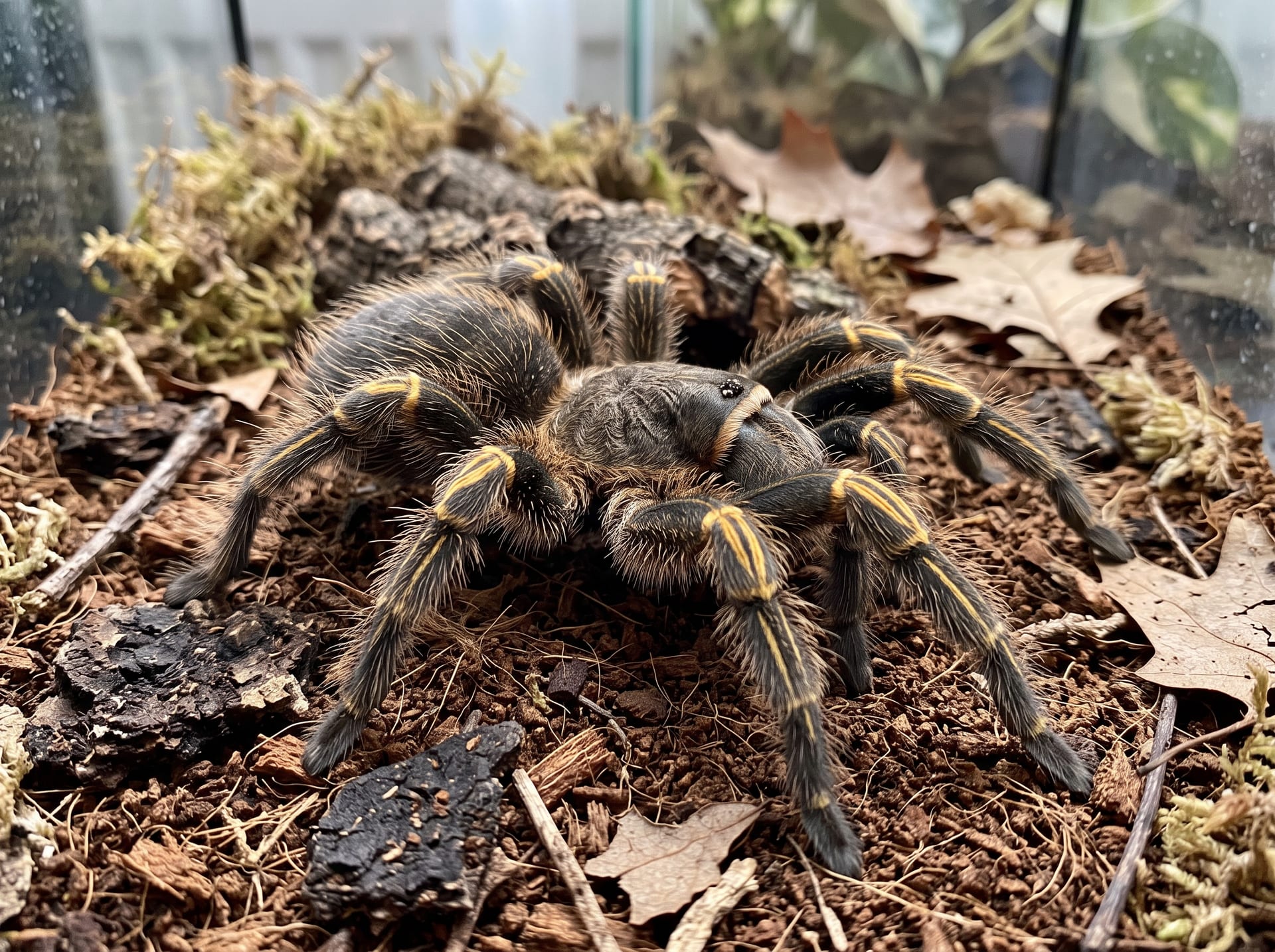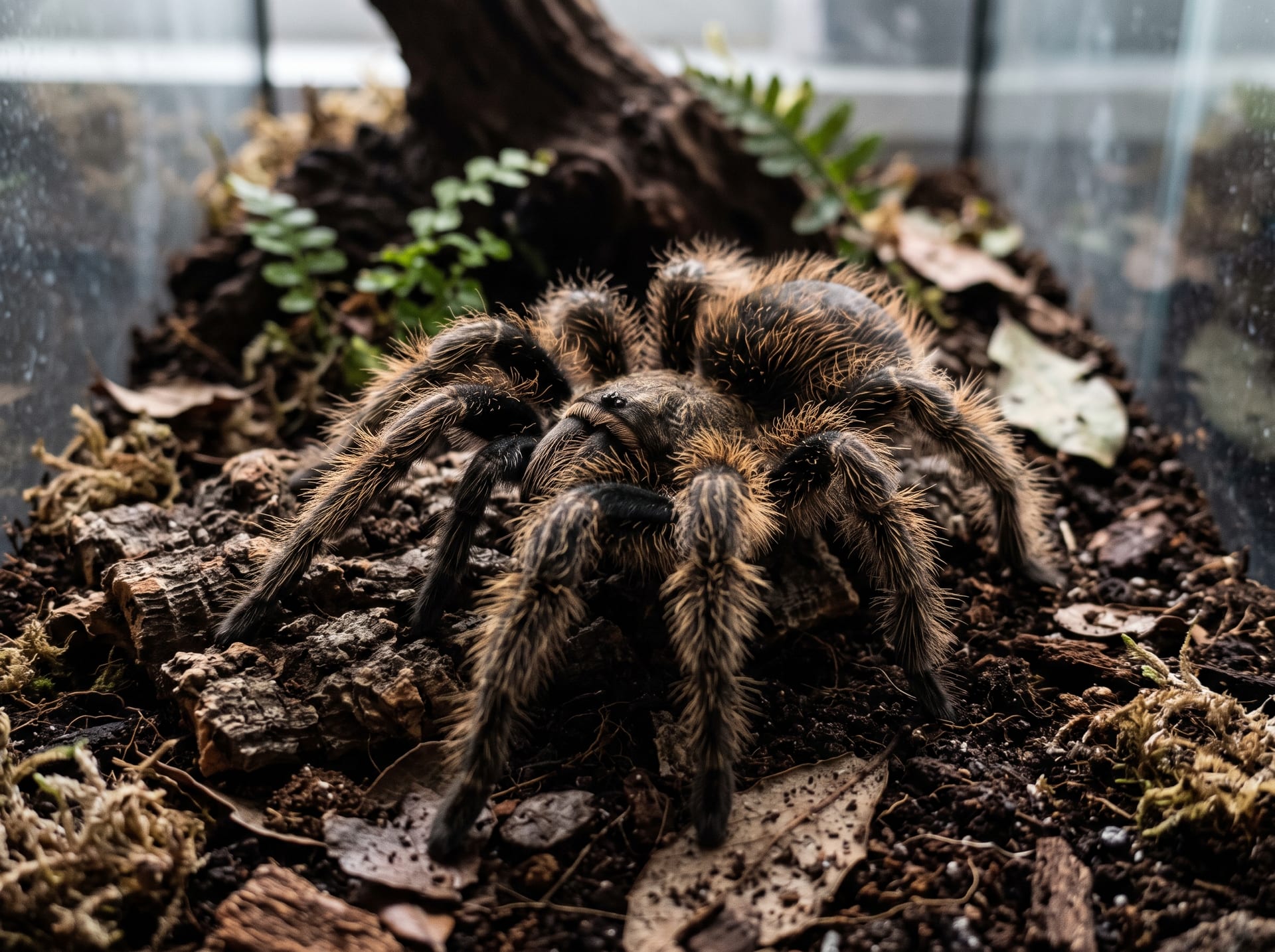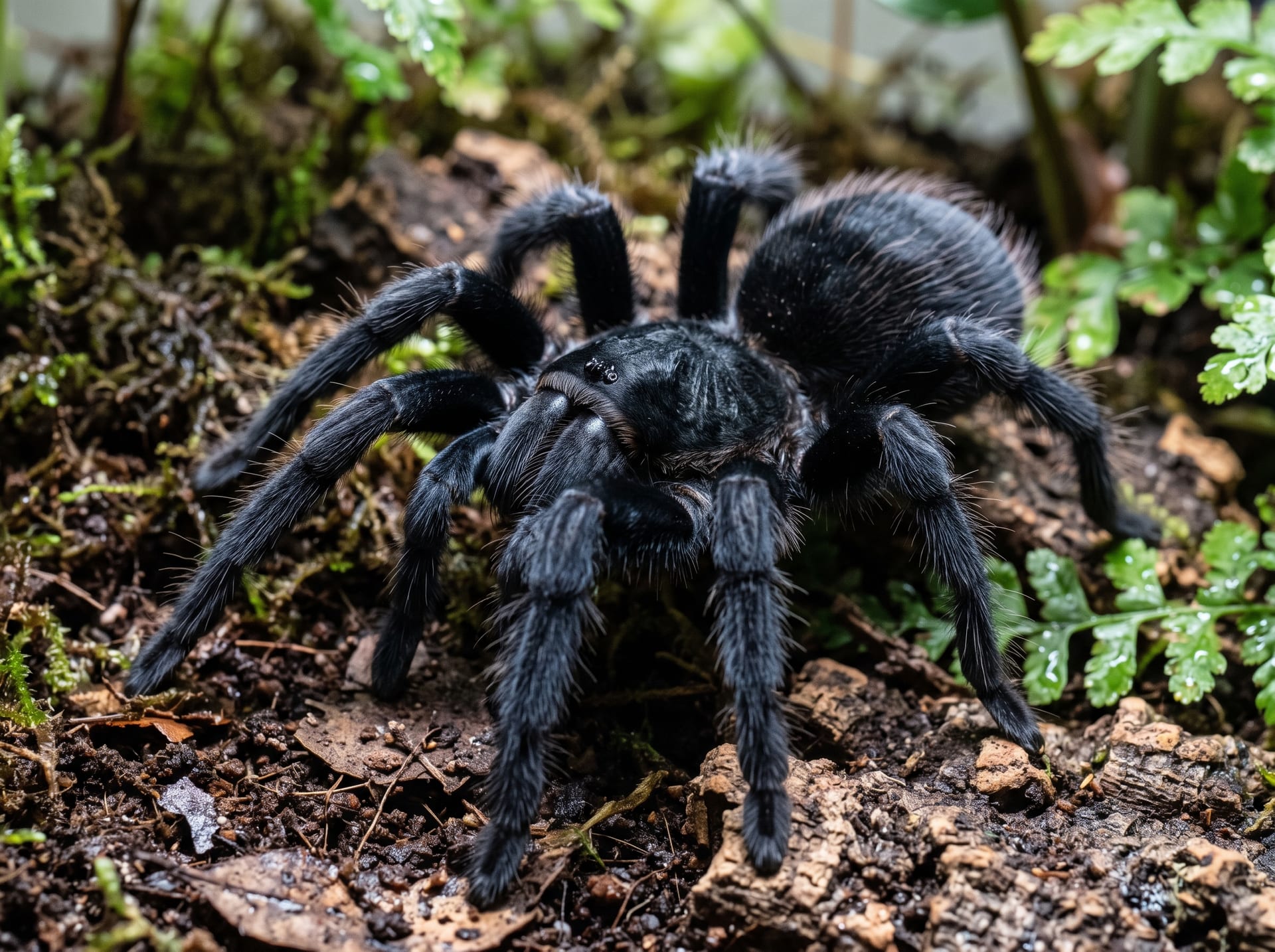
AI-generated image
Brazilian Black
BeginnerGrammostola pulchra
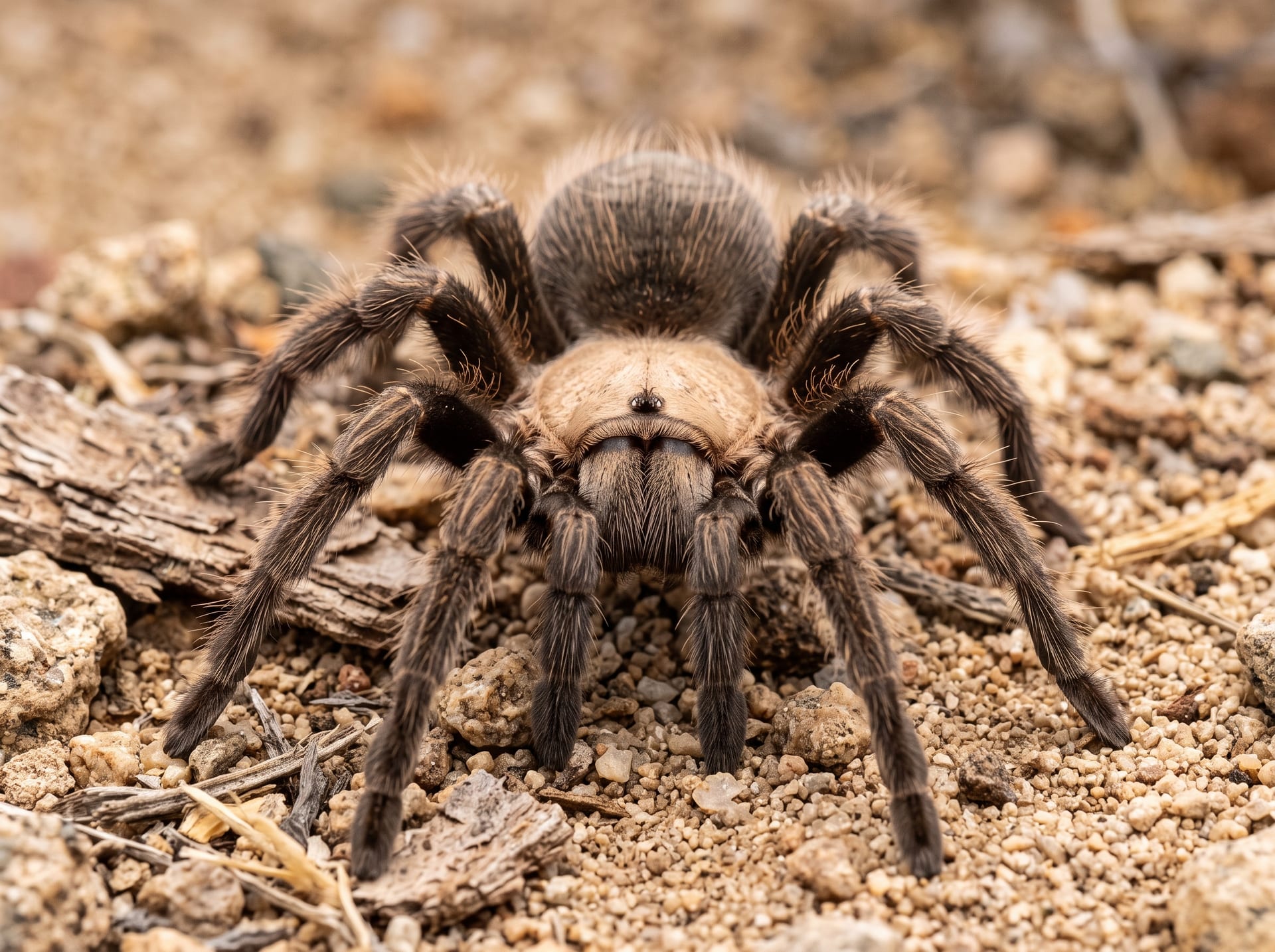
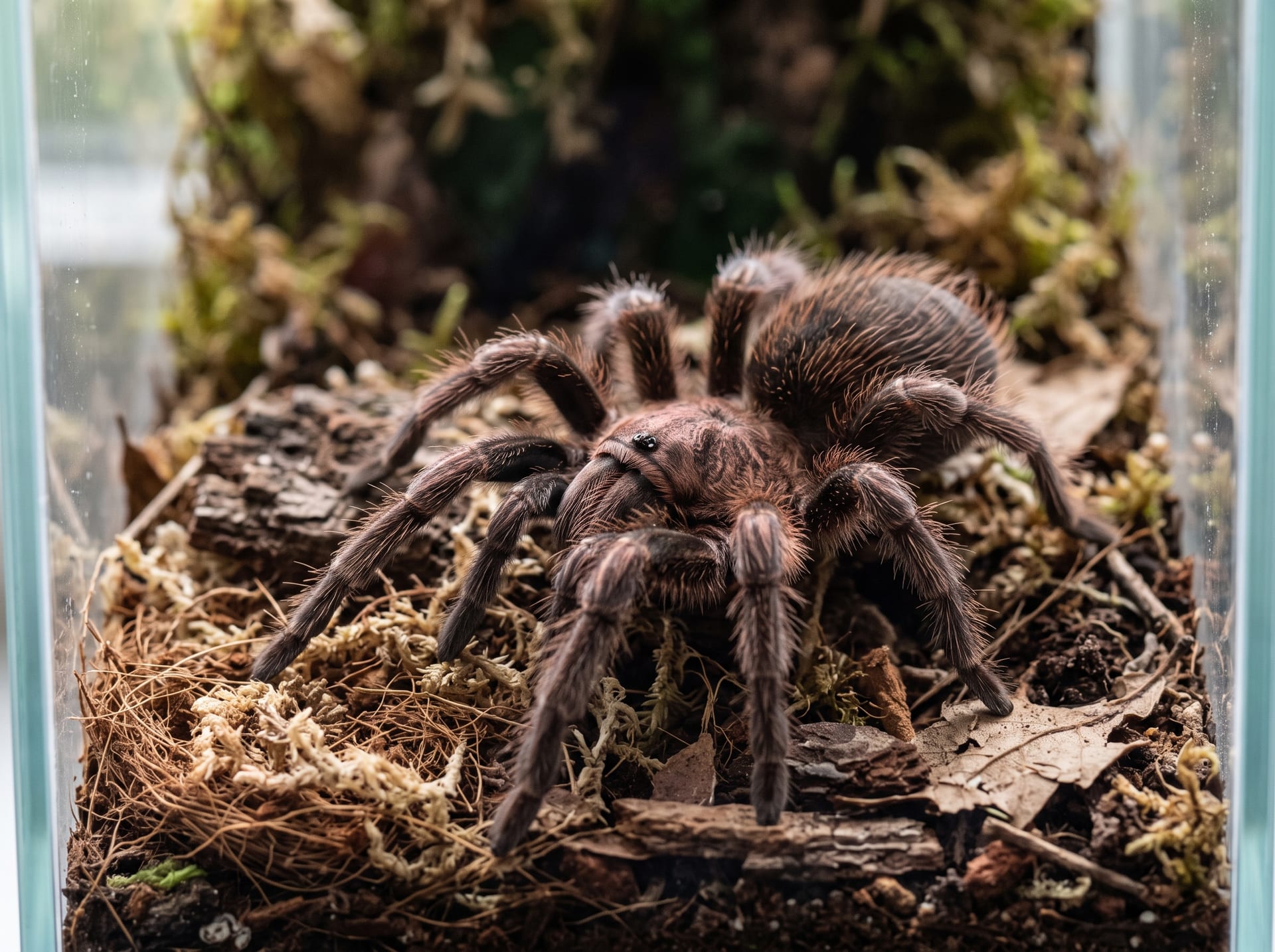
A South American terrestrial species cloaked in jet-black velvety hair. Prized for its calm temperament and rich color, it is hardy and long-lived.
Difficulty
Beginner
Temperature
23〜28℃
Lifespan
Female 20-25 years / Male 5-6 years
Size
Leg span 15-18 cm
Humidity
60〜70%
Diet
Live insects such as crickets and roaches, offered roughly weekly.
About
The Brazilian Black (Grammostola pulchra) is a terrestrial tarantula from the grasslands of southern Brazil and Uruguay, cloaked entirely in jet-black velvety hair. A larger species at 15-18 cm legspan, it is kept at 23-28 C and 60-70% humidity. Prized for its calm temperament and deep coloration, it is hardy and long-lived, with females reaching 20-25 years. Though gentle, it is a New World species capable of flicking urticating hairs, so handling should be moderate.
Lifespan of the Brazilian Black
The Brazilian Black lives Female 20-25 years / Male 5-6 years.
Size of the Brazilian Black
The Brazilian Black grows to Leg span 15-18 cm.
Basic Info
Origin
Grasslands of southern Brazil and Uruguay
Lifespan
Female 20-25 years / Male 5-6 years
Size
Leg span 15-18 cm
Temperature
23〜28℃
Humidity
60〜70%
Diet
Live insects such as crickets and roaches, offered roughly weekly.
References & Sources
Edited & verified by: BreederDirect editorial team
The taxonomic, regulatory, and husbandry data on this page are compiled and verified against the authoritative primary sources below.
Brazilian Black Listings
Loading latest listingsFind listings for this species