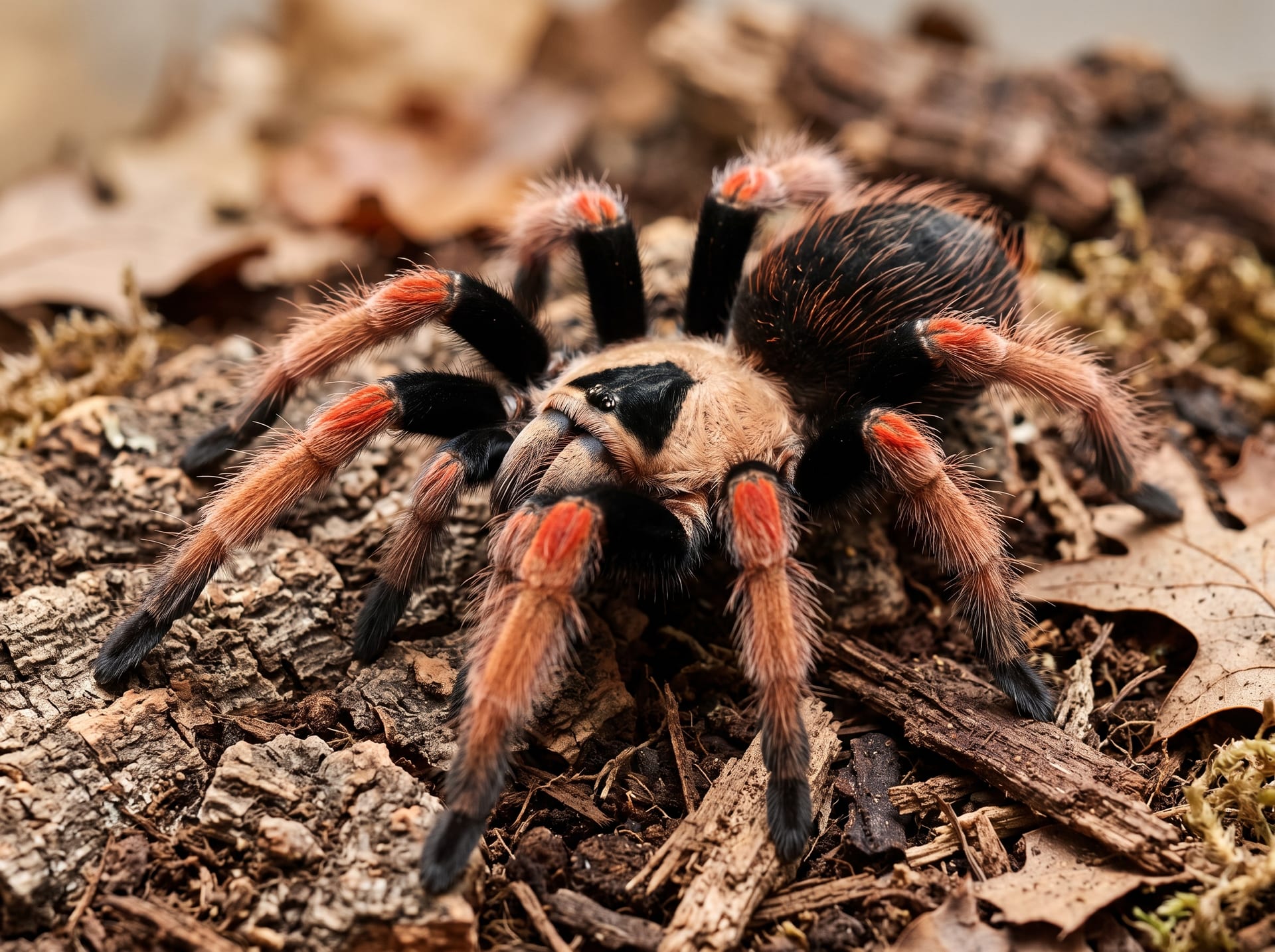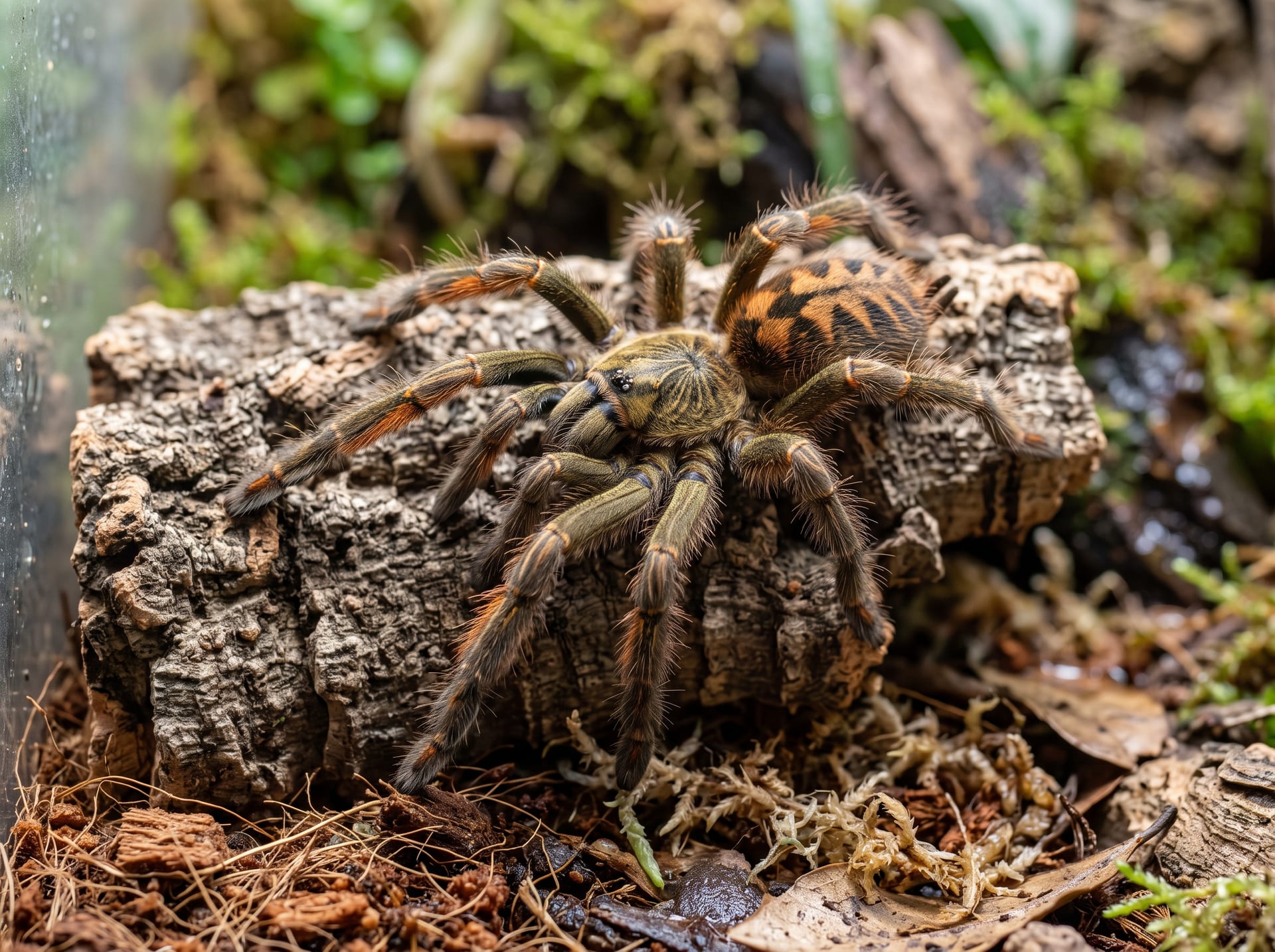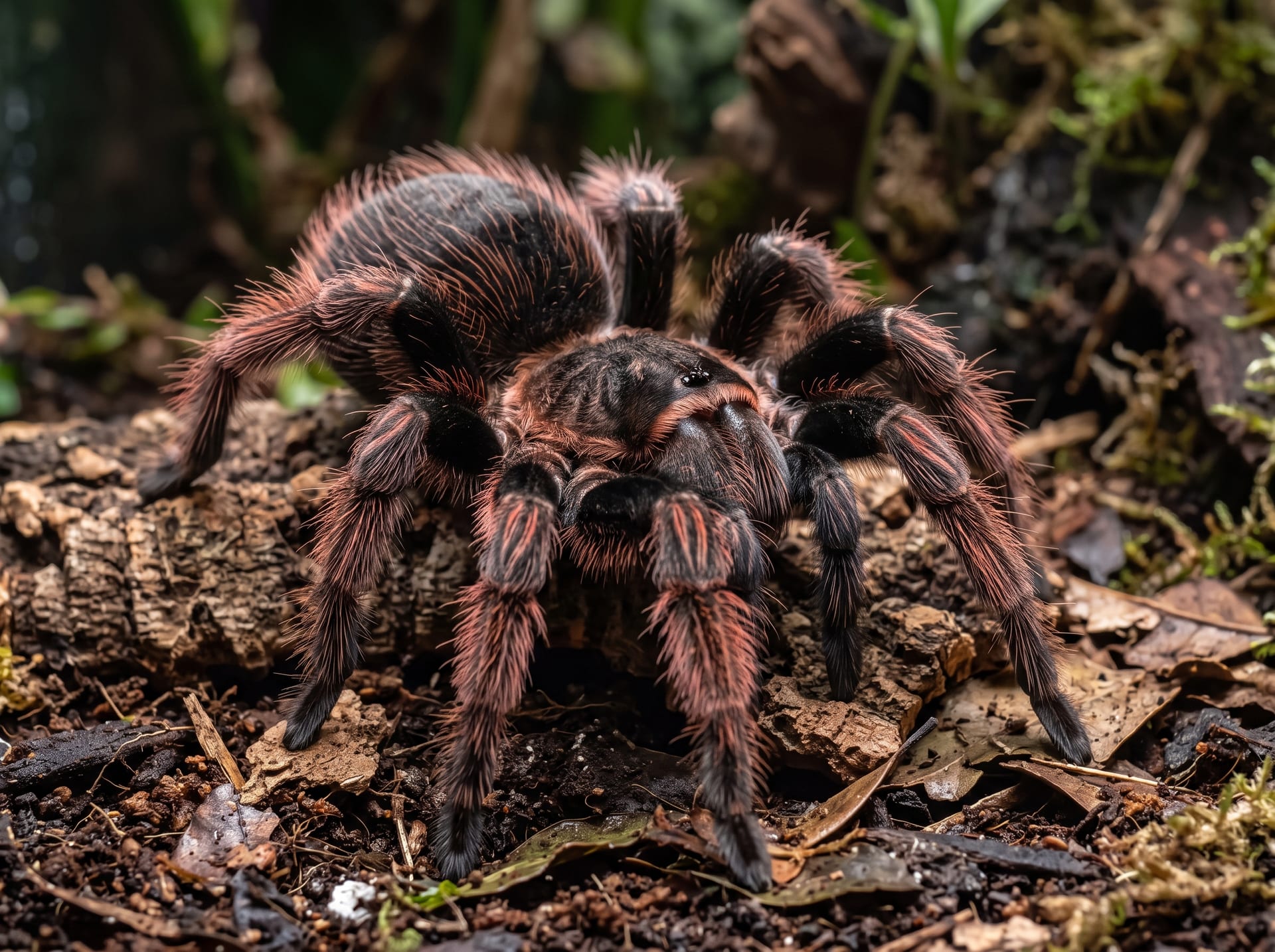
AI-generated image
Brazilian Salmon Pink
IntermediateLasiodora parahybana
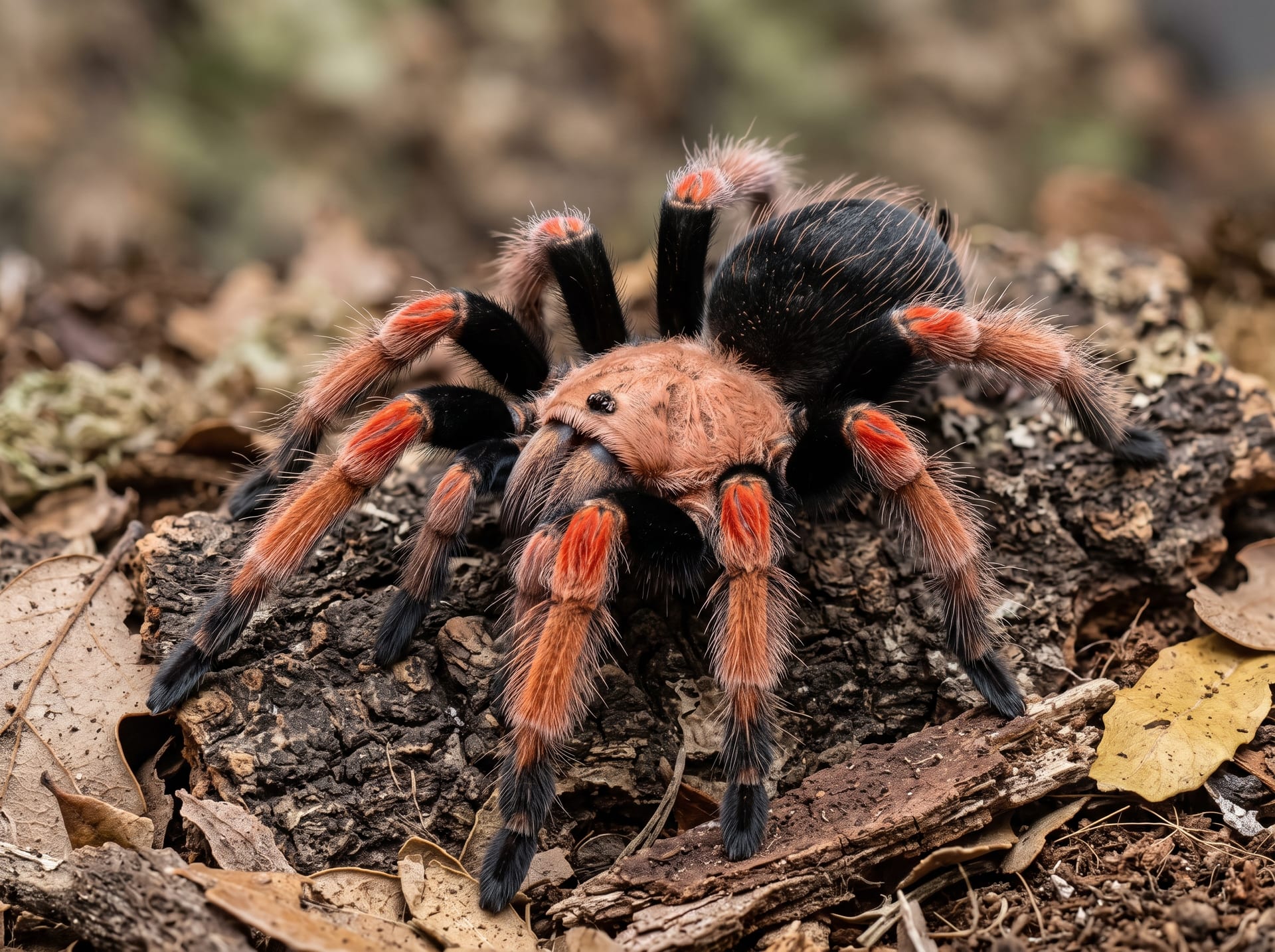
One of the largest terrestrial tarantulas, dark-bodied with salmon-pink hairs. Fast-growing and a voracious eater, but somewhat defensive and quick to flick urticating hairs.
Difficulty
Intermediate
Temperature
24〜28℃
Lifespan
Female 15-20 years / Male 3-5 years
Size
Leg span 20-25 cm
Humidity
65〜75%
Diet
Live insects such as crickets and roaches; large adults may occasionally take a pinky mouse.
About
The Brazilian Salmon Pink (Lasiodora parahybana) is one of the world's largest terrestrial tarantulas, a powerful, dark-bodied species from the tropical forests of northeastern Brazil with salmon-pink hairs. Reaching 20-25 cm in legspan, it is kept at 24-28 C and 65-75% humidity. Fast-growing and a voracious eater, it is somewhat defensive and quick to flick urticating hairs, making it better suited to intermediate keepers. Given its size and defensiveness, handling is best avoided, with care taken around its hairs and fangs.
Lifespan of the Brazilian Salmon Pink
The Brazilian Salmon Pink lives Female 15-20 years / Male 3-5 years.
Size of the Brazilian Salmon Pink
The Brazilian Salmon Pink grows to Leg span 20-25 cm.
Basic Info
Origin
Tropical northeastern Brazil
Lifespan
Female 15-20 years / Male 3-5 years
Size
Leg span 20-25 cm
Temperature
24〜28℃
Humidity
65〜75%
Diet
Live insects such as crickets and roaches; large adults may occasionally take a pinky mouse.
References & Sources
Edited & verified by: BreederDirect editorial team
The taxonomic, regulatory, and husbandry data on this page are compiled and verified against the authoritative primary sources below.
Brazilian Salmon Pink Listings
Loading latest listingsFind listings for this species