Jewel Lacerta (Western Eyed Lizard) Care Guide | How to Care for Jewel-like Beautiful Lizards
A comprehensive guide to caring for Jewel Lacerta (Lacerta lepida), Europe's largest lizard. From proper enclosure setup, temperature management, feeding, to breeding—discover the essential tips for long-term care of this jewel-like beautiful lizard.
Key Takeaways
A comprehensive guide to caring for Jewel Lacerta (Lacerta lepida), Europe's largest lizard. From proper enclosure setup, temperature management, feeding, to breeding—discover the essential tips for long-term care of this jewel-like beautiful lizard.
What is the Jewel Lacerta?
Jewel Lacerta (Lacerta lepida) is a large lizard in the family Agamidae, genus Lacerta, distributed primarily throughout Spain and Portugal, with populations extending into southern France and northwestern Italy. It is also known by its Japanese name "Western Eyed Lizard." Adult specimens reach body lengths of 50–90 cm (including tail) and are among the largest lizard species native to Europe.
Their greatest appeal is their coloration. Bright emerald green to blue-tinged green, adorned with white, blue, and yellow spots scattered across the body sides, creates a brilliance befitting the name "Jewel." Male adults become particularly vibrant during breeding season, making them highly prized collector's items.
While availability in domestic markets is limited, they can be obtained from specialist breeders and reptile expos. They are considered intermediate to advanced-level care animals, requiring thorough preparation.
Building Your Enclosure
Enclosure Size
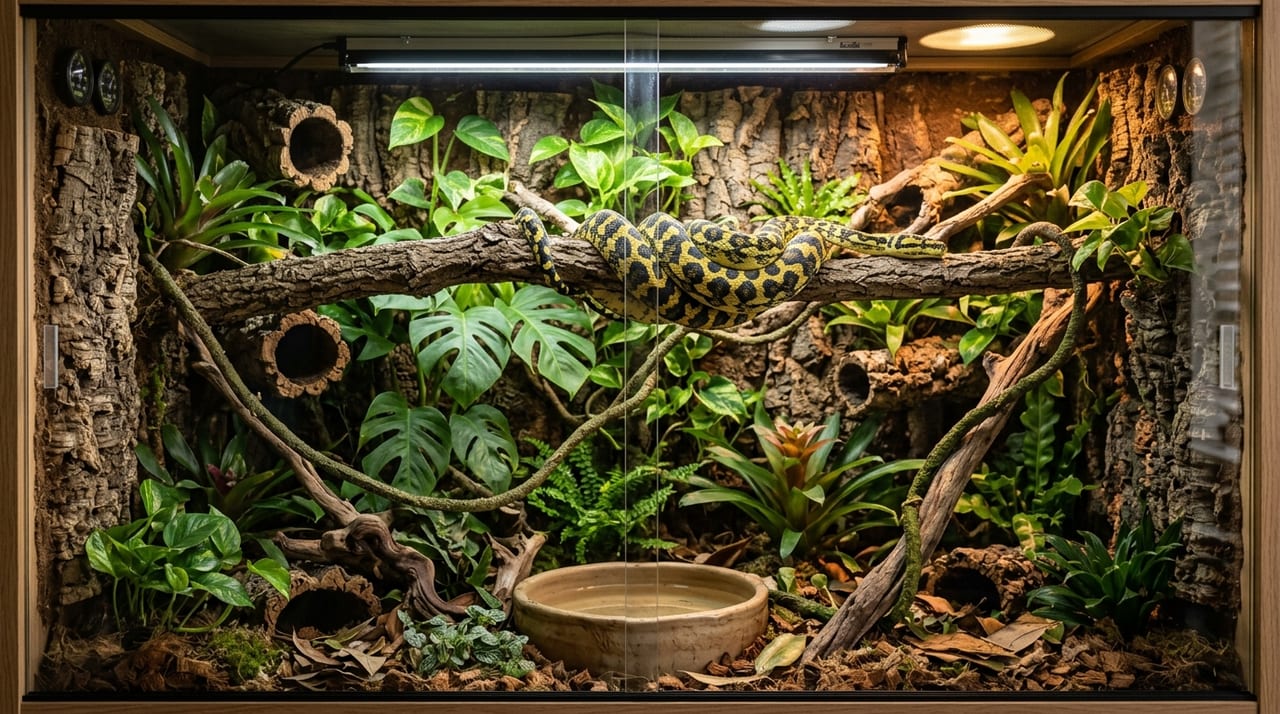
Given the size of adult specimens, especially males, a minimum enclosure of 120 cm (width) × 60 cm (depth) × 60 cm (height) or larger is essential. As an active species, more space is always better. Glass terrariums are recommended for their superior temperature and humidity control.
Install multiple cork bark, driftwood piles, rock formations, and hides to encourage three-dimensional movement. Use well-draining substrate such as desert sand or a mix of akadama clay and coconut husk, laid to a depth of 10–15 cm.
Temperature Management and Lighting
Jewel Lacertas are diurnal and require strong basking light. Establishing a proper temperature gradient is key to long-term success.
- Basking Spot: 45–55°C (surface temperature)
- Ambient Temperature (Cool Zone): 24–28°C
- Nighttime Temperature: 18–22°C
Use 100–150W spotlights for the basking lamp, maintaining a clear temperature difference from the cool zone. UVB lighting is essential; use high-output UVB bulbs such as ReptiSun 10.0 or Arcadia T5 HO 12%. Adjust photoperiod seasonally: 12–14 hours in summer, 8–10 hours in winter.
Humidity
As a Mediterranean species, maintain humidity levels of approximately 40–60%. Mimic Spain's dry rocky habitat by creating a humidity gradient—keep part of the substrate moist so your lizard can choose its preferred microclimate. Provide a large water bowl and replace it with fresh water daily.
Diet and Feeding
Jewel Lacertas are omnivores with a varied diet that includes insects, small animals, fruits, and vegetation.
Insect and Animal-Based Foods
Provide the following as staple foods 3–5 times per week:
- Crickets (Large): Readily available with excellent nutritional balance
- Dubia Roaches: High in protein and easily digestible
- Mealworms and Superworms: High in fat; treat as occasional snacks, roughly once weekly
- Pink Mice (Fuzzy Mice): Offer to adults 1–2 times monthly
Dust all insects with calcium powder before feeding, and add a multivitamin supplement 1–2 times weekly. Calcium and vitamin D3 deficiency can cause metabolic bone disease (MBD), making supplementation essential.
Plant-Based Foods
In addition to animal-based foods, regularly offer plant matter to adults:
- Fruits: Strawberries, blueberries, mango, papaya (1–2 times weekly)
- Vegetables and Greens: Mustard greens, dandelion leaves, endive (limit Chinese mustard)
- Commercial Gel Foods: Omnivore blends such as Repashy
Juveniles should receive a higher proportion of animal-based food (70–80%) during their growth phase, gradually transitioning to a 50:50 balance as they mature to adulthood.
Juvenile Care
Jewel Lacerta hatchlings are drab in color, appearing more tan or gray than green. Juveniles are particularly sensitive to temperature fluctuations, desiccation, and feeding errors, requiring careful attention.
- Enclosure Size: Start with approximately 60×30×30 cm
- Feeding Frequency: Daily to every other day, offering appropriately sized crickets or honey worms
- Shedding Support: Maintain slightly elevated humidity to prevent improper shedding
- Handling: Minimize handling until acclimated. Frequent contact causes stress
Gentle acclimation during the juvenile stage results in more docile, manageable adults.
Breeding
Cooling (brumation) is an essential trigger for Jewel Lacerta breeding.
Cooling Protocol
Begin gradually lowering temperatures in autumn (around October–November), and maintain the following during winter (December–February):
- Ambient Temperature: 15–18°C
- Photoperiod: 8 hours
- Feeding: Stop or greatly reduce
After maintaining this cool, short-day period for 2–3 months, gradually restore normal temperatures and photoperiod in spring (around March) to trigger breeding behavior.
Mating and Egg-Laying
Following temperature recovery, males display vigorous courtship and pursuit behaviors toward females. Females lay eggs approximately 30–40 days post-mating, producing 5–15 eggs per clutch. Provide a nesting substrate of moist vermiculite or specialized incubation medium, with a digging area at least 15 cm deep.
Incubation Management
Manage eggs in an incubator under the following conditions:
- Incubation Temperature: 28–30°C
- Humidity: 70–80%
- Incubation Period: Approximately 50–70 days
Immediately separate hatchlings from parents and offer appropriately sized crickets.
Health Management and Important Considerations
The following points are essential for long-term healthy husbandry of Jewel Lacertas.
Preventing Metabolic Bone Disease (MBD): Insufficient UVB exposure and calcium supplementation can cause skeletal deformities. Replace UVB bulbs regularly (every 6–12 months) and never skip calcium dusting.
Parasite Prevention: Wild-caught (WC) individuals may harbor internal and external parasites. We strongly recommend fecal testing and treatment by a specialist reptile veterinarian immediately after acquisition.
Stress Management: Many individuals are skittish; excessive handling or sudden vibrations and loud noises cause stress. Observe quietly from outside the enclosure and maintain consistent daily routines (feeding, cleaning).
Male-to-Male Aggression: Housing mature males together results in intense territorial fighting. Always house males separately.
Conclusion
The Jewel Lacerta holds a special place among reptile enthusiasts, prized for its striking beauty and impressive size. With proper enclosure setup, high-output UVB, appropriate temperature gradients, and balanced nutrition, lifespans exceeding 15 years are achievable. While domestic availability is limited, sourcing captive-bred (CB) individuals from specialist breeders and reptile expos is the surest path to acquiring healthy specimens. Embrace the challenge of long-term care and enjoy the jewel-like brilliance and commanding presence of this remarkable lizard.