Source: Wikimedia Commons
Thai Zebra Tarantula
IntermediateCyriopagopus albostriatus
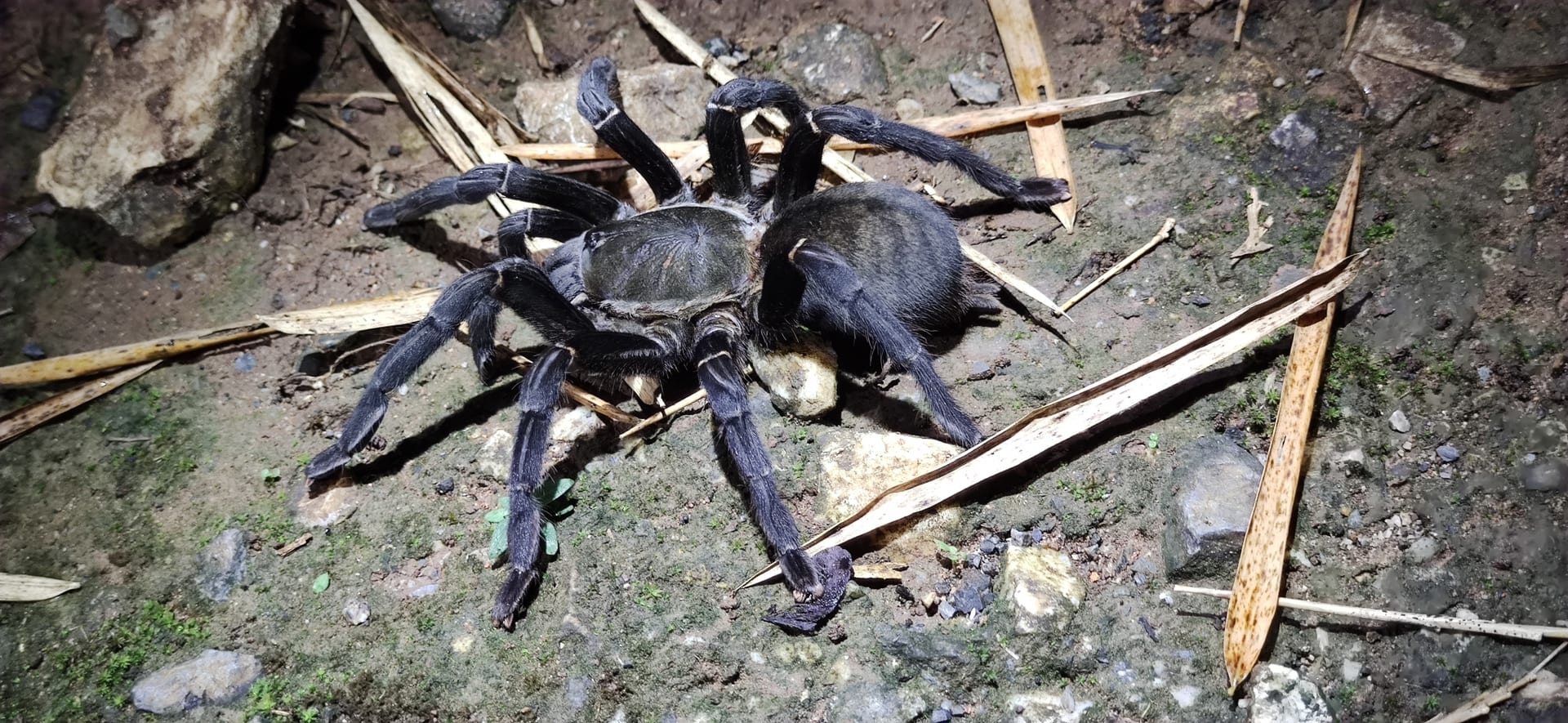
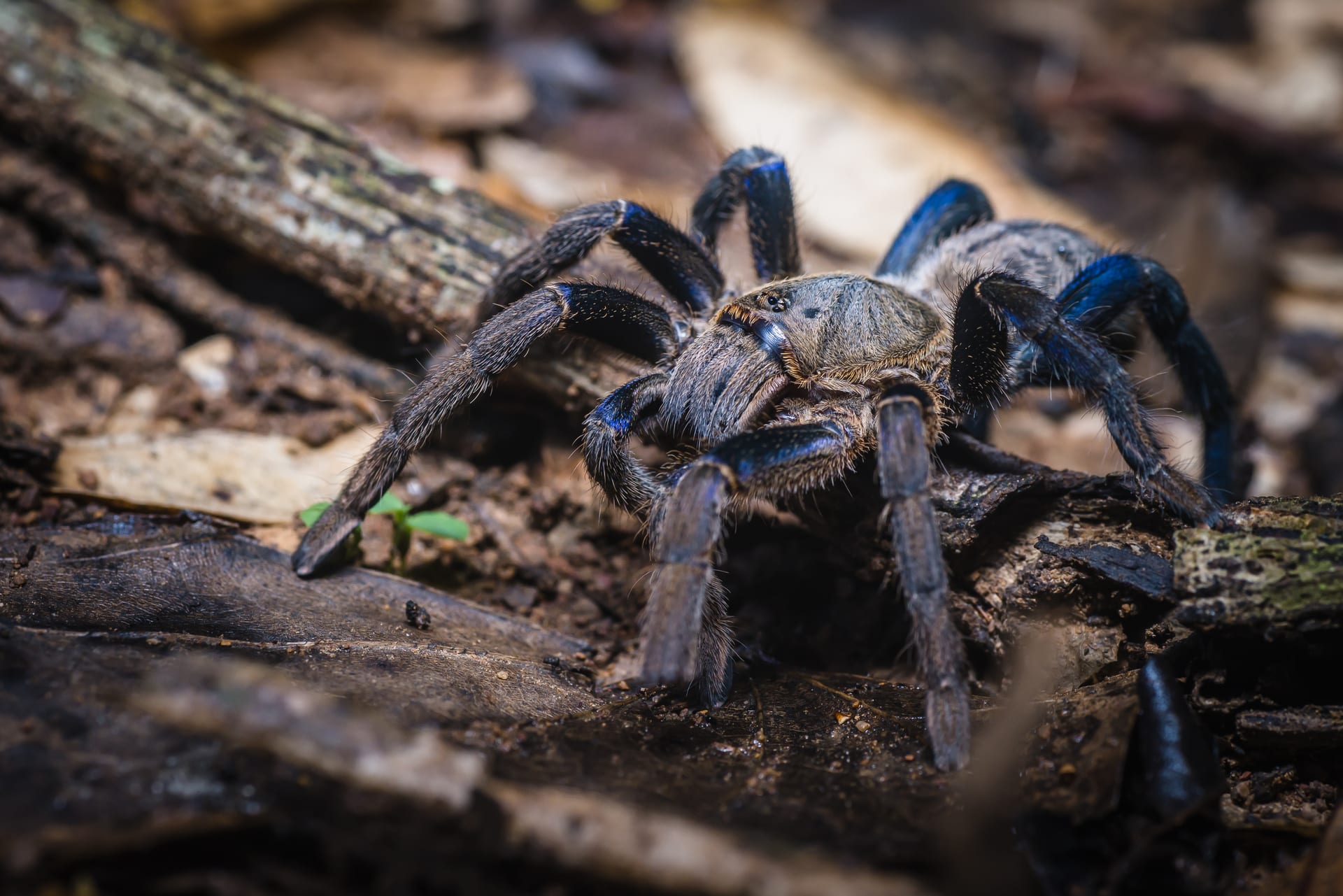
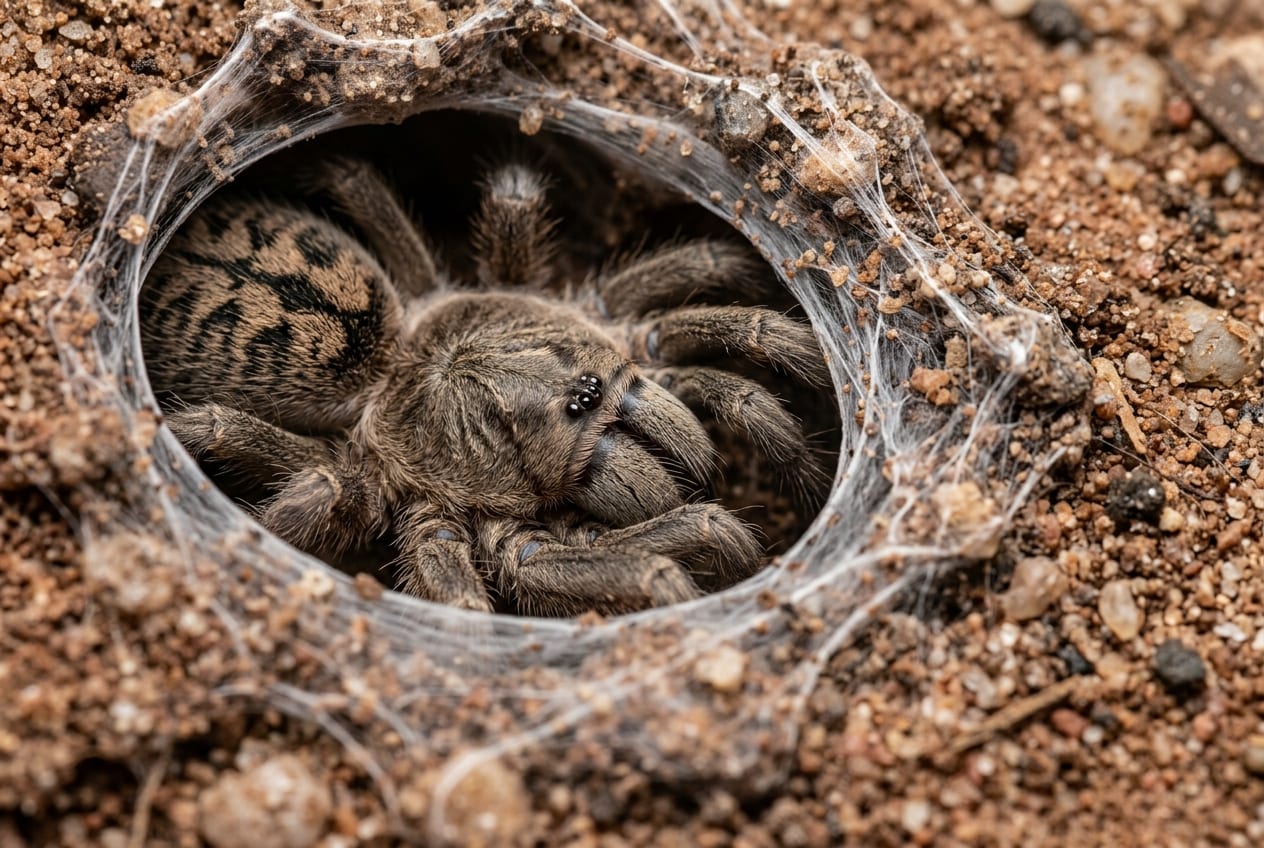
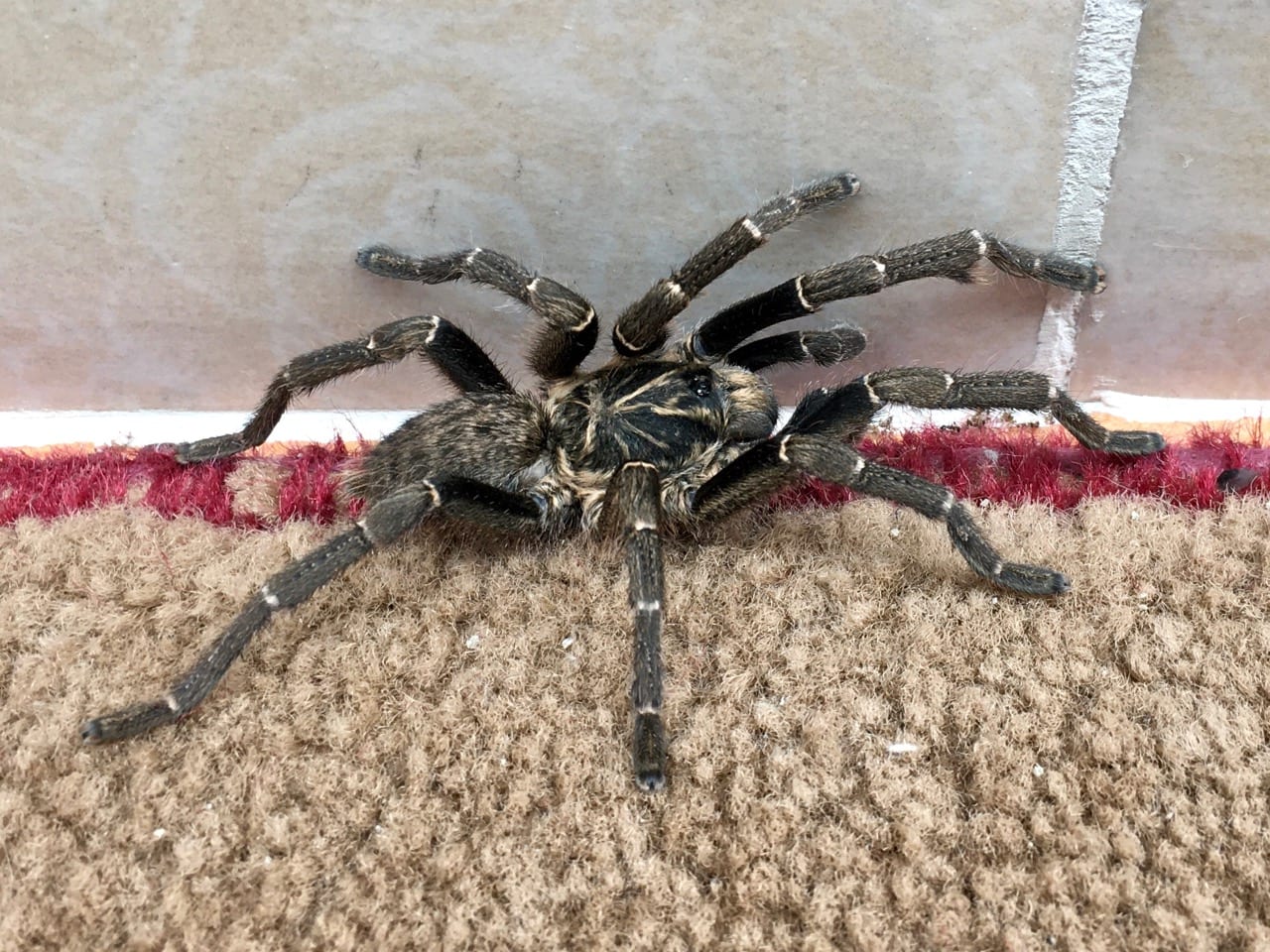
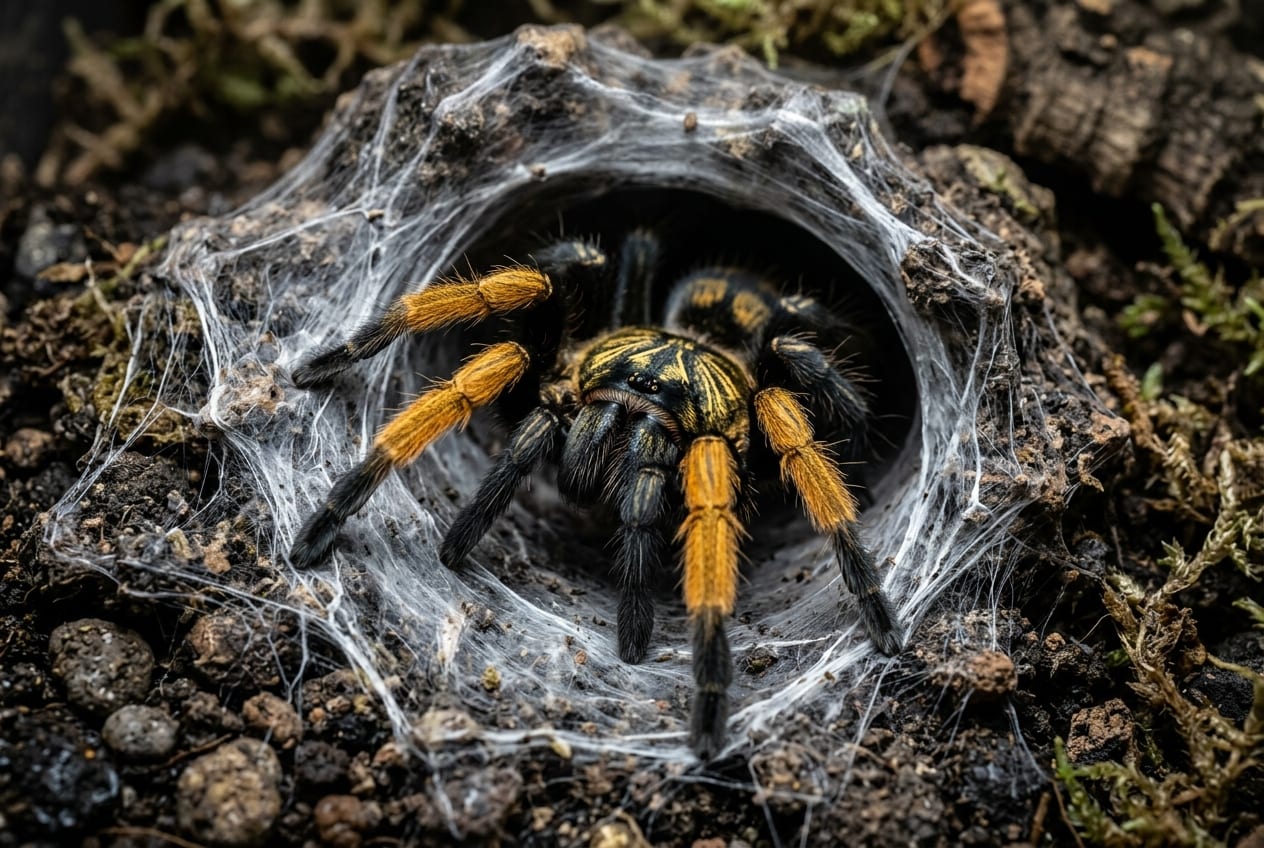
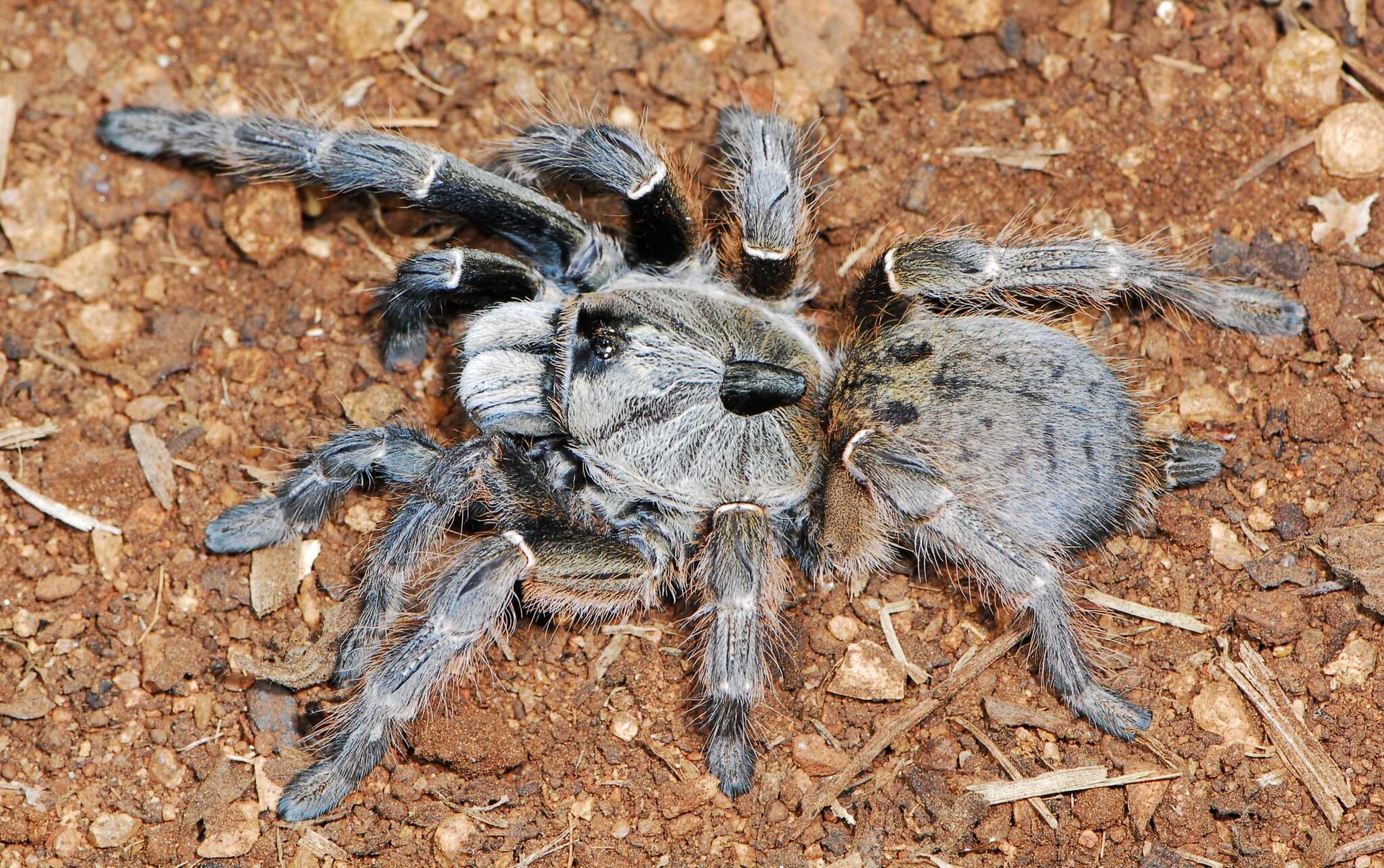
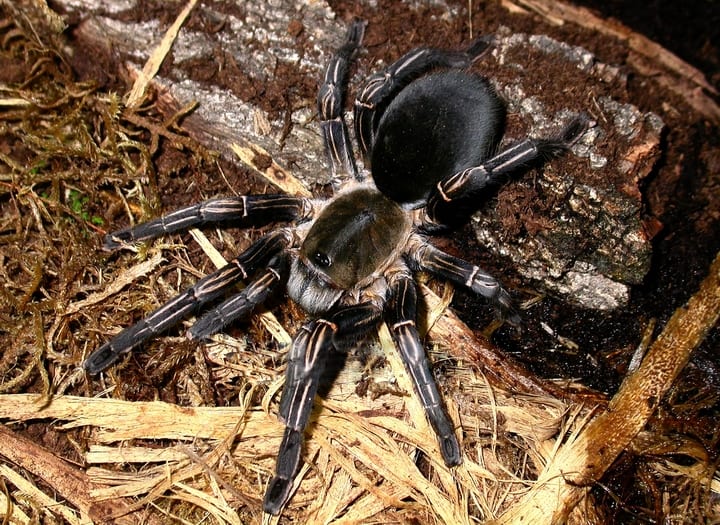
A fossorial tarantula from Southeast Asia with white stripes down its black legs and a white zigzag on the abdomen. Besides rainforest it lives in bamboo groves and rice paddies, digging deep vertical burrows and hunting at night.
Difficulty
Intermediate
Temperature
24〜28℃
Lifespan
Females 10-15 years / males 3-5 years
Size
Body 5-6cm, leg span 12-13cm
Humidity
70〜80%
Diet
Live insects such as crickets and roaches
About
Cyriopagopus albostriatus was described by Simon in 1886 as Selenocosmia albostriata and belongs to the Ornithoctoninae, occurring in Myanmar, Thailand, Cambodia, Laos and Vietnam, with its stronghold near Phnom Penh in Cambodia. The epithet comes from Latin albo, white, and striatus, striped, referring to the white stripes down its black legs and the white zigzag on its abdomen. Pocock moved it to Melopoeus in 1895 and Smith to Haplopelma in 1996, and it took its present name when that genus was dissolved in 2015. Besides tropical monsoon forest it lives in bamboo groves and rice paddies, so encounters with people are common. It is fossorial and nocturnal, digging deep vertical burrows. Two to three months after mating the female produces an egg sac of 100-200 eggs. As an Old World species it has no urticating hairs; it is skittish and its bite is painful. In Cambodia it is fried and eaten.
Source: Wikipedia (CC BY-SA 4.0)
Lifespan of the Thai Zebra Tarantula
The Thai Zebra Tarantula lives Females 10-15 years / males 3-5 years.
Size of the Thai Zebra Tarantula
The Thai Zebra Tarantula grows to Body 5-6cm, leg span 12-13cm.
It measures about 50-60mm in body length with a leg span up to roughly 130mm.
Temperature & humidity for the Thai Zebra Tarantula
The ideal temperature for the Thai Zebra Tarantula is 24〜28℃. Ideal humidity is 70〜80%.
Basic Info
Origin
Southeast Asia (Myanmar, Thailand, Cambodia, Laos, Vietnam)
Care Specifications
Semi-aggressiveSolitary
Sources: The Spider Shop: Melopoeus albostriatum / Tarantupedia: Cyriopagopus albostriatus / Wikipedia: Cyriopagopus albostriatus / German Wikipedia: Cyriopagopus albostriatus / GBIF
References & Sources
Edited & verified by: BreederDirect editorial team
The taxonomic, regulatory, and husbandry data on this page are compiled and verified against the authoritative primary sources below.
Taxonomy & Authority
Accepted name: Cyriopagopus albostriatus (Simon, 1886)
Synonyms: Selenocosmia albostriata Simon, 1886, Melopoeus albostriatus, Haplopelma albostriatum
Authority databases: GBIF
Nomenclature follows global taxonomic authority databases.
Regulations & Conservation Status
Not CITES-listed
Sources: CITES Appendices (species not listed)
Regulations may change. Always verify the latest information with the relevant authorities.
Thai Zebra Tarantula Listings
Loading latest listingsFind listings for this species