Source: Wikimedia Commons
Thailand Black Tarantula
AdvancedCyriopagopus minax
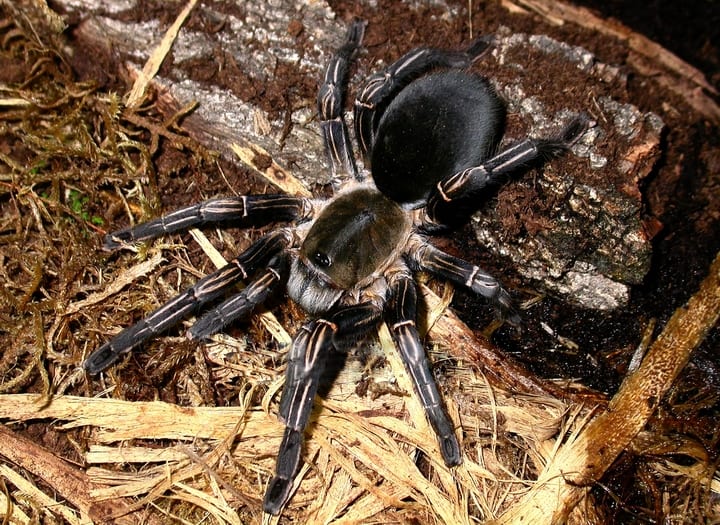
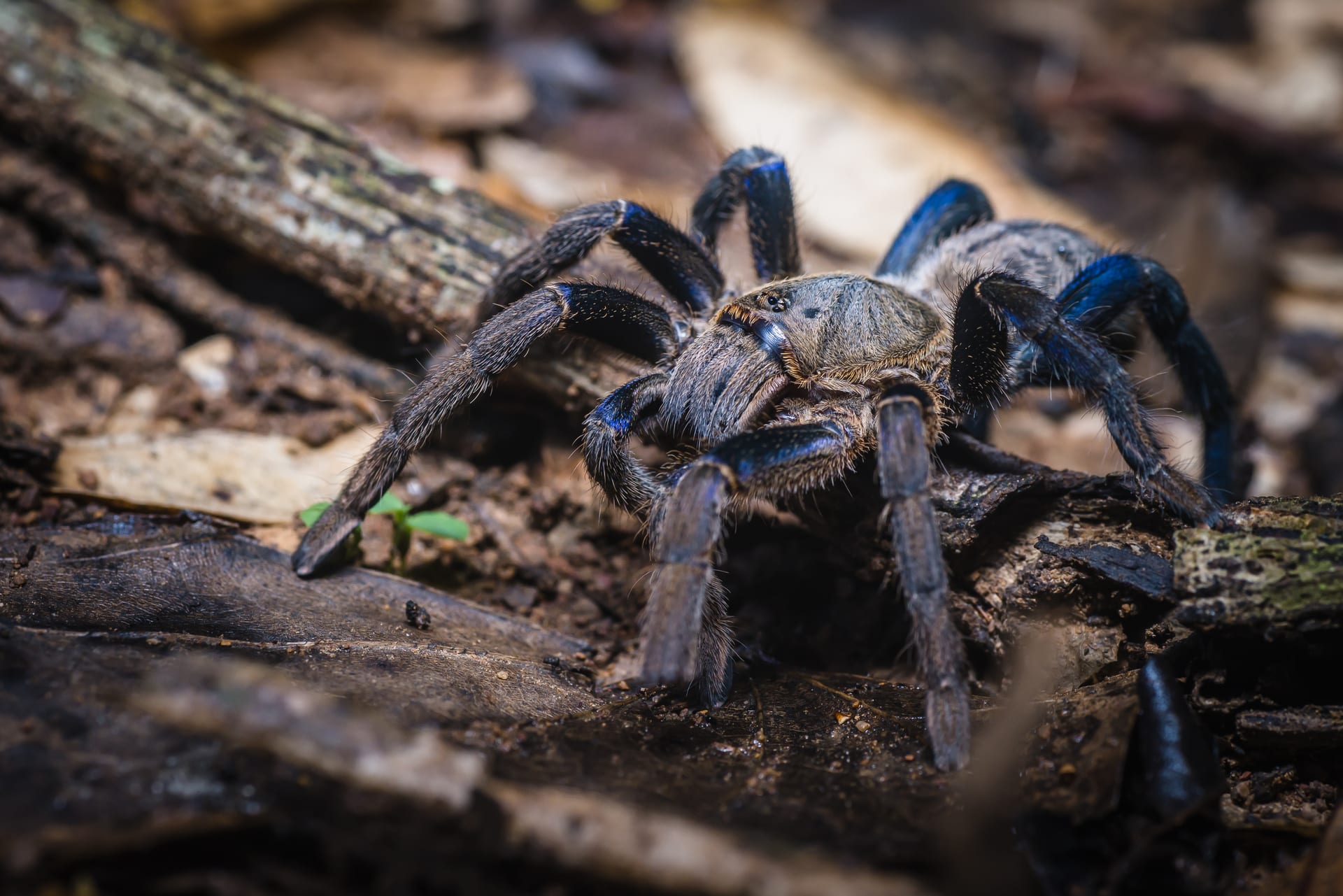
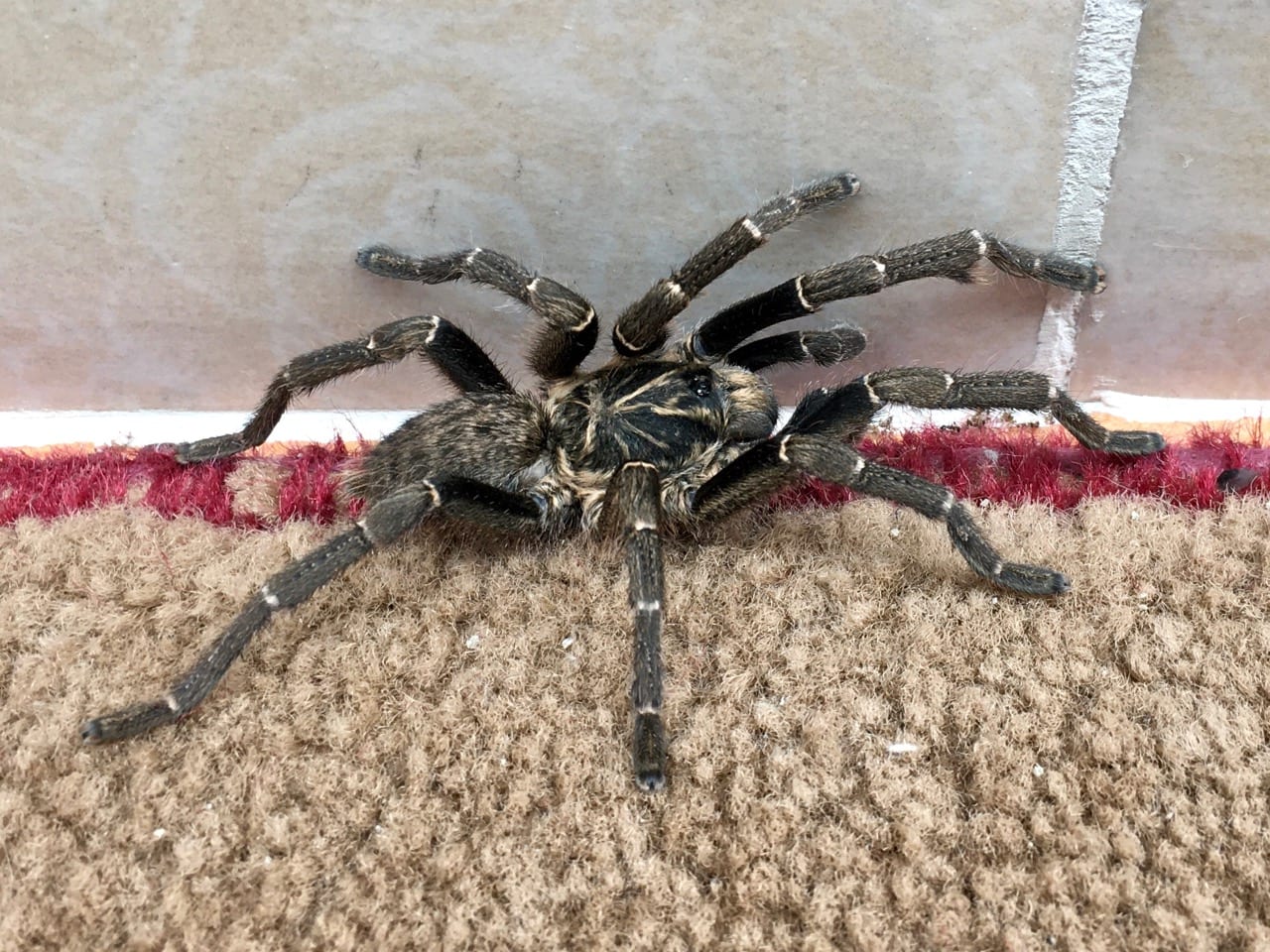
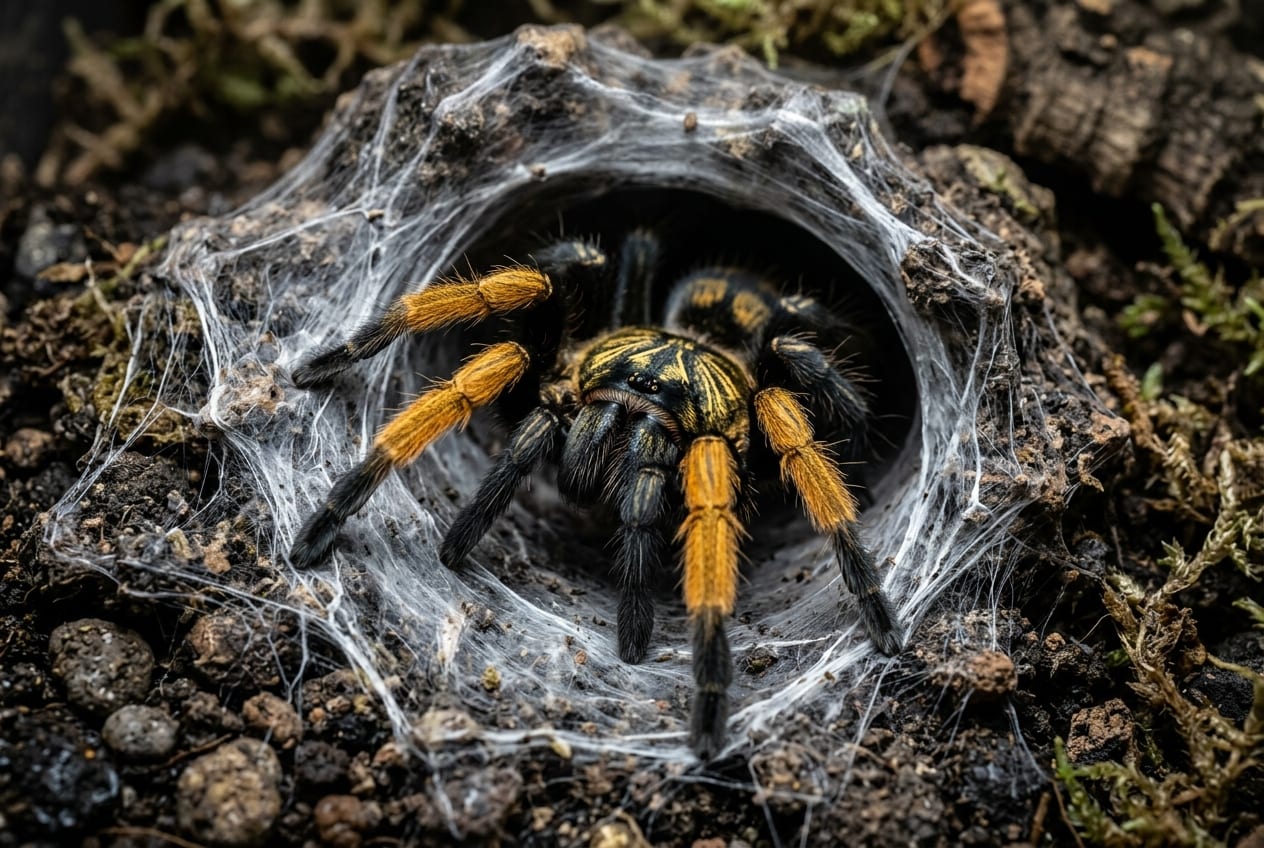
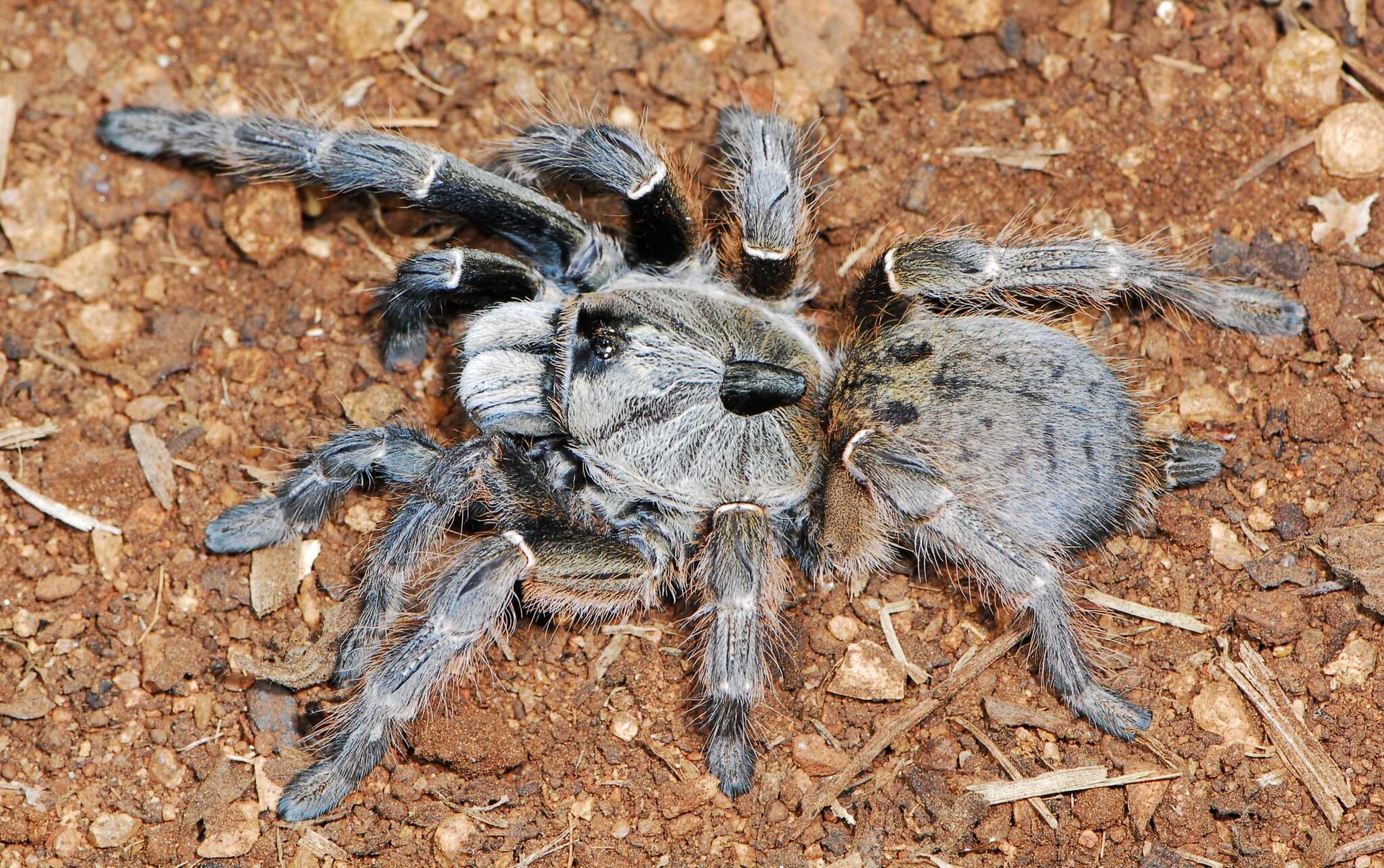
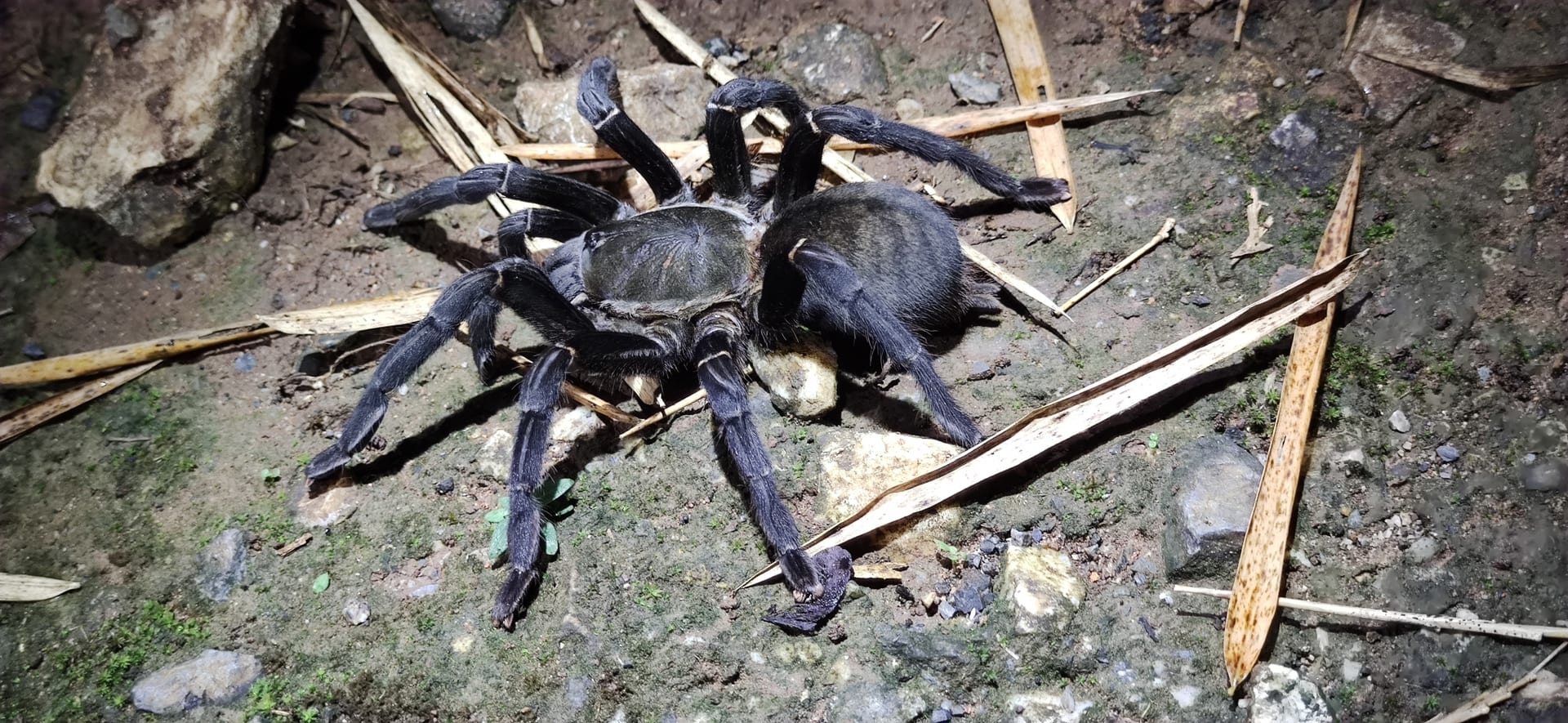
A fossorial tarantula from Southeast Asia, almost uniformly black except for orange fringes on the patellae and tibiae. It lives deep in burrows, is highly defensive, and its bite is reported as very painful.
Difficulty
Advanced
Temperature
24〜28℃
Lifespan
Females up to 12 years, males 2-3 years
Size
Body about 7cm, leg span about 13cm
Humidity
70〜80%
Diet
Live insects such as crickets and roaches
About
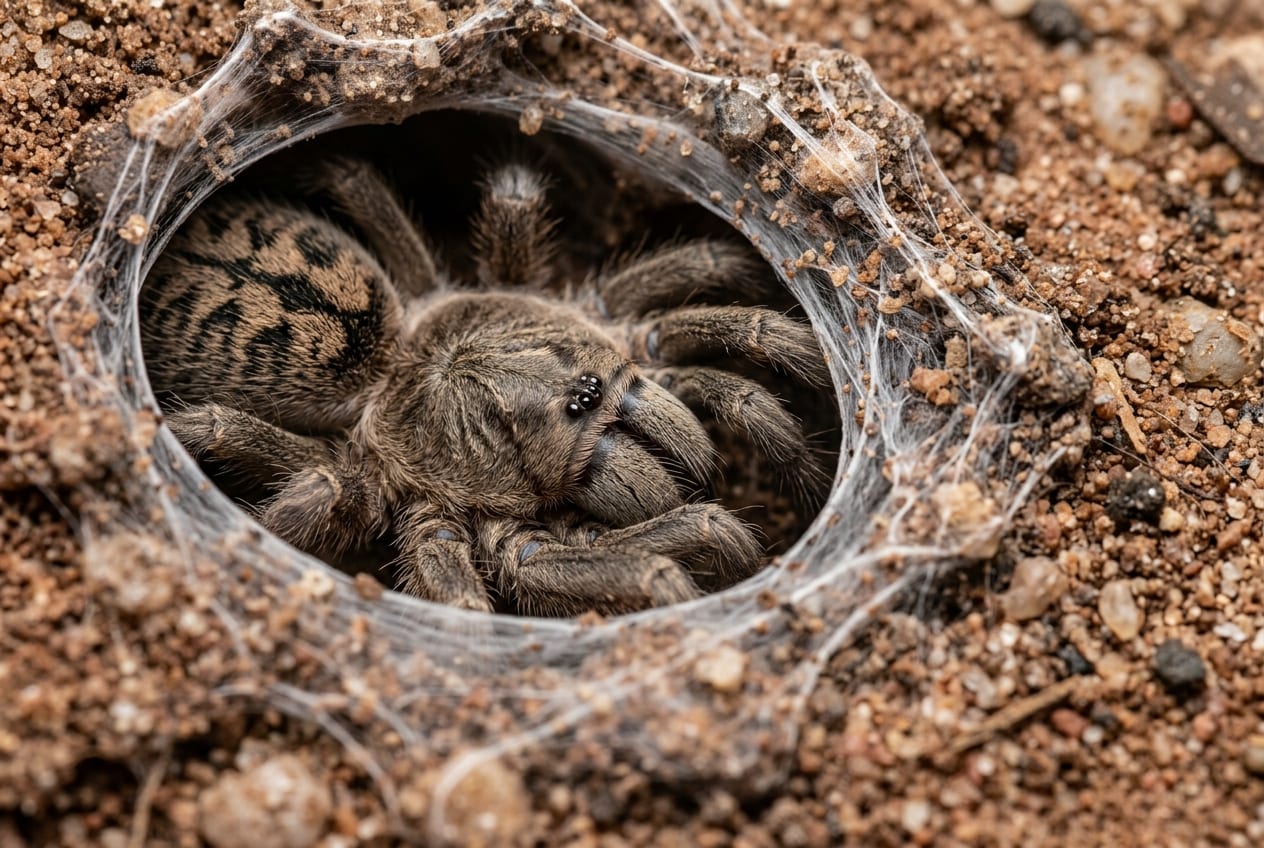
Cyriopagopus minax was described by Thorell in 1897 as Melopoeus minax and belongs to the Ornithoctoninae, occurring in Myanmar and Thailand. Its stronghold is Mon State in southern Myanmar, near the Andaman Sea. Smith moved it to Haplopelma minax in 1996, and it took its present name when that genus was dissolved in 2015. As the name suggests it is almost uniformly black, with a mossy green sheen on the carapace just after moulting. Orange fringing setae on the dorsal patellae and tibiae, especially of the first pair of legs, are diagnostic. It digs deep burrows with almost funnel-shaped entrances in monsoon rainforest floor and lines them thickly with silk. It is nocturnal and stays underground by day. Females live up to 12 years and males 2-3. It has not been assessed by the IUCN. In Thailand it is sometimes eaten.
Source: Wikipedia (CC BY-SA 4.0)
Lifespan of the Thailand Black Tarantula
The Thailand Black Tarantula lives Females up to 12 years, males 2-3 years.
Size of the Thailand Black Tarantula
The Thailand Black Tarantula grows to Body about 7cm, leg span about 13cm.
It measures about 70mm in body length with a maximum leg span of about 130mm, making it a medium-sized member of the family.
Temperature & humidity for the Thailand Black Tarantula
The ideal temperature for the Thailand Black Tarantula is 24〜28℃. Ideal humidity is 70〜80%.
Basic Info
Origin
Myanmar and Thailand (mainly Mon State in southern Myanmar)
Care Specifications
AggressiveSolitary
Sources: The Spider Shop: Cyriopagopus minax / Tarantupedia: Cyriopagopus minax / German Wikipedia: Cyriopagopus minax / GBIF
References & Sources
Edited & verified by: BreederDirect editorial team
The taxonomic, regulatory, and husbandry data on this page are compiled and verified against the authoritative primary sources below.
Taxonomy & Authority
Accepted name: Cyriopagopus minax (Thorell, 1897)
Synonyms: Melopoeus minax Thorell, 1897, Haplopelma minax (Thorell, 1897)
Authority databases: GBIF
Nomenclature follows global taxonomic authority databases.
Regulations & Conservation Status
Not CITES-listed
Sources: CITES Appendices (species not listed)
Regulations may change. Always verify the latest information with the relevant authorities.
Thailand Black Tarantula Listings
Loading latest listingsFind listings for this species