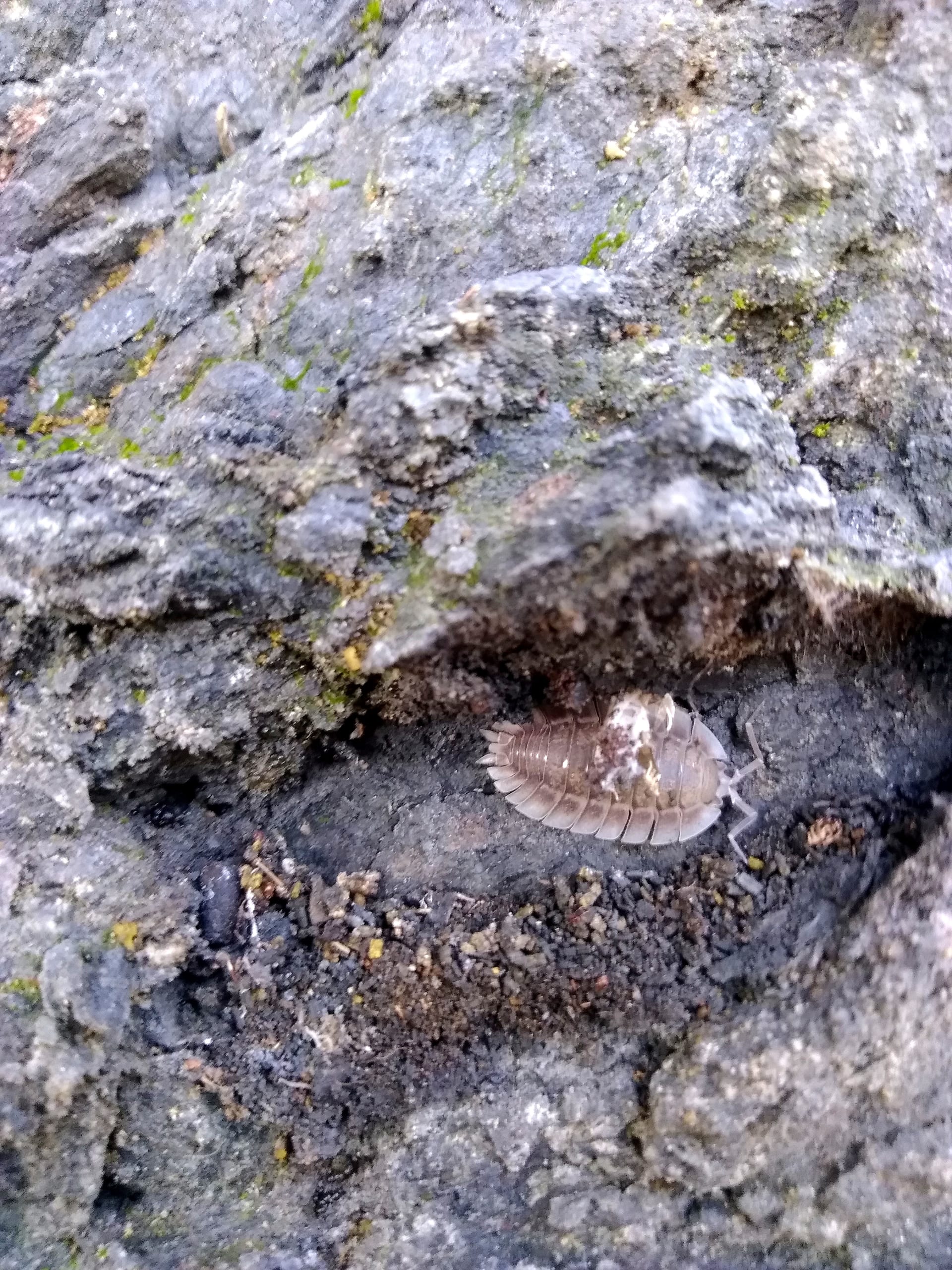
 © ConstantineShovel / CC BY 4.0
Spatulatus Isopod
The Spatulatus Isopod is a flat, broad-bodied woodlouse native to the dry rocky terrain of southern Europe. Its slate-gray to pale blue-gray body is marked with a dark dorsal stripe and lighter edging, giving it a subtle but striking pattern. Unlike many isopods, it cannot roll into a ball for defense, so it relies on hiding rather than curling up, and it thrives in dry, well-ventilated setups. Considered a good match for intermediate keepers, it can be kept in groups, and it is fun to watch as it slips its flat body into narrow crevices.
View Spatulatus Isopod encyclopedia →Breeder Wanted!
List on BreederDirect and sell directly to customers nationwide!
BreederDirect's 5 Transparency Commitments
When listing Exotic Invertebrates, Breeders disclose the following. We guarantee transparency on growth stage and breeding unit.
- Real Photos
- Breeding Unit
- Generation Info
- Body Length (mm)
- Country of Origin
Browse all 286 breeds
No listings match your filters
Adjust your filters, or get notified when new listings arrive.
Getting alerts is free with a member account. When new listings match your saved search, we'll notify you by email and in-app.
Browse other categories
Verified breeders (preview)
Are you raising exotic invertebrates?
Register as a breeder and connect with buyers directly.
Apply as a breederSpatulatus Isopod key facts
- Care level
- Intermediate
- Lifespan
- 2-3 years
- Size
- 15-20mm
- Temperature
- 20〜26℃
- Diet
- Leaf litter and rotten wood as staples, with cuttlebone for calcium and fish flake or dried shrimp for protein
- Temperature & Humidity
- 20-26C. Keep the enclosure mostly dry with one damp corner to form a gradient, and ventilate strongly.
- Enclosure
- Layer bark and flat stones so there are tight gaps to slide under. It climbs, so an angled branch helps. Mix leaf litter and rotten wood into the substrate.
- Diet & Feeding
- Keep leaf litter and rotten wood available, offer fish flake or dried shrimp regularly, and never let the cuttlebone run out.
- Temperament & Venom
- Harmless to people. Fast-moving but not nervous, active day and night, and kept in groups.
- Notes
- It cannot conglobate, so cover matters. Short rations of protein or calcium bring on cannibalism, and it does badly in damp, stagnant air.
About Spatulatus Isopod
Spatulatus Isopod: a flat, wide-bodied species from southern Europe's dry rocky habitats, slate-gray with a dark dorsal stripe, unable to roll into a ball. Suited to intermediate keepers.
7 things to know before welcoming a Spatulatus Isopod
1Prefers a Dry Habitat
The Spatulatus Isopod comes from the dry rocky terrain of southern Europe and doesn't do well in excess moisture. Keep the substrate on the dry side and the enclosure well ventilated. Too much humidity can lead to health problems.
2Cannot Roll Into a Ball
Unlike many isopods, the Spatulatus cannot curl into a ball for defense when threatened. Instead, it relies on gaps and crevices to hide, and it tends to dart quickly into shelter when startled.
3Provide Plenty of Hiding Spots
Since it can't roll up for protection, having places to hide — under flat stones, bark, or driftwood — gives this isopod peace of mind. Too few hiding spots can cause stress, so include several throughout the enclosure. Its flat body lets it squeeze into narrow crevices.
4Keep the Enclosure Ventilated
As a species adapted to dry, rocky habitats, this isopod doesn't thrive in a stuffy, sealed enclosure. Use mesh panels or vents to prevent humidity buildup. Ideally, keep most of the enclosure on the dry side and moisten just one corner to create a moisture gradient.
5Calm and Colony-Friendly
The Spatulatus is harmless to people and not skittish, and it suits group housing. However, cannibalism is more likely when protein and calcium run short, so keep a cuttlebone in the enclosure and feed fish flakes or dried shrimp regularly. Watching a colony move together is part of the appeal.
6Handle Molting Gently
As a crustacean, this isopod molts repeatedly as it grows. Right after molting its exoskeleton is soft and vulnerable, so avoid disturbing it during this period.
7Set Up the Enclosure First
Prepare dry substrate and hiding spots before your isopod arrives so it can settle in right away. Adults reach only about 15–20mm, so a large enclosure isn't necessary. Having everything ready in advance reduces stress from the move.
Frequently asked questions about Spatulatus Isopod
- Q.Can this isopod roll into a ball?
- A.No — unlike many isopods, the Spatulatus Isopod cannot curl into a ball for defense. When startled, it retreats into crevices or hiding spots instead, so it's important to provide plenty of shelter in the enclosure.
- Q.Is this species suitable for beginners?
- A.It's considered suited to intermediate keepers, so it's a bit demanding for complete beginners. Besides a dry, well-ventilated setup, you'll need to keep up a steady supply of calcium (such as cuttlebone) and protein. Get the basics right before taking it on.
- Q.Can multiple individuals be kept together?
- A.Yes, thanks to its calm temperament, the Spatulatus Isopod does well in group housing within the same enclosure. Keeping several together lets you observe their natural colony behavior.
- Q.How large does it grow?
- A.Adults reach about 15–20mm in length. Its flat, broad body shape means it stays manageable even in a compact enclosure.
- Q.Is this species subject to CITES?
- A.The Spatulatus Isopod is not subject to CITES.
Learn more about Spatulatus Isopod in the encyclopedia
View Spatulatus Isopod encyclopedia entry →
Care difficulty, lifespan, size and diet — all basics covered.
More in this category
Can't find the one you're looking for?
Post your wishes for free and breeders with matching animals will contact you with introductions.