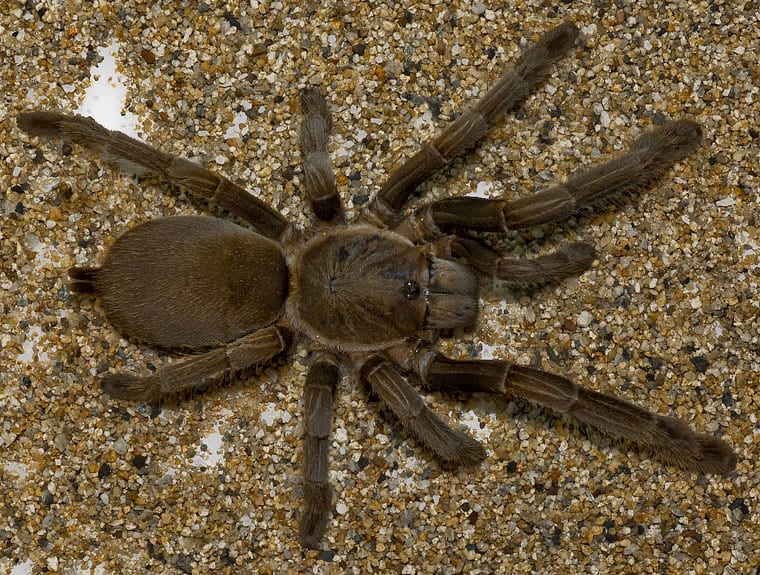
 © Robertwhyteus at English Wikipedia / CC BY-SA 3.0
Queensland whistling tarantula
The Queensland whistling tarantula is a burrowing tarantula from the east coast of Queensland and is regarded as Australia's largest spider. Adults reach a body length of 6–9 cm and a leg span of up to 22 cm, with notably thick front legs. When disturbed, it rubs hairs on its chelicerae together to make a hissing sound, the sound that inspired its common name. It is a defensive species, and females can live up to 30 years while males live up to 8. It is rated for experienced keepers, and suits people who are ready for a long commitment and can provide a deep, diggable enclosure.
View Queensland whistling tarantula encyclopedia →0% commission on your first sales!Register by September 30, 2026 and your first 2 sales are commission-free!
Breeder Wanted!
List on BreederDirect and sell directly to customers nationwide!
BreederDirect's 5 Transparency Commitments
When listing Exotic Invertebrates, Breeders disclose the following. We guarantee transparency on growth stage and breeding unit.
- Real Photos
- Breeding Unit
- Generation Info
- Body Length (mm)
- Country of Origin
Browse all 286 breeds
No listings match your filters
Adjust your filters, or get notified when new listings arrive.
Getting alerts is free with a member account. When new listings match your saved search, we'll notify you by email and in-app.
Browse other categories
Verified breeders (preview)
Are you raising exotic invertebrates?
Register as a breeder and connect with buyers directly.
Apply as a breederQueensland whistling tarantula key facts
- Care level
- Advanced
- Lifespan
- Females up to 30 years / males up to 8 years
- Size
- Body length 6-9 cm; leg span up to 22 cm
- Diet
- Carnivorous (insects and other invertebrates; in the wild also small lizards and frogs)
- Enclosure
- It lives in burrows, so provide deep substrate and a hide where it can start a burrow, plus a permanent water dish. Keep singly.
- Temperature & Humidity
- Primary data on keeping temperature and humidity are scarce. It comes from coastal Queensland, so avoid winter cold and keep the lower substrate moist.
- Diet & Feeding
- Offer live prey such as crickets and roaches sized to the spider. It is nocturnal, so feeding in the evening works best.
- Temperament & Venom
- Shy and burrow-bound, but it hisses in threat when provoked. The fangs reach 1 cm, and bites have been reported to cause up to six hours of vomiting and intense swelling and pain in the finger lasting more than a day. Never handle it.
- Notes
- It is strong and grows large, so use a sturdy container with a lockable lid. Its genus has changed over time and it is also sold as Phlogius crassipes, so check the name. Never release captive animals.
About Queensland whistling tarantula
Queensland whistling tarantula: regarded as Australia's largest spider, a burrowing species 6–9 cm long with a leg span of up to 22 cm. Females live up to 30 years, males up to 8. For experienced keepers.
7 things to know before welcoming a Queensland whistling tarantula
1Built for Experienced Keepers
This species is rated for experienced keepers. It is defensive when disturbed, so prior experience with large burrowing tarantulas helps. It is safer to build experience with other species first than to start here.
2Lifespan Differs by Sex
Females live up to 30 years and males up to 8, a wide gap. Keeping a female is a very long commitment, so plan well ahead. Ask the seller about the individual's sex before you decide.
3A Large, Bulky Spider
Adults measure 6–9 cm in body length with a leg span of up to 22 cm. Choose an enclosure that gives a bulky, thick-legged spider generous room, and plan to revisit its size as the spider grows.
4Provide Deep Substrate
As a burrowing species, it spends its time in a tunnel it digs itself. Provide substrate deep enough to dig into so it can build a retreat, which tends to help it settle. Avoid frequent digging up or rearranging of the enclosure.
5Hissing Is a Warning
When stimulated, it rubs hairs on its chelicerae together to produce a hissing sound. Treat it as a sign of alarm or stress; if you hear it, back off and leave the spider alone.
6Prevent Escapes and Bites
As a large, defensive species, it calls for careful lid handling during maintenance to prevent escapes. Avoid touching it with bare hands and use long tools such as tweezers. Because the effects of its venom cannot be stated with certainty, consult a medical professional if you are bitten.
7Molting and Feeding
Around a molt, a tarantula may become sluggish or stop eating. During this period, hold off on feeding, avoid disturbing it, and remove any uneaten prey. Size the prey to suit the spider's body.
Frequently asked questions about Queensland whistling tarantula
- Q.Can beginners keep a Queensland whistling tarantula?
- A.It is rated for experienced keepers and is hard to recommend as a first exotic pet. It is defensive and large, so handling it takes practice. Gaining experience with other species first is the safer route.
- Q.How long does it live?
- A.Females live up to 30 years and males up to 8, so the two sexes differ greatly. If you take in a female, be prepared for many years of care.
- Q.What is the hissing sound?
- A.It is made when the spider is disturbed and rubs hairs on its chelicerae together, and the species is known by a name inspired by this sound. It is thought to signal alarm or discomfort, so reduce the disturbance if you hear it.
- Q.Can I handle it?
- A.It is not suited to handling and is best enjoyed by observation. It is defensive and hisses when disturbed, and there is a risk of being bitten. Use tools during care and avoid direct contact.
- Q.What kind of setup does it need?
- A.As a burrowing species, it needs substrate deep enough to dig a tunnel and a secure retreat where it can settle. Adults reach 6–9 cm in body length with a leg span of up to 22 cm, so choose an enclosure with generous room.
Learn more about Queensland whistling tarantula in the encyclopedia
View Queensland whistling tarantula encyclopedia entry →
Care difficulty, lifespan, size and diet — all basics covered.
More in this category
Can't find the one you're looking for?
Post your wishes for free and breeders with matching animals will contact you with introductions.